Russia takes third place in team standings at the Paralympics
A brilliant result: six athletes — 12 medals, 8 of which are gold
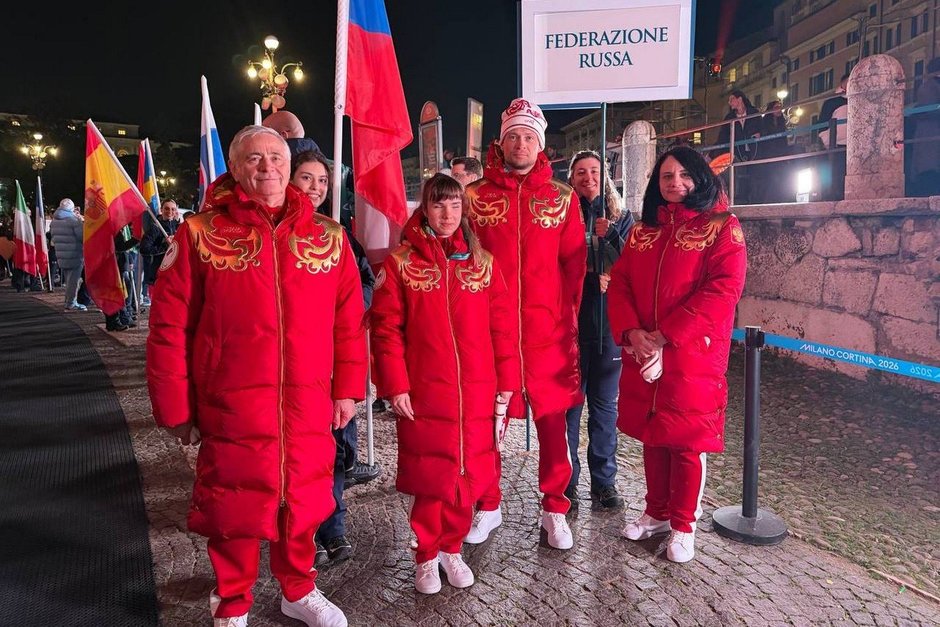
On March 15, the 14th Winter Paralympics concluded in Italy. The competitions were held in six sports, encompassing 18 disciplines, with 79 sets of medals awarded. Realnoe Vremya reports on what lies ahead for our athletes.
The flag was raised and the anthem played eight times
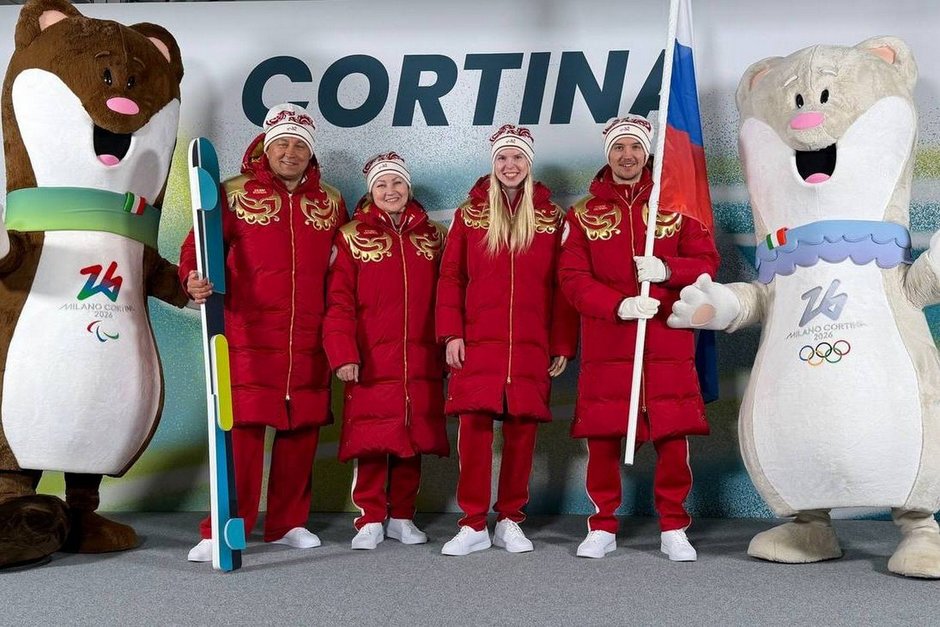
“What a spring it's turned out to be, what days have arrived," — this line from a famous song by Yuri Antonov aptly describes our impressions of the performances by the limited contingent of Russian Paralympians in Italy. Six competitors — 12 medals, eight of them gold. This is a joyful event, but not the main point.
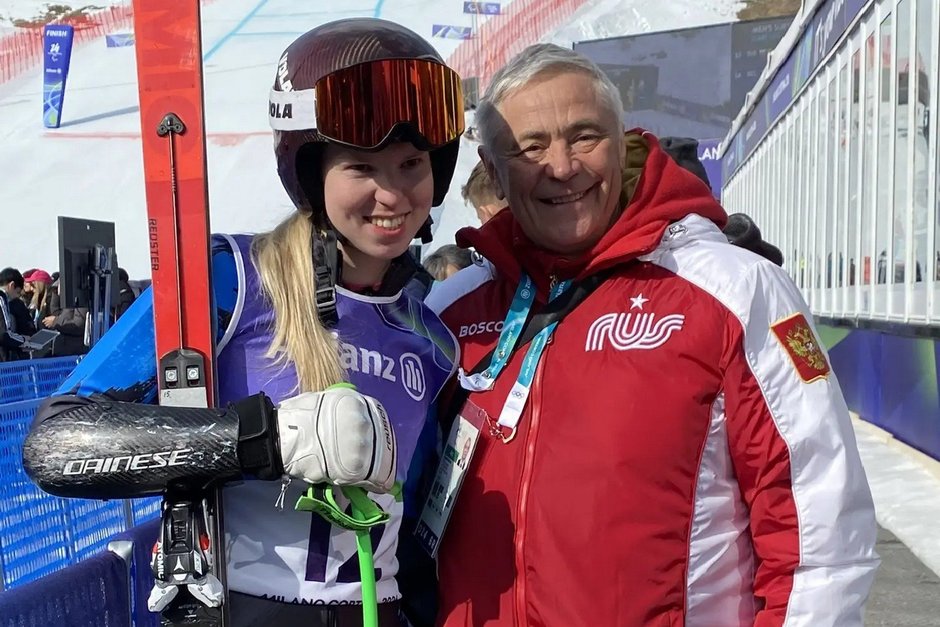
The last time our athletes competed under their country's flag was at the 2016 Summer Olympics in Rio de Janeiro. After that, the Russian state anthem and flag were present during official award ceremonies only at local events organized by international federations together with Russian leadership. Examples include the World Belt Wrestling or Sambo Championships. And now, in Italy, Anastasia Bagiyan three times in cross-country skiing for the visually impaired, plus Varvara Voronchikhina (alpine skiing) and Ivan Golubkov (sitting cross-country skiing), each twice ascended the highest step of the podium. In addition to them, Paralympic alpine skier Alexey Bugaev contributed one gold and two bronzes. Voronchikhina also has a silver and a bronze.
This somewhat brightened the overall negative backdrop associated with Russia's previous interactions with the International Paralympic Committee. It should be recalled that after the 2022 Olympics in China, Russian Paralympians were also supposed to compete. Moreover, they arrived in Beijing, and the large delegation included Tatarstan athletes Rushan Minnegulov and Marta Zainullina, but they were turned back. Russian athletes did not participate in the 2024 Summer Paralympics in Paris, unlike the truncated Olympic delegation.
The career of Rushan Minnegulov over the past ten years exemplifies the typical journey of a Russian Paralympian. At 21, he triumphed at the Sochi Paralympics (two golds and one silver in cross-country skiing), after which he missed three Paralympic Games: PyeongChang 2018, Beijing 2022, and now the current one. In South Korea, Russians competed with a reduced team, and Minnegulov's colleague from the Tatarstan delegation, Marta Zainullina, won two bronze medals in cross-country skiing and a silver in biathlon. After being barred from Beijing, Zainullina ended her sports career; Minnegulov continued his but did not make it into the group of six fortunate Paralympians for 2026. The current tally: one Paralympics behind him instead of four.
And even against the backdrop of absurd demands from the IOC, federations, and event hosts towards those Russian Olympians who were unable to participate in the last two Games in France and Italy, none of the severe requirements applied to the Paralympians. They are not members of law enforcement structures like the CSKA or Dynamo sports societies, did not participate in pro-government rallies, and none of them are SVO participants (hopefully, for now).
Paralympians are persecuted only for their “passport”
The pro-Western sports community has not become gentler towards Russians in principle, and the example of our Paralympians makes this “sports genocide” particularly noticeable. This includes demonstrative injustice, such as when the American delegation and the sole Paralympian from Israel competed in Italy without any problems from the organizers and hosts. On our side, there were essentially no objections; here, the mere fact of our own return to competition is more important than the exclusion of others.
The overall conclusion following the concluded Olympics and Paralympics can be summed up by the saying “constant dripping wears away a stone.” For example, Tatarstan ski jumper Danil Sadreev was unable to obtain an Italian visa and was not allowed to compete in the Olympics. In general, injustice was also common in the international sports community during Soviet times. As an example, recall how in 1961 and 1962, UK authorities twice refused visas to football players from East Germany, participants in the European Cup. In the end, the Germans advanced to the next stage without playing because UEFA disqualified the British teams. That was the justice of a bipolar world. Such a scenario is unimaginable now; the world has been unipolar for a long time, and the situation in international sports highlighted this most clearly, but there are shifts.
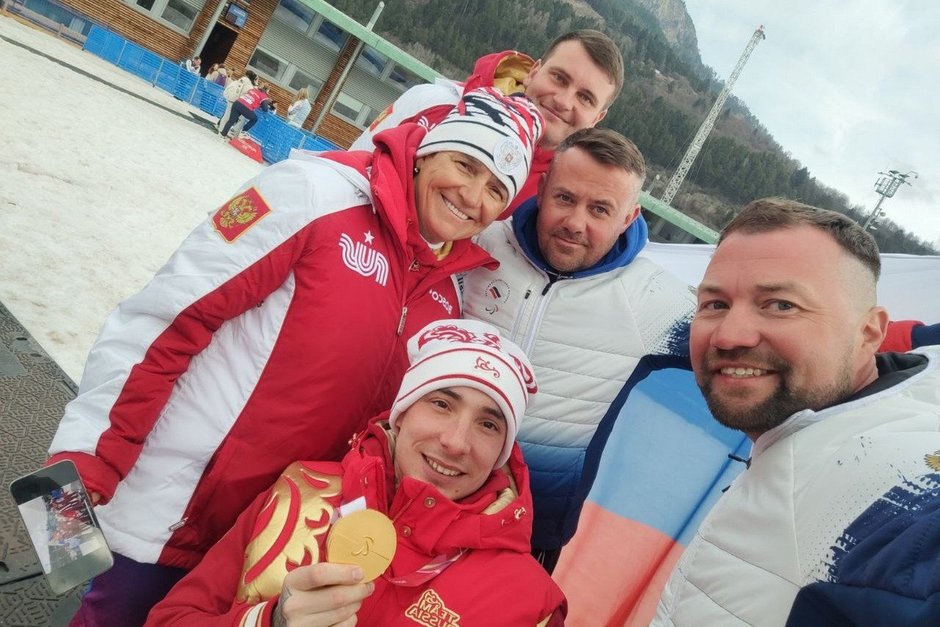
Take, for example, visually impaired Anastasia Bagiyan. She was able to compete partly because a so-called guide, Sergey Sinyakin — an able-bodied athlete acting as a sighted guide for a blind Paralympian — was allowed into the Paralympics. It was easy to find fault with the “guides," much easier than with amputees or spinal cord injury athletes, by simply not issuing visas and leaving our athlete out of the Paralympics.
It is also worth noting that during the Paralympics, Kazan resident Ayrat Zakiev performed successfully at the European Para Powerlifting Championships. Previously, he was treated as an outcast by the international sports community after being disqualified in 2015 for doping, which resulted in the stripping of his silver medal from the 2012 Paralympics. Now, having served his suspension, Zakiev competes successfully, just like any athlete from countries considered “correct” from the IOC's perspective.
What's next?
Frankly, the results of the Paralympics are important not only from the perspective of the Russians' performance. They also serve as a certain benchmark for the future. The massive scandal surrounding the alleged state doping program in Russia persecuted our athletes for exactly one Olympic cycle — Rio 2016 and PyeongChang 2018. The ban related to the SVO has been in effect on a large scale from 2024 to the present day. In a much-publicized interview, the President of the Figure Skating Federation, Anton Sikharulidze, made remarks we want to highlight.
— Currently, in summer sports, there are many disciplines that are already fully admitted. This is primarily because international federations have a council. It is this body that decides the main issues. And in the councils of these summer sports federations, there are many Latin Americans, Africans, and Asians, and they, so to speak, call the shots.
We should add to Sikharulidze's words by recalling the causal links behind the sympathies of many Latin Americans, Africans, and Asians. The emergence of the Soviet Union in the world led to the collapse of the colonial system and the formation of independent states on three continents. Personal sympathies may also play a role, as representatives from these continents studied in the USSR, many at institutions like RUDN University. These same horizontal ties are now being revived in numerous international organizations, such as BRICS, and the major 2024 Games in Kazan are a reason to believe that we will be fully reintegrated into international sports in the near future.
The preconditions for this are already evident. The recent European Futsal Championship was supposed to be held in Latvia and Lithuania, but when the governments of those countries refused to host the Belarusian national team, Slovenia was added to the list of host countries. The group stage involving Belarus was held there, as well as the final part, but without them. Well before the September start, the Youth European Weightlifting Championships were moved from Poland, which was refusing visas to Russian and Belarusian athletes, to Albania.