The Eastern pivot: how Russia and India are building a new economy for the future
From trade to a technological alliance: strategic partnership in action
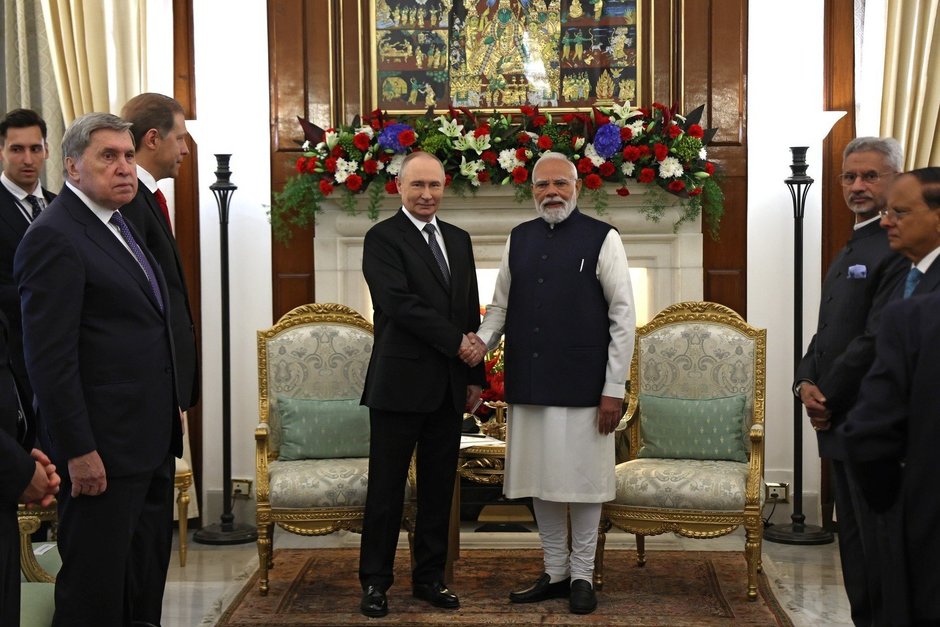
Russia and India have signed 29 joint documents following the talks between Vladimir Putin and Narendra Modi. The leaders of the two countries had an intensive business agenda, including participation in the Russian-Indian business forum. “What is possible for one is possible for all” — this principle of Mahatma Gandhi, forming the basis of the philosophy of non-violence and cooperation, is now becoming the key to understanding the new economic reality, digital economist Ravil Akhtyamov believes. As an alternative to globalisation, it opens the way to a different kind of partnership — where the success of one side creates conditions for the growth of the other, the speaker continued. According to him, it is precisely this logic of mutual reinforcement that defines Russia’s strategic turn to the East today and the deepening of its alliance with India — here they are building a shared space of opportunities accessible to everyone.
A new alliance between Russia and India
The project of the future pursued by Moscow and New Delhi is an attempt to create a balanced, resilient and mutually complementary system designed to meet the real, long-term needs of the two civilisations. And this project has moved from concept to concrete contracts: the result of Vladimir Putin’s state visit to New Delhi on 4–5 December 2025 was the signing of 29 joint documents that form a roadmap for cooperation for years ahead. The needs addressed by the new alliance include:
- the need for sovereignty — through technological cooperation and the creation of independent financial and logistical corridors;
- the need for security — through the diversification of supplies, the localisation of critical production (from pharmaceuticals to microelectronics) and the strengthening of defence partnership;
- the need for development — through the exchange of knowledge, joint investments in the infrastructure of the future (from the Arctic to the Indian Ocean) and fair access to resources.
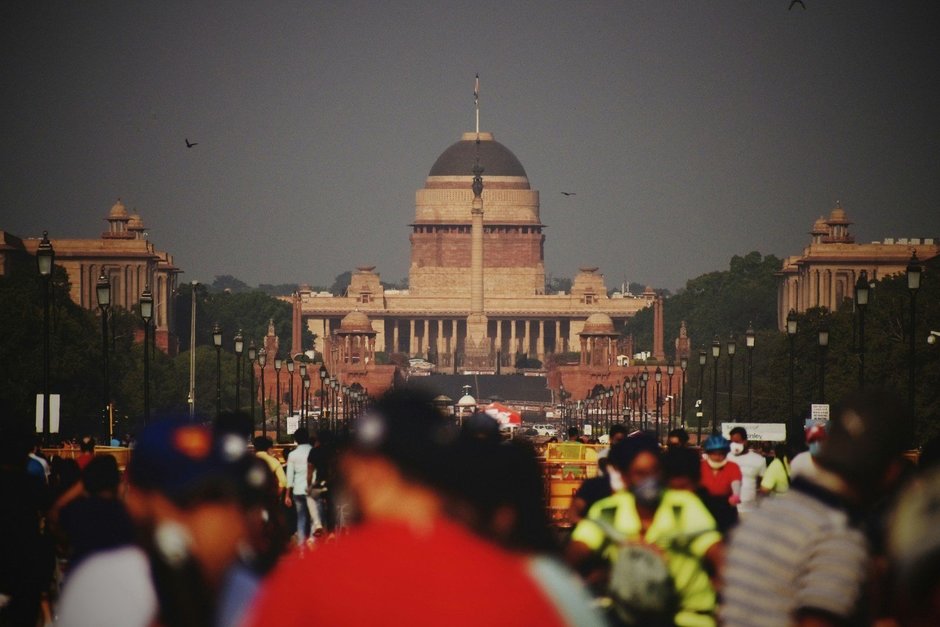
Thus, the cooperation between Russia and India is becoming a large-scale project for a qualitative transformation of global economic relations — moving from an endless race for profit to cooperation based on sovereignty, sufficiency and strategic mutual assistance.
In the context of rapid changes in the geopolitical landscape, Russia and India are jointly laying the foundations of a new economic order built on sovereignty, technological complementarity and strategic autonomy. Together with the business forum that brought together hundreds of company leaders and ministers, this visit marked a clear course towards a deep technological and industrial alliance.
The figures speak for themselves. Bilateral trade has reached record levels, although its structure has long remained unbalanced.
Table 1: Key Indicators of Russian-Indian Trade (2024–2025 financial year)
| |||||||||||||||||||||
The response of the two countries to this challenge was the signing of the “Programme for the Development of Strategic Areas of Russian-Indian Economic Cooperation until 2030”, which became the central document among the 29 agreements signed. Its essence is a qualitative change in the structure of trade. A practical roadmap for the business community was developed by the Russian-Indian Business Forum under the slogan “Balanced Trade. Shared Growth”.
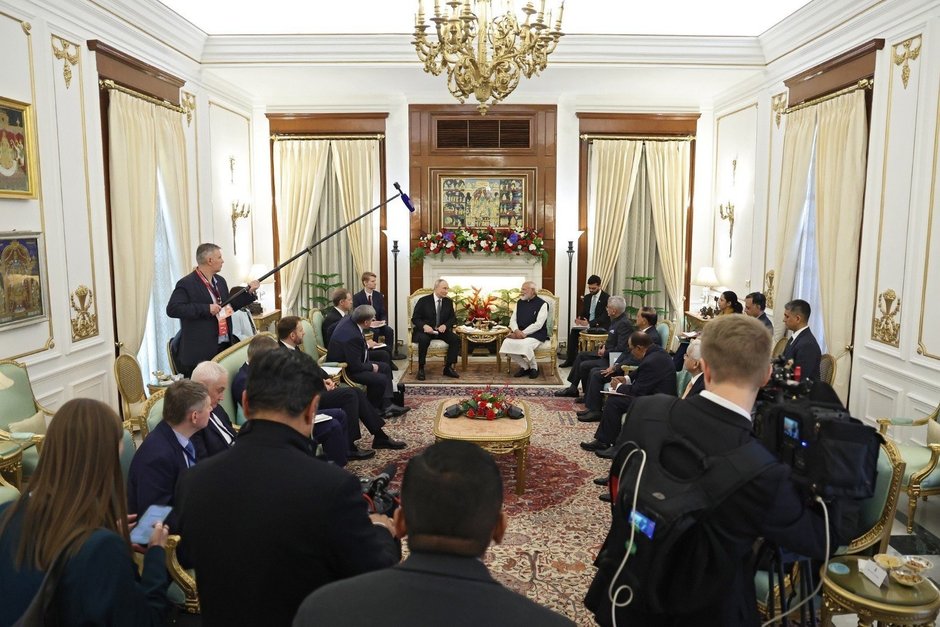
Key vectors of cooperation supported by agreements
The strategic partnership is being implemented through concrete projects in priority sectors, formalised legally in New Delhi.
Table 2: Priority Areas and Vectors of Cooperation
| |||||||||||||||
- Digital economy and technological sovereignty. The partnership has reached a new level. In addition to shifting 95% of mutual trade to settlements in roubles and rupees, the sides are exploring the compatibility of the digital rouble and the digital rupee. Experts propose establishing a bilateral Commission on Technology and Innovation to coordinate regulation and jointly finance breakthrough projects in AI, semiconductors and cybersecurity. The signed agreement on cooperation in health and medical science also opens the way for joint biotechnological research.
- Logistics and infrastructure. The development of the “North–South” International Transport Corridor and the Vladivostok–Chennai maritime route has become an urgent necessity. Without these arteries, neither the diversification of trade nor the fulfilment of plans for increasing supplies of agricultural products and finished goods is possible. The signed protocol on the exchange of preliminary information on goods will simplify and speed up customs procedures.
- New markets and human capital. The focus has shifted from procurement to localisation, especially in pharmaceuticals, as evidenced by the Kaluga pharmaceutical plant. Exchanges of expertise are also increasing: in Russia, educational programmes on doing business in India are emerging, while Indian IT specialists and engineers are becoming increasingly in demand in Russian regions.
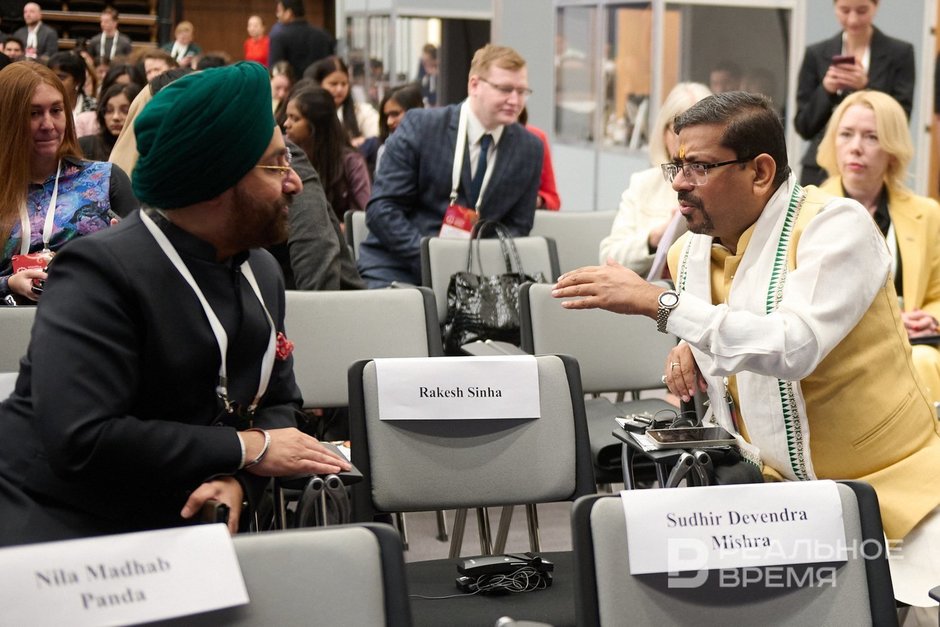
Practical implementation: new institutions and market signals
To bring plans to life, new institutions are being created, and business is demonstrating readiness to engage.
- Institutional support. The opening of the Bank of Russia’s representative office in Mumbai and active work on a free trade agreement between India and the EAEU aim to resolve systemic issues with payments and tariffs. The package of 29 documents creates a comprehensive legal framework for cooperation.
- Business signals. Russian businesses, from engineering (“Ural”) to pharmaceuticals (“R-Pharm”), are seeking partners in India for joint production and development. Indian companies, in turn, are actively entering the Russian market through e-commerce.
Russia and India are building a new-type economic model focused on long-term technological sovereignty. The December meetings in Delhi and the signing of 29 documents demonstrated that political will is now supported by concrete contracts and roadmaps. The shared goal is to reach $100bn in trade and create a deeply integrated, resilient system of cooperation in which each side strengthens the economic and technological security of the other. In the context of the emergence of a multipolar world, this eastern vector is becoming the real economy of the future.