«We are not going to squeeze — we need to pump oil»
Rustam Minnikhanov at the TNF-2025 proposed incentives for highly developed fields, while Yury Shafranik advocated for state regulation in the technological development of the fuel and energy complex.
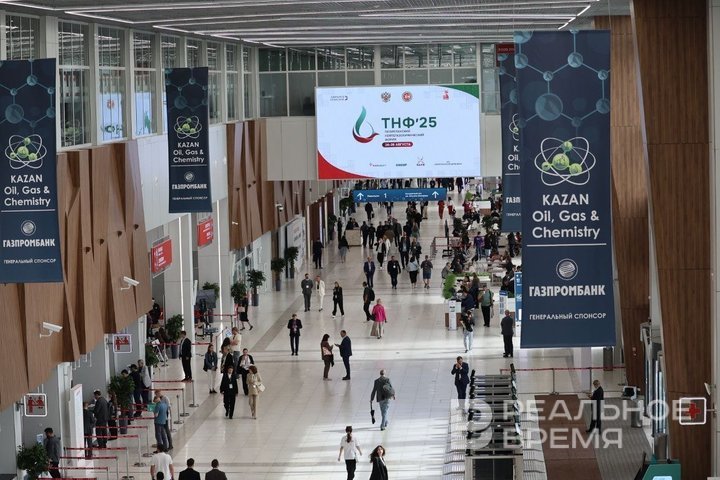
«At one time, we did not follow the American path, we did not follow the Chinese path, but began to preach that the market would regulate itself. As a result, with the departure of Western companies, we received a serious blow», — Yury Shafranik, head of the Union of Oil and Gas Producers of the Russian Federation, called for state participation in shaping the technological agenda for the oil industry. The volume of drilling in the country has fallen by 2.6 times, and the transition of oil workers to the model of separate oilfield service companies is «completely costly and ineffective». In these conditions, Tatarstan proposes to introduce a special tax regime for the development of heavy oils and highly developed fields that are unprofitable in the traditional tax system. More details can be found in the «Realnoe Vremya» material.
Who maintained energy parity with the United States
Russian oilmen are not expecting the discovery of new fields in the coming years, so the future of the industry largely depends on the profitability of production. «Right now, we need to solve big, one might say, strategic tasks. We will talk about new technologies and approaches that contribute to the competitiveness of the industry», — these were the words of Dmitry Shchugorev, anchor of Russia 24, who opened the discussion on the state of the oil and gas industry in the context of technological transformation.
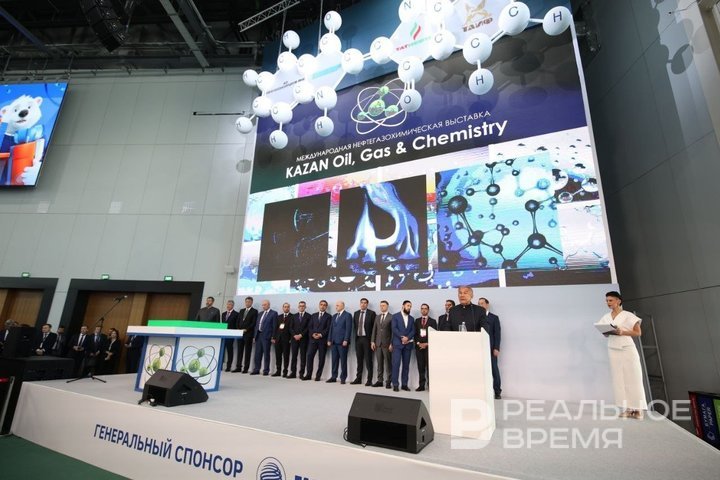
«We are not going to squeeze — we need to pump oil», — he joked in the style of students from the Oil and Gas University.
But this time, the Tatarstan Oil and Gas Forum coincided with the 75th anniversary of Tatneft, so an important event for the country ran as a leitmotif throughout the debate. Key figures for oil production flashed on the frames of the film, which was shown before the plenary session in Ilham Shakirov's hall. One way or another, it was the Tatarstan oilmen who provided the country's energy resources for the formation of the state.
«We need to talk about this regularly so that people don't forget», — noted Yury Shafranik, head of the Union of Oil and Gas Producers of the Russian Federation.
Forty years ago, he worked as deputy general director of Tatneft and received his first order. «In 1946, we produced 19 million tons of oil, and America produced 240 million tons and consumed 200 million tons. But already in 1955, the ratio in the production of the two powers became closer: 254 million tons and 180 million tons», — he said. According to him, the colossal breakthrough in achieving energy parity between the two countries was provided by the Tatarstan oil company, which produced over 2 billion tons of oil.
Incentives for mature fields under the mineral extraction tax
But now Tatneft's resource base is depleted, and oil reserves have to be extracted using non-traditional methods, said Rustam Minnikhanov, head of the republic. Last year, 33.8 million tons of oil were produced in Tatarstan (including MNCs), about two-thirds of this volume — 24.3 million tons — is processed at two large facilities, TANECO and TAIF-NK. Revenues from the fuel and energy complex provide a third of the republic's budget, Minnikhanov said.
«But today the oil industry is facing such serious challenges as the depletion of the traditional resource base, the development of high-viscosity and extra-heavy oil», — the head of the republic outlined the task.
Strictly speaking, the issue of special conditions for the development of mature fields has not been raised for the first time, but this time it may receive a resonance at the federal level.
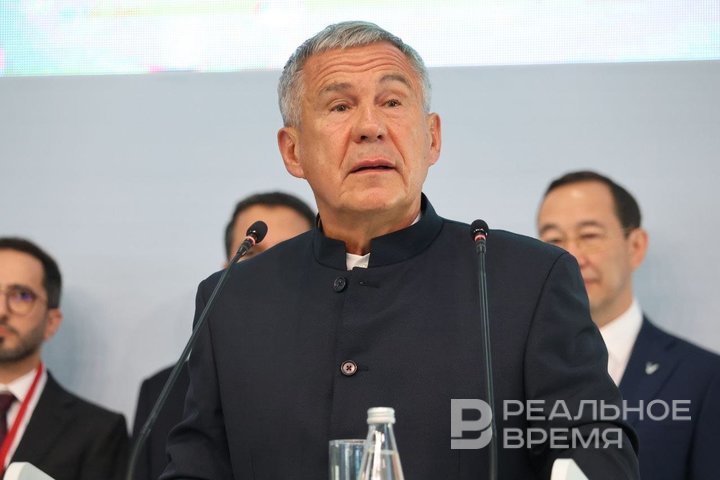
Already at the State Council meeting on state support for the oil industry, Rustam Minnikhanov specified how to bring into circulation complex oil fields with low well flow rates.
«Highly developed fields cannot compete with fields that have a flow rate of 20, 30 and 40 tons», — he pointed out, referring to the Tatarstan areas. Production in them is carried out with the help of over 200 different developments accumulated by Tatneft over the years of work.
«All these technologies are domestic, we have worked them out», — the leader said. As a rule, they are based on the use of costly steam-gas technologies.
Under the traditional tax regime, production turns out to be unprofitable. «But today, taxation for classical production and the thermal method does not take into account the costs of the thermal method», — Minnikhanov explained. And he proposed making changes to the tax legislation to stimulate the development of strategically important reserves. Most likely, we are talking about incentives under the mineral extraction tax, which forms the basis of the tax burden.
The head of Yakutia, chairman of the commission of the State Council of the Russian Federation in the field of «Energy», agreed that the industry is of great importance for the regions. «Today we are showing an example of how, thanks to the correct organization of work and cooperation, it is possible to solve problems that yesterday still seemed insoluble, and we will definitely succeed», — said Aysen Nikolaev.
«There is a demand for fairness in terms of access to cheap resources»
Evgeny Grabchak, Deputy Energy Minister of the Russian Federation, spoke in favor of increasing the state's role in stimulating the development of technologies in the fuel and energy complex. «Oil and gas has always been an advantage of the country's economy. Firstly, it is a financial cushion that provides a surplus budget. Secondly, the fuel and energy complex withstands competition on the world market within the framework of available natural resources».
The demand for fairness in terms of access to cheap resources is now in demand.
«We cannot give the world cheap money, but we can come and give justice in technologies in the possibility of extracting cheap resources and distributing them within our partner countries», — he said.

State policy should be aimed at subsidizing and developing technologies. An institute of oil and gas initiatives has been created, and 300 standards have been developed for suppliers of oil and gas equipment. The Ministry of Energy adheres to liberal views and does not intend to make them mandatory, as in the electric power industry. They believe that the barriers to entry into the fuel and energy complex are high enough, so «gray» suppliers will not be able to get in.
Import substitution of Western equipment in the fuel and energy complex is proceeding at an accelerated pace, said Mikhail Ivanov, Deputy Head of the Ministry of Industry and Trade of Russia. By the end of this year, the share of Russian equipment in the oil and gas market should reach 80%, although 10 years ago it was only 43%. The Ministry of Industry and Trade has identified 2 thousand positions of oil and gas equipment, of which 1.4 thousand were recognized as critical. 60 billion rubles were allocated for R&D for all processes. There are 380 positions left to substitute. «This is the technological landscape that we continued to work on within the framework of the coordination council. Over the past few years, of these 380 positions, 160 have been mastered by Russian manufacturers», — he said.
The volume of drilling in the country has fallen by 2.6 times
Yury Shafranik, head of the Union of Oil and Gas Producers of the Russian Federation, critically assessed the situation with exploratory and production drilling in the country. According to him, the volume of drilling in the country has fallen by 2.6 times, while in the United States it has increased by 2.5 times. «At one time, we did not follow the American path, we did not follow the Chinese path, but began to preach that the market would regulate itself. As a result, with the departure of Western companies, we received a serious blow», — he spoke negatively about cooperation with American and European companies.
Until 2015, the Russian fuel and energy complex was a leader, until 2019 it developed on a par with European companies, and then went into decline. «The main thing is to make a diagnosis in time and start treatment», — noted Yury Shafranik. He sees the reason for the decline in the transition to the model of own oilfield service companies. But he considers this path to be erroneous, since it «will never be effective». And he cited Gazprom Neft and Surgutneftegaz as examples.
«Dependence on high-tech operations from 50 to 95% still remains. This topic is so important that direct state participation is indispensable», — he concluded.
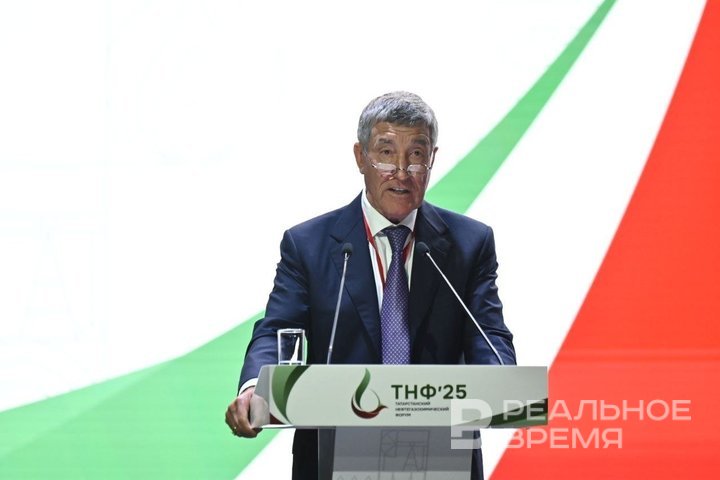
Other pressing issues of the fuel and energy complex were raised at the State Council meeting. The head of the republic advocated changing logistics routes in oil transshipment. To solve the problem effectively, it is necessary to eliminate logistics constraints, for example, through the development of the North-South transport corridor, to minimize risks through interstate agreements on the promotion and protection of investments, and also to create an integrated system for cargo insurance, export credits and investments, Minnikhanov believes.
There are also issues with payment. To ensure the stability of export payments, Rustam Minnikhanov proposed, together with the Central Bank of Russia, to accelerate the formation of a payment infrastructure that is resistant to external pressure: «It is also important to implement key initiatives, in particular, to accelerate integration with payment systems of partner countries, to create a multilateral payment platform using modern financial technologies».