‘Various options are being considered’: Tatarstan discussing utility tariff increase
Russia plans to raise them by 9.8%, but the republic has yet to determine its own figure

Tatarstan has not yet decided on the indexation of housing and utility tariffs for 2026: the figures will be announced closer to December, said Larisa Khabibullina, First Deputy Chair of the State Committee of the Republic of Tatarstan on Tariffs. The agency has held a board meeting dedicated to the Strategy for the Development of Tariff Regulation in the republic. What changes await residents of Tatarstan — in Realnoe Vremya’s report.
Utility tariff increases and a unified gas payment bill
Changes to utility tariffs are outlined with a calendar breakdown in Russia’s socio-economic development forecast, said Larisa Khabibullina, First Deputy Chair of the State Committee of Tatarstan on Tariffs. The upward price trend continues, with indexation scheduled for 1 July 2026. At present, the federal forecast sets the rate at 9.8%. What figure will Tatarstan choose? This will be known only at the end of the year, the official stated. “Various options are being considered," she added.
Journalists asked whether there was a possibility that the index would exceed 9.8%. In response, Larisa Khabibullina recalled the situation in previous years: “If we look at the past two years, yes, the September forecast was higher than the one set in April.”
Charges for supply and household services related to gas are not expected to rise in Tatarstan in 2025–2026.
“Our main focus here is to try to include gas supply in a unified payment document. This would be convenient both for residents and for us,” the official believes.

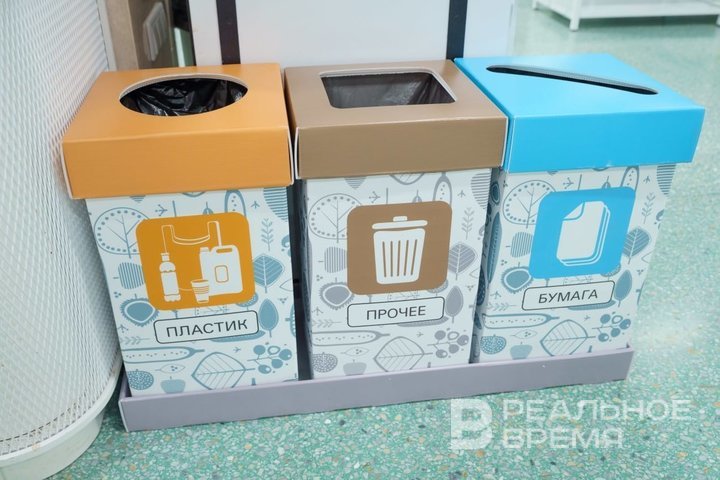
“Discounts” to be introduced for separate waste collection
According to the deputy chair of the State Committee, another pressing issue today is ensuring a 100% implementation of the maximum index selection:
“In the previous five-year period, we reached a level of 95–97%. Now we are working on integrating the database of the Federal Antimonopoly Service with our Unified Billing Centre, based on Tatenergosbyt, so that every resident is accounted for in the system according to their level of housing amenities. At present, we rely on data provided by municipalities. This can lead to errors, manual collection, and certain inaccuracies.”
In the area of municipal solid waste (MSW) management, the State Committee on Tariffs has set a goal to begin separate accounting for recyclable materials. In several regions, such as the Nizhny Novgorod Region, this process is already underway. There, the tariff has been reduced for a number of homeowners' associations (HOAs) due to separate waste collection.
“We are now studying this positive example and have set a goal to introduce this mechanism in our republic by 2030,” the speaker promised.
Tatarstan to choose between net and gross contracts
Together with the Ministry of Transport and Roads of Tatarstan, the State Committee on Tariffs will have to “determine a strategic course” and decide which path the republic will take in the field of transport: net or gross contracts. It is worth recalling that this issue sparked heated debates in the State Council earlier this spring.
“For now, our system is, of course, closer to net contracts, since budget financing currently applies only to beneficiaries. With gross contracts, almost everything is funded by the budget. Here, we will need to take a careful and very balanced approach,” said Larisa Khabibullina.
For 2025, Tatarstan has allocated 1.3 billion rubles in subsidies for beneficiaries, and nearly 291 million rubles for subsidising rural routes across 36 municipalities. This was announced by Maria Zakhvatova, the head of the Transport Department at the Ministry of Transport and Roads of Tatarstan. In the first half of 2025, passenger road transport enterprises in Tatarstan carried over 207 million passengers, an increase of 3.5% compared to 2024. As of 18 July, 2,200 vehicles are operating on 577 routes.
A third of the republic’s utility networks require replacement
Tatarstan needs to replace nearly 9,000 km of utility infrastructure, which amounts to 33.2% of the total network. This year, 485.3 km of networks are scheduled for renovation, announced Damir Shaidullin, First Deputy Minister of Construction, Architecture, and Housing and Communal Services of Tatarstan.
Currently, the networks in need of replacement include water supply systems (5,700 km, or 30.8%), wastewater systems (2,000 km, or 40%), and heating networks (almost 1,200 km, or 37.4%). According to the speaker, the target by 2030 is to replace at least 2.5% of networks annually. “Increased funding for investment programmes is necessary,” stated the presentation shown at the board meeting.
Thanks to a federal programme for the modernisation of utility infrastructure, 99.7 km of engineering networks will be replaced in 2025. A total of 3.2 billion rubles will be allocated for these works, with 1.6 billion coming from the federal budget. Under the republican programme, 269 km of networks will be repaired at a cost of 8.5 billion rubles. Altogether, 136 facilities are scheduled for modernisation this year, with 11.7 billion rubles allocated. These include 15 sewage pumping stations and two biological treatment plants.
In addition, 74.7 km of utility networks are set to be reconstructed under investment programmes, with funding totalling 15 billion rubles.
Deputy Minister of Industry and Trade of Tatarstan, Marat Minibaev, also noted a rise in incidents at power facilities. There were 143 such accidents in 2023, rising to 150 in 2024. In the first half of this year alone, 58 incidents have already been recorded. In response, Chair of the State Committee on Tariffs Aleksandr Grunichev called for the development of a comprehensive set of preventive measures.