Galina Shigapova: “People need to feel their own responsibility for their own health”
A district therapist — about happy and unhappy cases, about her work and about what Kazan residents get sick with
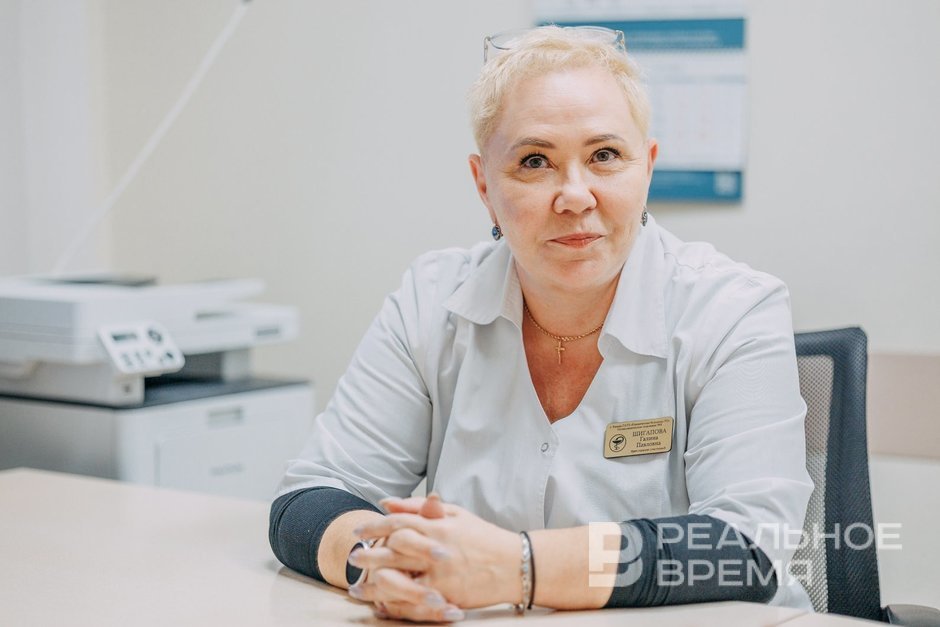
For twenty years Galina Pavlovna Shigapova has worked as a district therapist in the polyclinic of city clinical hospital No. 2 in Kazan. During this time she managed to work as an epidemiologist in a maternity hospital, mastered geriatrics and saw how the district service is changing. Today her work is dozens of patients, preventive checkups, complex diagnoses and the need to make decisions quickly. Galina Pavlovna told “Real Time” about why a therapist must know a patient not only from the medical card, how not to miss a serious disease and what is changing in the profession over the years of work.
“Oh, so that's how it is? Then I will enter the medical institute”
Galina Pavlovna Shigapova works as a district therapist in the polyclinic of Kazan's city clinical hospital No. 2 — in a quiet corner of the Admiralteyskaya Sloboda. Not long ago she became a laureate of the electronic board of honor of Tatarstan — that is how the republic recognized her many years of work for the good of people's health. Galina Pavlovna belongs to the huge army of ordinary doctors, those who day after day receive people, prescribe examinations and medicines, persuade, calm, become a friend and for decades lead one generation of their patients' families after another toward health.
She grew up in Chistopol, in a family of medics: her mother worked all her life as a nurse, her father was also a medical assistant and later became a laboratory assistant. After finishing school in 1985, Galina Pavlovna wanted to enter the biology faculty of Kazan University; biology attracted her. But she was one point short. The girl was very upset, returned home, worked for a while as a laboratory assistant at a school, and then entered a medical college.
— With age I understood that this was how it had to happen to me. I graduated from the college with a red diploma; at the placement I said that I wanted to go to work in the regional committee hospital — in the famous clinic at the Chekhovsky market. And they answered me: “Well, no. With your character you will go to work at the RCH, in intensive care.” I said: “Oh, so that's how it is? Then I will go and enter the medical institute.” And I entered! True, at the sanitary faculty — the competition there was smaller.
While she was studying, Galina Pavlovna lived in a student dormitory, which she recalls with great warmth. Of course, she worked on the side — as a nurse in the traumatology department of the famous “fifteen," in one of the hottest places of medical Kazan of the early 1990s. She recalls that it was a very exciting time: victims of shootouts and brawls were brought to traumatology; “bratki” came to sort things out. Anything happened. Second-year students were taken to help in operating rooms, because the staff was desperately lacking.
— And we found it very interesting. We were young, after all. Everyone was brought to our “trauma” without distinction, and there were a lot of alcoholics. There was, for example, a homeless grandfather; my friend and I fed him, because no one came to him. Once they brought an uncle, also homeless, with delirium tremens. So, when his delirium was relieved a day later and he was untied from the bed, he told us such insanely interesting things! He turned out to be a very intelligent and educated person who had read a heap of books. We listened to his stories spellbound. Women lay with fractures; relatives came to them — and they always fed us, the student nurses. They were kind people. I always recall that time with joy and gratitude, Galina Pavlovna smiles.
In the “fifteen” our heroine gained colossal experience — not only medical, but also life experience. And she recalls student life in the dormitory as a fun and also very joyful time. Galina Pavlovna is a bright, joyful and energetic person; she seems to glow with optimism. And she does not recall a single period of her life badly: listening to her, you understand that this smiling woman always sincerely loved everything she did. And she considers her work as a district therapist, seemingly so ordinary and routine, almost an exciting adventure for a whole lifetime. But she did not come to it immediately.
“In our observation ward everything was always clean”
After finishing the medical institute, our heroine went to work as an epidemiologist in polyclinic No. 9 on Khadi Taktash Street. An epidemiologist in a medical institution monitors the sanitary regime, plans vaccinations, controls infectious morbidity, and conducts sanitary-preventive measures. This is ceaseless organizational work that makes a city polyclinic and hospital a place truly safe for patients and staff.
After some time Galina Pavlovna moved to work as an epidemiologist in the maternity department of city hospital No. 4 — it was the city's observational ward. In observational maternity hospitals, women give birth with infectious diseases, without a full set of documents and examinations. They need to be given full medical help, to bring a baby into the world and reduce the risks of its infection — and at the same time protect the other women in labor from infection. In those years the observation ward of the maternity department of the 4th city hospital was the only one in the city where, for example, HIV-infected women gave birth.
— And at the same time you cannot imagine what doctors we had! Our obstetrician-gynecologists were known throughout the republic! For example, Albert Talgatovich Khaertdinov, who now heads the KDMC in Chelny. It was very interesting to work. Remember, in the early nineties the epidemic of swine flu began, from which pregnant women could die. They gave birth here too, and I, as an epidemiologist, was also here around the clock together with the other doctors. There were Muslim women who flatly refused examination by male obstetricians. Anything happened, and the experience gained during this time is colossal. I was responsible for the newborn babies not catching any infection in the maternity hospital. How many of these investigations we had, you cannot imagine! But in our observation ward everything was always clean; we won all court cases, Galina Pavlovna recalls.
An epidemiologist is a respected and very important profession. But in the depths of her soul our heroine always wanted to be a clinician doctor. To work directly with patients, to help them directly. Therefore in 2003 Galina Pavlovna entered residency. She studied for a year, did a traineeship for a year, and all this time continued to work as an epidemiologist in the observation ward.
“How can you abandon them? No way!”
In 2005 our heroine received a diploma of completing residency in a clinical specialty — she chose therapy. Then she also received a certificate as a geriatrician and for several years worked in the polyclinic both as a district therapist and conducted geriatric appointments.
Working as a geriatrician, by the way, Galina Pavlovna liked. She speaks with great warmth about her patients and voices their main problem: many lack banal human warmth. And not because their children are bad and inattentive. It is simply that the young work, and elderly people remain at home alone all day. There is still no surplus of clubs and hobby groups for them. Friends and neighbors gradually leave life. So the world around a person empties. Hence the increased talkativeness of elderly people at a doctor's appointment. After all, the medic often turns out to be the only one who listens attentively to their patient. Who sees in them, let it be professional, but still interest.
— That is why I always talked with them very attentively and for a long time. A geriatrician's initial appointment lasts almost an hour and a half. During this time one must manage to talk about everything in order to form an idea of the patient's life. One must win them over, so that they feel care and warmth, and not simply a doctor's appointment. You ask about life, about functional and basic activity, solve little tasks and examples with them to assess cognitive abilities, assess psychological status and exclude the presence of depression. After all, very many elderly people have depression, Galina Pavlovna explains.
Our heroine conducted geriatric appointments twice a week, and her main work was the therapeutic district. After three years she understood that she needed to leave only one thing in order to remain concentrated and collected. Because, in her opinion, one must do one thing, but with quality. To delve into it, understand it, give oneself fully to one's work. And she chose therapy. Because, as she herself admits, the patients in the district are an important part of her life for her.
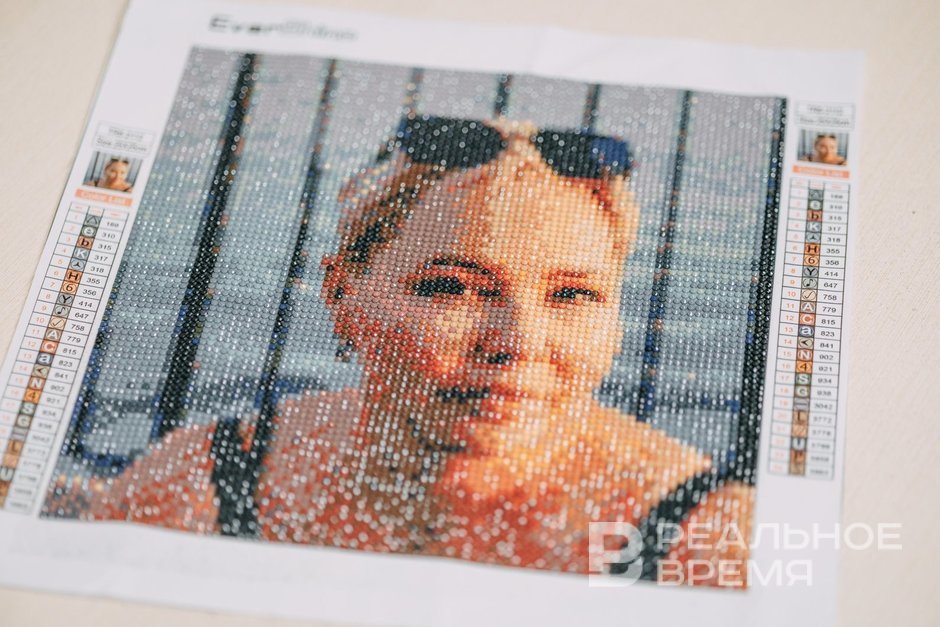
And she, it seems, is also an important person for the patients. The doctor shows us a diamond mosaic with her own portrait: a young patient with whom trusting, warm relations have formed gave it to her literally the other day.
— And how can you abandon them? No way, she laughs.
“What are 12 minutes if you are receiving an elderly patient?”
A district therapist has a great deal of work. And it is not only receiving patients — the allotted 12 minutes per person is almost always insufficient, especially if the patient is a first-time one. And therefore in the evening there always remains the need to finish filling in the medical documentation. Together with the nurse, Galina Pavlovna comes to the district at half past six in the morning, and she manages to leave before six in the evening far from every day.
— What are 12 minutes if you are receiving an elderly patient? A grandmother, a grandfather. You need to manage to win them over, encourage them, talk, and at the same time sort out what is happening with the person. And if you have talked correctly with an elderly person — they leave you half healthy! But, of course, 12 minutes is not enough for this. If a person comes with ordinary symptoms — for example, with an acute respiratory viral infection, — then you can work with them according to a template, make the usual prescriptions. But if they demonstrate something unclear — then I need to think about what it could be. Where to begin, where to send them, for what examinations. And fit this into the same 12 minutes! That is why I leave the cards and computer work for later and spend my own time on it in the evening.
The contingent in the district is quite stable; there are many elderly people in it, as is to be expected from the old and drowsy Admiralteyskaya Sloboda. 1810 people are attached to the district. Twenty years ago, when Galina Pavlovna began working here as a therapist, among the patients there were many drinking people — both the times and the general vibe of the district had their effect. By now some of the former patients have moved to the “Salavat Kupere” microdistrict, and some, unfortunately, have left this world.
The district is changing before our eyes. New life is being breathed into the Kirovsky district; the city intends to develop this historical territory. Therefore new residential complexes are already growing here, whose population — young, energetic, socially adapted and настроенный for a long healthy life — will territorially belong precisely here, to this polyclinic.

Most of the patients nevertheless live in one district and do not move anywhere. Often their children and grandchildren remain to live here too. Therefore the district therapist knows the families of their regular patients, starting with the grandparents. And this is not simply a touching fact. It has important medical significance. After all, if the doctor knows the family history, the hereditary pathology, then they well understand which parameters must be monitored in the younger generation, which functions of the body to pay attention to, even if there are no complaints. Genetics is an inexorable thing, and it is better to prevent the risks than one day to meet them face to face.
— We have risk groups, including very high ones, — and at such an appointment we immediately mark out for ourselves what to do next with the patient. As a rule, we know what to expect from our regular patients, because we have been managing them for many years. And we обязательно ask the new ones in detail whether mom and dad are alive, what they are sick with, what the grandmother and grandfather died of. How the person eats and what lifestyle they lead. Carefully, of course, you ask, so as not to accidentally offend the person. Mostly in the family history diabetes mellitus and cardiovascular diseases flash by. They also remain under our control, Galina Pavlovna says.
“So I am not working in vain”
The therapist in the district sometimes solves real puzzles. One must seriously think over many patients, compare symptoms and their combinations, understand to which narrow specialist to send the person or what treatment to prescribe. Sometimes whether the doctor solves the task directly determines the patient's life. Galina Pavlovna recalls several such cases.
For example, once a man a little over forty came to the appointment, with complaints of pain in the thoracic spine and in the lower back. The ambulance came to him three whole times, they gave painkilling injections, but nothing helped. And so he came to the district therapist for help.
— I thought: why has nothing helped for a whole week already? That does not happen. And for some reason I recalled my student years, a lecture that a cardiologist once gave us. I thought: let me do an ECG, just to be safe. We did an ECG for the patient, and it showed that the patient had an extensive myocardial infarction. Although there was no pain syndrome in the heart area at all. The heart attack ran with atypical symptoms, and therefore no one even thought of it. We called the emergency team right to the polyclinic, laid this fellow on the couch, I performed catheterization (so that it would be more convenient to carry out the subsequent therapy). And he says to me: “Can I go out for a smoke?”… In short, they brought him to the hospital, did an urgent coronary angiography and said: another hour or an hour and a half — and no one would have been able to help. He later came to me to thank me for saving him — and I felt such great satisfaction! So I am not working in vain! Galina Pavlovna smiles.
The therapist strongly recommends treating one's health very attentively and not ignoring any important symptoms. And if there are no symptoms — обязательно go for the dispensary checkup according to the planned schedule. This is not for a checkmark, this is for preserving lives, and who, if not a district therapist, should know this?
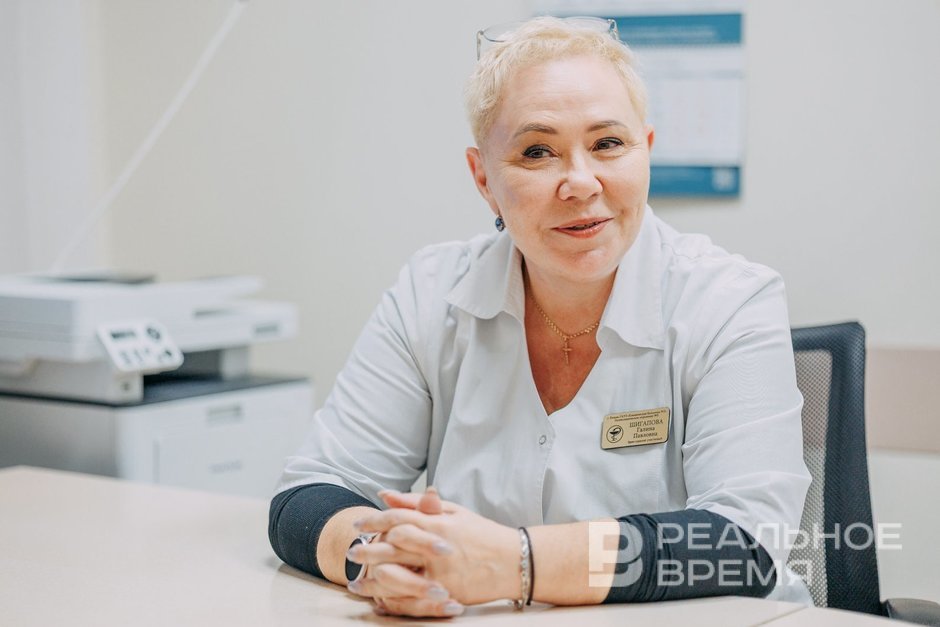
Galina Pavlovna tells two illustrative cases. Not long ago a patient came to her, also a doctor, for a referral for tests for his wife, who is sick with rheumatoid arthritis. The doctor gave the referral, but only on the condition that he himself also undergo the dispensary checkup. He did — and the stool test for occult blood showed a positive result. Galina Pavlovna добилась from the patient (who extremely reluctantly undergoes medical examinations) that he, within the framework of the second stage of the dispensary checkup, go for a colonoscopy. The examination showed that a polyp in the rectum had degenerated into a cancerous tumor. But since it was found in time, it worked out: they performed an operation, and the patient is alive and well.
— He later came to me and says: “Well, Pavlovna, thank you.” And I answer him: “Do not thank me, but say thank you to God for sending you here precisely at this time.” I myself always want to aim people at undergoing the dispensary checkup, обязательно! And if we call and invite for the second stage — one must by no means ignore this. We have had negative examples too. Last year there was a woman who in May had a positive stool test for occult blood. We could not get her to a colonoscopy until October — she worked as a cook on a ship, was on voyages all summer, refused to come under the pretext that she had a lot of work. In the autumn she ended up in the hospital as an emergency, the cancer had already spread. They operated on her, but after some time she died all the same, the doctor says with bitterness in her voice.
Calling on everyone to undergo the dispensary checkup, Galina Pavlovna removes the common objections that it is done largely for a checkmark. After all, the tests you take are your own. After all, you undergo the mammography yourself. And instrumental and analytical examinations do not lie. And even if the therapist at the dispensary appointment does not question you about your ancestry to the seventh generation — they see the results of your tests and examinations. And they do not lie.
But not every patient is adherent to treatment and even more so to examinations against a general calm background. The “gray zone” in Galina Pavlovna's district, by her approximate estimate, occupies about 40%. People do not undergo the dispensary checkup and do not go to the polyclinic. Possibly the reason is that the person is not let go from work (although by law they must be). Or they are let go, but they will lose money. But the doctors convince: by timely turning to a doctor, even if nothing hurts you, you can save your own life! If it is impossible to undergo the dispensary checkup during working hours — you can come to the polyclinic on Saturday; all possibilities are provided for this.
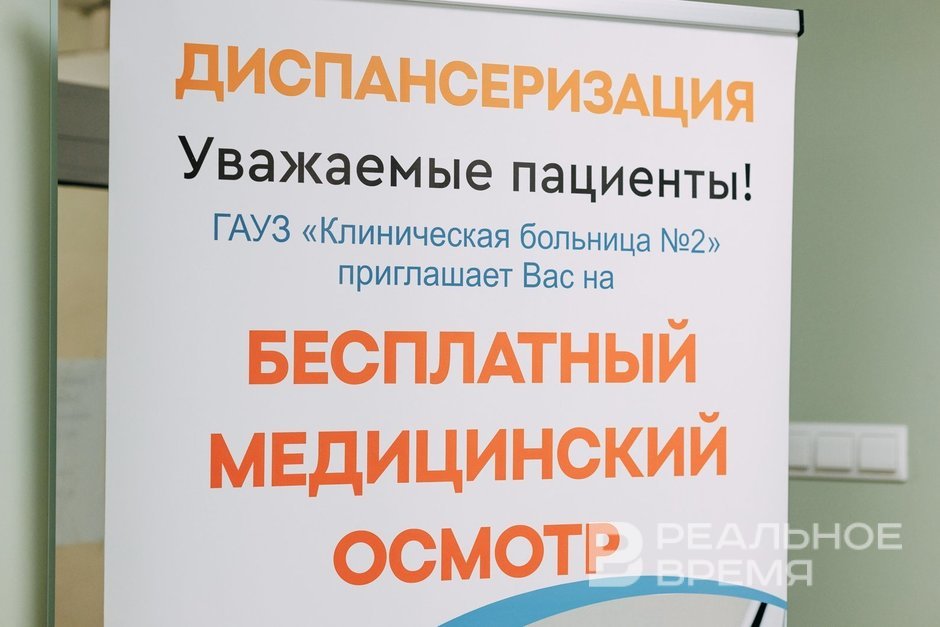
And if you had Covid in a severe form — you need to undergo the dispensary checkup even more so. In this case it will be an in-depth one, with specific examinations.
“People need to feel their own responsibility for their own health too”
Our heroine reflects on why we so often hope for luck and do not go to the doctor until it becomes unbearable:
— People have not been taught to be independently responsible for their health. In their picture of the world, the district doctor is responsible for it. That is, me, but not them. And people need to feel their own responsibility too! Right now the vaccination against flu is going on. How we persuade them! How we talk them into it! After all, the state allocated money for the vaccination for you; why do you not want to spend 10 minutes on this? You will not even have to sit in a queue; the vaccine will be quickly administered to you and you will be let go! But no, our patients are not accustomed to thinking about their health. It is even vexing: you drink, you smoke, you do not get vaccinated, and then the doctor must, in your picture of the world, instantly clean up what you have heaped up for yourself over your whole life? That is not how it happens…
The authority of the doctor, the person in the white coat, in the opinion of our heroine, has declined. Patients older than fifty respect doctors — they still fell into the mold of Soviet upbringing, in which the doctor and the teacher, at least declaratively, were considered the “blue blood” of society. And further — the younger the patient, the less they are accustomed to respecting doctors. Young people, according to the doctor, come not to be treated, but to receive a service. And this is very noticeable.
Galina Pavlovna, by her words, knows how to talk with conflict patients. She does not go for provocations, speaks calmly and confidently, but not indifferently — so as not to drop her own dignity and not to bring the patient completely out of themselves. Thus in most cases it is possible to calm irritated and angry people. But sometimes, when the doctor understands that the person is crossing all boundaries, she calmly warns: “I am turning on the recorder and beginning to record your words, so that later I can complain about you too.” At this, as a rule, the conflict is exhausted.
There is more cancer, and fewer deaths from heart attack
Over the twenty years that our heroine has worked in the district, the structure of chronic morbidity is changing. For example, there has been a growth of oncological diseases — but the doctor believes that the reason is not the growth of morbidity itself, but the strengthening of tests in the age-related dispensary checkup. For example, bowel cancer can “doze” in the body for several years, but now it is detected early — so there is the growth of statistics. But what is alarming is the increase in the detection of cancer in people of working age.
Cardiovascular diseases remain in first place among all chronic diagnoses. However, mortality from them in absolute figures is decreasing — possibly one must thank the strengthening of dispensary observation of patients for this. Diseases of the nervous system are not rare. More than before, medics today pay attention to diseases of the gastrointestinal tract. If until now mainly gastritises and refluxes were treated, now therapists are taught to pay more attention also to liver fibroses, which with age can lead to cirrhoses and to oncological diseases.
— Now we have the opportunity to deal with this in more detail and to stop a person at this stage of the disease, not bringing it to worsening. So that they live on long and happily, Galina Pavlovna explains.
Another constant group of the district therapist's patients — people with type II diabetes mellitus. For the most part they live on tableted medications. After all, new preparations have now appeared, and, according to the doctor, if a person loves themselves and monitors their health — proper nutrition, movement and taking the preparations, — in 99% of cases it will preserve good well-being for them for a long time. And the main thing — there will be no need to switch to insulin injections.
Over thirty years people's lifestyle has changed: the contingent in the Admiralteyskaya Sloboda has begun to drink less, there are fewer drug addicts. After all, to be honest, before it was an unsettled district, and there were not a few marginalized, dependent patients here. Now their number is substantially decreasing. Possibly the former reckless revelers have grown old and are simply physically unable to continue having fun at the same pace as in their youth. Some are no longer in the world. And some (although such are a minority) voluntarily gave up the syringe and the bottle. And the district therapist sometimes became the direct motivator for this!
— We have a patient in the district. He came out of prison, very insolent, impudent; we tried to establish contact with him for a long time. And we established it! I kept telling him: “Why are you spending your life on this nonsense! You could live far better and more interestingly.” He stopped drinking, took himself in hand, even got married, Galina Pavlovna says.
“This is the biggest gift: a candle lit in a church and a prayer for me”
Today in the polyclinic of city hospital No. 2 therapists no longer go on house calls, as was the case until recently. The feldsher takes on this work — and our heroine has taken her under her wing, teaches her, encourages her, helps her. But visiting bedridden, severe, palliative patients still remains with the district therapist. She regularly visits them, conducts examinations, tracks the dynamics. But she tells and still remembers stories from her many years of experience. For example, about how she came on a call to a young man, and he suddenly died.
— He sat down on the sofa and suddenly began to slump. I see foam coming from his mouth — that means pulmonary edema had begun. Help in this case must be given within 3—4 minutes, and for this specialized equipment and skills are needed that emergency doctors have. I call the ambulance and begin to “pump” the patient, to start his heart. I pumped for 20 minutes, until the medics arrived and pronounced death. Their doctor then asks me: “You saw that there were no chances. Why did you pump for so long?” And I answer: “His ten-year-old child was at home with him. How was I supposed to tell him that papa had died?” Galina Pavlovna recalls sadly.
She admits: losing patients, the doctor feels helplessness, hurt and anger. Not at herself, not at someone specifically, but at the situation in general.
But if a patient comes with a diagnosed dramatic diagnosis — for example, with the same cancer — here the doctor is by no means intending to be despondent, to pity and to dissolve in sorrow. She is sure: to a huge degree the result of treatment depends on the patient's inner attitude and on their intention to fight. Therefore she motivates her patients: “Chin up, no verdict has been passed on you! Let us treat, and I do not allow you to pity yourself. We all walk under God; as it is written in heaven, so it will be. Therefore believe in him and in yourself.”
By the way, the doctor is a religious person, and therefore always tells patients: the best sign of attention for her is not flowers and not sweets. But a candle lit in church for her health.
— This is the biggest gift a person can give me: a candle lit in a church and a prayer for me! Galina Pavlovna smiles.
To our usual question about what she loves her profession for, the doctor answers with a smile that for her it is important to see how a person has defeated the disease. Even an ordinary flu.
— The answer “Thank you, I already feel better” — it motivates me so much! I consider this the best exchange of energy that can happen between people. There are simple banal things, and I like treating them. And it happens that you noticed something intricate in time, sent them where needed, and the person survived — and you understand: “If not for me — everything would have been bad.” I try not to fall into pride, but when I have helped — I experience such infinite joy! I understand what I live for.
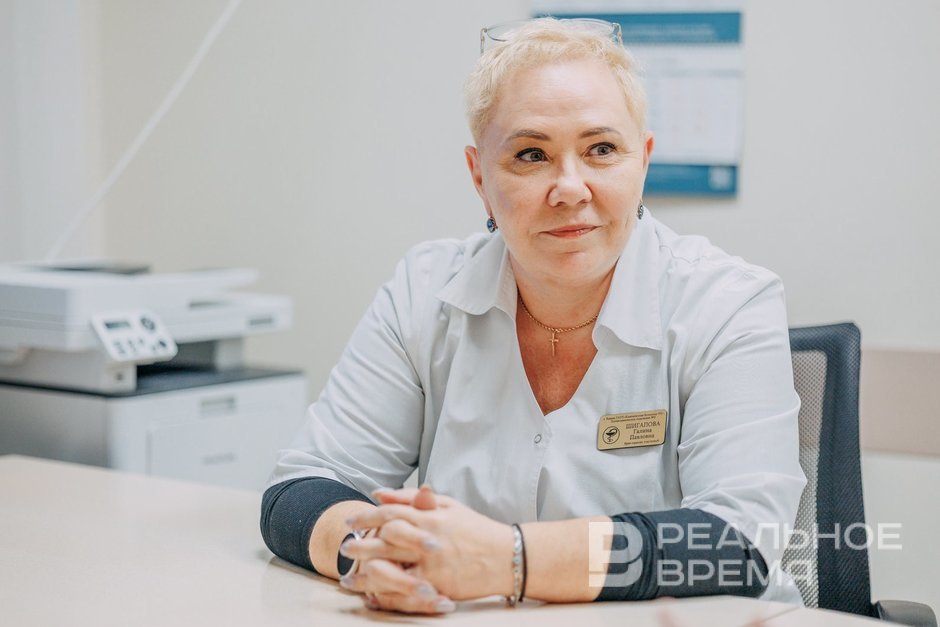
Outside the walls of the polyclinic Galina Pavlovna is a loving grandmother of a year-and-a-half-old granddaughter. She laughs: she never thought that the role of grandmother would inspire her so much, but now she cannot imagine life without her little one.
Incidentally, our heroine's life is rich. She goes with pleasure to concerts and theaters. She plans to resume attending a studio of oriental dance — she used to do it and liked it, but there is not enough time. She adores her dacha — she says that before she did not like it, but apparently stress at work takes its toll, and the earth miraculously removes it. Recently the doctor bought a drum set for home — she plans to learn to play it from lessons on the internet. Galina Pavlovna devoted much time to studying family relations and personal psychology — for the doctor this is an invaluable aid in working with patients, and in life it comes in very handy too.
And to the question about her dream the doctor answers with a smile:
— We dream of someday going to live by the sea. In a little house on the shore. We will have a dog there — a dachshund or a shepherd. I will also buy myself a big spotted pedigree cat. And, probably, there will be patients. Because how could I do without them?