Gymnastics favorites missed the Spartakiad of the Peoples of Russia
After the European Championship they began preparations for the World Championship
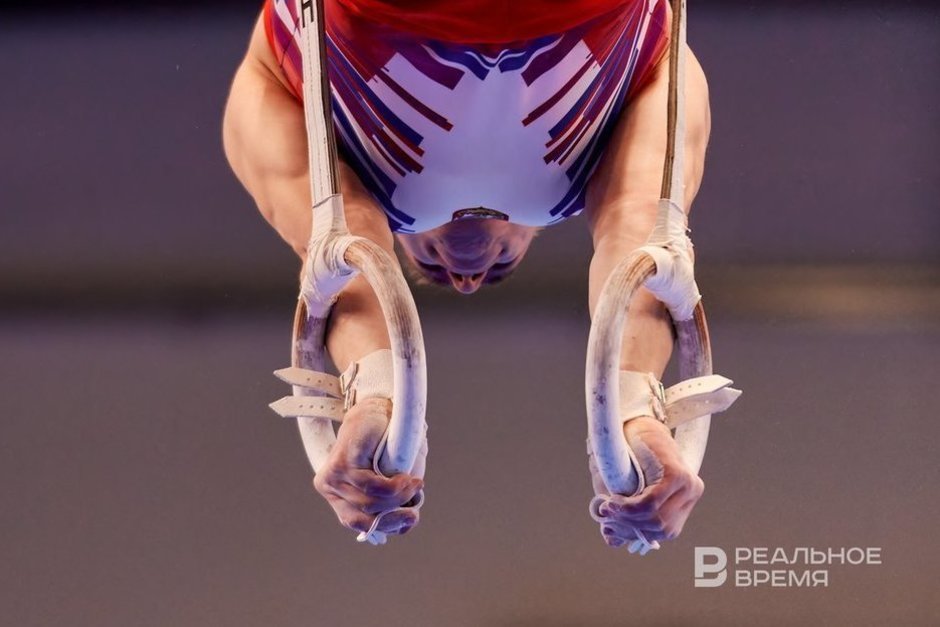
The gymnastics competitions among women and men within the framework of the Spartakiad of the Peoples of Russia have ended at the Gymnastics Center in Kazan. Thus, the Spartakiad marathon has reached the home stretch, where it will be followed, in particular, by the baseball start at the Central Stadium of Kazan. Details — in the report by “Real time.”
Tatarstan's Novikov won in the absence of the leaders
Last weekend, the gymnastics tournament that is part of the program of the Spartakiad of Russia ended. Alas, at the start there was none of the leaders of the Russian national team, who had performed so brilliantly at the recent European Championship in Zagreb.
The performance of the second echelon of men's gymnastics ended with the victory of Tatarstan's Daniil Novikov in the all-around, ahead of Muscovite Evgeny Kisel and Kirill Prokopyev from Vladimir. In fourth place was Ivan Kulyak from Kaluga.
In fifth place was his fellow countryman Kirill Gashkov, in sixth and seventh were the hosts of the podium Ivan Antonikhin and Matvey Zanin, and in general this can conclude the listing of the all-around results, since among them there was not a single participant of the European Championship. Neither those who performed — Dukhno, Tatarstan's Daniel Marinov, as well as Ivan Zaika, Savely Siedin, Alexey Usachev, Mukhamdzhon Yakubov, nor Sergei Naidin, who was not allowed to compete. Except that the vice-champion of the Spartakiad in Kazan, Kisel, potentially could have started in Zagreb, but in the end was not allowed.
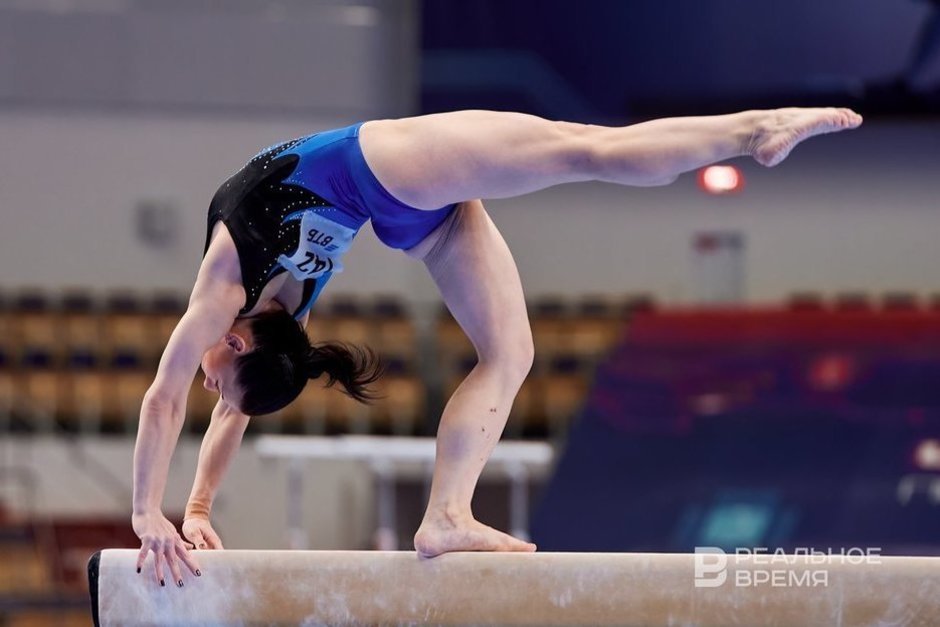
The Tatarstan national team won in the all-around
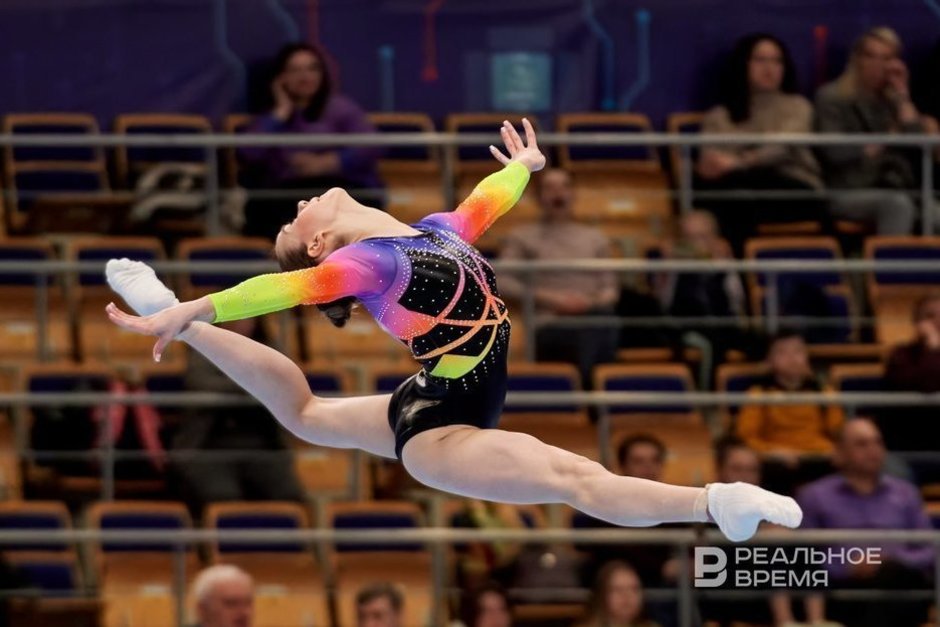
In the women's part, the champion of the Spartakiad all-around was the newly crowned European champion in team competitions Alyona Glotova, nominally the fourth-fifth number of the national team, after Melnikova and Listunova, Kalmykova and Roshchina. The winner Glotova and Leila Vasilyeva, who finished 11th in the all-around, Viktoria Listunova, as well as Elizaveta Us — these are those who still pleased the mass audience of Kazan by starting at the Kazan Spartakiad.
Listunova did this outside the competition in the individual all-around, plus strengthened the Moscow team in the team standings, where this team became second. Us with the Krasnodar team became third, in the company of Yulia Biryulya. She is a kind of Oksana Chusovitina “on a budget," who for the second year has been helping Krasnodar close the team event with her performance in her signature event — the vault, which is locally good for the Krasnodar region.
We emphasize Yulia Biryulya in the sense that the girl is 27 years old, she is the only one at the competitions who was born back in the last millennium, older than her teammate on the Krasnodar team Astkhik Kasparova, who took third place in the vault, by 10 years, two and a half Olympic cycles. Biryulya was already performing fully in the years when, for example, Aliya Mustafina shone on the mat, and now she looks at her from the sidelines, being one of the coaches of the Moscow team.
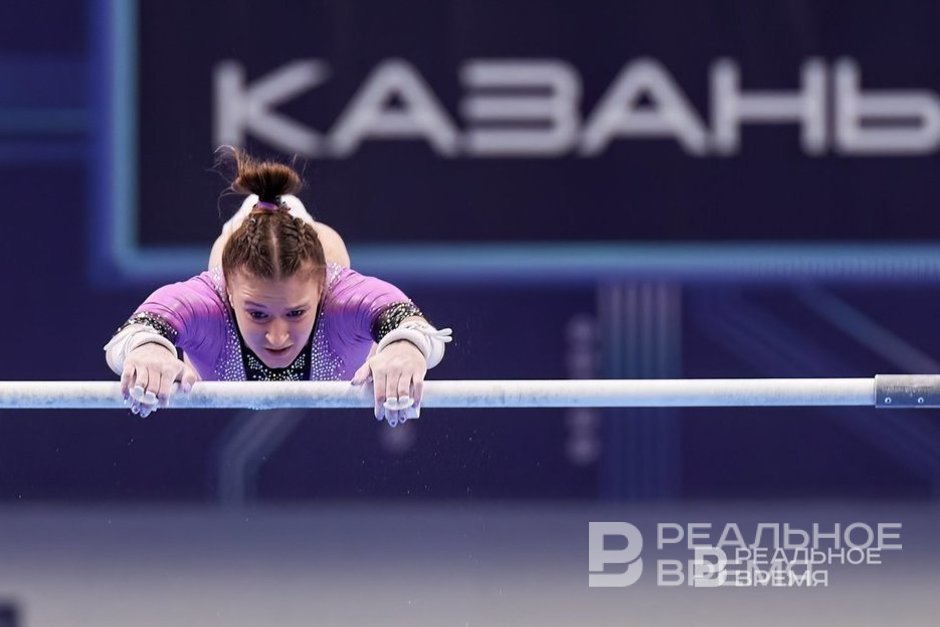
And why then was a whole Spartakiad needed if the first numbers of the national team did not participate in it at all? And the part of the national team members who did participate could be observed by spectators randomly — like Listunova, who won on the uneven bars, Us, who beat the same Listunova on the balance beam, Vladislav Polyashov and Sergei Naidin, who were first on the pommel horse and parallel bars. How should one treat the victory of the Tatarstan team in the team all-around (Novikov, Antonikhin, Zanin, as well as Stanislav Isaev and Daniel Sharov) over Moscow (Zavrichko, Kisel, as well as Yakubov, who also started in the floor exercises)? Our sports officials often claim that medals from international starts won in the absence of Russian athletes are not so valuable. So how should we then treat starts in which Tatarstan without Marinov overtook Moscow without Dukhno? How valuable are Novikov's silver and bronze on floor and rings, Antonikhin's bronze on the pommel horse without the participation of Zaika, Siedin and Usachev?
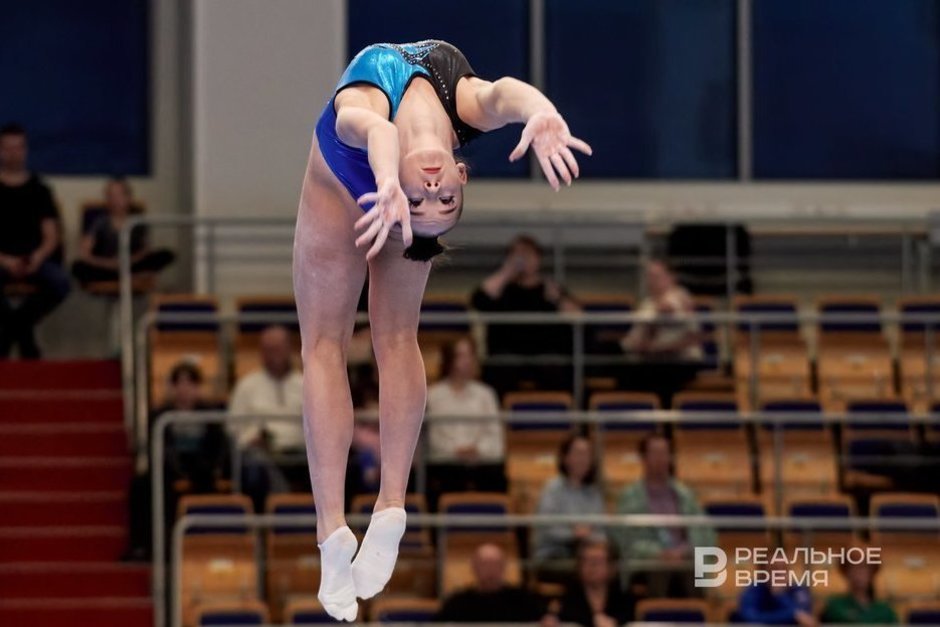
The human body is a delicate instrument
Yes, after the European Championship in Zagreb, the leaders of the national team remained in preparation for the World Championship in Dutch Rotterdam, which will be held from October 17 to 25. A month remains until the championship, and here it is important to approach it on a new rise in form; it is not excluded that Melnikova and Marinov, Roshchina and Dukhno, Kalmykova and Zaika are now reassembling themselves for new starts. Even domestic gymnastics remembers, alas, tragic examples with Elena Mukhina, who 16 days before the start of the 1980 Olympics did a somersault, after which she received a spinal injury. In Minsk there was no specialist — in the end Mukhina was operated on, according to some reports, the day after the fall, according to others — after three. Mukhina would spend 26 years in a wheelchair, while her mentor Mikhail Klimenko, who had brought his charge to this injury, after the collapse of the USSR would leave for Italy to raise local gymnastics.
Soviet sport remembers an example when an entire team's plans were ruined. This was 1982, when Tbilisi “Dynamo," which was on the rise after winning the Cup Winners' Cup the previous year, reached the semifinal, where it lost to Belgian “Standard.” David Kipiani commented on this: “Seven players of our club were taken with the national team to Argentina, where I was not really allowed to play, and were torn away from normal work for the semifinal of the Cup Winners' Cup, which we lost.”
By and large Kipiani is right, and Beskov's actions cannot be called anything other than sabotage. On April 7, the Tbilisi team lost at home to “Standard” 0:1, after which on April 14 they played in Argentina 1:1 (Daraselia, Sulakvelidze, Khizanishvili, Chivadze and Shengelia took the field), after which on April 21 they lost to “Standard” on its field 0:1.
Remembering this, the coaches of the Russian gymnastics team could have completely freed a whole series of leaders from the Spartakiad starts, giving them a respite between Zagreb and Rotterdam. Thereby the level of these starts was, probably, even lower than the competitions of the gymnastics Premier League.
An exclamation mark will have to be placed on baseball
As a result, the commentators of the gymnastics starts, Lidia Ivanova (the widow of footballer Valentin Ivanov, so football examples are also relevant here) and Emin Garibov, were often forced to introduce the participants of the starts to fans not deeply involved in the topic, rather than simply commentate. In general, the saturation of international starts can sometimes also play a minus role, as, for example, in figure skating, where there are already not particularly many who want to return to the international arena, since in Russia people have simply been “overfed” with both official starts and unofficial performances like various shows.
By contrast, for example, in the same fencing, where another Azerbaijani, Elgar Mamedov (like his ethnic relative Garibov), being the head coach of the national team, could state the full gathering of all stars of domestic fencing, who performed unsuccessfully at a rare international start for them — the World Championship. And Tatarstan's Mark Mekeshkin, who won in sabre, with Marta Martyanova, vice-champion in foil, and the sensational European champion Pavel Graudyn with Olympic champion Yana Yegoryan came to Ufa, since the Spartakiad became one of the main stages of selection for the 2028 Olympic Games in Los Angeles.
On the whole, Ufa, it turns out, got lucky, and Kazan will now have to wait for the Spartakiad starts in baseball on September 23—29 (both starts will be hosted by the Central Stadium), closing the program of these complex competitions.