“One Drop of Black Blood”: how a dark-skinned woman headed America's best library
In the biographical novel “The Book Universe of Belle Greene," Alexandra Lapierre tells the incredible and true story about the price of skin color

Belle da Costa Greene lived almost her entire life under someone else's surname and with a carefully constructed biography. For those around her she was a Portuguese woman, a brilliant connoisseur of rare books and the first director of the Morgan Library. Only in 1999 did the historian Jean Strouse establish that behind the name Belle da Costa Greene was hidden a black woman, Belle Marion Greener. The French writer Alexandra Lapierre tells about how a light-skinned African American outwitted the American elite headed by J. P. Morgan and what it cost her in the novel “The Book Universe of Belle Greene.” Details — in the material of the literary reviewer of “Real Time” Ekaterina Petrova.
Crossing the “color line”
Belle Marion Greener is the daughter of two light-skinned African Americans. Her father, Richard T. Greener, became the first African American graduate of Harvard. After the parents separated in the 1890s, Belle's mother changed the family surname from Greener to Greene, and the children took variants of the second name “da Costa.” Thus the family crossed the “color line” and began to live as white.
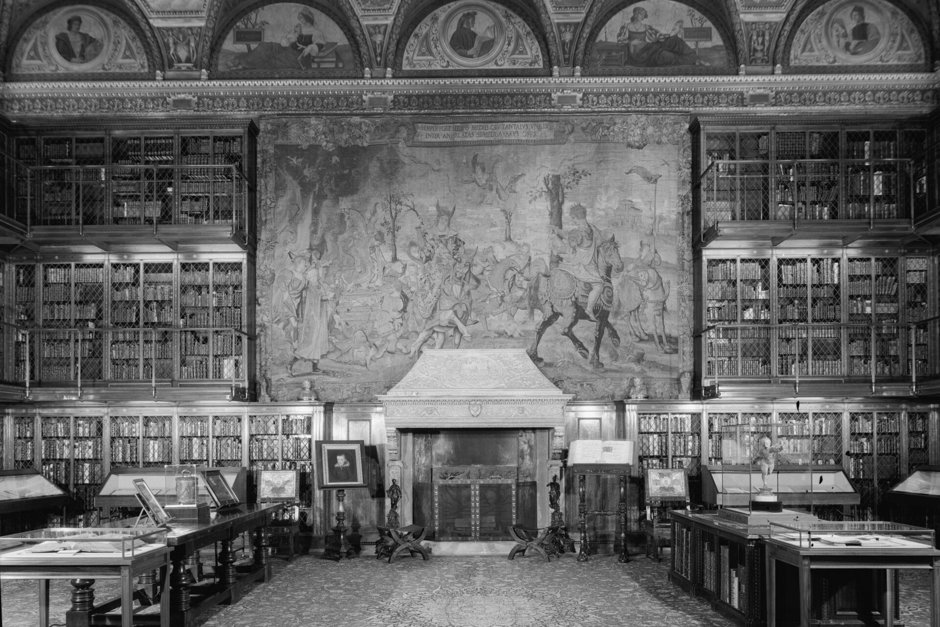
During her lifetime contemporaries knew Belle Greene as a person of a completely different scale. In 1879 she was born in Washington, and after the family moved to New York she worked in the Princeton library together with the nephew of J. P. Morgan. In 1905 he recommended her to his uncle. The banker Morgan hired Greene as his personal librarian. After his death in 1913 she continued to work for his son, J. P. Morgan Jr. In 1924 he turned his father's library into a public institution, and Greene became the first director of the Pierpont Morgan Library. She held this post for 24 years, until 1948.
Greene quickly became an authority in the world of rare books and illuminated manuscripts. She participated in high-profile auctions in London and Paris, bought rare editions of William Caxton, achieved the acquisition of the “Crusader's Bible” and the medieval “Commentary on the Apocalypse” by a Spanish monk. Her annual salary reached 10 thousand dollars, while other librarians received about 400. In society she also did not strive to look like a modest librarian.
— The fact that you made me a librarian does not mean that I have to dress like a librarian! Greene said.
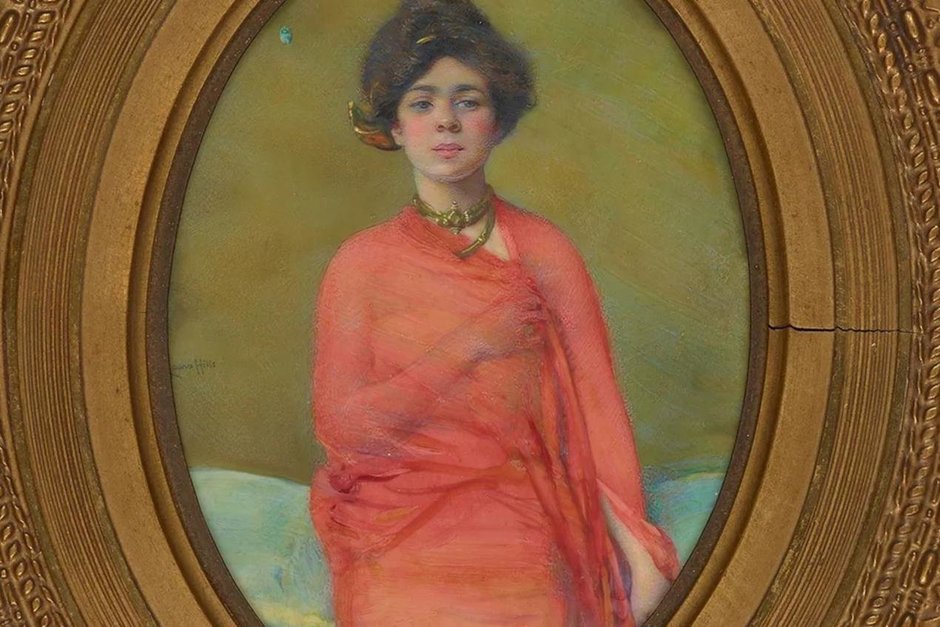
She was remembered in luxurious dresses and hats; she smoked, drank and chose her own lovers. One of the longest was an affair with the art historian Bernard Berenson. At the same time Greene destroyed diaries and personal papers, leaving no explanations of her own for her crossing over the “color line.”
“One drop of blood”
To understand why Greene so carefully hid her origin, one needs to know what exactly the “color line” meant in America of her time. In the USA the rule of “one drop of blood” was in effect — the principle according to which a person with any known African ancestral line was classified as black. Anthropologists call this principle hypodescent: a person of mixed origin is automatically assigned to the group with lower social status. In the American variant even a minimal share of African origin was enough. Professor of sociology F. James Davis notes that the rule arose in the South and grew out of the history of slavery, and then became part of the Jim Crow system of racial segregation.
Before the Civil War this norm existed first of all as a social practice, and after the war it became ever more rigid. In 1896 the US Supreme Court in the case “Plessy v. Ferguson” fixed it as a legal standard, recognizing Homer Plessy as black with one-eighth African origin.
In the early 20th century individual states began to directly prescribe such criteria in laws. In Tennessee this happened in 1910, and in Virginia in 1924 the Racial Integrity Act was adopted. It defined a white person as one who has “not a single trace” of non-European blood. Other states established their own thresholds: in Florida, Maryland and Missouri it was one-eighth, in Washington, D.C. — one-sixteenth, and in Georgia, Alabama, Texas, Oklahoma, Tennessee and Arkansas — up to one-sixtieth.
For people with light skin this created a special situation. Outwardly they could look white, but their origin still assigned them to the black population. Therefore some chose passing — crossing over the “color line” and life in white society. Such a step opened access to education, housing, white jobs, restaurants, theaters and other opportunities closed to black people. But at the same time it required hiding one's origin and breaking ties with black relatives and the community. The historian Allison Hobbs therefore considers passing also as “voluntary exile.”
Black or white?
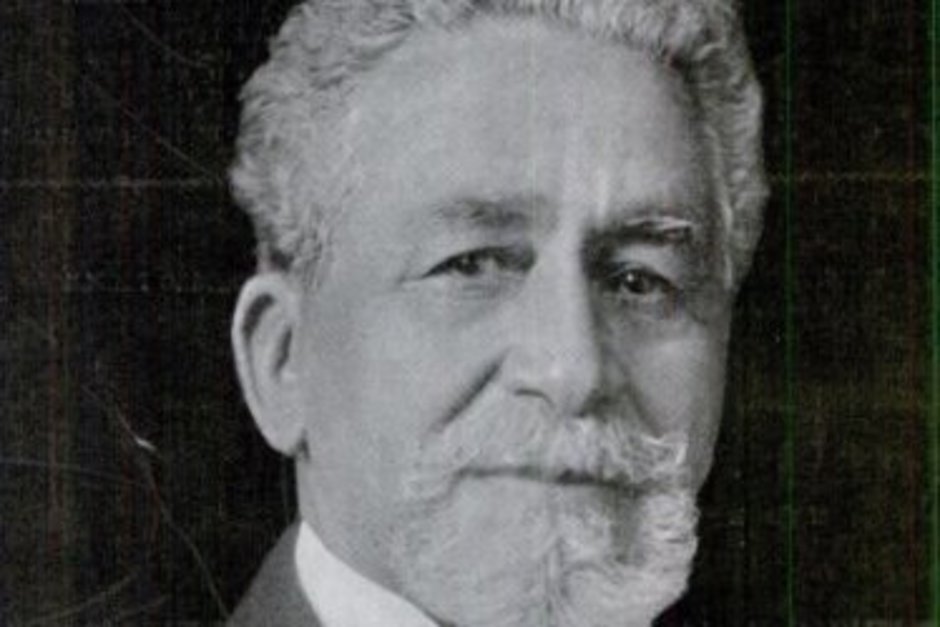
Richard Theodore Greener (1844—1922) entered history as the first black graduate of Harvard; he received his bachelor's degree in 1870. Later he taught at the University of South Carolina, headed the law faculty of Howard University, worked as a US diplomat in Russia (Vladivostok) and remained an activist in the struggle for equal rights of African Americans. Greener loved books no less than his daughter. He assembled a personal collection of African Americana, which included, for example, Benjamin Banneker's “Almanac” for 1792. In 1876 Greener even prepared for the American Philological Association a work about rare and interesting books in the library of the University of South Carolina.
After separating from his wife Genevieve Ida Fleet in the 1890s, the family went a different way. Genevieve changed her surname and created a version of Portuguese origin. Greener was the only one in the family who preserved his black identity. His relations with his children after this almost disappeared from documents. The biographer Heidi Ardizzone believes that Belle could have seen her father only once, already after his retirement in Chicago (this episode is described in detail in Lapierre's book). Greener himself at that time continued to speak publicly about race relations and to give lectures. In 1894 he published the essay “The White Problem," rethinking the expression “the Negro problem” common at the time.
Almost a hundred years later the story of Greener himself received an unexpected continuation. For a long time historians believed that his personal documents perished during the 1906 San Francisco earthquake. But in 2009 a contractor, Rufus McDonald, was preparing an abandoned house on the south side of Chicago for demolition and found an old travel trunk in the attic. Inside lay Greener's papers, books, a law license and documents written in Latin and Russian. There was also his Harvard diploma of 1870. McDonald took the find to a rare book dealer. He immediately recognized the owner's name: “This is Richard Theodore Greener.” Later Harvard acquired the diploma and included it in its archive.
Belle Greene herself left almost no materials that could explain her origin. At the end of her life she destroyed personal papers and diaries. Hundreds of her letters to Bernard Berenson survived, but even in them she does not write about her origin or about her transition into white society. During Belle's lifetime there were rumors about her racial origin. Her swarthiness was explained by Portuguese roots, which she herself spoke about.
The turning point came in 1999. The historian Jean Strouse in the biography “Morgan: American Financier” established the identities of Belle's parents. Before the publication of the book only her mother and brothers and sisters knew about her origin. Strouse for the first time connected the name Belle da Costa Greene with Belle Marion Greener, the daughter of Richard Greener and Genevieve Fleet.
Belle Greene through the eyes of Alexandra Lapierre
Lapierre first saw Belle Greene in the archive of the Morgan Library in the 1990s, while working on a book about Fanny Stevenson. Since then the story of the librarian did not let her go. Alexandra Lapierre is the daughter of the writer Dominique Lapierre. She studied at the Sorbonne, then at the American Film Institute and the University of Southern California. According to her, there she learned to tell stories. Her specialization is fictionalized biographies of forgotten women. Among her previous heroines are Fanny Stevenson and Artemisia Gentileschi.
Lapierre spent three years on “The Book Universe of Belle Greene” and studied archives of Italy, England and the USA. In Italy Lapierre copied by hand 628 letters of Belle to Bernard Berenson. The longest occupies 28 pages. The author says that after the tenth letter she felt as if she had found herself “in the head” of Belle: that is how she caught her phrases and manner of writing. In the afterword to the novel Lapierre writes:
— The reader may have no doubt that even the most romantic scenes and the most anecdotal incidents are drawn from Italian, English and American archives and all the vicissitudes can be traced documentarily.

The documentary basis does not cancel the genre peculiarity of the book. “The Book Universe of Belle Greene” is first of all a fictionalized biography, or a biographical novel (whichever one prefers). Lapierre shows America after the Civil War and the world of bibliophiles and auctions. Belle's path goes from the Princeton library to the public Morgan Library, which in 1924 she headed.
It is not easy to determine the boundary between documentary evidence and artistic reconstruction, if the reader is not thoroughly familiar with the biography of the main heroine. Lapierre “finishes drawing” some episodes and dialogues, as well as Belle's internal monologue, relying on letters and other archival materials. Here too is the reconstruction of love lines and sentimental dialogues, which are built into the main plot with a volume of more than 600 pages.
Publisher: “Belle Lettres”
Translation from French: Alexandra Vasilkova
Number of pages: 648
Year: 2026
Age restriction: 16+
Ekaterina Petrova — literary reviewer of the online newspaper “Real Time," host of the Telegram channel «Булочки с маком».