A cozy detective story about an uncozy Britain
Book of the week — Jonathan Coe's novel “The Proof of My Innocence”

On August 19, Jonathan Coe turned 65. For nearly forty of those years, he has been writing about Britain, intertwining personal stories with the country's politics and history. Coe creates both small personal works and large-scale novels about the state of the nation, satirically exploring the political and moral problems of contemporary Britain. In his latest novel, “The Proof of My Innocence," Jonathan Coe fits a critique of British society and politicians into several genres at once: cozy detective, dark academia, and autofiction. The literary critic of Realnoe Vremya, Ekaterina Petrova, tells what has changed in the writer's literature over three decades and what has remained the same.
A writer who reinvents Britain
Jonathan Coe was born on August 19, 1961, in a suburb of Birmingham, and at the age of eight wrote his first surviving story — the detective “The Castle of Secrets.” He continued writing at school, then during his studies at Trinity College, Cambridge, and in graduate school at the University of Warwick, where he defended his dissertation on Henry Fielding's “Tom Jones.”
His first novel, “The Accidental Woman," was published in 1987. In the late 1980s, Coe moved to London, where he worked in literature and music, writing songs for his own short-lived band and for a feminist cabaret.
Wide recognition came with Coe's fourth novel, “What a Carve Up!”, published in 1994. It became the writer's first international book and was translated into 16 languages. In it, Coe turned to the politics and society of the Margaret Thatcher era, combining social satire with a detective structure. The writer then continued to explore British history through different genres. “The Rotters' Club” (2001) tells about Birmingham in the 1970s; in “The Closed Circle” (2004), the author turns to the era of “New Labour”; “Number 11” (2015) continues the line of “What a Carve Up!” and addresses the social and cultural contradictions of Britain in 2015. The novel “Middle England” (2018) brings back the characters from the two previous novels and places them in the period before and after the Brexit referendum.
At the same time, Coe writes family stories, comedies, detective novels, and novels about cultural memory. “The Rain Before It Falls” (2007) is primarily a family saga; “The Terrible Privacy of Maxwell Sim” (2010) is a comedy about loneliness and disconnection in the age of social media; and “Expo 58” (2013) is a comedic thriller set against the backdrop of Cold War espionage. In 2004, Coe published a biography of the experimental writer B.S. Johnson, which won the Samuel Johnson Prize for the best non-fiction book of the year.

Politics remains a constant part of Jonathan Coe's work. The writer explained that he turned to it in his early twenties and considered non-political novels rather a deviation from his main direction. After “The Rotters' Club” and “The Closed Circle," he felt that critics had too firmly defined him as a political novelist and consciously stepped away from the theme. But later he reread “What a Carve Up!” and realized he wanted to bring back the feeling of pleasure from writing connected to political material. Coe called it a return to his natural style and said he writes better when politics is “ticking away” somewhere in the background.
Gradually, Coe built his own history of modern Britain. At the same time, Coe claims he cannot speak on behalf of the whole of Britain. In 2026, he called the idea of the writer as the voice of the nation outdated and emphasized that his vision of Britishness was shaped by his own background and education. He is not interested in politics per se. He primarily explores the everyday lives of people influenced by politics. In a 2018 interview, Coe said he tries to convey the texture of real life as accurately as possible and considers laughter an important part of it. He also noted that his books consist of many interconnected scenes and require a complex narrative architecture.
A detective story about a country that has lost a shared reality
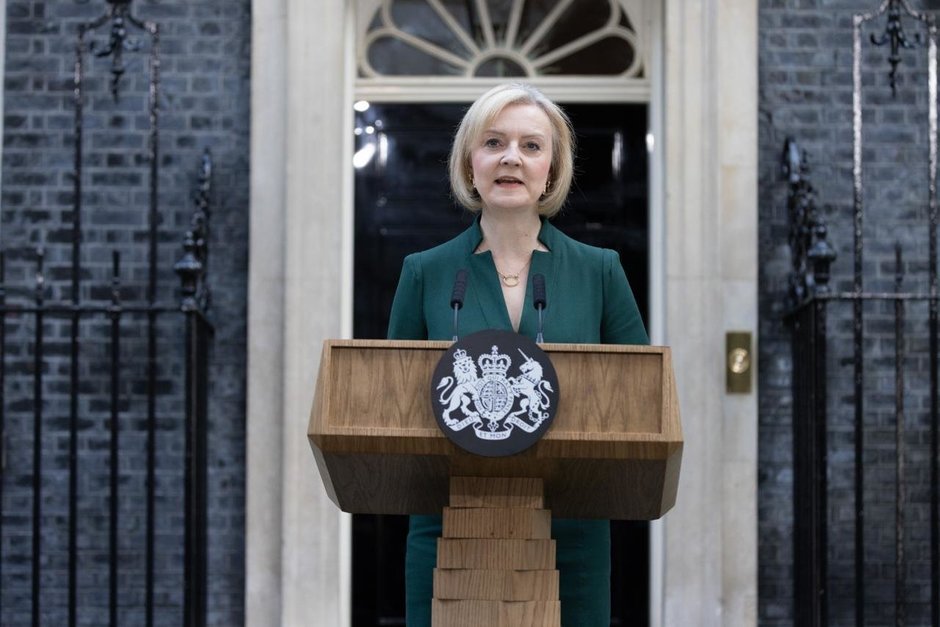
After “Bournville” (2022), Coe changed his pace and genre. The writer returned to the tone of “What a Carve Up!” and combined it with a metatextual detective story about contemporary politics. As a backdrop in “The Proof of My Innocence," he used the seven weeks of autumn 2022 with the short premiership of Liz Truss, which Coe himself calls an almost surreal episode of British history.
At the center of the narrative is a university graduate, Phyl, who has returned to her parents' village and taken a zero-hours contract job at Heathrow Airport. She doesn't know what she wants to do next until Christopher Swann, an old Cambridge acquaintance of her mother's, enters her life. He researches the history of right-wing politics and runs a political blog. Swann goes to a conference of the British organization “Processus," linked to the most Trumpist forces of American Republicans. There, he encounters people who want to hand over the National Health Service (NHS) to American pharmaceutical companies.
Coe then turns this political setup into a detective story. At the conference in a country house, a murder occurs, with secret passages, a mysterious note, missing phones, and suspicion that one of the conspirators is hiding their true goals. Coe works with the rules of the cozy detective: a country house, an eccentric sleuth, a secret passage, a puzzle to solve. He does not mock the genre but uses its techniques and gives the reader all the pleasures usually associated with reading cozy mysteries.
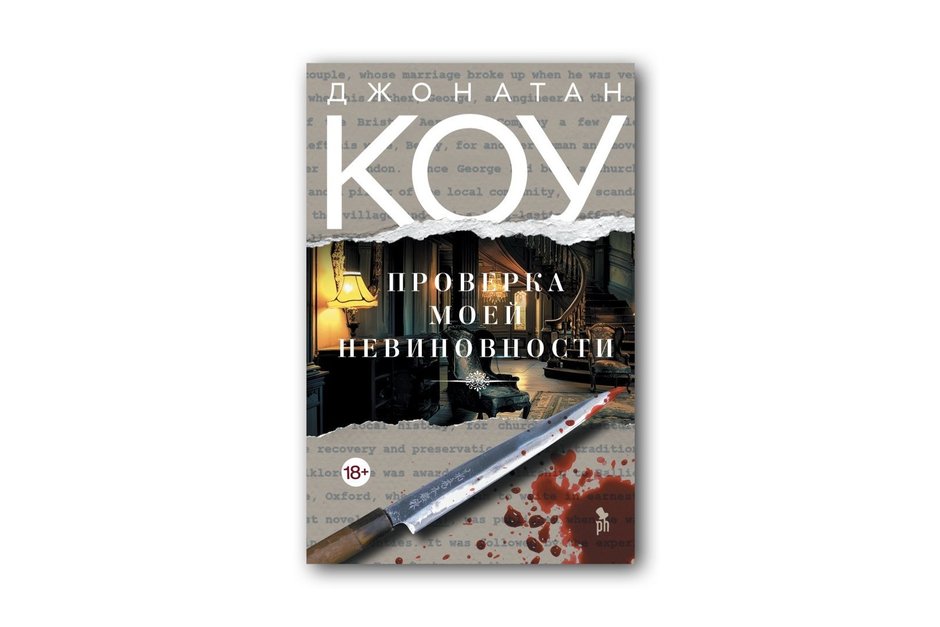
In the second part, the action moves to Cambridge in the early 1980s, and Coe turns to the dark academia genre. The writer returns to his student past in fiction for the first time. Coe says it took him about forty years to gain the necessary distance from that period of his life. The third part of the novel changes not only time and genre but also the narrative principle. Two women take turns telling the story and returning to the murder investigation. Here Coe introduces the theme of subjective and objective truth and asks which mode of narration better conveys a multi-layered reality. Thus, the three parts of the novel sequentially test the capabilities of detective fiction, dark academia, and autofiction to speak about reality.
Coe complements this structure with a play on his literary double. In the Cambridge section, Tommy Cope appears — an excellent student who writes bad poetry and, after university, unexpectedly begins publishing politically charged satire. The character clearly mirrors Coe's own biography. Even the title of his future novel — “What a Carve Up!” in a reimagined version — becomes part of a joke at his own writing career.
Self-irony here has a very specific function. Coe looks at the literary hero with the same distance with which his hero looks at literature. The writer turns his literary reputation and even the perception of himself as a “cozy” author into the material of the novel. Coe simultaneously jokes about literary trends, competition in the creative environment, and inevitable aging.
At the same time, behind the genre play, Coe pursues a very specific political line. He is interested not so much in Truss's premiership as in a longer process. Over the past forty years, the conservative movement has radicalized, and political language has become much more polarized. In fact, the writer shows how ideas that were considered marginal in the 1970s gradually entered the British political mainstream. Therefore, Truss in the novel rather marks a historical point than becomes its main character. Her short premiership creates the backdrop for a story about a political movement that existed long before 2022.
The writer examines conservative politics over several decades and simultaneously connects the British process with the American one. The novel features an organization oriented toward American right-wing forces, and its participants discuss plans to reform the NHS and limit the influence of trade unions.
Here, “The Proof of My Innocence” continues the political line of “What a Carve Up!” In 1994, Coe used a detective plot to talk about Thatcher-era Britain. Thirty years later, he again takes up the detective form but shifts the action to a period when the consequences of that political course had already become part of a new reality. However, the new novel differs from Coe's early satire in its attitude toward its characters. In 2024, the writer said he now looks at people less cynically and tries not to judge characters as harshly as before. In “The Proof of My Innocence," alongside political radicals, Coe places the bewildered Phyl, her passive parents, and people who do not know how to react to what is happening.
Phyl is an important figure in the narrative. She is not a political activist. After university, the girl returns home, works at the airport, and spends her time watching old episodes of “Friends.” Her generation inherits a strange legacy: young people try to imagine a future shaped by previous generations but see no clear place for themselves in it. Coe connects this state with nostalgia for a time that Phyl herself did not even experience.
Nostalgia in general remains one of Coe's constant motifs, but in the new novel it acquires an additional meaning. In “Middle England," an important cultural memory was the song “Goodbye, Old England," while in “The Proof of My Innocence," the ballad “Lord Randall” plays that role. Music heard in childhood or youth has become for Coe a separate world within everyday reality. The turn to the past is not reduced only to memories of a Britain that no longer exists.
The genre of the novel imposes its own requirements. In a detective story, one must determine who is guilty. In a political chronicle, one must understand what happened to British conservatism. Autofiction forces doubt about the boundary between personal memory and fiction. Coe combines these tasks in one novel and makes different narrative forms test each other. In this sense, the book's title is symbolic in several directions at once. “Proof” refers both to the investigation and to the attempt to establish the truth, while “innocence” refers to the character's guilt and to the naivety of a person who wants to understand what is happening.
Publisher: Phantom Press
Translation from English: Shasha Martynova
Number of pages: 472
Year: 2025
Age rating: 18+
Ekaterina Petrova — literary critic for the online newspaper Realnoe Vremya, host of the Telegram channel «Булочки с маком».