“Krylya Barsa” took second place in the championship after the home tour
In the decisive match, Kazan lost one point to their main rival from St. Petersburg
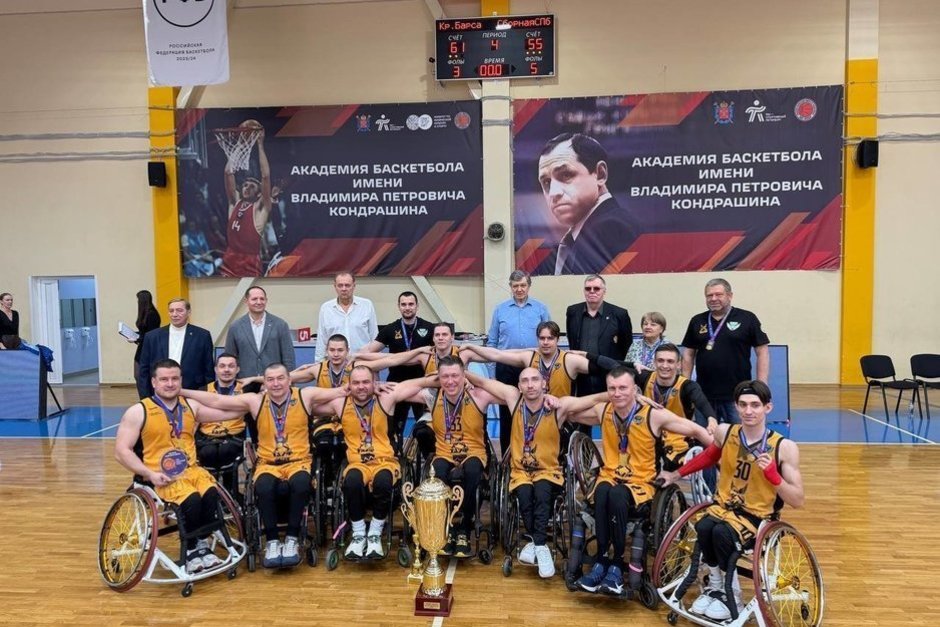
The tour of the Russian Wheelchair Basketball Championship has concluded at the Tulpar sports complex in Kazan. The home team “Krylya Barsa” won four matches and lost one, now occupying an intermediate second place in the standings. For more details, see the report by Realnoe Vremya.
Kazan started with two wins over Tyumen and Ulyanovsk
In the home tour, Kazan started with a game against Tyumen's “Shans," which they won 64:49. This was followed by a major victory over Ulyanovsk's “Volga” — 85:36. It was the Volga team that provided the main surprise of the opening tour, beating “Legion-Yugra” from Khanty-Mansi Autonomous Okrug 58:52, thus repeating their success from the spring qualifying round. Long-time “Krylya Barsa” fans could watch this match with divided loyalties, as former Kazan player Ruslan Kozhevnikov played for the winners, while Andrey Chugunov, a former captain of the Kazan team, played for the northerners.
Ulyanovsk played the entire match with a single five, while the northerners are in the process of forming a new team. Even the training camp held at the Dan sports complex in Kazan has not yet helped them, but the path to the top is a lengthy process that requires relying on cumulative effect. The veterans of the Special Military Operation — Dinar Bagautdinov, Andrey Belov, Vitaly Nagorny — who left the team were replaced by new players: Nikolai Buyanov, Aslan Soltykhanov, and former Tyumen player Valery Nasekin. Among them was another ex-“Krylya Barsa” player, Yuri Otroshchenko, and Agvan Piloyan, who apparently has finally switched to para-badminton. The northerners' newcomer Valery Nasekin decided to move and transfer to another team this winter, at over 50 years of age.
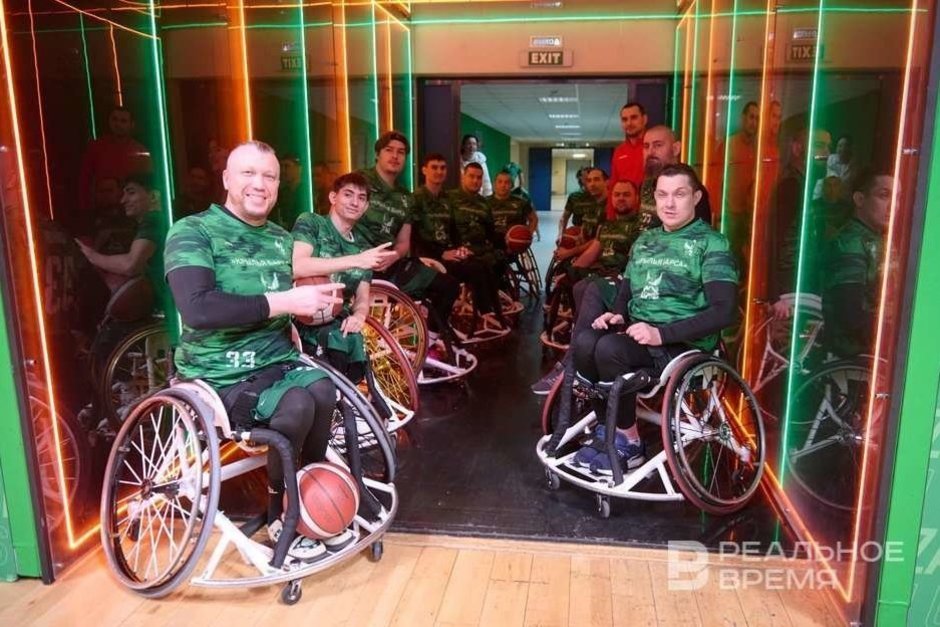
With hopes of revenge
The match between “Krylya Barsa” and Moscow's “MBA Falcon” was important psychologically. It was the Muscovites who defeated the reigning Russian champions and newly crowned National Cup winners in the qualifying round of the national championship, but there are nuances. In that game, Kazan was missing three key players at once — Artur Galstyan, who had undergone surgery, and Vasily Kochetkov and Albert Bagamanov, who were suspended for unclear reasons. It was discussed that their disability level was not severe enough. In other words, the guys walk on their own feet. The other thing is that their injuries categorically do not allow them to play basketball in the ordinary sense of the term. In the West, such people are treated unequivocally: if you cannot play on your feet, you play in a wheelchair. And it shocked no one that some of “Krylya Barsa's” opponents in international matches from teams in Bosnia and Herzegovina or Turkey would get out of their wheelchairs before and after the game and walk on their own two feet.
But eventually, the decision to suspend Bagamanov and Kochetkov was overturned — partly because, upon returning to the international scene, the guys will be needed for the national team. The team's coaches are engaged in their direct work, as well as scouting and rehabilitation of people who find themselves in difficult situations. A person with removed menisci does not fit the definition of a healthy person in any way, but fits perfectly under the concept of “musculoskeletal disorder” (as POMA stands for). There are former basketball players whose health now does not allow them to play this sport, but wheelchair basketball may suit them.
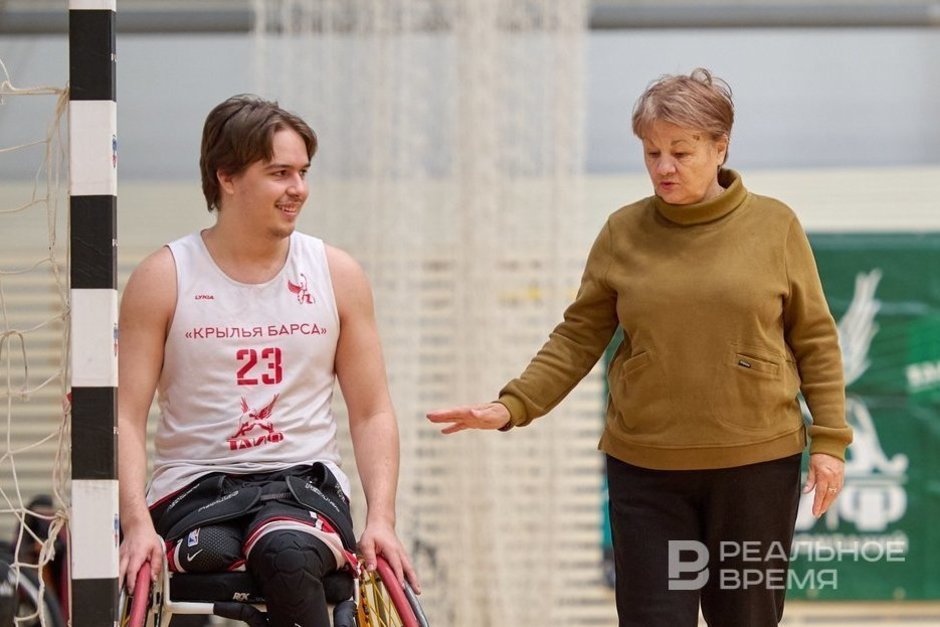
The interest in the match in Kazan was so serious that among the official observers was the head coach of the Russian national team, Dmitry Olenevsky. Kazan took the court with an incomplete roster — 11 players. Neither Elvir Faizullin nor Rustam Rakhmankulov were present. Artur Galstyan took a seat on the bench, as did Vsevolod Salin. But from the start, Kazan pulled ahead — 6:2, thanks in part to accurate shots from Kochetkov and Bagamanov. Albert, who had never played classical basketball before his transition to wheelchair basketball, admitted: “Natalya Vladimirovna gave me a shot that I didn't have at all for the reasons mentioned above. Sergey Anatolyevich raised our team's overall physical fitness level to the best in the country. And together, they came up with and refined several joint combinations.” The way Kuleshova teaches shooting was demonstrated by Bagamanov, who sent the ball into the basket without touching the rim.
K — the favorite letter of “Krylya Barsa”
The starting five of “Krylya Barsa” — Kochetkov, Viktor Kaynov, Vladimir Kuchin — three K's, assembled together in the 3x3 basketball variant, were reinforced by “small change” Dinar Kamaliev, another basketball player whose last name begins with K. This is logical for a team named “Krylya Barsa” (Wings of the Bars), and only Bagamanov stood out in this regard. He was the first to roll out for a substitution, giving way to Vsevolod Salin, with a two-fold lead on the scoreboard — 15:8. Salin immediately got on the scoresheet with a personal foul, and by the end of the period, Muscovites had slightly reduced the gap — 15:12.
The most important thing in this situation is that Muscovites managed to impose a fairly competitive fight on the Kazan “Wings," who were at their best and in optimal form, and this is important for the development of Russian wheelchair basketball. But the champion would not be a champion if the players did not show character at the right time. First, Dinar Kamaliev, who had been missing his shots until then, stole the ball from an opponent and scored under the basket. Then Salin, who already had two fouls, scored several baskets in a row, becoming the game's top scorer. True, Kochetkov categorically disagreed with this. After missing from under the basket, he was accurate from the six-meter line on the next attack — 34:24.
The score at halftime — 40:26 and 59:38 after the third period — hinted that Kazan was closer to revenge than the opponents were to repeating the outcome of the previous game. And the tournament schedule suggested that in the second half of the game, it was better to preserve the advantage than to try to increase it by expending all energy. Already the next day at 10:00, Kazan was scheduled to take the court for the main game of the tour against the St. Petersburg team “BasKI," as Kazan had allocated seven starters for the rematch with Moscow, not using Ivanov and Shigapov, Samartsev and Simonov. Strategy dictated tactics, and Kazan switched to an energy-saving mode, in which many favorites of the Football World Cup overcome the group stage. The result was a score quite pleasing to the Kazan eye — 75:58, indicating that in optimal condition, Moscow is not yet coping with the champion. But St. Petersburg had its own assumptions on this score.
A premature final
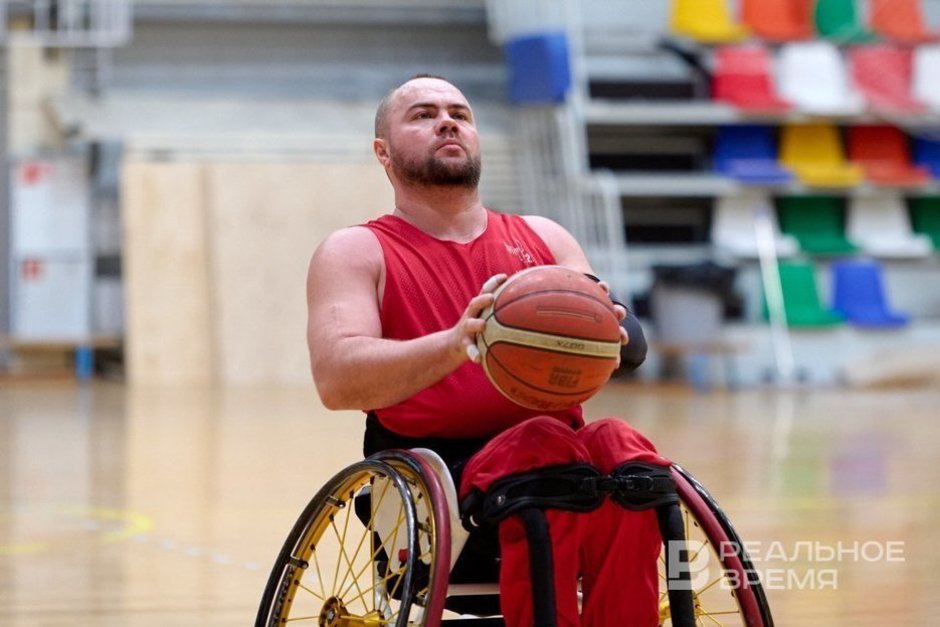
For the most important game of the tour against St. Petersburg's “BasKI," the Kazan coaching staff put Artur Galstyan and Vsevolod Salin in place of Kaynov and Kamaliev. The fact that the favorites of Russian wheelchair basketball faced each other on the penultimate day of the tour was explained by the results of the preliminary tour, where Kazan took third place. And they needed to regain the leading position. Alas, in the first attack from under the basket, Albert Bagamanov missed, and St. Petersburg opened the scoring. But the next six points went to the Kazan team's tally, two of them from Salin, who easily and accurately converted his free throws. 6:2 — and on the next attempt, they could have increased the lead, but Salin missed from under the basket, and St. Petersburg did not forgive — 6:4. The visitors generally played in their favorite manner: position themselves at the shooting spot, wait a couple of seconds to aim, and shoot with almost no resistance. This is a common practice, but in the Kazan-Moscow game, it was hardly used, as the teams tried to execute shots while moving.
Overall, the first period went quite favorably for Kazan: the lead doubled — 16:8 — until Dmitry Sitnikov made a long-range shot. The first period ended 16:11. After that, the start of the second period went smoothly. First, Bagamanov brought Kazan four points in a row, then Kochetkov fired from beyond the six-meter line. Then Vladimir Kuchin scored from under the basket, playing a “two-man game” with Kochetkov, and Bagamanov scored again — 27:13.
It smelled like a rout, and importantly, almost the entire starting five was involved in the scoring, and it was unclear who to focus defensive efforts on. St. Petersburg coach Gennady Shchetinin, calling a timeout, was probably just trying to calm his players, who were trailing by a two-fold margin in the middle of the match. Bagamanov missed from under the basket at the end of the period, in response to which Kazan gave up a fast break and an uncontested shot, and instead of the supposed score 38:25, the scoreboard showed 36:27. After that, Albert's accurate mid-range shot was meaningless, as the first half time had expired.
For the third quarter, the “Krylya Barsa” coaching staff sent Dinar Kamaliev in instead of Galstyan, and he had a memorable collision with Andrey Litvyak, after which both ended up on the floor. Otherwise, the match moved into a scenario where the teams traded points, and the score 44:33 midway through the third quarter looked quite comfortable. Viktor Kaynov came onto the court as a response to the St. Petersburg team's timeout. By the final break, Kazan had a lead of 48:39, having lost five points from a peak lead of 14, but it was still a comfortable margin. Alas, it was halved in the very first minute of the game — 48:43, with St. Petersburg scoring easily. This alarmed the “Krylya Barsa” coaching staff, who called a timeout and brought Bagamanov, Galstyan, and Salin back onto the court.
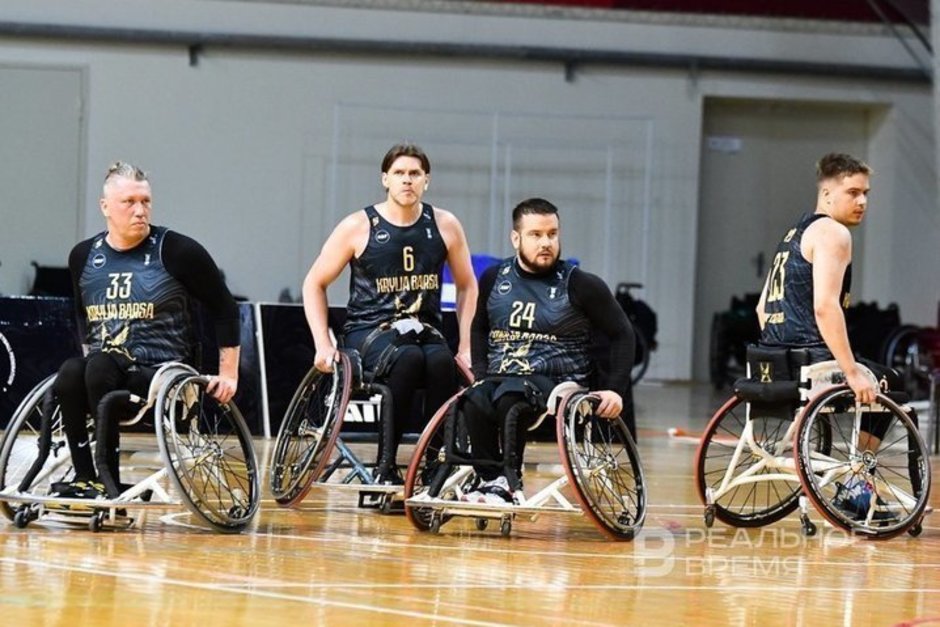
Then something incredible happened: Kazan, from their defensive rebound, passed the ball straight to an opponent — 50:45. Then they missed again from under the basket and failed to convert free throws. St. Petersburg simply switched to the tactic of static shots, which they know and love, with or without screens. And the lead melted to a minimum — 54:51. The coaches shuffled the lineup again, bringing back Kaynov and Kamaliev, who missed twice from under the basket and committed fouls — 56:54. The way St. Petersburg finally tied the score looked like mockery, as Andrey Litvyak was completely unguarded at that moment. An inaccurate pass on offense, and St. Petersburg went ahead from the free-throw line — 56:58. Vasily Kochetkov with two accurate shots restored Kazan's lead — 60:59, after which Shchetinin called a timeout, and his players set the final score — 60:61.
On the final day of the Kazan tour, it was interesting to watch two matches. First, whether Moscow could challenge St. Petersburg. The answer to this question came by the end of the first quarter, when from a score of 12:10, the visitors from the Northern capital pulled away. Symbolically, they led 74:44 at the end and executed the last attack, even though the player attacking the basket was in a very difficult position. The result — 76:44 and confident leadership after the first round.
“Krylya Barsa” finished the home tour with a victory over the guests from Khanty-Mansi Autonomous Okrug and took an intermediate second place in the standings.