Safina Suleymanova: “National brands must unite to wipe the floor with Western ones”
Tatarstan clothing manufacturer on import substitution, unfair competition, and the industrial design law
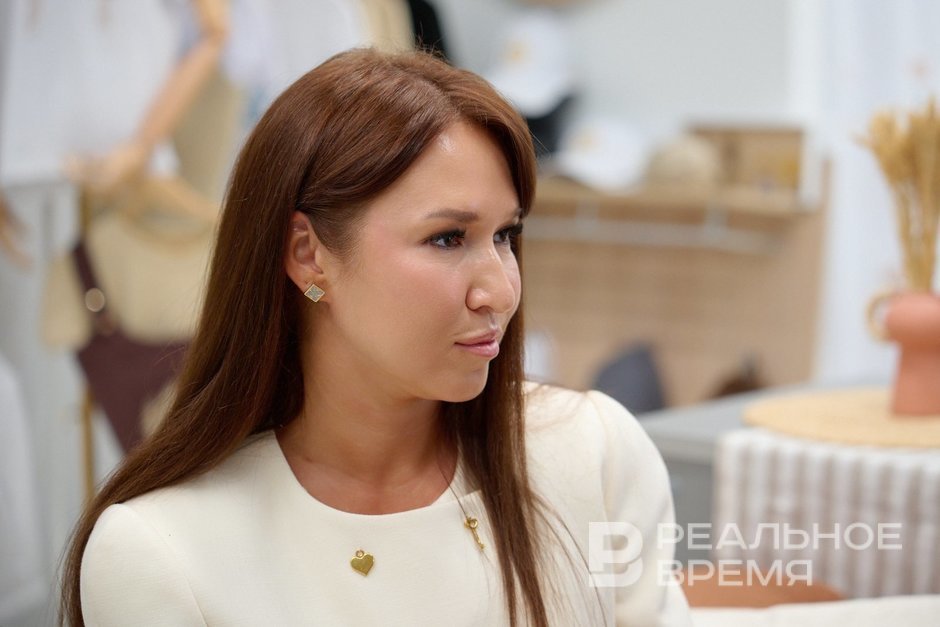
At the beginning of 2026, clothing production in Russia fell by 17.2%. This was the most significant decline since April 2020, when the industry was paralyzed by the COVID-19 lockdown. Experts attribute the crisis mainly to the pressure of sanctions limiting the supply of equipment and materials, a shortage of skilled personnel, and a drop in consumer demand. Analysts' forecasts are grim: this year could see mass closures of both retail outlets and production facilities in the light industry. How Tatarstan manufacturers are coping with these challenges was told to Realnoe Vremya by Safina Suleymanova, owner of the sports and corporate apparel brand “Ayda Sport.”
“My mother inspired me to start my own production”
— Safina Rustemovna, why did you choose this business segment and how did you build your production?
— In general, we continue the traditions of the Kukmor district, which has always been famous for its craftsmen. My grandmother was also a labor veteran; she spent her entire career at the famous sewing factory in Kukmor. I was born in Kazan, but my roots, my family come from there, and that is why I speak of this place with pleasure and pride. What don't they produce there! Kukmor is a city of enterprising people. And my mother inspired me to start my own production. If it weren't for her, perhaps nothing would have worked out.
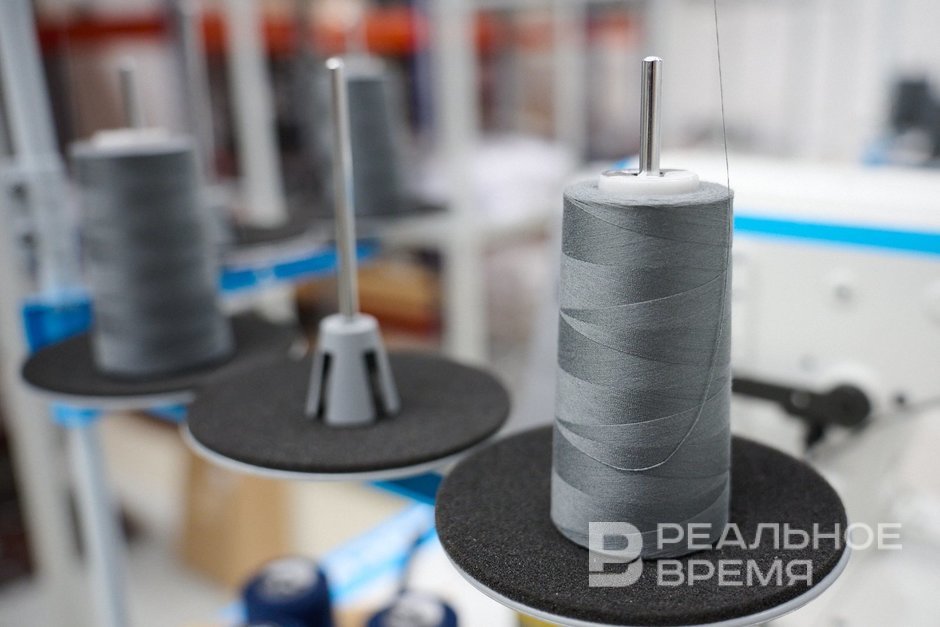
The company was founded in 2017 in Kukmor, so our main production is located there. Today, about 20 people are employed at our production facility. The work is well-organized. We use new technologies and purchase good equipment. We have a design workshop, a sewing workshop, and a workshop where we create new collections — we develop them for a very long time and meticulously.
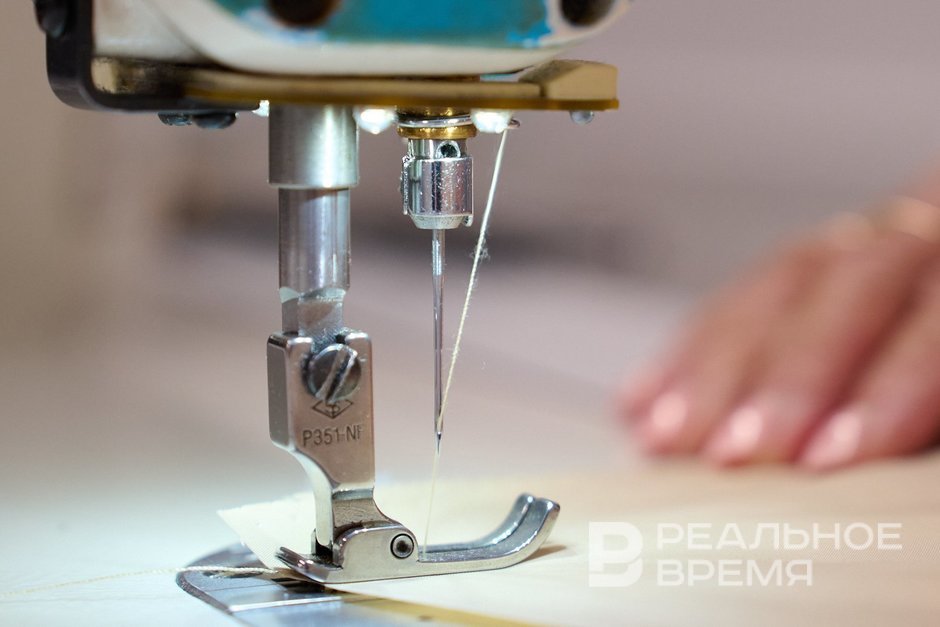
The embroidery workshop is also located here. In total, about 220 square meters are allocated for production, and approximately the same amount is used for our warehouse facilities. We are located almost within the city limits so that our employees can get to work conveniently. Currently, we rent the premises, but in the future, we plan to buy our own to eliminate the rental expense item.
— Through what channels do you sell your products?
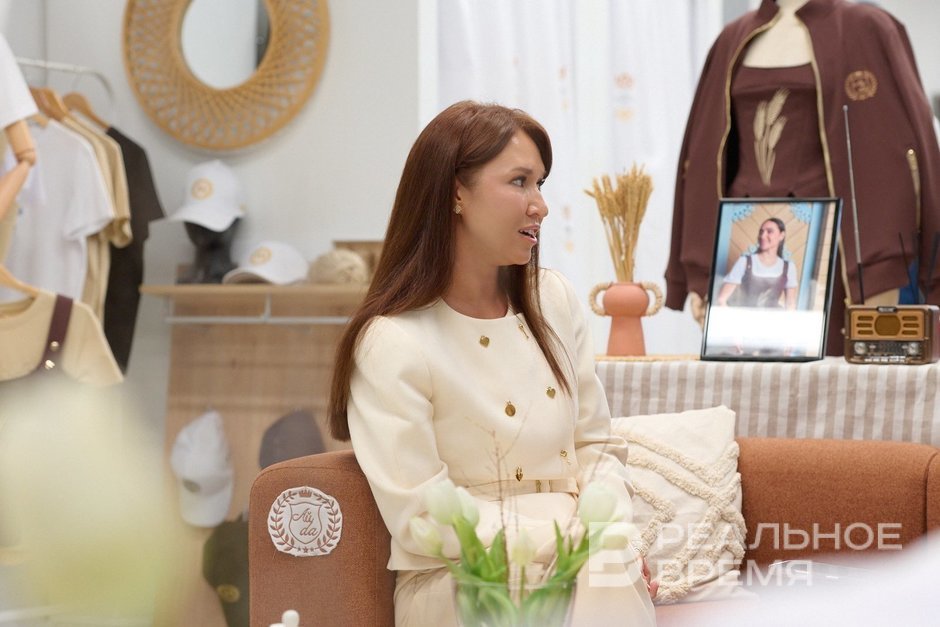
— In addition to large corporate orders, we also work in retail. We accept online orders. We have completely abandoned working with large marketplaces. We had a bad experience when items were returned to us in extremely unsatisfactory condition. We have offline stores in the Agropark and now in Kazan's Center for Unique Craftsmanship, where we have not only organized sales but also set up a workshop and hold master classes on sewing and fabric painting. We are not used to asking, and the Center for Unique Craftsmanship is our first major subsidy to date. We are infinitely happy with this opportunity because I believe it is a bridge where, on one hand, the state extends a helping hand, and on the other, residents and craftsmen create their own platforms. This is precisely the kind of major assistance that the government can provide, and we are making full use of it. I don't know of any analogues to such a project in Russia.
“We are inspired by the cultural code”
— This year, Russia has seen a decline in clothing production. How has this trend manifested itself in the republic?
— The current turbulent times have little effect on us, fortunately. As they say, do what you must, and let be what will be. In addition, more than 20% of our products are clothing for sports sections, sports clubs, and our partners' stores. Last year, we sewed more than 10,000 items of clothing.
Despite the difficulties, our company showed growth in 2025. According to our estimates, this happened against the backdrop of increased demand from corporate clients. Such orders make up almost 50%.
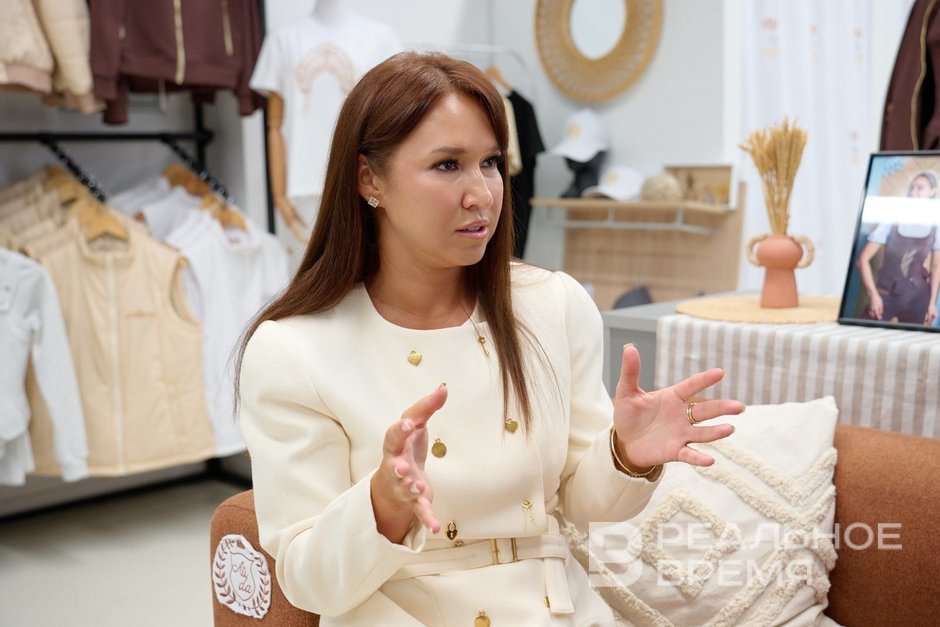
Today, we work in three main directions. The first is the production of capsule collections with Tatarstan's national identity. These feature clothing with elements of folk arts and crafts. In addition, we are listed in the republican register of creative industries.
The second direction is the creation of corporate merchandise. We sew products for industrial enterprises, various companies, and government institutions.
The third direction is working with sports sections, federations, and clubs. We are partners of HC Ak Bars and FC Rubin, and some fans wear our gear. We are inspired by the cultural code, as well as the national flavor of the country and the republic.
“People come to the Center for Unique Craftsmanship knowing they will buy something unique”
— Let's return to the Center for Unique Craftsmanship. There are residents who point out flaws in its operation. Do you share their opinion?
— This project is just getting off the ground. We are at the very beginning of the journey. Yes, initially there were mixed opinions: on one hand, many came in thinking it was something like a museum, and on the other hand, there were opinions that the platform would become just another shopping center. Therefore, it is important here to show that we are all living people, that this is not exhibits, but clothing.
Moreover, I think residents should consider offering good prices. With all due respect to the brands, a dress costing over 50 thousand rubles is expensive for the average resident of Tatarstan. Perhaps it is worth thinking in this direction. Of course, we must realize that the Center for Unique Craftsmanship is not a showroom story. We should not become like all other stores.
The third point is that we need to talk more about the project, about what is here and how it all works, so that people are not put off by it. Everyone who comes here is greatly impressed. Perhaps we should work more in this direction — to increase the recognition of the Center for Unique Craftsmanship. But this work is gradually being done. The website has started working, advertising has appeared. So we just need to wait and not jump to premature conclusions. People come here knowing that they will buy something unique, something unlike anything else.
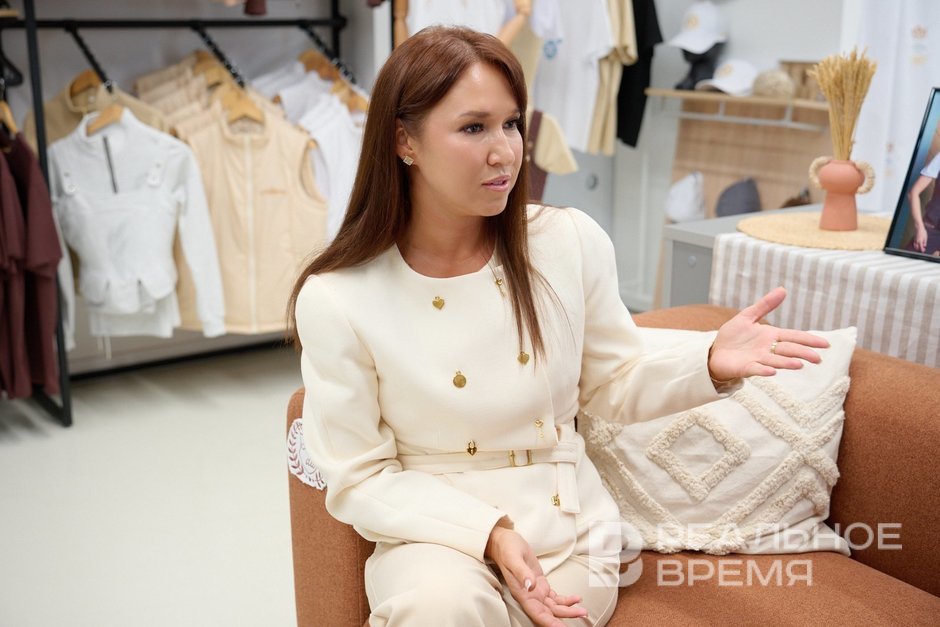
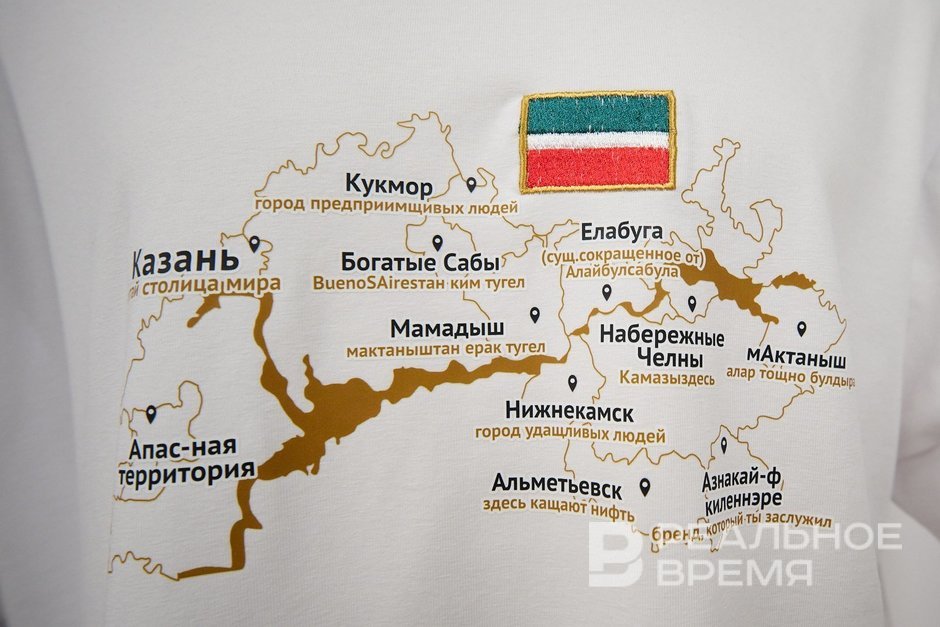
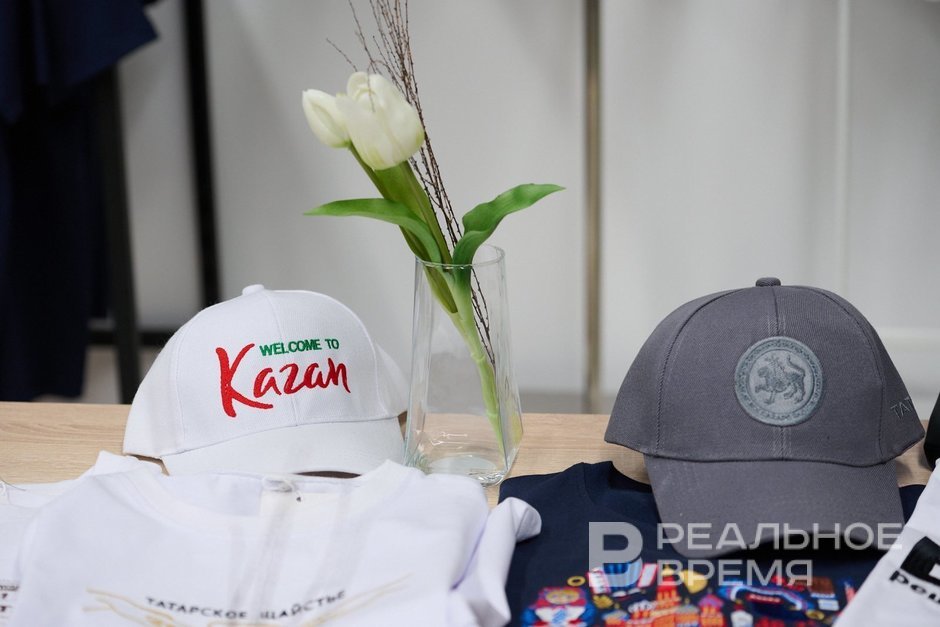
I'll let you in on a secret: we want to introduce an unusual format. I saw it during a business trip to South Korea in stores of a global brand. There, in addition to selling the products themselves, they organized the production of unique stickers right on the spot. And there was always a huge queue there. So the customer can get any inscription or image on their T-shirt or sweatshirt in real time. We plan to open the same direction in the Center for Unique Craftsmanship. In Tatarstan, people love individuality very much. That is probably why clothing with republican symbols, with a map of Tatarstan, or inscriptions in Tatar is popular. We decided to move further in this direction. We have already ordered special equipment worth 1.4 million rubles and are bringing an embroidery machine here. In addition, we will need another master.
— How has the situation with raw materials changed? Where do you now order fabrics and accessories?
— Currently, the fabrics we use are almost 100% Turkish, sometimes Chinese or European (from Italy or Spain), but we want to move away from this. Recently, we had a very productive trip with a delegation from the Ministry of Industry and Trade of Tatarstan, led by Oleg Korobchenko, to Belarus. We were amazed by the quality that our colleagues offer. Now we plan to gradually change our trajectory and buy more and more fabrics from our neighbors. We are planning new purchases for August.
New collections will be created. We are currently in the process of discussing what we are buying, in what volumes, and where. About one thousand meters of fabric are needed to launch one collection. We want to collaborate with other national brands and conduct joint purchases through suppliers who are ready to bring these volumes to Tatarstan. Accordingly, we will then be able to buy this fabric in parts. These issues are currently being discussed with Belarus.
“We are thinking of starting our own fabric production”
— Have you been able to establish fabric production in Russia?
— We see that there is movement in this direction. There is a very good manufacturer of membrane fabrics in Russia — it is located in the city of Shakhty. Their material is slightly more expensive than that of foreign competitors, but very high quality. We purchased this fabric as a test and sewed outerwear from it, which performed excellently. In addition, we have been working from the very beginning with synthetic padding produced in Novosibirsk. It has never let us down. But to be fair, the examples end there. We are actually even thinking of starting our own production of fabrics and synthetic padding. We are currently discussing this possibility.
— Has import substitution occurred in equipment production?
— I think this is not a quick process. Currently, all our equipment is Chinese: both sewing and embroidery machines. Prices have risen by about 20% recently. So if we conditionally bought the first sewing and embroidery machine for about 2 million rubles, now it costs us 2.9 million. The same goes for threads and accessories — either China or Turkey. Although I recently learned that high-quality accessories are now being produced in the Moscow region, which is, of course, gratifying.
— How high is the competition in the niche, and how do you feel about it in general?
— It is no secret that the light industry is a fairly highly competitive niche. And that's great: we are always in shape, and it is incredibly interesting to work. If we talk about competition in general, I think that now is the time when national brands should unite, create collaborations, support, and help each other. Only this way can we wipe the floor with Western brands.
A prime example of a platform for this is Kazan's Center for Unique Craftsmanship. We, for example, are friends with many of our neighbors, visit each other, help out when necessary, and come for advice. Yes, we are all different, and our products differ, but we are alike in one thing: we are patriots of our homeland and put not just effort and time into creating our products, but also our soul.
“The only thing I don't like about competition is copying”
— Nowadays, it is very popular to produce clothing with national or state symbols. Are there any rules for their use?
— No one forbids using the coat of arms or flag of Tatarstan. Perhaps that is why they can be found on the clothing of various brands. But the symbols of Kazan cannot be applied just like that; there is a strict ban. For using the image of the Kremlin, for example, we bought a license that is valid for three years. It is somewhat similar to copyright. However, if our products are copied, we are not protected in any way: it is quite difficult to prove. Competition is wonderful. The only thing I don't like about it is copying. You put so much effort into creating a new product, and in the end, someone comes along, takes it, makes an exact copy, churns it out, and even in inferior quality.
Yes, such a problem exists. In our industry, there is the concept of industrial design, which is protected by law, but in reality, it turns out differently. This issue is being raised in the professional community. Two years ago, we discussed it in the Federation Council. We had a whole consultation, and many well-known Russian brands came out and asked what to do. One of my colleagues even cried at the podium out of resentment. Perhaps legislators should think about how to solve this problem. For the simple reason that if we take an industrial design as a basis and change a small seam, color, or pocket placement, the product is no longer considered the original version. We have to re-register everything. I think that in this regard, it makes sense to adjust the legislation.
— What is the main problem of the industry, in your opinion?
— Personnel issues, undoubtedly. Despite the fact that we work in a city where there are many good seamstresses, we will sooner or later face the fact that a new generation must come to replace them and needs to be adapted. If we don't automate the process, we need to look for them now. The generation of zoomers has already started coming to us, but we need to work with them differently. Sometimes they just don't show up for work and don't answer calls. Or they first complete training and then just say: “This is not for me” or “Creating patterns is boring.” To our joy, there are also young people who are ready to work. Currently, out of our 20 employees, three are from the younger generation. The salary at our enterprise is decent for the district: an average of 57 thousand rubles, and for some seamstresses, even more.
— What do you include in your future development strategy?
— We are looking towards opening new retail stores. Our brand is very much loved in the districts of the republic, and we would like to have our own representation there — for example, in Naberezhnye Chelny, Nizhnekamsk, or Aktanysh. Among the real plans is opening a sales point in the new shopping center on the territory of the Alabuga Special Economic Zone. I think this is a prospect for the coming months.