The “Odyssey” reveals secrets of ancient science, mobile phones don't cause cancer, scientists find an exomoon
Interesting science news of the week
The largest meta-analysis over 28 years proves that mobile phones and radio towers do not cause brain cancer. The texts of the “Iliad” and “Odyssey” describe the scientific worldview of Ancient Greece. Three thousand years ago, there were ten times more languages in the world than today. For the first time, a satellite has been found outside the Solar System — though it is the size of Jupiter and orbits a brown dwarf. A healthy gut microbiome protects against stress and depression. More details about this week's science news are in the review by Realnoe Vremya.
Mobile phones do not cause brain cancer
From 1994 to 2022, scientists around the world, at the initiative of the WHO, conducted 63 studies on how electromagnetic fields from smartphones, Wi-Fi networks, radio towers, and other radiofrequency devices affect human brain health. Rumors have long linked exposure to electromagnetic waves with brain cancer.
An international group of scientists conducted a large-scale meta-analysis of the collected data, which answers this question quite categorically: there is no link between gadgets and brain tumors. Even if you talk on them for many hours every day. Cell towers and radio transmitters are also safe from this perspective, and childhood leukemia, contrary to rumors, is not caused by them either.

The energy of radio waves is not high enough to damage cellular DNA, which differs greatly from X-ray or gamma radiation. And for non-believers, scientists urge them to look at the statistics and compare. Thirty years ago, no one used mobile phones. Now billions of people have them. If mobile phones really caused brain cancer, the incidence statistics would literally “boil” compared to the pre-mobile era. But this did not happen: brain cancer statistics have been stable since the 1980s.
3,000 years ago, people spoke tens of thousands of languages
Today, linguists estimate that there are 7,500 languages in the world, but almost half of them are at risk of disappearing. Several languages “die” every year, but this, it turns out, is not only characteristic of the modern era with its globalization.
Until now, scientists believed that the planet lost the most languages over the few centuries of European colonization: indigenous tribes disappeared from the face of the earth along with their languages, or they mixed, adopting English, Spanish, French, Portuguese, and other global languages.

A group of American scientists attempted to create a mathematical reconstruction of the number of languages in the world over the past 12,000 years. They based their work on many factors — from Bayesian methods of statistical distribution to data on the size of traditional hunter-gatherer societies. The scientists assumed that small isolated communities usually speak their own languages. Based on all this, they estimated how many languages existed on the planet during different periods of civilization's development.
They found that even before agriculture emerged, there were no more than 6,000 languages. But then, when people began to spread widely across the planet, the number of communities grew. According to the American model, between 3,000 and 1,000 years ago, there were tens of thousands of languages on Earth — an order of magnitude more than today. But then globalization began: powerful empires and civilizations grew, absorbing the cultures of conquered tribes and erasing their languages.
Most likely, the process will continue further.
Scientists have found an exomoon outside the Solar System for the first time
Astronomers are observing a red dwarf 73 light-years from Earth. This star — CD-35 2722 — is more than twice as light as the Sun. A brown dwarf, CD-35 2722 B, orbits around it. Brown dwarfs are objects that cannot yet be called stars but are no longer planets. They are heavier than 13 Jupiter masses but lighter than 80. Stable thermonuclear reactions with ordinary hydrogen cannot yet begin in their interiors, so a brown dwarf will not become a star. However, the fusion of deuterium nuclei (a heavy isotope of hydrogen) does occur in them. So they are warmer than ordinary planets.
What interested scientists about the brown dwarf orbiting the star CD-35 2722? It is 37 times heavier than Jupiter and orbits its star once every 5,000 years. And a satellite — an exomoon — orbits it! This fact was discovered because astronomers detected a “wobble” in the star and a change in the object's speed relative to the observer. This wobble can only be explained by another celestial body influencing the brown dwarf.
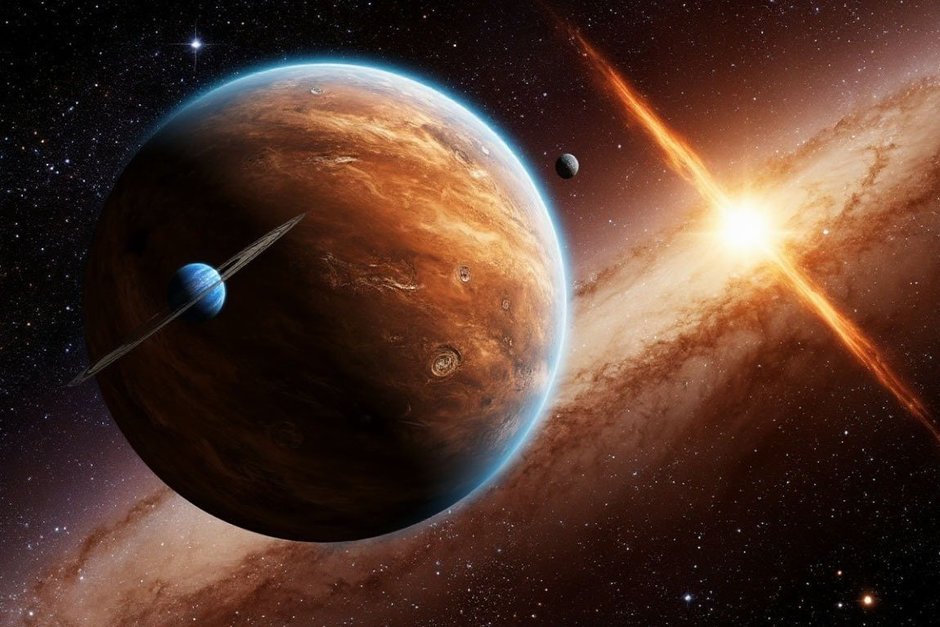
Calculations revealed that this is a planet almost the size of Jupiter, a classical gas giant. It orbits its brown dwarf in 170 Earth days. And this is the first reliably discovered exomoon of a brown dwarf that itself orbits a full-fledged star. So we see a triple hierarchy: star, brown dwarf, planet.
It is quite possible that classical satellites, similar to our moons in the Solar System, also orbit this unusual exomoon. But there is no evidence for this yet.
Gut bacteria help regulate stress levels
Neuroscientists and microbiologists from the Southern Medical University of Guangzhou (China) conducted an analysis of a large body of clinical data on the relationship between gut and brain function. According to their data, the composition of the gut microbiota can significantly influence stress levels and the body's ability to cope with it.
The reason is the metabolites produced by the bacteria inhabiting our digestive tract. In the context of stress regulation, scientists were particularly interested in short-chain fatty acids (SCFAs), secondary bile acids, and tryptophan metabolites (one of the amino acids). They are beneficial to the gut by strengthening its inner walls. And in terms of hormonal metabolism, they are important because they participate in the functioning of the hypothalamic-pituitary-adrenal axis. This system manages the body's response to stress and the production of cortisol, and also stimulates the production of serotonin and dopamine, which determine our mood and well-being.
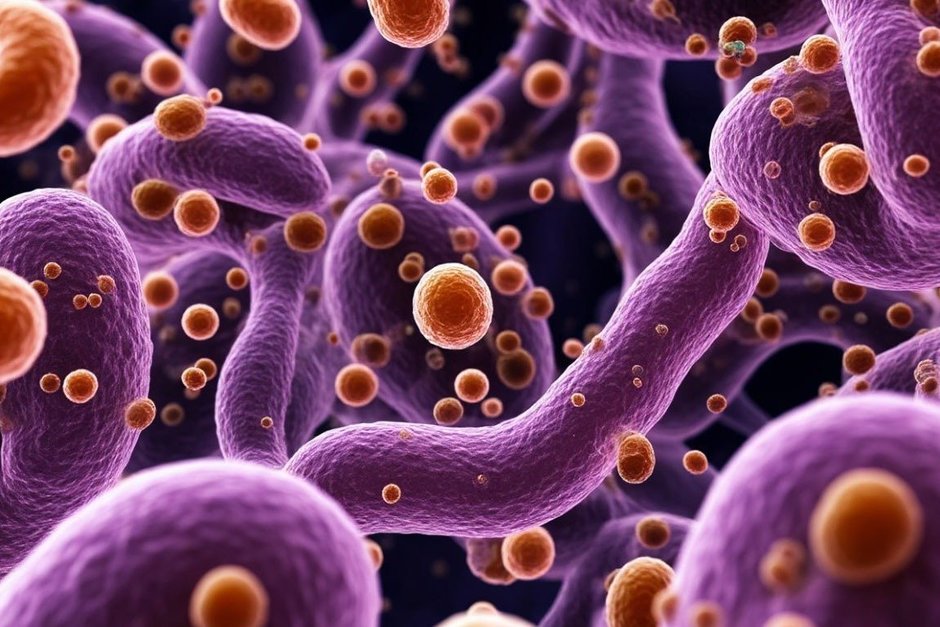
Animal experiments have shown a clear relationship between the development of depression and a deficiency of bacterial flora combined with a lack of SCFAs. If the acids are additionally introduced into the body or beneficial flora is introduced into the intestine, neuroplasticity increases, anxiety levels decrease, and cognitive abilities improve.
It turns out that probiotics and a special diet can be effective adjunctive methods for treating depression and anxiety disorders. But before introducing them into psychiatric clinical practice, evidence of effectiveness and additional research are needed.
The “Odyssey” reveals the scientific picture of the ancient world
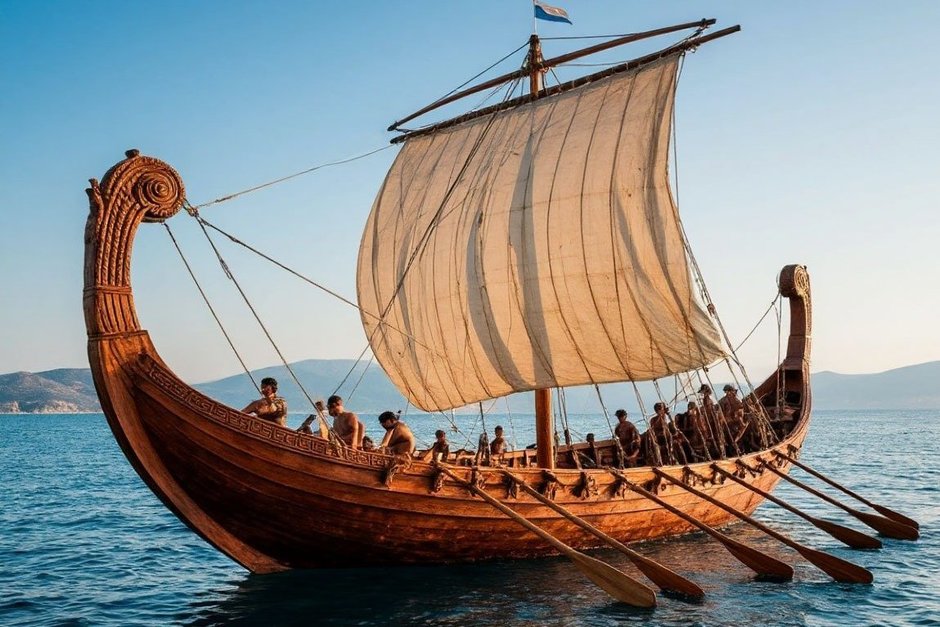
Nature magazine marked the release of Christopher Nolan's film in its own way: its experts analyzed which fragments in Homer's “Iliad” and “Odyssey” speak about the scientific ideas of the ancient Greeks who lived in the 16th century BC — more than 3,500 years ago! After all, the texts of the two great ancient poems contain many moments that still excite the imagination of scientists. For example, Homer describes the earliest ideas about self-propelled ships controlled by something remarkably reminiscent of artificial intelligence: the Phaeacian ships that delivered Odysseus to Ithaca “know every city, every fertile land," they have “no helmsmen," and they instinctively understand what their crews are thinking and intending to do.
Metallurgy and trade
The “Odyssey” was recorded in the Iron Age, around 800 BC. But for many centuries before that, it was transmitted orally in the tradition of the aedoi. This means that it reflects both knowledge of Iron Age metalworking, and data on the production of bronze swords and spears (since the epics have their roots in the Late Bronze Age), and hints at the production of actual steel. For example, when Odysseus drives a red-hot spear into the Cyclops' eye, it hisses — just as a steel blade hisses when it is quenched in water during forging. This technology is not characteristic of working with either iron or bronze. This means that the person who wrote this passage saw how tools with steel blades were forged.
The episode with the row of twelve axes, through which Odysseus had to shoot an arrow upon returning to his palace, is confirmed by excavations of a Mycenaean palace in Greece. For example, an image of a perforated axe with holes in the blade was found there, dating back to 1450 BC.
The “Odyssey” also proves the existence of a branched and extensive trade network between Bronze Age civilizations. Evidence of such trade was found in the 1980s, when a sunken ship from the 14th century BC was discovered off the southern coast of Turkey, full of treasures from Europe, Africa, and Mesopotamia. That is, Bronze Age people traveled throughout the Mediterranean. So 20 years of wandering — why not?
Botany and poisons
The text of the “Odyssey” is scattered with references to medicines, poisons, and antidotes of plant origin — meaning the Greeks successfully used all of them.
Thus, to heal people from tears, sorrow, and grief, Helen of Troy uses a potion called nepenthe, mixing it into wine. Researchers believe it may have contained extracts of henbane and mandrake, which contain natural compounds that block the neurotransmitter acetylcholine. In the ancient world, they were widely used as anesthetics.

The sorceress Circe gives Odysseus's men a potion that turns them into pigs and makes them forget their homeland. It is likely also based on henbane. At the same time, the god Hermes gives him an antidote — a mysterious herb called moly in the form of a flower with a black root and a milky-white bud. Scientists suggest that it could be sea narcissus, which suppresses the effects of the aforementioned henbane and mandrake.
Astronomy
Odysseus and his crew skillfully used stars for navigation — the Greeks were experienced seafarers and navigated the sea using a celestial “map.” The nymph Calypso tells Odysseus to sail so that Ursa Major remains on his left, meaning sailing east, home.
The poem also contains several other tantalizing crumbs of astronomical knowledge: mentions of the Pleiades, the Hyades open star cluster, and the Orion constellation. All these names date back to the very origins of Greek astronomy.
The Greeks also knew about solar eclipses. When the prophet Theoclymenus foresees the death of Penelope's suitors, he describes how the Sun will disappear from the sky and darkness will envelop the world. A 2008 study suggested that this was a completely real eclipse that occurred on April 16, 1178 BC. So Odysseus's return to his palace apparently happened on that very day.