Alexander Ovchinnikov: “My grandfather said about Gavrilov: he was short in stature, plowed with oxen”
A historian on the legendary defender of the Brest Fortress and the reconstruction of Great Patriotic War events
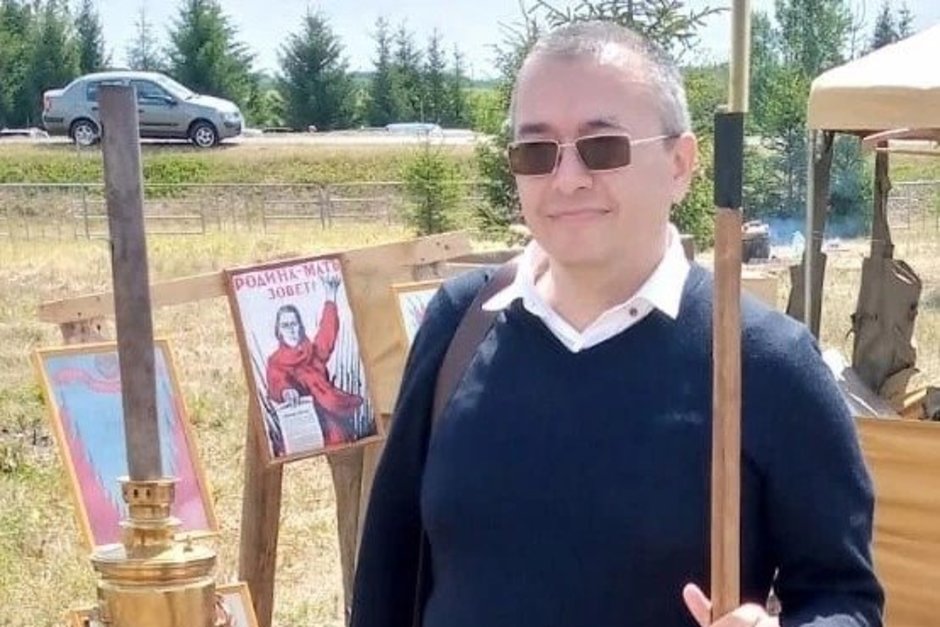
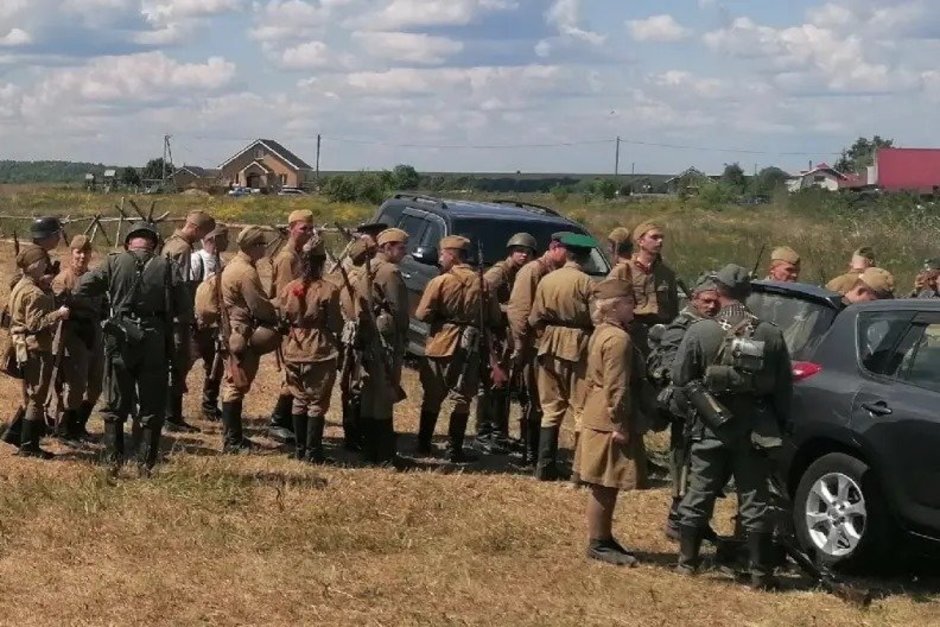
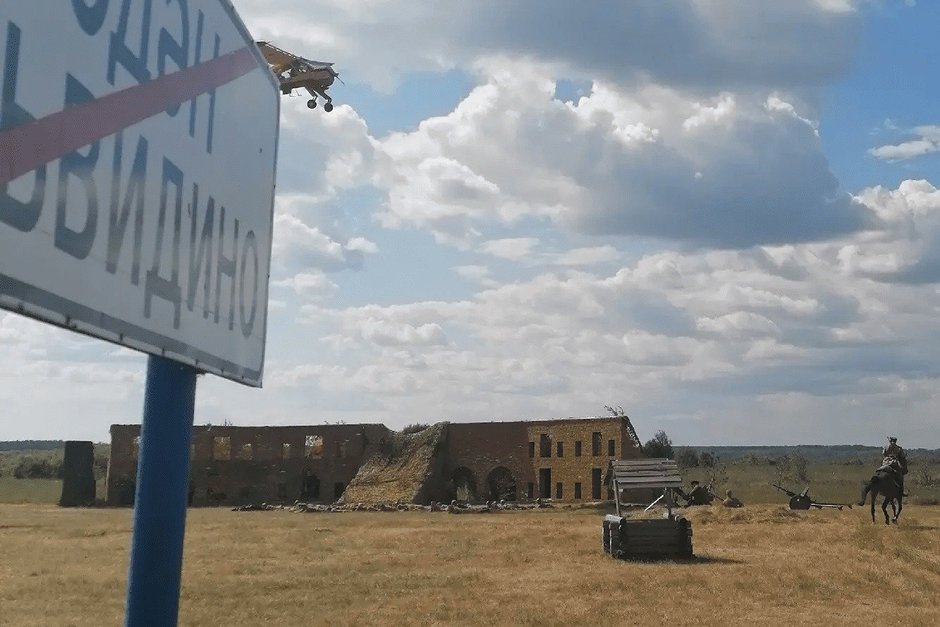
Today is the Day of Remembrance and Sorrow in Russia — the anniversary of the start of the Great Patriotic War. June 22, 1941, among other things, is associated with the heroic defense of the Brest Fortress. For several years now, not far from the village of Alvidino in the Pestrechinsky district of Tatarstan, the festival “Elbeden” has been held — a large-scale reconstruction of the events of that time with up to 50,000 participants and spectators. Alvidino is the small homeland of the legendary defender of the Brest Fortress, Major Pyotr Gavrilov. A native of the district, historian Alexander Ovchinnikov, in an author's column for Realnoe Vremya, tells about the hero, the memorable battle, and how his descendants remember him.
“Major Gavrilov is a distant relative of mine”
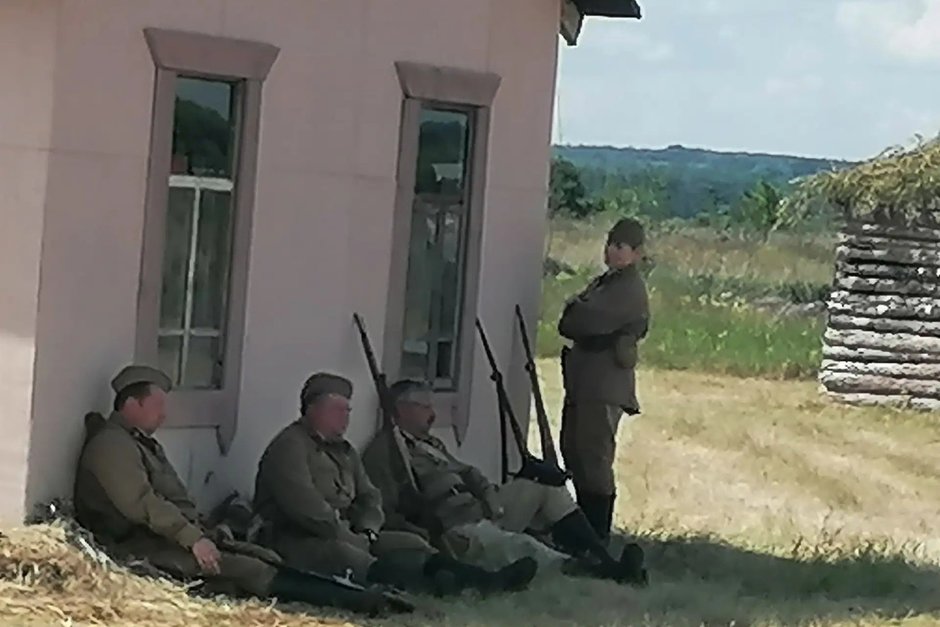
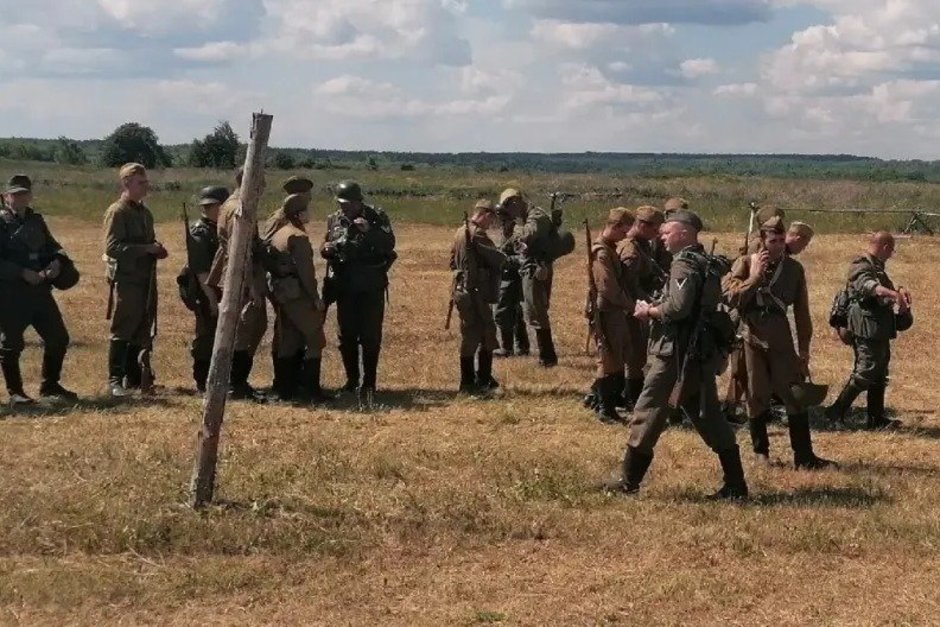
During the festival in Alvidino, the local Mesha River turns into the Western Bug River. At 4 a.m., the “Wehrmacht troops” begin crossing it, and on the other bank, next to a model of the Eastern Fort of the Citadel, “Red Army soldiers” are already waiting for them.
The defense of the Brest Fortress and the reconstruction of this event are of not only scholarly interest to me; there is also a personal aspect. My grandmother (1930–2006) and grandfather (1929–2013) come from the villages of Yunusovo and Selengushi, which are very close to Alvidino. According to my grandfather, the people from “Selengushi," “Yunusovo," and “Vladino” are almost all “distant relatives” to one another, so Major Gavrilov is a very, very distant relative of mine, as they say, “a seventh cousin twice removed.”
I first heard about the Hero of the Soviet Union in childhood from two different sources. The first was official events on May 9 in the district center and at school, and the second was family memories. The content of these sources often differed. Even then, at an intuitive level, I began to understand that family memory and the memory dictated by the state are not the same thing.
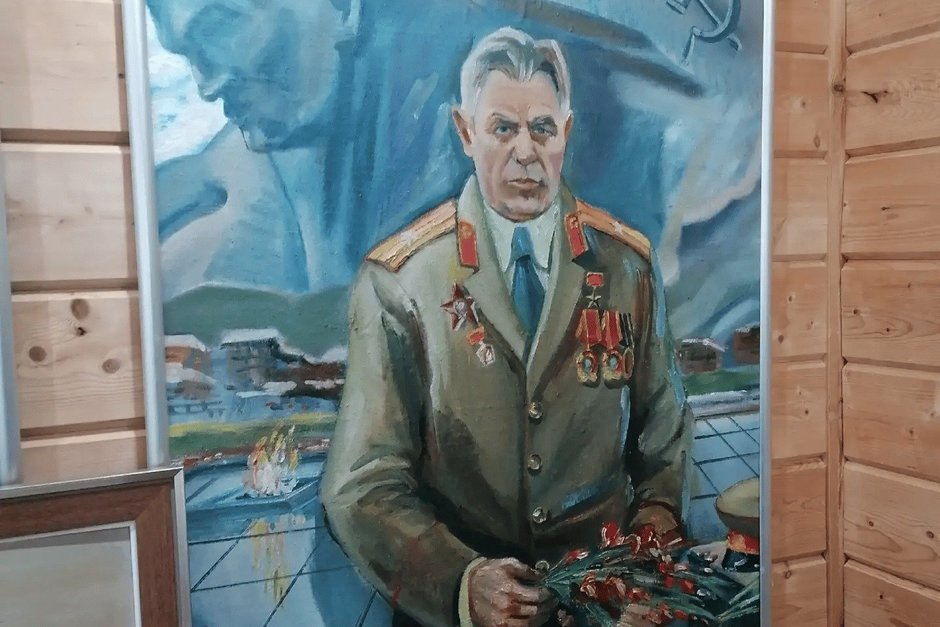
My grandfather remembered well Gavrilov returning to his native village after the war. The attitude of many fellow villagers toward the former prisoner of war was, to put it mildly, not very friendly. My grandfather saw the hard labor of the former officer, stripped of all ranks. What particularly stuck in his memory was plowing with oxen. My grandfather, who worked the land alongside Pyotr Mikhailovich, said of him: “He was short in stature, plowed with oxen.” My grandfather also recalled what was no secret to those around him — that in the middle of the night, Gavrilov could be summoned “wherever needed” for long conversations about his life in captivity.
The hero's post-war life in his small homeland was not very happy or promising; he found himself at the very bottom of the rural social ladder. This forced him to move to Krasnodar, where he managed to find work. According to some data, he initially cleaned public areas, then got a job as a forwarding agent at the Krasnodar Instrument-Making Plant.
Breaking out of Stalin's village was a great life success; my grandmother recalled that during the war and the first years after, ordinary food was quinoa. Gavrilov was helped by the fact that because of the “stain on his biography," he was not accepted into the collective farm, and collective farmers, as is known, did not have passports and their movement around the country was restricted. My grandmother and grandfather were able to move from the village of Yunusovo, neighboring Alvidino, to the district center of Pestretsy and get jobs at the local special school as a driver and a housekeeper, respectively, only after 1974, when they received passports.
In Krasnodar, thanks to the writer Sergei Smirnov (1915–1976) taking an interest in the theme of the defense of the Brest Fortress, fame caught up with Pyotr Mikhailovich, but he did not return to permanent residence in the Pestrechinsky district.
“For everyone who remembered him alive, Gavrilov was 'from Vladino'"
As a specialist in historical memory, I can say that in the “Elbeden” war games, several layers of memory forming a vertical can be clearly traced. The first of these is the local one. These are the memories of the residents of Alvidino and neighboring villages.
In Soviet times and later, the appearance of the legendary fellow countryman changed little in the lives of the Alvidino residents. I remember that the road to the village was always very bad. My grandfather worked as a truck driver until he retired; as a child, I often rode with him, and once after rain we got stuck for an entire night in the mud of the dirt road before Alvidino. In the early 2000s, I saw the head of the district driving a good sports car near the village, but the low clearance of the foreign sports car prevented him from turning onto the dirt road. In the early years, the bad road hindered the “Elbeden” war games, but thanks to the resonance of the event, a normal road was eventually built.
In the 1990s, residents of Alvidino, Yunusovo, and especially Selengushi, where only a few houses with defenseless pensioners remained, seriously feared raids by groups of hooligans on motorcycles from the district center. By the time of the festival, the state had strengthened, and local crime did not become an obstacle to the event. Otherwise, the reenactors with dummy weapons would have attracted understandable interest, and much trouble could have happened. I remember that in 2004, downstream of the Mesha, while participating in excavations of an early medieval burial ground near the village of Narmonka in the Laishevsky district, local “guys” came to our archaeologists' camp at night and declared that “this is their land," demanding the items we had found, including a unique late Sarmatian sword.
As a schoolboy, together with my class from Pestretsy Secondary School No. 1, in the second half of the 1990s, every autumn I went out to the surrounding fields to harvest potatoes and beets. It is difficult to put into words the feeling of overwhelming physical exhaustion, but now I understand that this experience allowed me to feel a small fraction of the post-war daily peasant labor. There is information that some fellow villagers who were unfriendly toward Gavrilov might occasionally throw a potato at him, but just throwing food around in the semi-starved years was unwise, and most likely, some excesses could have occurred during collective work in the same potato fields. I, who worked there half a century later, remember well that the concentration of tired people in one place provokes emotional tension and conflicts.
The festival organizers understood a priori that the residents of Alvidino agreed to host a multi-thousand-person event within their village and the associated inconveniences.
The village name was often pronounced in abbreviated form by locals and in the district generally — Vladino. For everyone who remembered him alive, Gavrilov was “from Vladino.” I heard the word “Elbeden” for the first time only in connection with the war games, surely like many other residents of the district. Gavrilov himself is unlikely to have ever used this word.
Here it is logical to move from the local to the second layer of historical memory — the district-republican level. The initiator of the festival reconstructing the defense of the Brest Fortress was an official from the district center, a very energetic organizer, Nailya Tazieva. In the first years of the festival, when it still competed with the “Skorlupino” project promoting the Pestretsy poultry farm, which was also her project, she literally held a large-scale event for the district in an open field.
Twenty-one years ago, upon graduating from university, for various reasons I had to work as a social studies teacher for one quarter at Pestretsy Secondary School No. 2, and I can imagine how much effort is required to organize even a small event in those conditions.
The model of the Eastern Fort of the Brest Fortress was built by the whole village
At one point, I volunteered to participate as a volunteer in the preparation of the war games. Hoping for a full-fledged participant observation experiment — a common research method in anthropology — in 2019, through a classmate, I approached the organizers with a request to include me in the crowd scenes, but at that time there was no equipment suitable for my height. I had to limit myself to observation. As almost a local resident, I had the unique opportunity to observe the festival's organization process from the inside, asking acquaintances about it casually and in passing. The research field was challenging, as I was accustomed to communicating in an academic environment, and the difference in cultural contexts was felt. Still, I managed to find out that in the first years, local government employees were involved in preparing the model of the Brest Fortress, trenches, dugouts, and other structures.
According to one of the Pestrechy officials, in 2019, during the organization of the first “Elbeden” war games, the authorities asked residents of the district to help build the model of the Eastern Fort of the Brest Fortress: some brought slabs, some brought 20–30 bags of cement, some came and worked themselves. According to official data, in 2019, several local organizations and one farm from a village neighboring Alvidino sponsored the military reenactments. On June 12 of the same 2019, more than a hundred Pestrechy residents took part in a community cleanup to complete the bulk of the work before the upcoming holiday. As reported in the district media, among those working were “heads of institutions and organizations of the district, heads of rural settlements, representatives of education, culture, sports, and others.”
My classmate, who is connected to the local authorities, expressed himself succinctly but accurately about the specifics of organizing the “Elbeden” war games: “Everyone does something there... mostly, as usual, government employees... they paint, clean, build.” Technically, this was most likely carried out through the implementation of an executive committee resolution for “internal use” on assigning a particular organization to a specific section of construction. The voluntary nature of the work was emphasized. After the “war games," some government employees were ceremoniously awarded certificates at the district administration.
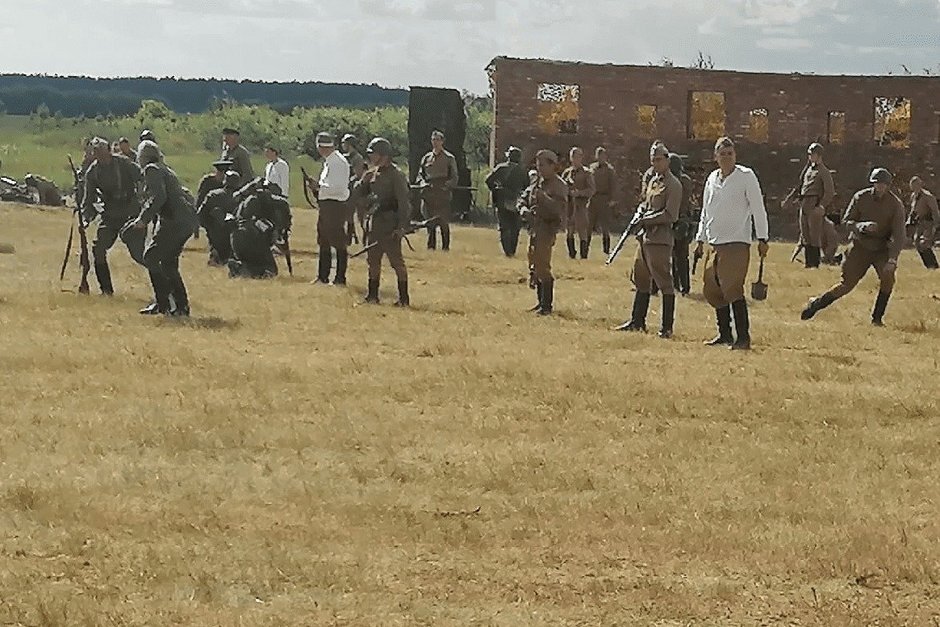
It became clear that the district leadership had become interested in the war games. Apparently, permission to hold the festival was also obtained at a higher, republican level.
The festival's exit to the regional level, in addition to technical issues, also required resolving ideological ones. The reconstructions are held in Tatarstan, which is why the word “Elbeden” — the Tatar equivalent of “Alvidino” — appeared in their title.
The village itself is mainly inhabited by baptized Tatars (Kryashens). Officially, they are considered a sub-ethnic group of Tatars, but many of them identify themselves as representatives of a separate Turkic-speaking Orthodox people. For most of Gavrilov's life, before the revolution and for some time after the war, the Kryashens were officially recognized as a “distinct” people, and only later were they included as Tatars by Kazan scholars. Let me remind you that Gavrilov studied at the Kazan Central Baptized-Tatar School, and his given name, surname, and patronymic are in honor of Christian apostles and archangels.
In the official discourse of the “Elbeden” war games, it is emphasized that Hero of the Soviet Union Pyotr Mikhailovich Gavrilov is a Tatar. Kryashen public figures include him, along with, for example, General D.M. Karbyshev (1880–1945), in their “ethnic pantheon” of war heroes.
“The Pestrechy festival united different levels of memory”
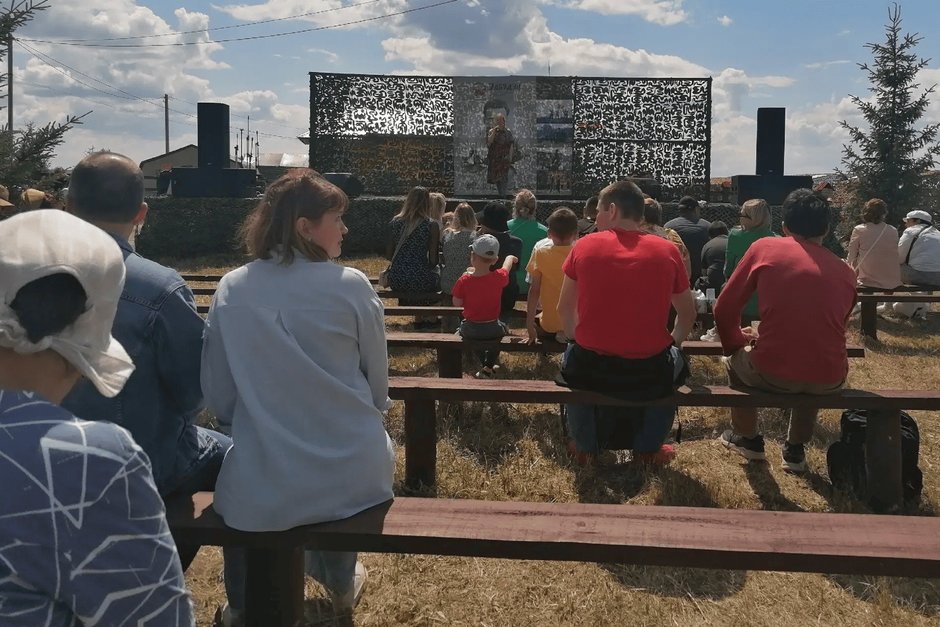
Military reenactments are also associated with “higher” levels of memory. The all-Russian, and formerly all-Union, aspect of memory of the defense of the Brest Fortress is, I think, understandable. It is enough to recall numerous books and films, such as “The Immortal Garrison” (1956), “The Brest Fortress” (2010), and “Not Listed” (2025). The Brest Fortress has become a symbol of courage and heroism. The “Elbeden” war games are now supported by presidential grants, and many patriotic historical clubs from all over Russia participate in them.
The republican and all-Russian levels of memory of the defense of the Brest Fortress were brought into alignment by the final settlement of relations between Tatarstan and the federal center, which began in the late 2000s. In the earlier period, there were nuances. For example, on the cover of a 2007 children's book published by Tatknigoizdat, dedicated to the “Liberation War of the Tatar People," there was an emblem of the “Idel-Ural” legion formed by the Nazis from representatives of the Turkic-speaking peoples of the Urals-Volga region (the Institute of History named after Sh. Mardzhani of the Academy of Sciences of the Republic of Tatarstan officially opposed the withdrawal of the book from sale). Therefore, thanks to the appropriate political situation, the ethnic regional component of the “Elbeden” war games, the assertion of Gavrilov's Tatar origin, harmoniously fit into the all-Russian ideological discourse of memory of the Great Patriotic War. In this case, the vertical of memory coincided with the vertical of power.
In neighboring Belarus, which forms a union state with our country, the theme of the defense of the Brest Fortress has become part of the memory of the feat of the Belarusian people during the war. And interestingly, here the Pestrechy festival united different levels of memory not only symbolically but even administratively and economically. From the very beginning of the “war games," the administration of the Pestrechinsky district established good friendly relations with the regional executive committee of the city of Brest. The reason for the official visits of the Pestrechy residents was precisely the “Elbeden” war games.
Some time later, the former head of the Pestrechinsky district was promoted to Belarus as the head of the trade representation of Tatarstan. According to media reports, he was “retroactively” assigned a salary of $2.75 thousand per month (over 280 thousand rubles at the exchange rate of that period). It is clear that his candidacy was agreed upon with the Belarusian side, including based on the fact that he was already known in the republic. For Ilham Kashapov, who began his career as the head of the Pestrechy poultry farm, this was an impressive career rise. It is interesting to note that Major Gavrilov at one time was in no hurry to return from Krasnodar to the Pestrechinsky district and bequeathed to be buried at the garrison memorial cemetery in Brest.
Thus, many influential political forces turned out to be interested in updating the memory of the defense of the Brest Fortress in Gavrilov's small homeland in Tatarstan, as well as in Russia as a whole and in Belarus. Being symbolic capital, historical memory transformed into other types of capital. The local layer of memory, closest to the realities of the past, mostly remained silent, although the residents of Alvidino, appealing to the festival, sometimes tried to draw attention to the many unresolved problems of their, in their opinion, “dying” village.
Professional research helps avoid the creation of historical myths
How is the defense of the Brest Fortress regarded outside Russia and Belarus? In many former Soviet republics, historians strive to identify and perpetuate the names of their countrymen who defended the fortress.
Competing with the established views on the events of the summer of 1941 in most of the post-Soviet space is the glorification of the defense of the Citadel by Polish troops against Wehrmacht units (and supposedly the Soviet army) in September 1939. Key figures of the Polish defense are presented as General Konstanty Plisowski (1890–1940) and Captain Wacław Radziszewski (1898–1940).
Polish history enthusiasts conduct historical reenactments of the 1939 events. It is clear that they focus precisely on their part of the memory of Brest during World War II. The sources on the specifics of organizing Polish reenactments are unavailable to me for obvious reasons, but as a scholar, I would be interested in conducting a comparative analysis with the Pestrechy experience.
It would seem that academic historians should set the vector of historical memory. But I do not agree with this statement. Professional historians are only a part of the society in which they live, and administratively and financially, they are not the most influential part. Essentially, a historian faces a choice — either to “work” for mass perceptions of the past, or to meticulously study the past and those same mass perceptions of it. This choice is often also a moral and ethical dilemma.
In Soviet times, the writer Sergei Smirnov collected the memories of the fortress defenders, wrote his famous books and plays about them. The memoirs of participants in those events, including Major Pyotr Gavrilov, were published. From a scholarly point of view, this was the first and very important stage of academic research. The next stage of working with sources involves cross-referencing the memories of different people, comparing them with official documents, ascertaining the circumstances under which the memoirs were written, considering how much time had passed since the event itself, etc.
Professional research helps — though not always — to avoid the emergence of historical myths. An example of this is the scholarly analysis of the attempts by some Polish historians and publicists to construct a narrative about the “heroic defense” of the Brest Fortress by Polish troops against the Wehrmacht and the Red Army in September 1939. Let me remind you that before World War II, Brest was part of the Polish state.
According to the “secret protocol” to the Non-Aggression Pact between Germany and the USSR of August 23, 1939 (the Molotov-Ribbentrop Pact), Brest was included in the Soviet sphere of influence, but German army units that invaded Poland on September 1 reached Brest before Soviet troops (they crossed the Soviet-Polish border on September 17). It is well established that from September 14 to 16, an assault took place, and Polish troops under the command of General Konstanty Plisowski offered stubborn resistance, especially in the area of the Kobrin Gate. The Germans suffered serious losses; during the fighting, the adjutant of Heinz Guderian (1888–1954) was killed. But on the night of September 17, the defenders left the fortress, and it came under Wehrmacht control.
Later, the Soviet 29th Tank Brigade under the command of S.M. Krivoshein (1899–1978) arrived. After negotiations, according to the terms of the Molotov-Ribbentrop Pact and despite the muted discontent of German soldiers and officers, on September 22, a ceremony was held for the solemn withdrawal of German troops from Brest. Outwardly, the event resembled a parade with orchestras, watched by Guderian and Krivoshein.
“The story of Radziszewski's detachment turned out, I repeat, to be nothing more than a myth”
According to scholarly data, the Polish defense of the Brest Fortress ended there in September 1939. However, in 1981, former Corporal Jan Samosiuk shared memories that gave rise to a beautiful but nevertheless myth. The main content of the myth was that after the main body of Polish troops left on September 17, 1939, a detachment under the command of Captain Wacław Radziszewski allegedly remained in the fortress. From the Kobrin fortifications, the detachment moved to the Sikorski Fort, where they took up defensive positions. The Germans, who were clearing the area after the recent fighting, discovered the enemy in the fort only on September 19 and offered surrender through parliamentarians. Radziszewski refused, shelling began, which, however, did not harm the defenders. Guderian, knowing that the fortress would soon have to be handed over to Soviet troops anyway, did not launch an assault that promised new losses.
On September 22, the Sikorski Fort was allegedly stormed by units of the Soviet army. Artillery bombardment, armored car attacks, and infantry assaults yielded no results. The same was repeated on September 24 and 25. A massive assault began on September 26; the defenders suffered heavy losses but refused to surrender when Soviet parliamentarians proposed it. At the same time, seeing the hopelessness of the situation, on the night of September 26–27, Radziszewski, with soldiers who could move, left the fort and headed for Kobrin, then to Brest, where his family remained. Later, following a denunciation, Wacław Radziszewski was allegedly arrested and, along with thousands of other Polish officers, shot in Katyn.
According to Polish mythology, it turned out that the Polish Army had defended the Brest Fortress for two weeks against both German and Soviet troops. This mythical narrative fit well with the ideology of post-Soviet Poland, so it was actively taken up by many publicists, politicians, historians, journalists, and reenactors. But the story of Radziszewski's detachment turned out, I repeat, to be nothing more than a myth. Cross-referencing Corporal Jan Samosiuk's memoirs with other documents showed that Guderian's and Krivoshein's memoirs say nothing about fighting for the Sikorski Fort after September 17, 1939. There are also no mentions of these combat actions in the documents of the 19th Wehrmacht Army Corps and the 29th Tank Brigade of the Red Army. Finally, there are the memoirs of a local resident that Radziszewski with several soldiers hid and changed into civilian clothes at her house on September 18, 1939 — i.e., he could not have been fighting in the fortress until September 27.
The results of the scholarly research destroyed the historical myth but did not please Polish patriots. The figure of Wacław Radziszewski is still associated with the “heroic defense," and he himself continues to be called the “last defender of the Brest Fortress” in Poland.
I personally noticed that Jan Samosiuk suddenly remembered the defense of the Brest Fortress against Soviet troops precisely in September 1981. At that time, a political and economic crisis was raging in Poland; on that same day (September 5, 1981, when historian Jerzy Sroki interviewed the former corporal), the opposition trade union “Solidarity” began its congress. Many in Poland did not rule out the introduction of Soviet troops, and the narrative of the “feat” of Radziszewski's detachment was invented at a very opportune moment. The “Warsaw Spring” did not happen; communist power held on, and this narrative did not spread in the 1980s. After the collapse of the USSR, there was no one to restrain the myth that had fallen on fertile political soil; professional Polish historians who tried to object proved powerless.
The “Elbeden” war games program could be supplemented
Speaking of scholarly research on the defense of the Brest Fortress in the summer of 1941, it is necessary to mention the name of German historian Christian Ganzer, who devoted his doctoral dissertation to analyzing the problem. He compared the memoirs of the fortress defenders with German documents — prisoner cards, the combat log of the 45th (by the way, Austrian) Infantry Division that stormed the Citadel, Luftwaffe pilots' bombing assignments for the fortress, etc. The results of his painstaking work made it possible to specify the feat of the “immortal garrison," filling it with more substantial factual material.
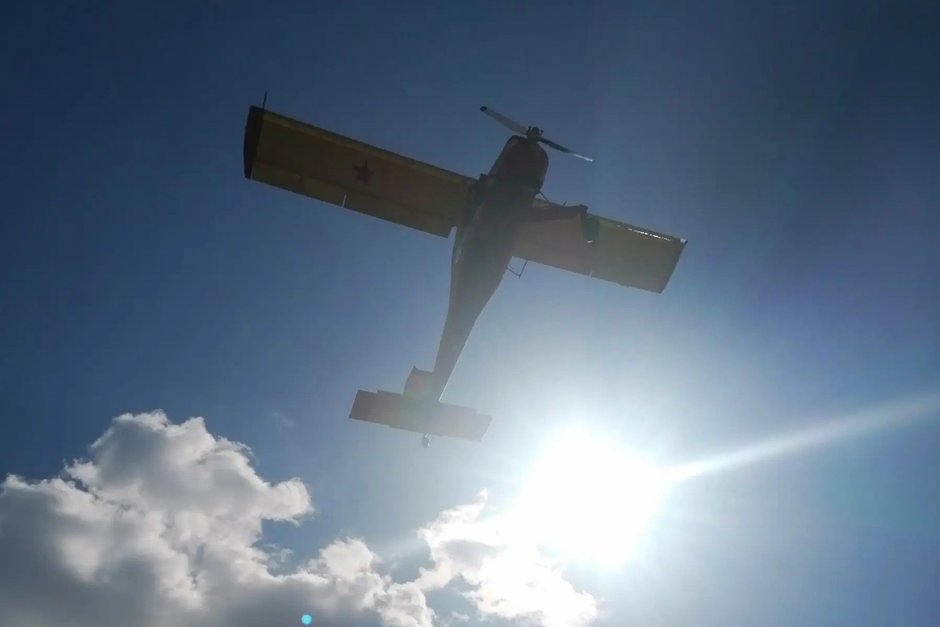
Ganzer clarified the dates of the fortress defense (from June 22 to 29), the time of capture of its defenders (of the 9,000 defenders, 7,000 were taken prisoner), and tried to explain some discrepancies in the sources. For example, according to his data, from June 22 to 28, 1941, the Luftwaffe supposedly did not bomb the Citadel, whereas its defenders, including Major Gavrilov, wrote in their memoirs about German planes they had shot down in the first days of the war. There are other discrepancies in the documents, but I will not comment on them here, as this is a matter for specialized scholarly debate.
The organizers of the “Elbeden” war games try to reconstruct the established Soviet perceptions of the defense of the Brest Fortress. This is explained by the tasks they face, primarily patriotic education. Several years ago, I had a debate with Vladislav Khabarov, head of the scientific reconstruction department of the National Museum of the Republic of Tatarstan, after which the title of the performance changed to “The Legend of the Brest Fortress.” The mass audience did not see much difference from “The Legendary Fortress," but this relieved the organizers of the obligation to strictly follow scholarly data.
“Wordplay” is a common phenomenon in the triangle of “state — society — corporation of historians.” For example, in the mass consciousness, there is an idea of the adoption of Islam by the Volga Bulgars in 922. Specialists in this field, however, prefer to speak of “the recognition of Volga Bulgaria as an Islamic state in 922.”
The “Elbeden” war games program could be supplemented. According to the chronology, I would recommend a reenactment of the signing of the Treaty of Brest-Litovsk (March 3, 1918) between Soviet Russia and Germany and its allies in World War I. According to the treaty, Brest-Litovsk became a German stronghold, and the treaty itself became one of the reasons for the start of the Civil War, in which P.M. Gavrilov participated. Further, one could reconstruct the battles for the Brest Fortress during the Soviet-Polish War of 1919–1920, after which the Citadel was part of Poland before World War II. Thanks to such productions, viewers could learn a lot of interesting things about iconic figures such as L.D. Trotsky (1879–1940) and M.N. Tukhachevsky (1893–1937).
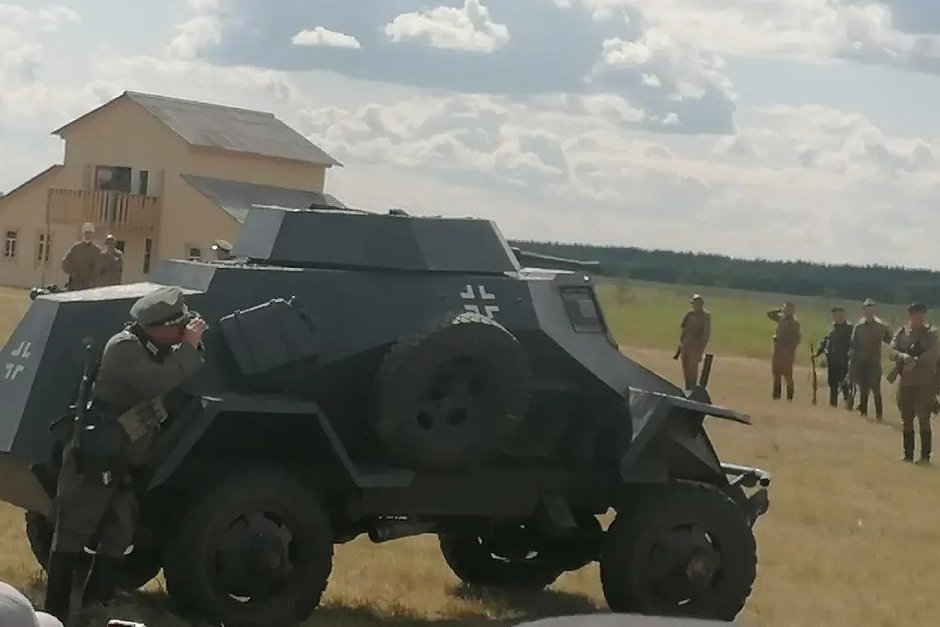
As a symbol of friendship between the Polish and Soviet peoples, one could add a reconstruction of the defense of the Brest Fortress by the Polish garrison in September 1939. It is important to bring the theme of the Holocaust to the attention of the war games audience, concerning the Nazis' extermination of thousands of Soviet citizens of Jewish descent in Brest. I would not bypass the theme of captivity, the horrific conditions in which Soviet soldiers, including the defenders of the Brest Fortress, were held — this would once again emphasize their strength of spirit.
An interesting subject for reconstruction is the fact of Hitler's and Mussolini's visit to the Brest Fortress on August 26, 1941. This is a good reason for popular science lectures on the nature of Nazism and fascism, on what masks this evil can hide behind. Such lectures would enhance the intellectual and educational side of the entire event, making it interesting for people with different levels of education. Although it must be admitted that reconstructions of explosions and air raids, along with knife-throwing competitions, look spectacular.
There is no need to simplify the image of the enemy — the organizers deliberately recruit people with a distinctive appearance for the “German” crowd scenes. Reconstructions are also worthy of the hardships of the post-war life of the heroes of the Brest defense, who had not yet been recognized by the state. Along with the actively demonstrated music, fashion, and dances of the 1940s, one should also show and invite viewers to experience peasant labor themselves. For example, try plowing with oxen, or tasting a brew of quinoa and tree bark.