Main facts about ASEAN: what you need to know about the association on the eve of the summit in Kazan
History, goals and prospects for cooperation with Russia
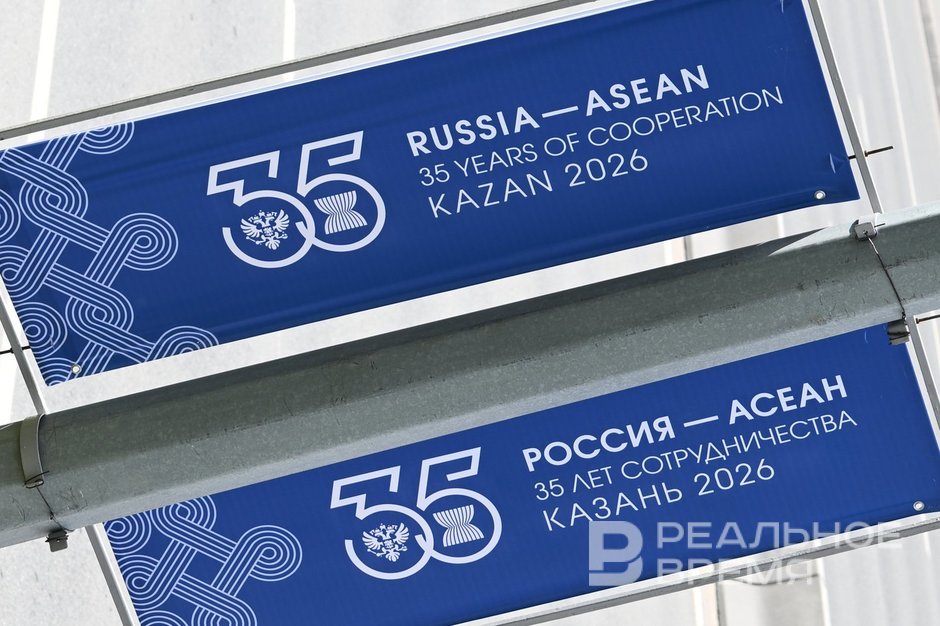
This week, from June 17 to 19, the Russia — ASEAN International Summit will be held in Kazan to mark the 35th anniversary of cooperation. The capital of Tatarstan expects Russian President Vladimir Putin and top officials from Southeast Asian countries. What the association is and the prospects for its interaction with Russia are in the material by Realnoe Vremya.
What is ASEAN?
ASEAN (Association of Southeast Asian Nations) is the Association of Southeast Asian Nations. It was founded on August 8, 1967 — on that day the so-called Bangkok Declaration was signed, which marked the beginning of a new regional organization. The main goals of creating the association were to accelerate economic growth, achieve social progress and establish cultural cooperation.
The total GDP of ASEAN countries is $3.9 trillion, making it the fifth largest economy in the world after the United States, China, Germany and Japan. The association's foreign trade turnover is $3.8 trillion.
Which countries are members of the association?
Currently, the organization includes 11 states. Five of them — Indonesia, Malaysia, Singapore, Thailand and the Philippines — were the founding countries of the organization. Later, Brunei, Vietnam, Laos, Myanmar and Cambodia joined the association. East Timor officially joined the association in October 2025.
ASEAN countries are home to nearly 700 million people — a huge consumer market. At the same time, the share of the young population is significantly higher than, for example, in European countries. The average age of the population of ASEAN countries is 30 years, said Alexander Korolev, Deputy Dean of the Faculty of World Economy and Politics at HSE University.
What other statuses are provided for in ASEAN?
- Observer. Papua New Guinea has held this status since 1972.
- Dialogue partner. Russia received this status in 1996. It is also held by Australia, New Zealand, South Korea, China, India, Canada, Japan, the United Kingdom and the United States. The European Union is also considered a dialogue partner.
- Development partner. This is how ASEAN's relations with Germany, Italy, the Netherlands, Peru, France and Chile are formalized.
There are also several expanded formats of ASEAN cooperation with other countries. In 1997, the ASEAN+3 format was established (providing for interaction with China, Japan and South Korea), and in 2005 — ASEAN+6 (the same plus Australia, India and New Zealand).
In 2005, the first East Asia Summit of ASEAN countries was held, attended by Australia, India, China, New Zealand and South Korea. Russia and the United States later joined as well.
Why was the association created?
The initiative arose in a difficult political situation: Southeast Asia remained a zone of instability, conflicts and competition among external forces during the Cold War. Against this backdrop, countries sought to create a mechanism that would reduce tensions and build a sustainable system of regional interaction.
Over time, the focus shifted to economic integration, the development of mutual trade, attracting investment and the formation of a single regional space.
What are the prospects for cooperation between Russia and ASEAN?
Over the past 10 years, Russia's trade turnover with ASEAN countries has grown by 58%, while Russian exports have grown by 44%, said Nikita Kondratyev, Director of the Department of Multilateral Economic Cooperation and Special Projects of the Russian Ministry of Economic Development. In particular, supplies of mineral resources increased by 85%.
Russia is increasing its exports of agricultural products: wheat, vegetable oil, corn and meat products. Supplies of meat products to ASEAN countries increased 50-fold. The potential for trade turnover growth is enormous, Russian political scientist Oleg Matveychev told our publication. It could potentially be increased fivefold.
Now, in the context of the “Pivot to the East," cooperation with Southeast Asia is gaining particular importance. Experts interviewed by Realnoe Vremya emphasize: first and foremost, Russia acts as a supplier of energy resources.
— The main thing [, ASEAN is interested in from Russia] is the sales market. We have not yet been able to fully replace Europe. Gas goes to China at a discount, and at best, if the 'Power of Siberia — 2' pipeline comes online, it will supply 99 billion cubic meters. Significantly more went to Europe,— economist and financial analyst Alexander Razuvaev told the publication.
Can ASEAN countries replace the European market for Russia? Razuvaev believes: yes. “But it will take about five years," he added. This year, volumes of mineral fuel and oil supplies are already growing: in the first quarter, they exceeded the figures for the same period in 2025 by 40%, as follows from Kondratyev's words.
Korolev expressed a similar view: in his opinion, Russia needs to position itself as a sectoral strategic partner in energy and food.
— In addition, some flagship projects are needed. For example, this could be the construction of a nuclear power plant. It must be understood that such construction stretches over decades. This would bring along technology, technical support and equipment. Russia would sell various machines under contracts, and they would enter into trade. This could really restart the trade and economic dynamics between Russia and Southeast Asian countries,— he said.
In March, Russia and Vietnam signed an agreement on the construction of the first nuclear power plant in the republic — according to the expert, Malaysia and Indonesia are closely watching the deal. And their transition to peaceful atom is only a matter of time, he concluded.
What else can Russia offer? According to Oleg Matveychev, it's fertilizers, weapons, IT technologies. Like Alexander Korolev, he also sees prospects in the export of agricultural products and the development of nuclear energy.
— We can not only trade non-renewable resources like oil and gas, but finally with finished products. We have unique developments in both the medical industry and the chemical industry. They could be sent there,— said Vladimir Belyaev, Doctor of Political Sciences, Head of the Department of Political Science at Tupolev KNRTU.

As for supplies from ASEAN to Russia, Asia currently exports exotic fruits and rubber products to Russia. A promising area is computer technology. Hardware (so-called iron) and software for it could be in demand in Russia, the expert says.
Who will come to the summit in Kazan?
Prospects for cooperation are expected to be discussed at the summit in Kazan. It is no coincidence that Russian President Vladimir Putin will take part in it — as part of the event, he will hold a number of bilateral meetings. The Philippines has already requested a meeting with him — President Ferdinand Marcos Jr. will be present at it.
Also expected in Kazan are the President of Vietnam To Lam, the Prime Ministers of Malaysia — Anwar Ibrahim, Cambodia — Hun Manet, Laos — Sonexay Siphandone. "[In total] the arrival of 14 delegations is planned, as well as the Secretary General of the Shanghai Cooperation Organisation and the President of Belarus," said Rinat Gabitov, head of the Russian Interior Ministry's Department for Kazan, today.
— If the President (Ferdinand — editor's note) Marcos from the Philippines comes, it will be a good signal for Russia and the international community, because the Philippines is an official military-political ally of the United States. The same thing if the Prime Minister of Singapore comes. This is the only ASEAN country that has imposed sanctions against Russia,— Alexander Korolev, Deputy Director of the Centre for Comprehensive European and International Studies at HSE University and an expert at the Valdai Club, told RIA Novosti, analyzing whether the summit serves as a signal that Russia has avoided isolation despite Western actions.