If the key rate is lowered, money will leave banks and fuel inflation
The Committee on economy, investment, and entrepreneurship of the Tatarstan State Council expressed approval of the Central Bank's monetary policy
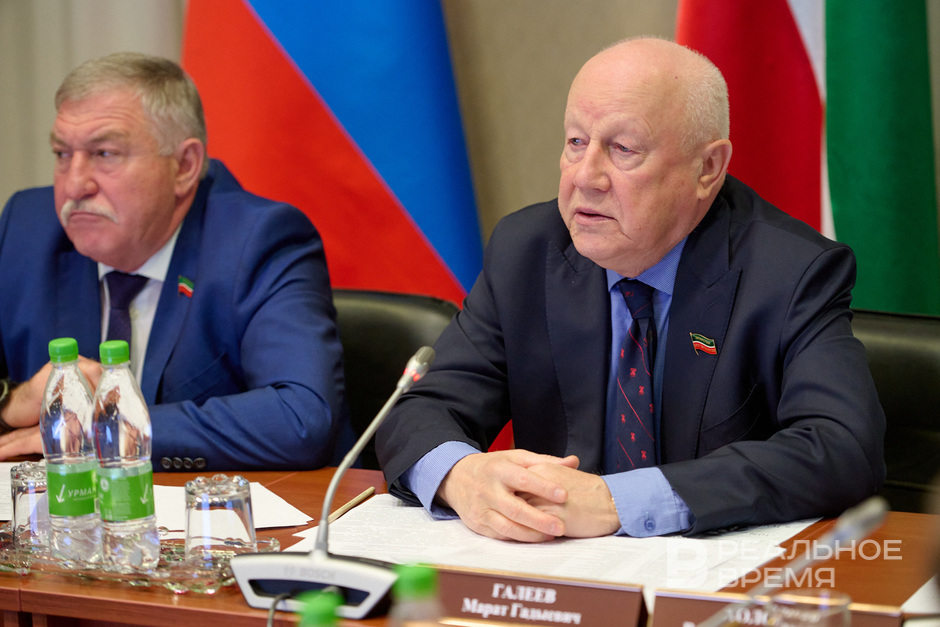
“A reduction in the key rate will inevitably lead to a decrease in deposit rates. What will be the result? Savings comparable to the size of the annual GRP will flood the market, causing a spike in inflation," Marat Galeev, one of the longest-serving deputies of the Tatarstan State Council, objected today to dissatisfied business representatives. Following yesterday's reprimand from Dmitry Samarenkin, head of the Kazan Fat Plant, regarding the negative impact of the key rate on production profitability, businesses have changed their rhetoric. The IT industry has shown a tenfold increase in profits over the year but fears an increase in insurance premiums, while exporters have requested support for promotion in foreign markets. “When states want to earn from exports, they sharply reduce taxes in that sector," suggested Marat Galeev. More details in this report by Realnoe Vremya.
ABOUT INVESTMENTS — EITHER SPEAK WELL OR NOT AT ALL
The consideration of the report on the Tatarstan government's activities for 2025 continued today in the republican parliament. The discussion was taken up by a joint meeting of the Committee on Economy, Investment, and Entrepreneurship and its expert council, which was attended by many business representatives, industry associations, and the Tatarstan Chamber of Commerce and Industry. This time, Deputy Minister of Economy of Tatarstan Oleg Pelevin and Deputy Minister of Industry and Trade of the republic Rodion Karpov defended the report.
It seemed that the discussion around the 15% key rate, initiated yesterday within the parliament's walls, could face a new round of criticism from industrial enterprises. Dmitry Samarenkin, Chairman of the Board of Directors of Kazan Fat Plant JSC, stated that the current key rate level makes it impossible to attract working capital and hinders enterprise development.
However, as Marat Galeev, a permanent member of the Investment Committee, later noted, there are no “such judgments and lamentations” in the committee. “The rate is gradually decreasing, so we need to take advantage of the opportunities present in the current market situation," he noted. Indeed, the topic of investments was hardly raised, as if an unspoken rule applied: either speak well of them or not at all.
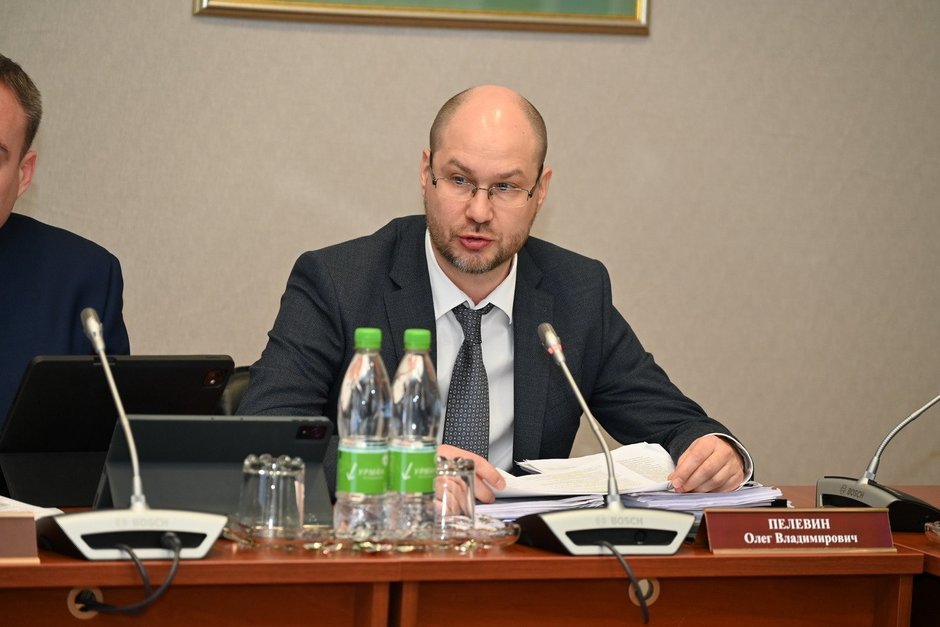
Nothing new has been heard on this matter since then in Oleg Pelevin's report. He repeated yesterday's point that three negative trends continue to affect the economy. First, the strong ruble exchange rate has increased pressure on exports and created unequal competition with importers in the domestic market. Second, the Central Bank's key rate exceeds the profitability of certain industries. Third, overdue loan debt is growing, leading to decreased profits and increased losses.
CHINA IS SIMPLY “SWEEPING US AWAY”
But on the other hand, he pointed out, all enterprises in the country operate under these economic conditions. According to him, business leaders at meetings with the Ministry of Economy claim that “they have development plans, no one is stopping production," understanding that “at such a high cost [of money], the task is to increase efficiency and optimize costs.”
Rodion Karpov, Deputy Minister of Industry and Trade of Tatarstan, explained that industry developed unevenly in 2025. High growth rates of 340% were shown by defense industry enterprises engaged in producing UAVs, combat helicopters, and ships. Production of electrical equipment grew by 18.4%, drug production by 7.2%, chemical products by 3.1%, and petroleum products by 2.2%.
Other sectors of the economy fell back. The automotive industry suffered the most — the decline was 23.9%. Despite the high key rate, the share of manufacturing industries at the end of 2025 was 79%, whereas 20 years ago this figure was around 50%. That is, the republic's industry is moving away from a purely raw material orientation, Karpov noted.
Meanwhile, Tatarstan State Council deputy and head of the Ak Bars SC, Renat Mistakhov, drew attention to the position of Russian exporters in foreign markets. They risk losing their positions in Southeast Asian markets in competition with Chinese manufacturers if federal authorities do not increase their influence.

— China is simply sweeping us away, and everything (in the Russian domestic market — editor's note) comes from China. We (the authorities — editor's note) are not taking any aggressive stance regarding export expansion. We only have REC tools (subsidies for the delivery of export products). We need to make more use of political instruments that would allow us to enter new foreign markets, — he noted.
Otherwise, Russian exporters could lose their positions, he warned. “We will lose the [foreign] market this way. The Chinese, Indians, and those countries that still have industry left from Soviet times are starting to occupy our foreign markets.”
According to him, export orders in the portfolio of Russian shipbuilding companies have disappeared, although they previously constituted a significant part. “We'll 'sit around' a bit longer — and we won't be able to re-enter these markets," Renat Mistakhov fears.
— If the state is interested in export earnings, it could lower taxes in sectors oriented towards foreign markets, — Marat Galeev agreed, adding that this has long been practiced in many countries. In his opinion, solving this problem requires a targeted approach at the federal level.
WHERE WILL R&D MONEY COME FROM?
— Successes in import substitution are still fragmentary; serious challenges remain. How do you plan to close technological gaps? — asked committee chairman Ryagat Khusainov.
— Our main goal is integration into federal technological cooperation maps, — Pelevin replied.
According to him, Tatneft, SIBUR, and KAMAZ have so far made it into these maps. Technological renewal and the implementation of R&D require investments, but so far enterprises are living off the investment backlog of previous years, he admitted.
— With such expensive resources, where will the funds come from? First of all, they expect loan interest rates to drop, — inquired Marat Akhmetov, acting Chairman of the State Council.
Oleg Pelevin answered evasively. “We are also counting on maximum participation in federal support measures," he said, without naming specific sources of funding.
DATA CENTER COMPUTING CAPACITY WILL INCREASE 30-FOLD
The IT industry, which enjoys a comfortable tax regime, has shown a tenfold increase in profits over the year, continued Bulat Gabdrakhmanov, Deputy Head of the Tatarstan Ministry of Digital Development. According to the forecast, the industry's gross revenue for 2025 will amount to 269 billion rubles, with growth of 35%. Tax contributions amounted to 42 billion rubles (+20%). Currently, over 3,500 companies operate in the industry, the largest of which are residents of the Innopolis and Skolkovo special economic zones. Last year, they managed to attract 1.37 billion rubles in federal funding in the form of subsidies and grants. Another 2.2 billion rubles were raised under the national projects “Data Economy” and “Space.”
At the same time, companies are scared by risks associated with changes in tax regulation. In particular, an increase in insurance premiums and a reduction in the limits under the simplified taxation system, noted Bulat Gabdrakhmanov.
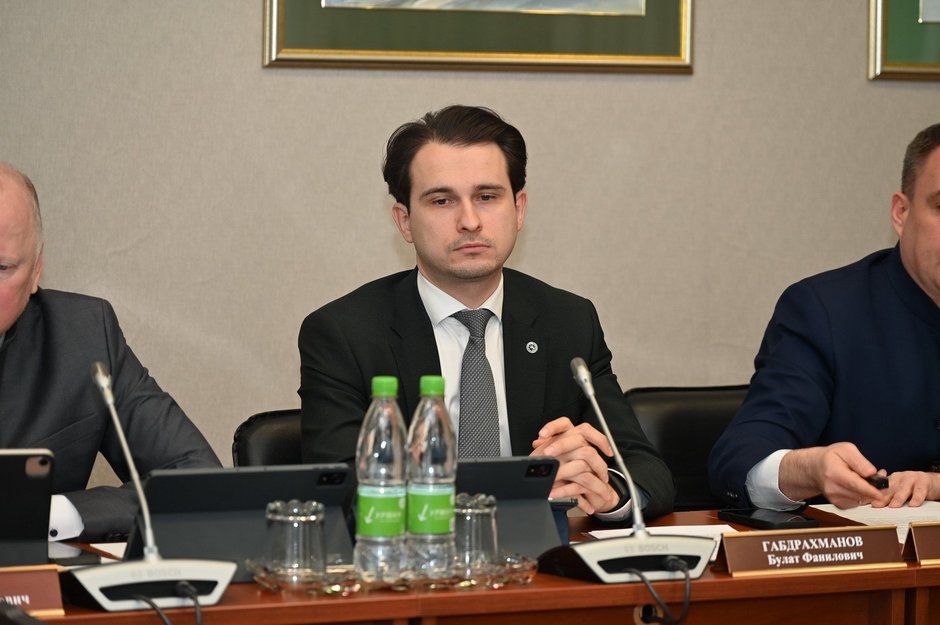
He recalled that last year, a republican artificial intelligence development program until 2030 was adopted. The total budget is 5 billion rubles. Under it, authorities plan to increase data center computing capacity by 30 times. Currently, Russia ranks 30th in the world in terms of AI development. This program is designed to accelerate this process.
— Without it, we would risk staying put or even falling behind, — noted the Deputy Head of the Ministry of Digital Development. — There is a global race to develop infrastructure. For example, Kazakhstan spends 0.3% of its GRP on building computing power, while Russia spends only 0.001%.
The Information Technology Center has announced a tender for the purchase of equipment, but it is not certain that the equipment will arrive, he fears. “Under sanctions, supplies for infrastructure could stop, because no one else in the world produces it except American Nvidia, not even China," he said.
In conclusion, those present returned to the debate about the key rate.
— Economic laws are objective. A reduction in the key rate will inevitably lead to a decrease in deposit rates. What will be the result? Savings comparable to the size of the annual GRP will flood the market, causing a spike in inflation, — summarized Marat Galeev. — We can only move gradually; the rate is decreasing slowly. The Central Bank's courageous maintenance of the rate is generally a sound policy. It is important that understanding of these processes is growing at both the federal and republican levels.