TAIF-NK research center: on the home stretch
95% of construction work completed
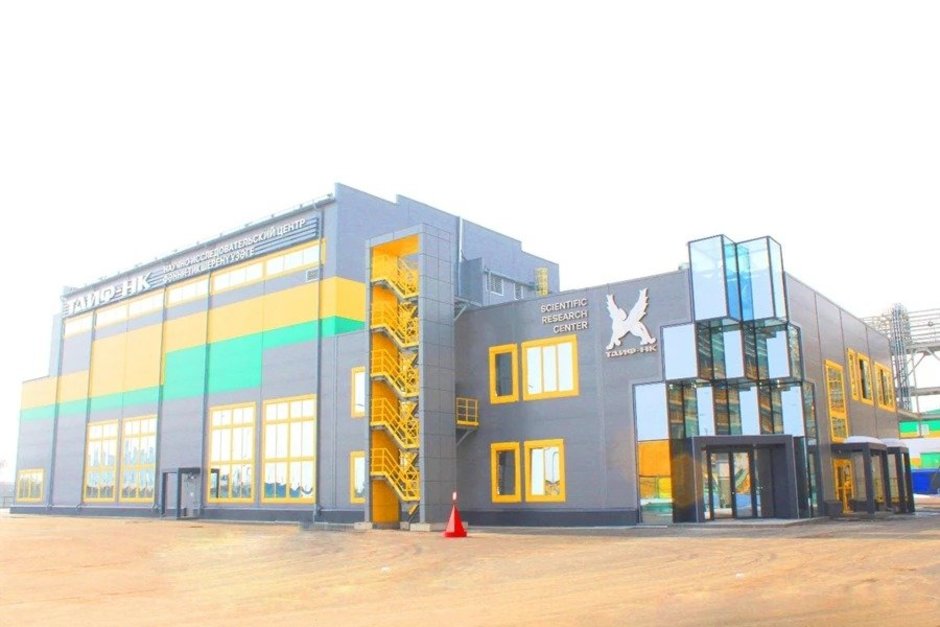
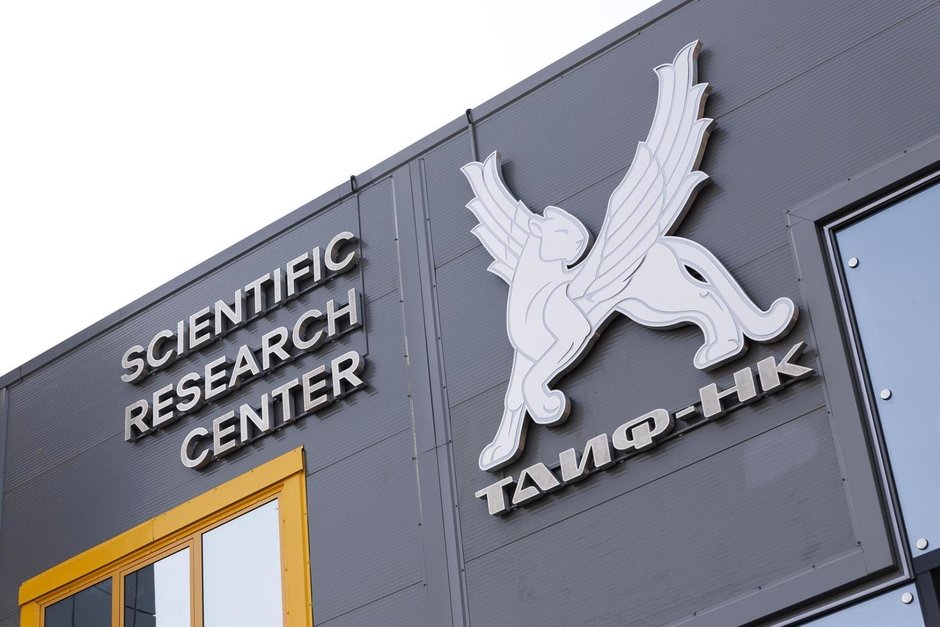
Construction of its own Research Center is being completed on the site of one of the country's most innovative oil refineries — JSC TAIF-NK. Here, technologies for processing various types of heavy feedstock will be tested on pilot laboratory units. This will allow the development of a database on the influence of the quality characteristics of oil residues on the efficiency and conversion of heavy oil feedstock into valuable light petroleum products. The design and construction of the center are carried out according to modern standards, ensuring safety and efficiency. The first tests at the Research Center are scheduled soon, while workers are currently applying the finishing touches. A detailed account — in this report by Realnoe Vremya.
CGDUPT in miniature
The building of the future Research Center appears small and quite compact. The pilot testing hall houses a fully-fledged mini-plant — a reduced-scale copy of the main CGDUPT unit. Only if experiments on the large-scale production are risky and too expensive, technological innovations can be tested on a laboratory scale: quickly and without risks.
The technological unit installed in the Research Center's pilot testing hall consists of modules.
In Module “A," the suspension feedstock — vacuum residue from JSC TAIF-NK's main production, as well as heavy gas oil, mazut, bituminous oil, heavy polymer resin, activated lignite, or recycled polymers — is heated to 60–80°C for further processing.
The liquid-phase reactor of Module “B” (by the way, a reduced-scale copy of the operating CGDUPT suspension hydrocracking unit), using a special coal additive, converts the feedstock, mixed with hydrogen-containing gas and heated to 500°C, into liquid petroleum products with a high content of aromatic compounds. The conversion depth is up to 95%!
Module “C” is a high-pressure hydrocracking unit consisting of two sequentially installed gas-phase reactors. Here, the product obtained in Module “B” is converted into liquid hydrogenate (a liquid hydrocarbon mixture) and hydrocarbon gases.
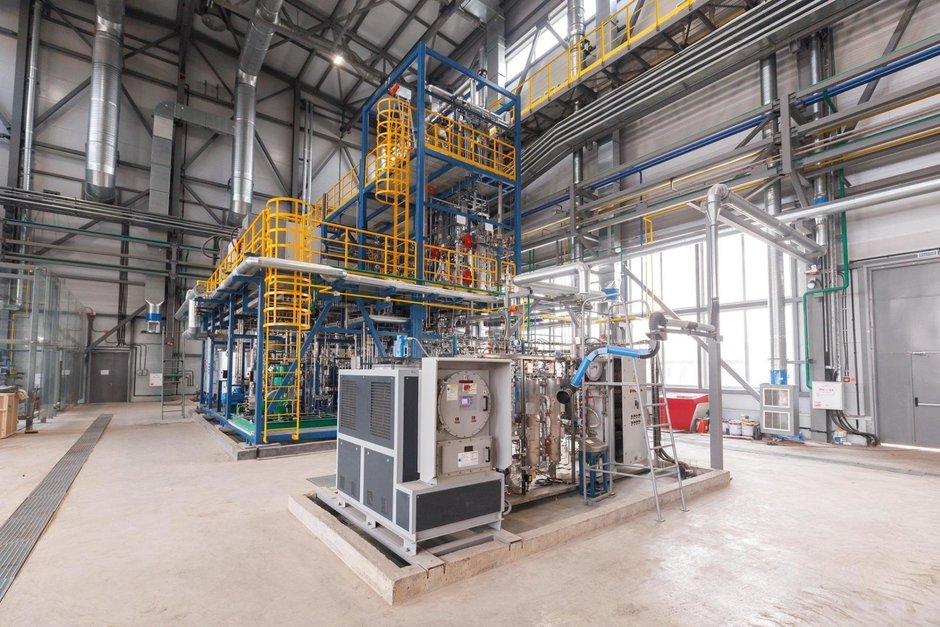
Three atmospheric and vacuum distillation units of different capacities (from 6 to 50 liters) are combined into Modules “D” and “E.” Using adjustable pressure (from 0.1 mmHg) and temperatures (up to 570°C) in an automated mode, this unit allows for researching the extraction of narrow fractions (products with specific parameters) from oil feedstock. Jewel-like precision with boiling temperature steps of just a few degrees provides oil refining scientists with the information necessary for further building operational models to optimize processes in the main production.
Module “F” comprises special crushers and a high-speed rotary mill designed for grinding solid feedstock (activated lignite, industrial waste, and recycled polymers) into fine fractions — up to 50÷100 microns — for further processing.
The autoclave of Module “G” — a closed reactor for researching new catalytic processes at extreme pressures (up to 34.5 MPa) and temperatures (up to 500°C) — crowns the unique testing ground of the laboratory complex of the JSC TAIF-NK Research Center.
The formed production chain will allow scientists to work on what is already being called “the future of oil refining”: conducting in-depth studies of processes, testing deep processing technologies for heavy oil residues — such as vacuum residue, mazut, and other “tails," waste and off-spec products of petrochemical industries, as well as recycled polymer feedstock. In other words, the Research Center will allow selecting optimal conversion modes to maximize the extraction of valuable products from heavy feedstock and to manage their quality characteristics. Carefully calibrated models will be developed here into highly efficient technological processes for oil refineries — not only for TAIF-NK but for the entire Russian oil refining industry.
The second direction is testing various additives and catalysts. The center will test coal additives from Russian and foreign suppliers, as well as next-generation catalytic systems. The task is to empirically determine their efficiency and cost-effectiveness. The Research Center will be able to test various catalyst loading schemes for hydrogenation processes in the refining of oil feedstock (including heavy and non-standard) both for improving its own technological processes and for the benefit of other refineries.
The third is expanding the feedstock base. After testing, the plant will be able to convert low-margin and low-demand oil refining products — such as waste from primary refinery production, off-spec products, and recycled polymer feedstock — into demanded, high-margin products.
The fourth, no less important: the TAIF Group's proprietary technology, TAIFCOMBI, continues to evolve and improve. The Research Center is assigned a key role in conducting pilot tests and obtaining initial data for adjusting technological processes and achieving maximum efficiency from the unique CGDUPT equipment.
Inside the Research Center, everything indicates the imminent completion of construction work: utilities are connected, the main technological equipment is installed, pressure testing and water running tests have been carried out. Currently, workers are adding the finishing touches: painting and interior finishing of the premises, including panel installation, painting, and tile work.
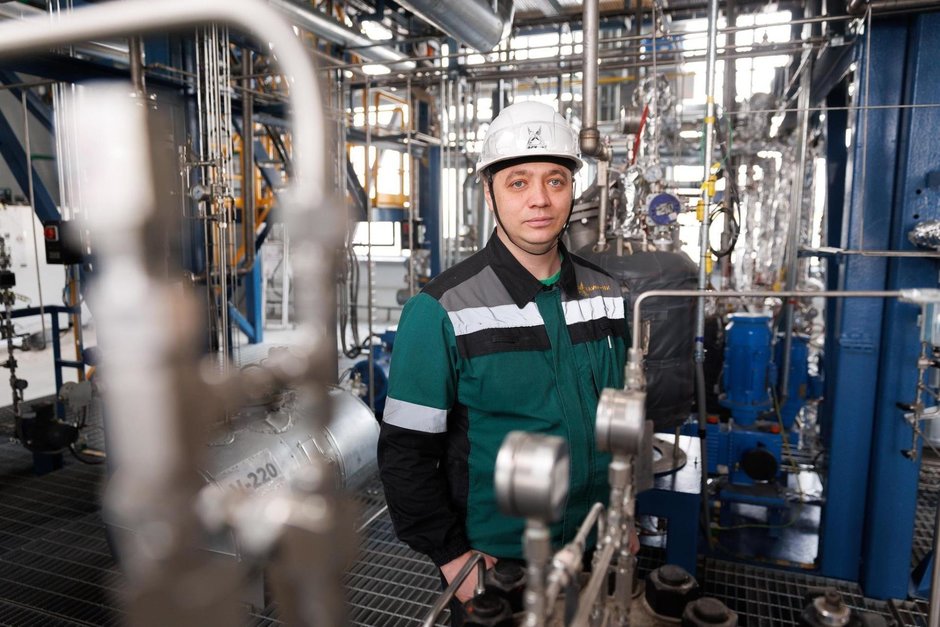
The progress of construction has been closely monitored from the very first days by the Head of the Research Center, Ilnar Karimov. The task of building and launching the company's research center was entrusted to a Candidate of Technical Sciences, winner of the federal competition “Engineer of the Year — 2024” in the category “Chemical Technology," and holder of the diploma for winning the republican competition “Engineer of the Year — 2025” in the category “Oil and Gas Industry.” He took charge of Workshop No. 10 of the CGDUPT — the internal designation for the Research Center at TAIF-NK — exactly two years ago, in March 2024.
— I was pleasantly surprised when I was offered to head the Research Center. At that time, I had worked for about eight years as Deputy Head of the Elementary Sulfur Production Unit at the CGDUPT. I didn't hesitate for long. I admit, I have always been drawn to something new and unexplored. The Research Center project promised to be unique. It is set to become the first in Russia dedicated to studying deep processing of heavy residues, — Ilnar Karimov said.
One of the first to join the Research Center team was the unit's mechanic, Marcel Gizatullin. He moved to the under-construction Research Center from a structural division of the CGDUPT.
— For me, this is primarily an opportunity to gain experience. I am confident that many discoveries and scientific achievements lie ahead, — Marcel Gizatullin said in the early days of construction.
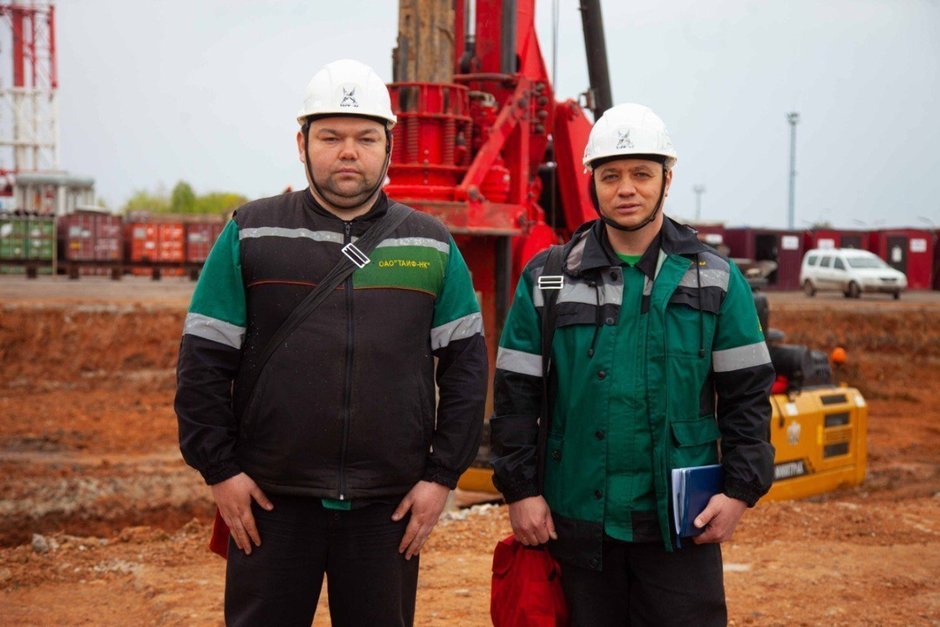
Company management set an ambitious goal for the Research Center employees: to build a modern research center dedicated to studying the deep processing of oil residues, waste from oil refining and petrochemical production, and recycled polymer feedstock.
From the ground up
By March 2024, design contracts had been signed with the company Research Center Technochem CJSC (St. Petersburg), and contracts with foreign partners for the supply of technological equipment had been finalized, Karimov recalls.
— The first steps were challenging: we needed to formally establish the new structural unit of the plant. We started developing instructions, regulations, workshop guidelines, forming the staff, and defining their job responsibilities. Simultaneously, we worked with the design institute, reviewed vendor documentation, provided feedback, made corrections, and engaged in endless correspondence! And, of course, the most exciting part — the construction unfolding before our eyes: together with specialists from the JSC TAIF-NK Capital Construction Department, the first contractors appeared and began earthworks, — says Ilnar Karimov.
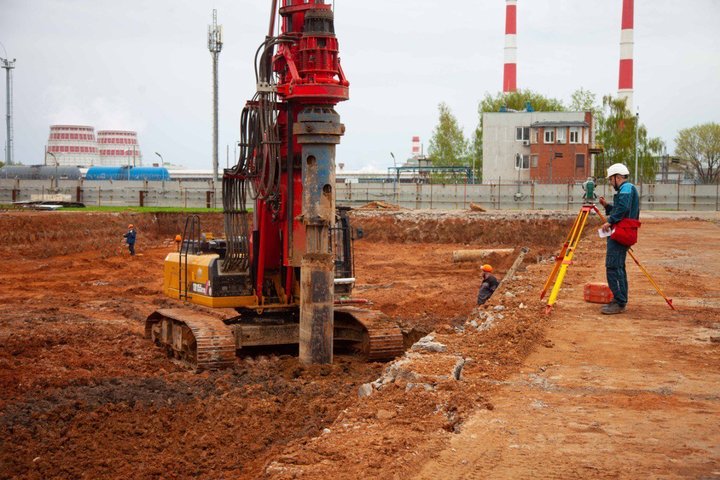
Thus, life began to stir on the empty site: excavation, pile driving, erection of the main building's framework. Two years, according to the Head of the Research Center, passed like two months! Perhaps when you love your work, time flies unnoticed. At the peak of construction, up to 100 people and numerous pieces of construction equipment worked on the site.
— This construction project did not involve a general contractor, so it was a collective effort of all specialists from JSC TAIF-NK, contracting organizations, designers, material and equipment suppliers. And we worked as a single team! Dozens of organizations worked on different stages of the construction. Each team was responsible for its own area, including assembling metal structures and laying pipelines. Even now, I look and marvel at how, starting with a concrete pad on the edge of the plant, we built not just a beautiful building on the outside, but a whole “mini-plant” inside. Both I and the unit's specialists have traveled on numerous business trips, including abroad. For instance, to China, from where part of the equipment for the pilot experimental oil refining modules came, — Ilnar Karimov noted in conversation with a journalist.
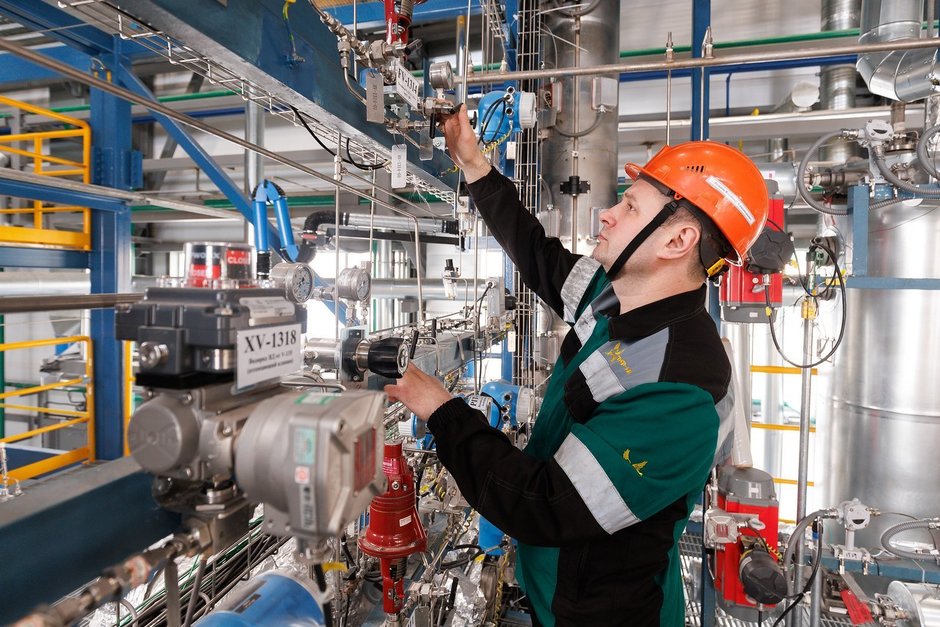
The main technological equipment — the iron heart of the Research Center — was delivered in September 2025. The transportation of five sea containers and four frames of the main module to Nizhnekamsk involved road, sea, and rail transport and took about one and a half months.
— We eagerly began assembling the main equipment skids and invited partners for supervisory installation and commissioning in early November. Until mid-February, together with them, we conducted all necessary tests and equipment adjustments, including running the unit with water, pneumatic tests with nitrogen, and then with hydrogen. Now we await the completion of final work and are preparing for the crucial stage — receiving feedstock and starting up our unique unit, — noted the Head of the Research Center.
Finishing touches
The wait for the opening is almost over, Research Center employees say. Construction work is 95% complete. Workers are applying the finishing touches. The Moscow company Spetsvideoproekt is installing multimedia equipment in the conference hall. They have previously worked at the Ministry of Foreign Affairs, Chelyabinsk State University, and Vnukovo and Sochi airports.
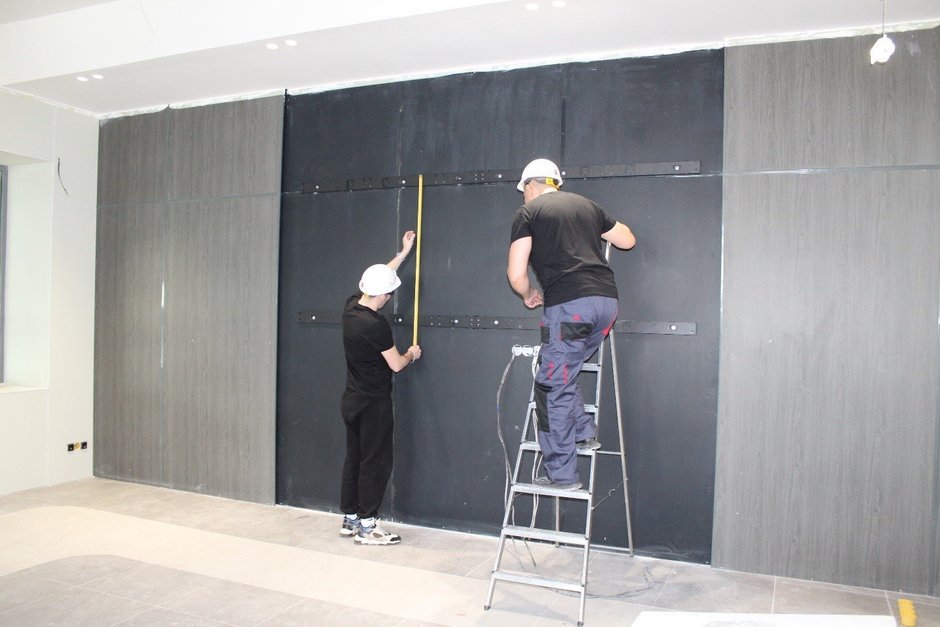
— At the JSC TAIF-NK Research Center, we are installing a 135-inch diagonal LED screen with a 1.5 mm pixel pitch using COB (Chip on Board) technology — which allows for safe touching of the screen surface and provides a smoother, more realistic image. We are using equipment from Unilumin, as well as auto-tracking cameras and communication systems from trusted manufacturers. The project's distinguishing feature is the customer's requirement for a fully automated system that starts with just three button presses on the wall. It independently identifies speakers and directs the cameras toward them, — Kirill Vakulo, Project Manager of the company, explained the intricacies of the multimedia system.
The installation of CRIBLAT panels, gypsum boards, ceilings, and all interior finishing at the Research Center is being handled by the Russian company SPM LLC.
— We have been on site for about two months. The work is approximately 95% complete. The remaining task is to cover a brick wall with printed CRIBLAT panels. It's meticulous work. The print consists of three triangular panels. Each part needs to be precisely fitted to the existing dimensions, — said Anatoly Marilov, a construction and installation foreman.
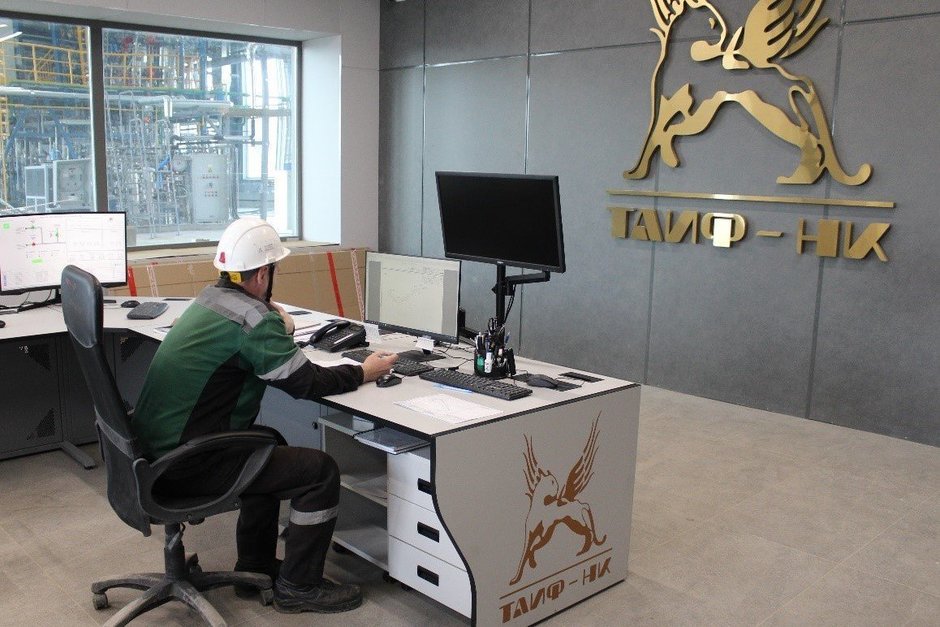
The contracting organization SK Element has been involved in the construction since the early days: participating in excavation and other construction works.
— Our company has been cooperating with JSC TAIF-NK since 2014. I joined the team when we were just starting to build this facility. The main work is finished: finishing and landscaping were also partially done by our organization. It's pleasant to see how the Research Center has grown and is taking its final shape. At first, like on any construction site, it was dirty and dusty. Now you could walk around in high heels, if it were allowed by safety regulations (laughs). I'm eagerly awaiting the opening to see the Research Center in its full glory! — admitted Gulnara Khaidarova, an engineer from the production and technical department of SK Element.
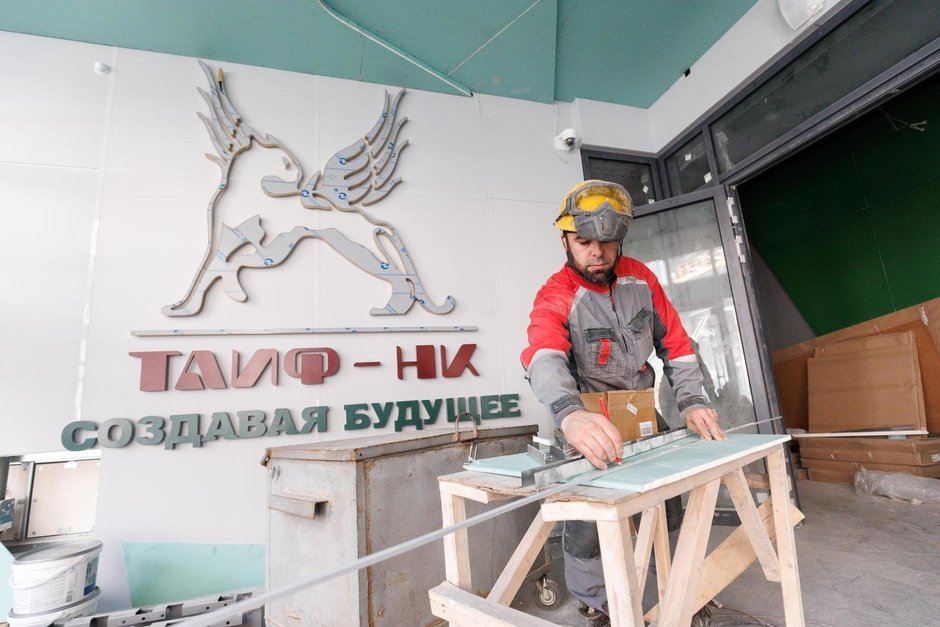
Specialists from the Technical Supervision Department of TAIF-NK's Capital Construction Department oversee compliance with construction norms and standards.
— Several contractors are involved at the final stage of construction. Some are handling general construction and metal structure installation, while others are installing heating, ventilation, water supply, and sewage systems. Simultaneously, outdoor air conditioning units are being installed, as well as anti-corrosion and fire-protection painting. This is necessary to protect the metal structures from corrosion and fire damage. All this is done to ensure high quality standards, — explained Emil Fatikhov, Lead Engineer of the Technical Supervision Department at TAIF-NK's Capital Construction Management.
Small but mighty
Simultaneously with the construction of the Research Center, staff recruitment was underway. The team currently has 21 members. Lead Shift Engineer Aidar Khabibullin came from the second production site — the Gasoline Plant.
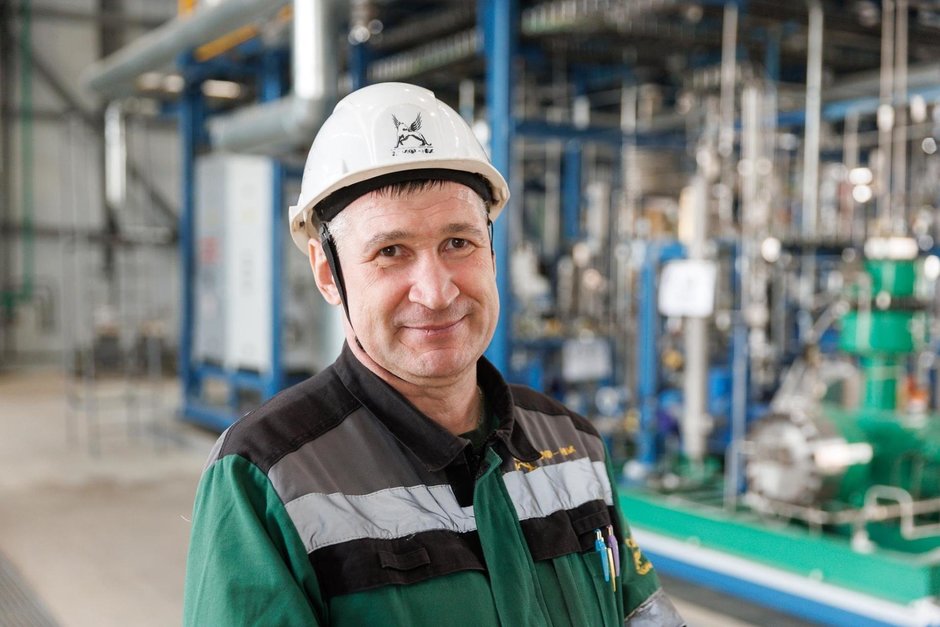
— I have been working at TAIF-NK for over 20 years, since 2005. I witnessed the construction and commissioning of the Gasoline Plant. I'm glad to be part of this team as well. Although our team is small, it is friendly and cohesive. I want to contribute to the development of science and leave a mark on the company's history, — Aidar Khabibullin admitted.
Chemist Guzaliya Kayupova is one of two women working in the large male team at the Research Center. She began her scientific career as a student at KNRTU. She worked as a laboratory assistant at the Institute of Organic and Physical Chemistry of the Russian Academy of Sciences, where she defended her PhD dissertation in “Physical Chemistry.” Later, she moved to Nizhnekamsk and joined a petrochemical enterprise, but decided to change jobs in August of last year.
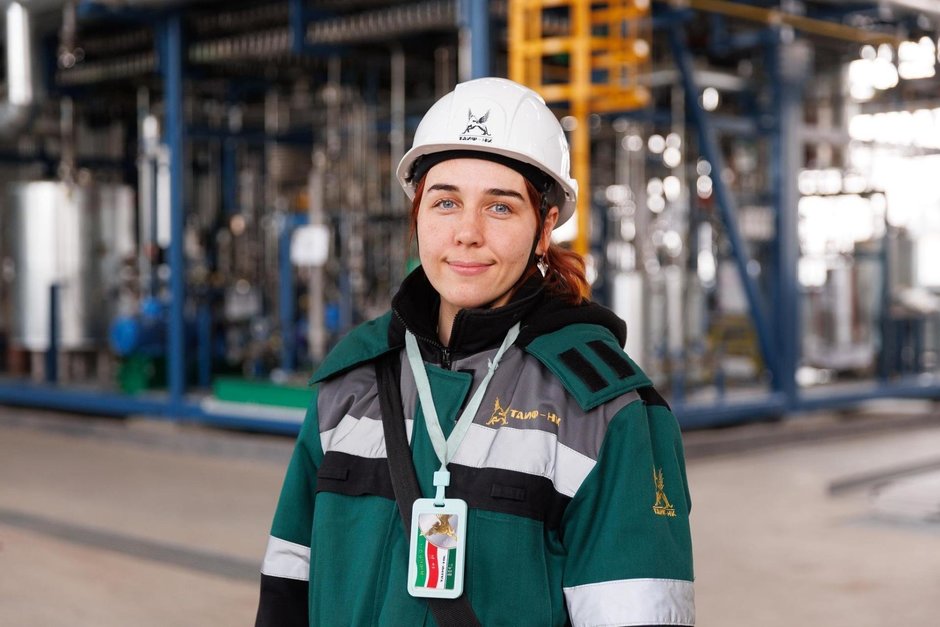
— When I heard that a research center would be established here, I eagerly submitted my documents. Fortune was on my side: my candidacy was approved, and I was fortunate to become part of the Research Center team. Of course, petrochemistry and oil refining are different. But do you remember Goethe's quatrain? “What from the parchment's leaves thou hast not won / The key of wisdom seekest from the sun. / Who with the spirit of the age doth strive, / For him the age's spirit hath no tongue.” Hence, one must constantly improve, seek and learn new things, never stop. That way you become an interesting, developed person, and a highly qualified specialist, — she said.
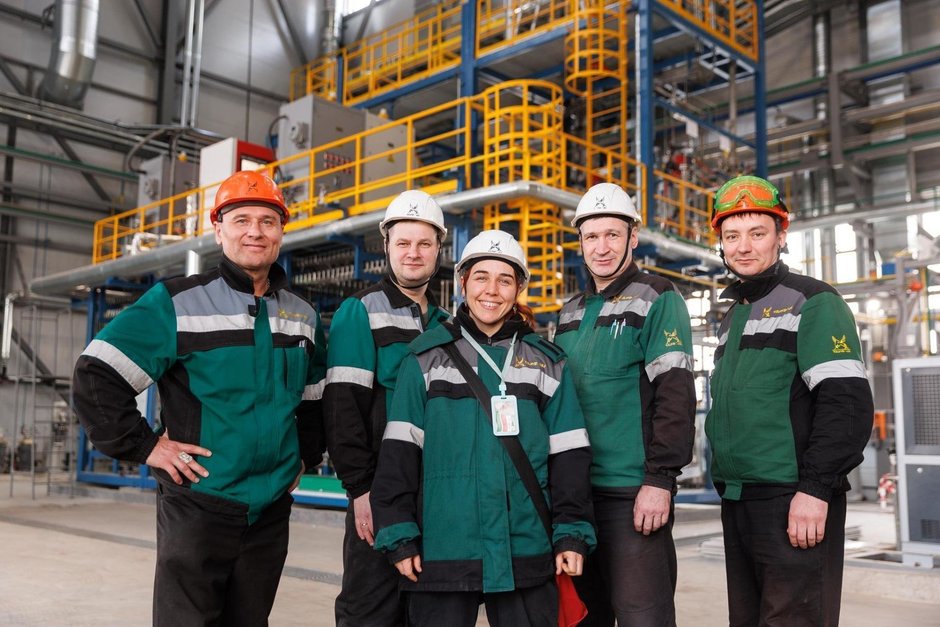
And no one here doubts that the opening of the Research Center will mark a new chapter in the development not only of TAIF-NK but of the entire Russian oil refining industry. All the necessary elements are in place: innovative pilot units, a professional team, a high level of scientific research, and, most importantly, the desire to continue improving and moving forward.
The opening of the Research Center will ensure even closer cooperation between one of the country's most innovative oil refining complexes and leading scientific institutions, universities, and research centers. This will allow not only attracting the brightest minds but also facilitating knowledge exchange, thereby accelerating scientific research and its implementation into production practice.
— With the launch of the Research Center, new horizons for large-scale research and development open up before us. It is clear that the center will play a key role in shaping the scientific foundation for domestic oil refining, and successful tests will help significantly increase the depth of oil refining and the competitiveness of Russian products on the international market, — concluded Ilnar Karimov.
There is already interest from the scientific community. This was clearly demonstrated by the recent V Scientific Conference “Dynamic Processes in the Chemistry of Organoelement Compounds” held in Kazan, where representatives of TAIF-NK discussed the complex's achievements in deep processing of heavy oil distillation residues, its unique TAIFCOMBI technology, and announced the imminent opening of the Research Center.
— The goals of our research center are: research, scaling, and training. The TAIFCOMBI technology continues to improve, and in this, the Research Center intends to cooperate closely with leading scientific schools in Russia and friendly nations, — Ilnar Karimov emphasized during the presentation of the JSC TAIF-NK Research Center at the A.E. Arbuzov Institute of Organic and Physical Chemistry. Taking the opportunity, he also invited the luminaries of science gathered in Kazan to the upcoming opening of the center and expressed JSC TAIF-NK's and the TAIF Group's readiness for constructive dialogue and joint research work.