John Fowles — the writer who hated success and fame
This week's book: British novelist john Fowles's debut novel “the collector”

On Tuesday, March 31, it will be one hundred years since the birth of John Fowles — a writer who became incredibly popular during his lifetime while simultaneously distancing himself from his own fame. “The Collector” is his debut novel. It is the story of a lonely clerk who kidnaps a young woman and tries to win her love in isolation. Literary columnist for Realnoe Vremya, Yekaterina Petrova, explains how this novel established the key themes of Fowles's work and how the author, having achieved instant success, developed a lasting distrust of fame, avoided the literary establishment, and consciously chose a reclusive life.
From hatred of family environment to hatred of all forms of power
John Robert Fowles was an English writer, novelist, and essayist considered one of the key literary figures of the second half of the 20th century. His prose occupies an intermediate position between modernism and postmodernism, combining philosophical themes with formal experimentation.
Fowles's books have been translated into many languages and adapted for film numerous times. At the same time, the writer himself emphasized his internal distance from the environment in which he grew up. In an autobiographical essay, he described his hometown as a place “where conformity reigned — the pursuit of respectability.” From an early age, he developed a rejection of “following the crowd," which later reflected in the themes of his novels.
Fowles was born on March 31, 1926, in Leigh-on-Sea, Essex, to a prosperous cigar merchant and a schoolteacher. “No one in my family had any literary interests or abilities… it seemed I came from nowhere," John Fowles noted about the break with his family background. While studying at Bedford School, he became head boy and experienced power firsthand, which he later described as a system of coercion and control. This subsequently cultivated in him a hatred of all forms of power.
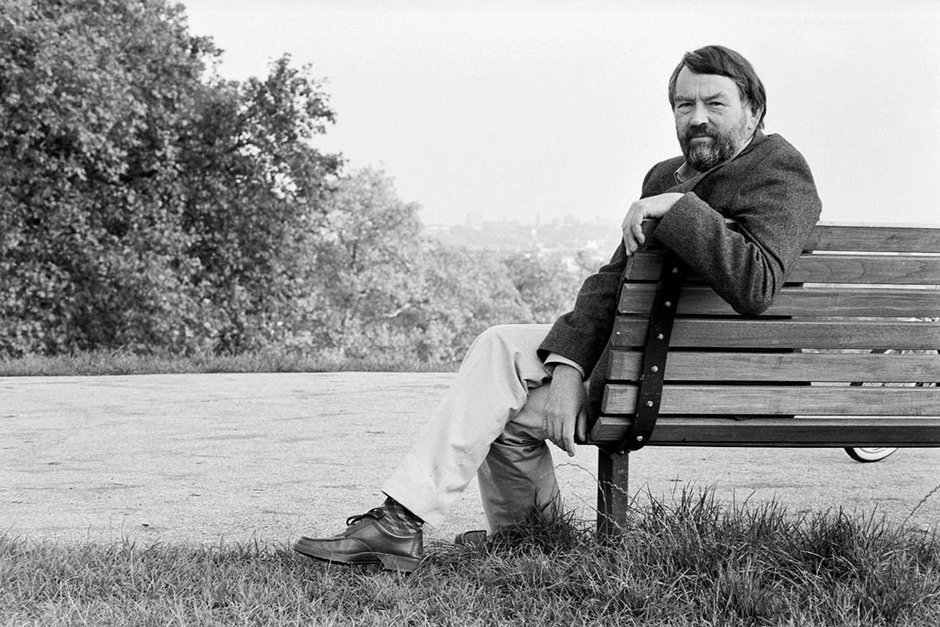
After brief service in the Royal Marines, which he also hated, he entered New College, Oxford, where he studied French language and literature. In a 1989 interview with The Paris Review, Fowles recalled Oxford in the late 1940s as “a happy dream, an alternative world… where the individual came first, not the nation.” It was there he encountered the ideas of French existentialists — Jean-Paul Sartre and Albert Camus — whose concepts of freedom and individual responsibility had a significant influence on him.
After graduating from Oxford in 1950, Fowles began teaching — first in France, then in Greece and London. Life on the Greek island of Spetses became a turning point for him: there he met his future wife, Elizabeth, and found material for the novel “The Magus” (1965).
John Fowles began writing in the early 1950s, in his own words, “from inner need and dissatisfaction with external life.” “I started because I was always good at fantasizing… and because I rejected much of the life I had to lead," Fowles said. His early attempts were met with numerous rejections. He destroyed manuscripts, considering them not good enough, and learned by imitating Gustave Flaubert, D. H. Lawrence, Daniel Defoe, and Ernest Hemingway. As a result of this lengthy preparation, his first novel, “The Collector," was published in 1963, launching his literary career.
“Our world is sick”
John Fowles began working on “The Collector” at the end of 1960, completing the first draft in a month. Later, the writer significantly revised the manuscript, spending over a year making corrections before showing it to his publisher. The book was published in 1963 and immediately attracted attention. According to the publisher, the rights for the paperback edition were sold for the highest price ever paid for a debut novel. The success was instantaneous. The author himself formulated the work's goal as an attempt “to show that our world is sick.”
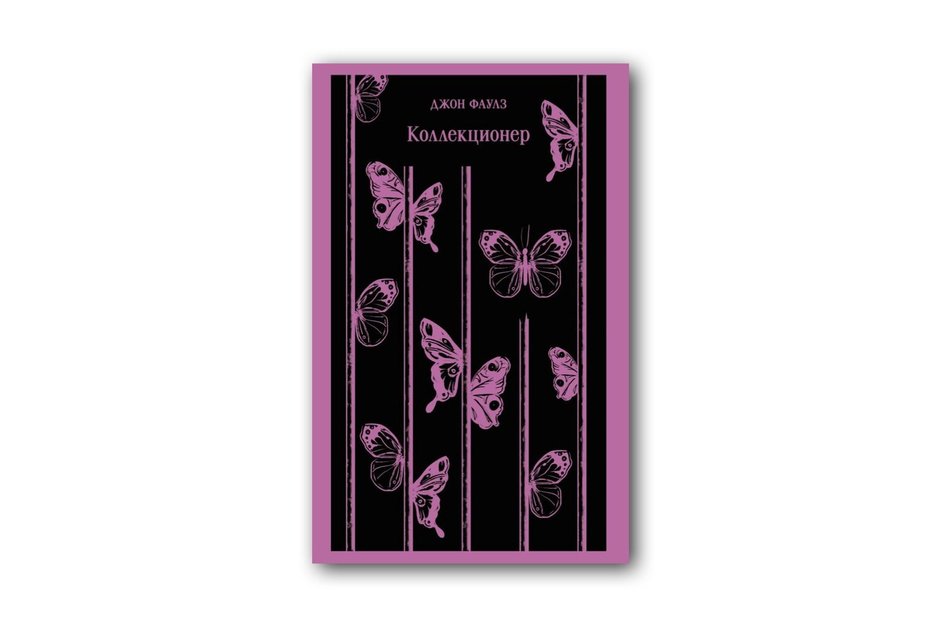
The novel's plot revolves around the story of Frederick Clegg, a lonely clerk obsessed with collecting butterflies. He becomes fixated on Miranda Grey, an art student he observes from afar. After winning a large sum of money, Clegg buys a secluded house and kidnaps the girl, imprisoning her in the cellar. He expects that, over time, she will fall in love with him.
The first part of the narrative is from Clegg's perspective, while the second is in the form of Miranda's diary, which she kept during her captivity. She attempts to escape, resists, then tries to manipulate her captor, but ultimately falls seriously ill and dies. This structure combines two opposing points of view that converge with shocking immediacy.
The novel's themes were connected to social and philosophical questions that Fowles later elaborated on in his essay collection “The Aristos.” He conceived “The Collector” as an illustration of the conflict between the “Few” and the “Many” — the intellectual minority versus the rest of society — and as a manifestation of the state of “nemo," the feeling of one's own insignificance that drives a person to crime. In the text itself, this is expressed through the confrontation between Clegg and Miranda. They have different educations and belong to different social classes. The novel also explores the clash of different concepts of free will. At the same time, the story unfolds as the gradual destruction of the victim's personality.
Fowles was a pioneer of cross-genre fiction. When “The Collector” was first published, reviewers couldn't decide on the novel's literary orientation. British critics considered it an innovative thriller, while American critics noted its serious philosophical content. Additionally, Fowles blended deep psychological analysis with the form of dual narration. First, the reader hears the voice of the kidnapper, then the victim's, with the second part presented as a diary. This creates an effect of mirroring and juxtaposition of two consciousnesses.
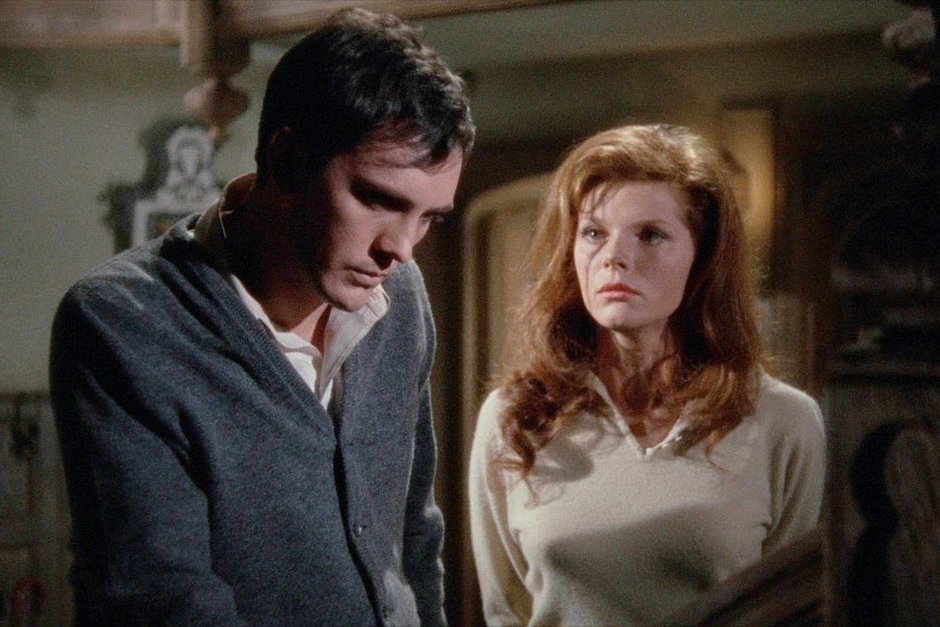
Fowles also meticulously worked on language and intonational accuracy. According to critic Alan Pryce-Jones of The New York Times, “there is not a false note in the portrayal of Frederick.” As a result, “The Collector” was perceived not only as a debut but also as a work that set new standards for the psychological novel and thriller.
“Contempt for writers who are vain and want fame”
Success came to John Fowles immediately after the publication of “The Collector.” The book became a bestseller and allowed the writer to leave teaching and fully transition to literature. In subsequent years, he solidified his position with the novels “The Magus” and “The French Lieutenant's Woman” (1969). By the 1970s, he had become one of the few English authors popular not only with critics but also with readers. Yet Fowles himself regarded fame with evident distrust. He declared that he felt “great contempt for writers who are vain and want fame.” Later, Fowles admitted he was tired of the “bestseller conveyor belt” and consciously chose a different path.
This choice led him to a gradual withdrawal from public life. In 1968, Fowles settled in Lyme Regis on the south coast of England, where he spent most of his life in a house by the sea. Earlier, he had lived on an isolated farm, but complete solitude seemed a bit monotonous to him. Despite this, Fowles consciously maintained distance from society. “I have never particularly needed other people… I need them less than most people," he said in a 1977 interview.
He was drawn to natural surroundings and seclusion. The writer emphasized he could not live “away from the sound of the sea.” Over time, he gained a reputation as a recluse who avoided public attention and lived a quiet, contemplative life.
“Solitude is a very important sign of the future novelist," Fowles explained the connection between reclusiveness and writing practice. He believed that a writer must exist “in two worlds — the real and the unreal.” John Fowles also emphasized the need for inner freedom, opposing the desire to “put the writer in a cage, to define him precisely.” For Fowles, the novel was a way to convey not logical but “sensual truths," and in this sense, the author's task was “to teach how to feel correctly.”
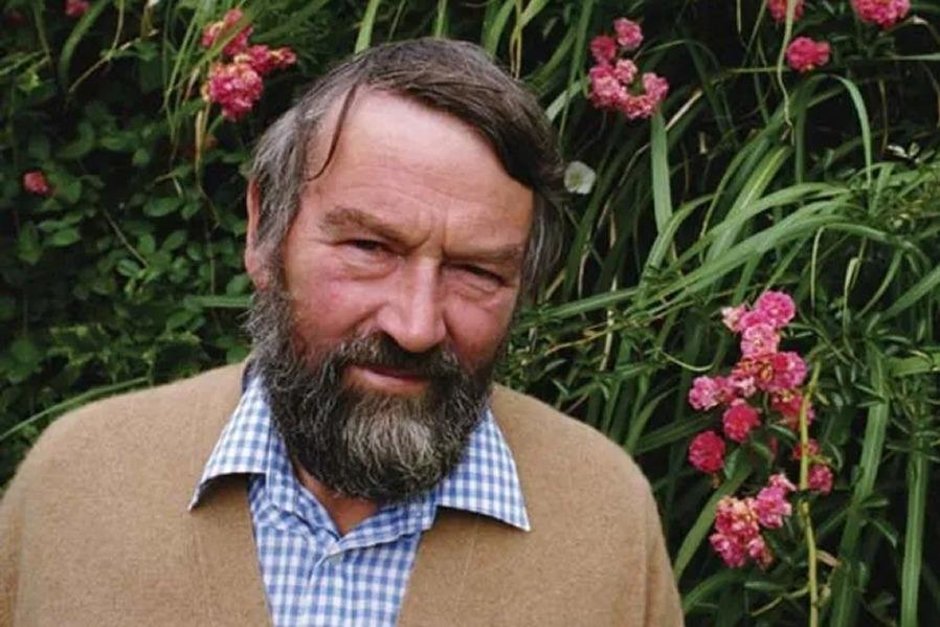
This understanding of the profession also shaped his attitude toward the literary community and readers. Fowles said that in private life he “was not a literary figure," avoiding “cocktail parties and publishers' receptions.” “In many ways, I was placed in the position of an exile in this country," the writer recounted about his feelings of isolation. At the same time, he noted it was not about being an exile from the country, but from society.
Relations with readers were also tense. Fowles complained that a famous writer living in seclusion “will be pursued by readers… they want to see you and talk to you, not understanding that it gets on your nerves.” However, he insisted on the necessity of a broad audience and criticized the novel's enclosure within a narrow intellectual circle.
Despite his distance from public life, Fowles continued his literary activity. After the successes of the 1960s, he published the novels “The Ebony Tower” (1974), “Daniel Martin” (1977), “Mantissa” (1982), and “A Maggot” (1985), as well as essays and diaries. However, the intensity of his work declined. After a stroke in 1988, he noted the loss of his former ease of writing and “doubt in the value of the game itself” of literature. Later, Fowles said he had exhausted himself as a novelist. Nevertheless, his books continued to be studied, especially in the United States, where they became part of university curricula.
John Fowles died on November 5, 2005, at the age of 79 in a hospital near Lyme Regis. The cause was heart failure. Until the end of his life, he remained in his house by the sea, maintaining the form of life he had chosen — a combination of literary fame and conscious reclusiveness.
Publisher: Eksmo
Translation from English: Irina Bessmertnaya
Number of pages: 416
Year: 2021
*Age rating: 18+*
Yekaterina Petrova is a literary columnist for the online newspaper Realnoe Vremya and hosts the Telegram channel «Булочки с маком».