“We decided this project should be people's”
Work on the series “Ilham” to be completed by october
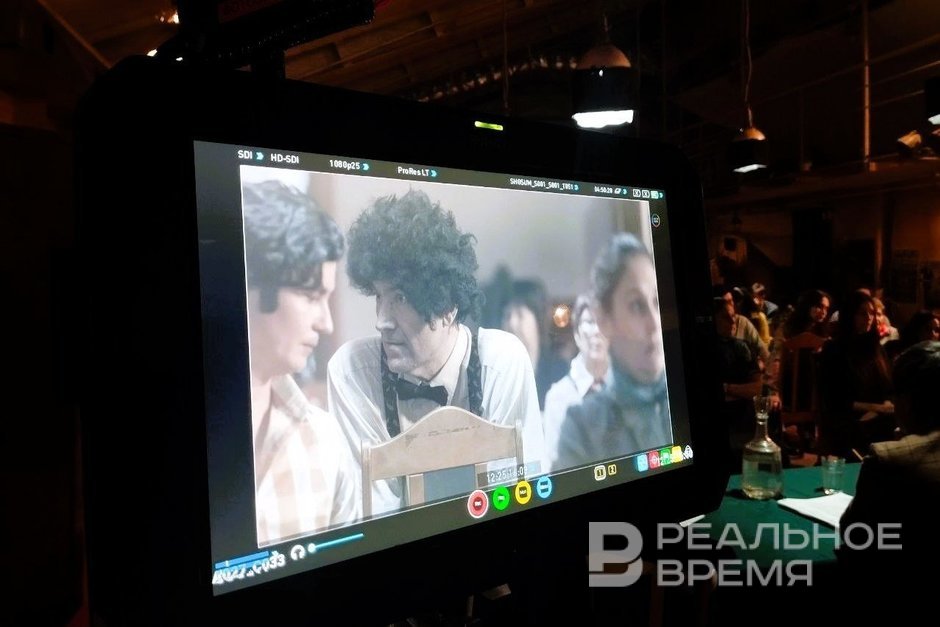
Filming of the series “Ilham” about singer Ilham Shakirov continues in Kazan. Radif Kashapov, a correspondent for Realnoe Vremya, participated in the filming himself. Preparations for the screening are scheduled to be completed in October. Our publication reports on how the life of the People's Artist is being brought to the screen.
The days and nights of Marcel Musavirov
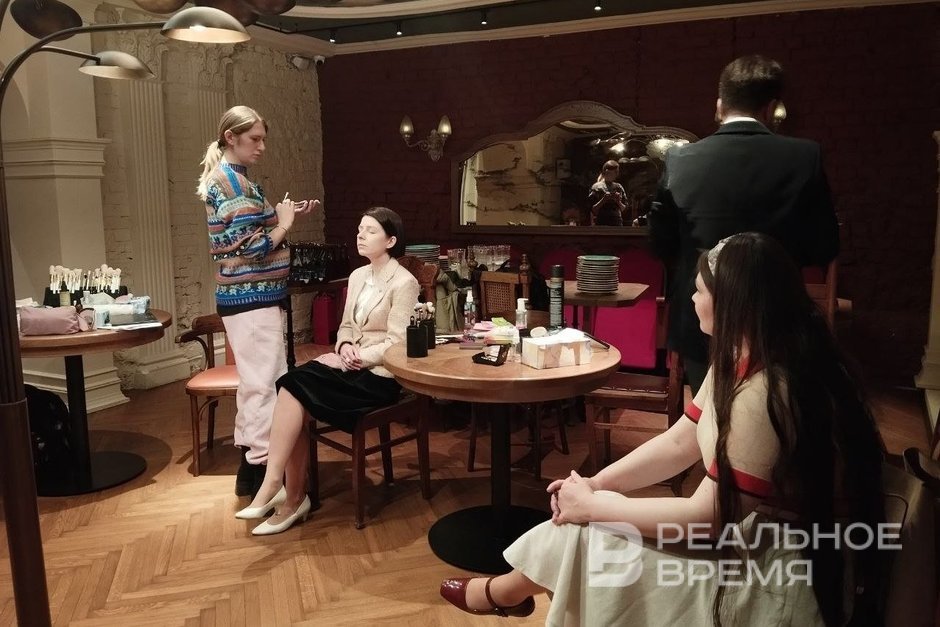
In mid-March, the creative team of the series announced a casting call for extras, emphasizing that anyone could appear in the project about the beloved Tatar singer. To be sure of being selected, I signed up for the earliest shoot, which started at five in the morning at a restaurant.
— We could easily gather extras ourselves, but we decided this project should be people's, so we reached out to viewers and residents of the republic. Surprisingly, there are many young people among them. Yesterday, they saw Marcel in makeup and spontaneously started applauding him without any cue, — says Alina Suleymanova, director of the film company “Vatan 21 Vek.”
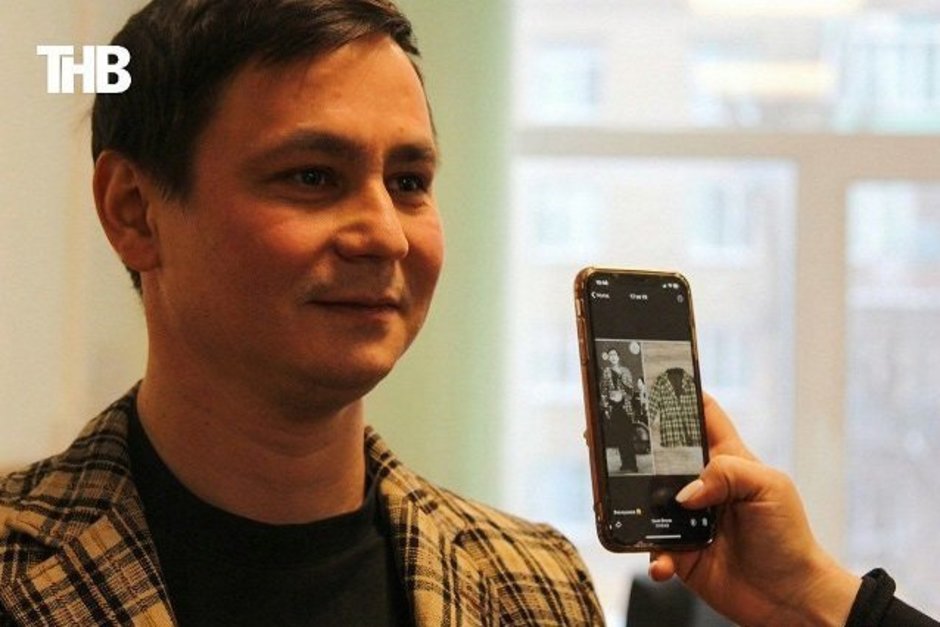
Outside, I meet the lead actor, Marcel Musavirov. The actor from the Naberezhnye Chelny Drama Theater has intense days and nights. Yesterday, he was filming a television scene, then went home, performed in the play “Young Hearts," slept for a couple of hours, got behind the wheel — and now he's getting ready for makeup. Outwardly, he indeed resembles the young Shakirov. Moreover, Musavirov agreed to an experiment — he underwent hair extension procedures, which are now carefully styled on set to achieve the characteristic curls. The actor says his mother-in-law recently saw him in this guise and immediately recognized the People's Artist of the RSFSR. The resemblance is enhanced by the distinctive accent, which Musavirov learned by listening to radio broadcasts that the actor began recording back in the 1960s.
Suleymanova admires the actors: she recounts that yesterday on set, a lighting fixture was supposed to explode, and its sparks landed on the actors' hair and clothes, but no one made a sound until director Oleg Kondrashov called out "Cut!”
It's worth noting that Kondrashov doesn't settle for a single take. He consults with colleagues, meticulously constructing each frame so that the actors, the lighting, and the overall atmosphere all perform convincingly.
In the restaurant, besides him, actors Evgeny Bylnov from the Youth Theater and Gulnaz Vafina from the Kariev Theater are filming. They are preparing for a scene where Shakirov explains to Moscow artists what “mong” (melodic soul) means. Besides me, several other girls and guys are in the background, including TV presenter Lina Zinnatullina, who came with her husband:
— I want to be part of history, — she explains her decision. Everyone found clothes reminiscent of the 70s in their wardrobes, and the costume designer picked out a tie for me. A waitress from the restaurant is drawn into the filming — her approach to the table starts a three-minute scene shot from different angles: wide, medium, close-up. Of course, during all this, not only the main actors but also the extras must repeat the same actions each time.
A secret room in the Tinchurin theater
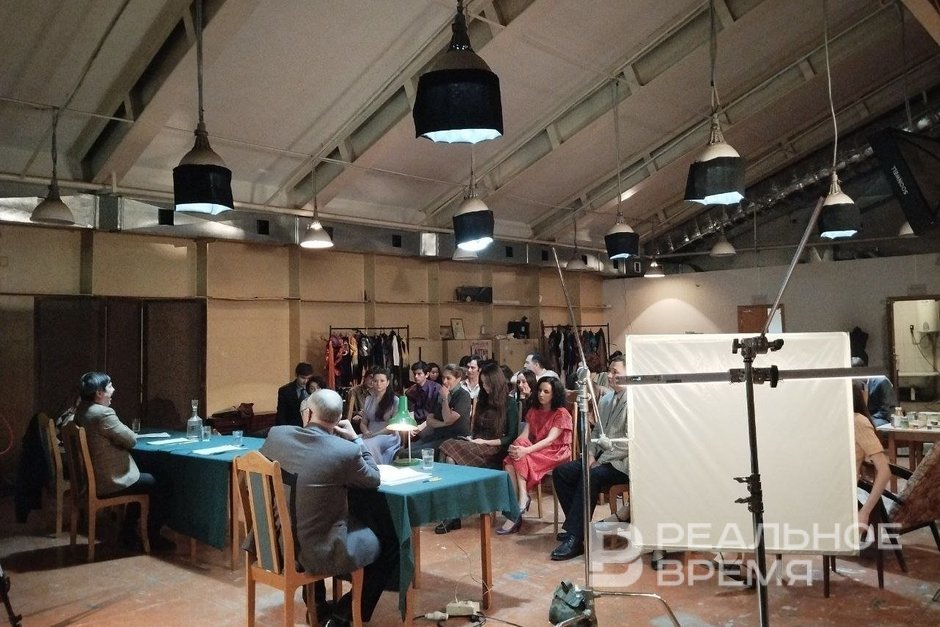
Musavirov manages to catch a nap while the crew, led by production designer Alisa Galieva, prepares the second location. It's located in the current Tinchurin Theater (the former Kamal Theater building), but not everyone can find it.
You take the elevator to the sixth floor, walk along planks past stage machinery, and you find yourself in a set construction workshop as large as a gymnasium. This is the top of the “sail.” Here, they are filming a meeting of the Tatar State Philharmonic staff, where Shakirov worked from 1960 until his death.
Initially, they found a rather Soviet-style room in the Saidashev Palace of Culture, but they concluded it would look dull on screen. After all, this is not a documentary but a feature film.
Suleymanova says the location was found by chance; it's especially valuable that the place hasn't changed since its opening in 1986:
— This is a paradise for a filmmaker because we are experiencing an incredible shortage of 1970s locations, — she explains. — In Tatarstan, even in the most remote villages, renovations and reconstructions have been carried out. This space was a great find for us. But then the hardest work began for the production designers. We cannot afford mistakes, so we have two scriptwriters, three directors, several experts, and three producers: general, creative, and executive.
Who is Fanis Zigansha playing?
For cameraman Rafik Galeev, this is his third major Tatar film. Previously, he shot “Kuktau” and “Are You Alive?” with director Ildar Yagafarov. Galeev says they filmed the singer's childhood during the winter and have now moved on to episodes from the 60s and 70s. He didn't immediately agree to the project but later, coordinating schedules with shoots in Moscow, joined the creative team: “Cinema is a field where you constantly have to be creative and improvise on the fly. Fortunately, there are people here who help and provide the opportunity to film. I also shot a documentary in this theater with director Marcel Salimzhanov. I'm glad the Tinchurin Theater is accommodating us.”
— I believe history is important, — says Galeev. — If the story is national and the script is good, you can always make a good film that will be understood in any country, in any language. Because human relationships are the same everywhere, and they are always interesting to audiences. That's how I judge a film. If I, as a professional, start noticing how the cinematography is done, if I switch to thinking about professional matters, it means I've lost interest as a viewer. But if the story captivates me, then the film has succeeded.
Finally, everything is ready, and filming begins. Here, Musavirov interacts with a master of the episode, Kamal Theater actor Fanis Zigansha, who wears a huge wig — a common practice for artists in Soviet times. It's hard to guess who he is portraying on screen, but Zigansha gives a hint: he's playing several famous presenters at once!
Filming continues; in one of the villages in the Zelenodolsk district, they will film a Shakirov concert, with many spectators, of course! There are many more location changes and much work ahead; meanwhile, post-production for the three-part film will be completed in October.
The project is being prepared with the support of the Commission under the Rais of Tatarstan on the preservation and development of the Tatar language and the native languages of the peoples living in the Republic of Tatarstan, and personally of Marat Akhmetov.