Reproduction in weightlessness, the alphabet of life in space, the oldest dogs
Interesting science news of the week
Weightlessness “disorients” sperm and hinders their ability to reach the egg quickly. Before their final extinction, Neanderthals lost a large part of their population and resettled Europe anew. All five “letters” of the genetic alphabet — the nitrogenous bases that make up DNA and RNA — were found in soil samples from the asteroid Ryugu. Genomes of the oldest dogs have been found in Britain, Switzerland, and Turkey, and they are 5,000 years older than previously discovered ones. Russian doctors have created a mathematical model of the aging immune system.
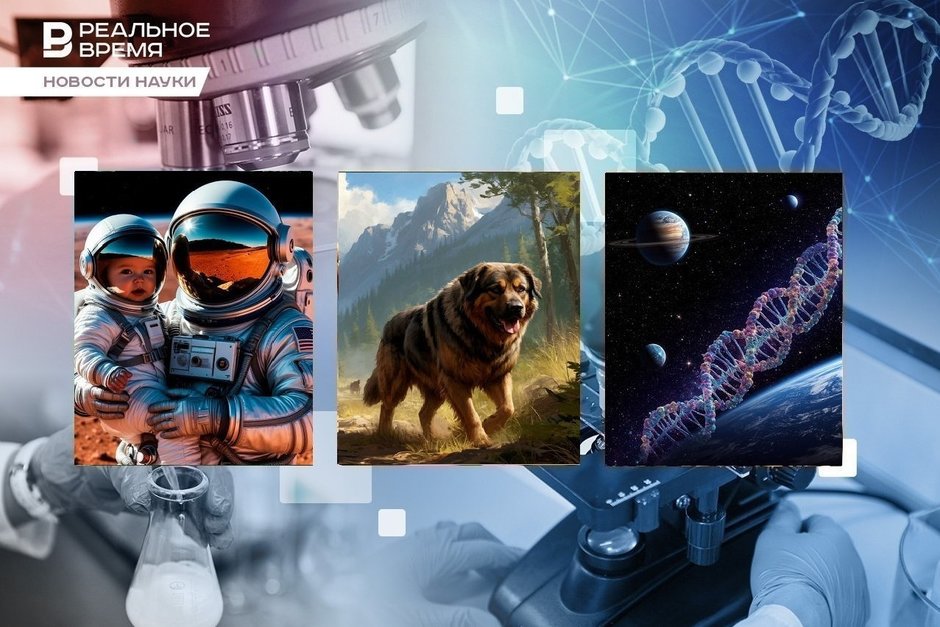
Weightlessness negatively affects the reproductive efficiency of mammals
For humanity to effectively conquer outer space, it is necessary to thoroughly understand all medical aspects of human life in space. Reproductive issues will play a crucial role here, since in the distant future, colonies on planets will need to reproduce themselves without constant resupply of population from Earth.
Research in orbit would seem the most logical way to gather such data. But it is very expensive and difficult to systematize. Moreover, it is hard to isolate individual effects in orbit: weightlessness, cosmic radiation, and G-forces all combine to “blur” the clarity of the experiment.
Therefore, Australian scientists from the University of Adelaide attempted to reproduce only weightlessness in isolation and study sperm activity in this environment. To do this, they used a 3D clinostat — equipment that rotates the space containing the samples, thus neutralizing Earth's gravity. Sperm were loaded into the clinostat and connected to channels shaped like fallopian tubes. This simulated the situation where sperm reach the egg on their own.
Experiments were conducted with human, mouse, and pig sperm. The verdict: weightlessness hinders sperm from reaching the target. Significantly fewer human and mouse sperm were able to reach their destination — even though their motility, speed, and movement patterns remained unchanged. The Australian biologists concluded that gravity is needed not for the movement itself, but for correct orientation in the right direction.
Moreover, the sperm that did reach the target under microgravity conditions were of higher quality: human sperm bound better to the egg's outer layer, and mouse and pig sperm produced more high-quality embryonic cells. It appears that weightlessness acts as an additional natural selection factor for the highest quality sperm.
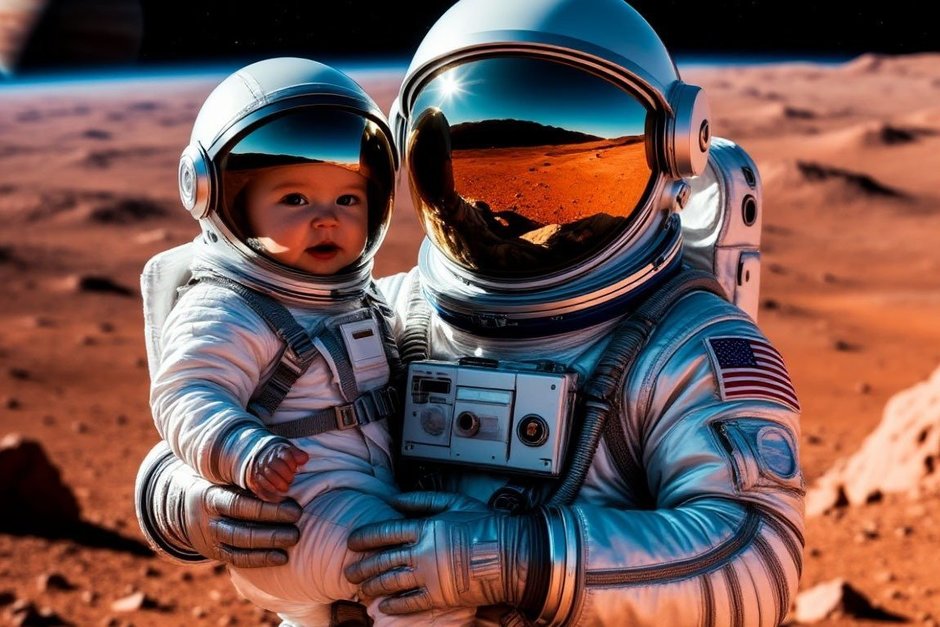
Neanderthals didn't go extinct on the first try, but it ultimately led to their demise
Paleogeneticists have discovered that Neanderthals in Europe did not disappear from the planet's history on the first attempt. 70–80 thousand years ago, a dramatic cooling event occurred in Europe, and the population of our “cousins” was almost entirely wiped out. Only a few hundred individuals survived, taking refuge in southern France, in a natural shelter. From there, they managed to recolonize the continent.
This data has only recently become available to scientists. An international team of paleogeneticists extracted mitochondrial DNA from bone powder and teeth of 10 Neanderthals found at six sites across Europe (Belgium, France, Germany, Serbia). The genomes were sequenced and combined with 49 mtDNA sequences published earlier and collected across Eurasia. The geneticists then constructed a phylogenetic tree and calculated the age of evolutionary divergences.
The result: 20 of the 22 studied genomes of late Neanderthals from Spain to the Caucasus descend from a single mtDNA lineage. This genetic group began to grow and spread across Eurasia 65 thousand years ago. This was explained by the severe glaciation that, between 70–80 thousand years ago, made Europe uninhabitable and killed off most of the Neanderthal population. The highest density of sites from that time is found in southwestern France — where the Neanderthals survived. Their descendants then recolonized Europe (though not for long). Only two genetic lineages retained mtDNA from before the glaciation — individuals from the Cotte Cave and Mandrin Grotto in France. They simply continued living in their refuges both before and after the glaciation, without much mixing with others.
The outcome of this whole story was not a natural but a genetic catastrophe: all late Neanderthals descended from a single maternal line. Their former genetic diversity was lost forever, and with it, their adaptability. 40 thousand years ago, Neanderthals completely ceded the Earth to us, the sapiens.
All “letters” of DNA and RNA found in sand grains from asteroid Ryugu
The hypothesis of the extraterrestrial origin of life on Earth sounds exotic, but occasionally facts emerge to support it. Here's another: in samples from the asteroid Ryugu, scientists have found all five nitrogenous bases, the building blocks of nucleic acid molecules. They are also known as the five “letters” of the genetic alphabet: adenine, guanine, cytosine, thymine, and uracil.
The asteroid Ryugu was discovered in 1999 and has been studied for many years. Its diameter is about 900 meters, and its age is about 4.5 billion years. It likely broke off from the giant asteroid Pulana beyond the Solar System's “snow line” (roughly between the orbits of Mars and Jupiter). In December 2020, the Japanese spacecraft Hayabusa2 returned to Earth, bringing a capsule with fragments of Ryugu's soil. Research into the asteroid's chemical composition has continued ever since. In February 2025, it was suggested that liquid water once existed on its surface. Previously, organic matter was found in the samples, including amino acids (the building blocks of proteins), and even uracil — one of the five “letters” of the universal genetic code.
Now, the Japanese have reported that all five nitrogenous bases were found on Ryugu. In addition, derivatives of nicotinic acid, urea, ethanolamine, and several amino acids were found. The Japanese are confident that these molecules are of extraterrestrial origin, not the result of terrestrial “contamination” by life in the laboratory.
What does this discovery mean? It means there are celestial bodies capable of being sources of prebiotic compounds for a young planet. It also suggests that the code of life might indeed be universal, and its fragments are widespread throughout the Solar System.
The history of domesticated dogs deepened by another 5,000 years
Where and when the gray wolves of the Ice Age were first domesticated and turned into dogs is still unknown. But it is known for certain that they were very important to early human communities: people always took their dogs with them, societies exchanged dogs, and the animals sometimes even became an export commodity. Until now, the oldest dog DNA came from fossil remains nearly 11,000 years old found in northwestern Russia.
Scientists from Ludwig Maximilian University of Munich and the Natural History Museum in London have pushed back the age of the oldest known dog remains by another 5,000 years — from Neolithic sites in Great Britain and Turkey. These dogs lived alongside prehistoric humans 14–16 thousand years ago. The genetic trace of these dogs is also present in the genes of our modern mutts.
Interestingly, the genomes of the samples from Turkey (15,800 years old) and from a cave in Britain (14,300 years old) are strikingly similar. This means that domestic dogs spread across Europe and Western Asia very quickly. They lived alongside hunter-gatherers who treated dogs in much the same way. At both sites, the dogs were fed the same food their human companions ate (as shown by isotope data), and at the Turkish site, dog remains were buried directly on top of human remains — likely holding some ritual significance.
Scientists from the Francis Crick Institute in London also identified another very early dog — it lived in Switzerland 14,200 years ago. The Swiss discovered that the genetic profile of early European dogs is surprisingly well preserved in modern European breeds, such as the German Shepherd.

The three dogs found in Turkey, Britain, and Switzerland have almost identical mitochondrial DNA. This means they were part of a single Ice Age population that spanned Europe and the Middle East. This unity has not been proven until now, making this a major discovery.
A mathematical model predicts the aging of the immune system throughout life
At the Center for Mathematical Modeling in Drug Development at Sechenov University (First Moscow State Medical University), researchers have developed a mathematical model that can quantitatively describe the aging process of the human immune system from the first days of life to old age. The model describes all processes — the emergence of T-cells, their development, peak numbers, subsequent declines, and rises.
The scientists focused specifically on CD4+ T-lymphocytes — these cells are the commanders of the immune response. Without destroying foreign cells themselves, they direct other immune cells at the beginning of an immune response and form memory of past infections. To develop new drugs for treating infections, cancer, and autoimmune diseases, it is crucial to understand how their numbers and activity change over a lifetime. This was the focus of the Moscow researchers.
The mathematical model they built showed that immune aging is not a smooth line. The decline in T-cell numbers is a non-linear process. Until age 4, the number of T-cells increases, then a gradual decline begins. After age 40, there is a new rise because cell survival adaptation mechanisms kick in. By age 50, the number of immune T-cells falls again, and around age 64, there is another “peak” associated with the activation of division in cells that have never encountered an antigen.
In childhood, the main role in coordinating immunity is played by the activity of the thymus (the gland that produces T-cells). In adults, antigenic load — the number of infections experienced — plays a primary role. In the elderly, these factors weaken.
Currently, the developed model can describe the age-related dynamics of T-cells in healthy individuals. Now, scientists are teaching it to describe pathologies — infectious processes, cancer development, or autoimmune diseases. In the future, by adding individual data to the model, it could be used to create a personalized immune profile for a specific patient. This will help not only in drug development but also, possibly, in slowing aging processes.