Not a cookbook: how Rumohr turned food into philosophy
Art historian Sergey Feofanov presents the book “The spirit of culinary art," in which cooking is viewed as part of philosophy and culture
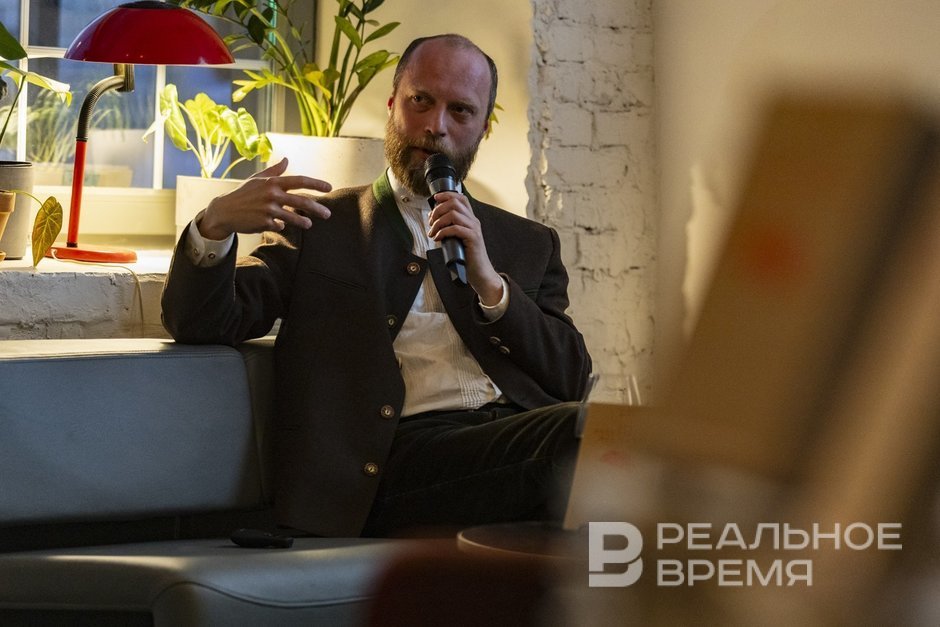
On the weekend of March 7, the bar “Melok” hosted the presentation of a book by the 19th-century German thinker Carl Friedrich von Rumohr, “The Spirit of Culinary Art.” This 1822 text is considered one of the first philosophical treatises on gastronomy. Art historian Sergey Feofanov spoke about who Carl Friedrich von Rumohr was, why crown princes and future rulers of Northern Europe listened to him, and how his travels through Italy turned into a classic text of German gastronomic culture. Details are in this report by Yekaterina Petrova, literary columnist for Realnoe Vremya.
From romanticism to gastronomy
The history of the Russian edition of Carl Friedrich von Rumohr's book “The Spirit of Culinary Art” began with a research project. Art historian Sergey Feofanov recounted that he first encountered this text while preparing a major exhibition on Romanticism. Between 2020 and 2021, the Tretyakov Gallery was working on a joint Russian-German project, “Dreams of Freedom. Romanticism in Russia and Germany," which was later shown in Moscow and Dresden. During discussions, one of the German colleagues mentioned Rumohr's book.
“He said there's a book called 'Der Geist der Kochkunst'. It would be great to somehow integrate it into the exhibition," Feofanov recalled. The text wasn't ultimately included in the exposition, but Feofanov acquired the book and read it. According to him, it seemed “quite curious," despite the author's name being almost forgotten today.
The decision for a Russian edition came later, in an informal setting. Feofanov mentioned discussing the book with Mikhail Kotomin, director of the Ad Marginem publishing house. “We were sitting in his kitchen, talking, and I mentioned this book. A month later, Kotomin called and said: 'We've translated it. How about you take on the scientific editing,'" Sergey Feofanov said at the book presentation. Receiving the translation, Feofanov realized the work would require serious revision of the text. According to him, the problem wasn't the quality of the translation, but the specificity of the book itself, written in a complex language rich with cultural references.

The title became a separate issue. The translator suggested a more neutral variant — “Foundations of Cookery” — but Feofanov insisted on a literal translation. "'Geist' in German means spirit, 'Kochen' means to cook, 'Kunst' means art. I was offered the title 'Foundations of Cookery' to make it clearer. But I said no, we need to translate authentically — 'The Spirit of Culinary Art,' even if it sounds strange," the art historian noted.
To facilitate reading the 19th-century text, the edition was supplied with a detailed scholarly apparatus. Feofanov wrote an extensive afterword, which, according to him, effectively functions as an introduction, and prepared over two hundred explanatory footnotes. He added: “Rumohr was very intelligent, perhaps too much so. Reading him today is difficult, so the book needs explaining. There are 202 footnotes here — references to ancient mythology, authors, history, geography. This reference apparatus can be used almost like Wikipedia.”
The Russian edition became the first translation of Rumohr's book into another language. Additionally, it was the first to be supplemented with illustrations. Feofanov also noted that obtaining rights to the images proved challenging due to the political situation, and not all German museums agreed to participate in the project.
Art lover, Italy enthusiast, and cicerone for princes
Carl Friedrich Ludwig Felix von Rumohr was born in 1785 and died in 1843. Sergey Feofanov reminded the audience at the presentation that these dates fall within a pivotal era in European history. “He lived quite a long life for his time. If you recall the biographies of many Romantics, their lives often ended in their early twenties," the art historian noted. According to Feofanov, Rumohr's life path unfolded against the backdrop of major historical events — from the French Revolution of 1789 to the Napoleonic Wars and the formation of a new political map of Europe.
Judging by the inscription on his tombstone, contemporaries perceived Rumohr primarily as an art historian and intellectual. Feofanov mentioned he lived in Dresden for several years and discovered Rumohr's grave in the old Neustadt cemetery. He quoted the inscription on the monument:
“To the witty and knowledgeable writer on state and life circumstances of the past and present, the founder of the profound study of the history of medieval art, the versatile connoisseur of the art of bygone eras, the noble patron of new art, this monument was dedicated by Christian VIII, King of Denmark.”
The monument was erected on the initiative of the Danish King Christian VIII, a close friend of Rumohr. As Feofanov explained, their acquaintance began back when the future monarch was still crown prince, and later Rumohr even received Danish citizenship. The monument itself was designed by the architect Gottfried Semper, author of the Dresden Opera House and the Gemäldegalerie Alte Meister.
Rumohr's intellectual biography was shaped within the circle of German Romantics. In 1802, he met the Romantic painters — the Riepenhausen brothers — which largely determined his subsequent interests. Rumohr received artistic training at the Munich Academy of Fine Arts and interacted with key figures of the early 19th-century intellectual scene. According to Feofanov, he was acquainted with the philosopher Friedrich Schelling, interacted with the writer and poet Friedrich Schlegel, and knew Johann Wolfgang von Goethe. His circle also included the writer Ludwig Tieck. “Rumohr was part of the scene of that time, right at the center of the intellectual environment," Feofanov said.

One of Rumohr's early works was the 1812 book “The Antique Group of Castor and Pollux. On the Concept of the Ideal in the Work of Art.” Feofanov emphasized that at that time, the very science of art history was just taking shape: “No concept of art history as a science existed back then. There were amateurs, collectors, but almost no systematic research.” The success of this work led to Rumohr's collaboration with the journal “German Museum," published by Friedrich Schlegel.
Rumohr spent a significant part of his life in Italy. He visited five times and lived there for a total of about fifteen years. His interest was primarily connected with Renaissance and antique art. The result of this research was a three-volume history of Italian art, which was used as a textbook for a long time. He also wrote a separate book on Raphael and an essay, “Three Journeys to Italy.”
The Italian journeys also had a practical side. Rumohr accompanied European princes during their educational travels, acting as a kind of guide to artistic culture. Feofanov explained: “They needed a companion who could show them Italy and explain it. They were told: there's Rumohr, he knows the country and the language. And he traveled through Italy with them as a cicerone.” Among his companions were the future Danish king Christian VIII, Bavarian king Ludwig I, and the Prussian crown prince Friedrich Wilhelm. According to Feofanov, Rumohr also served as their artistic advisor. He helped shape court collections and consulted on the purchase of artworks. Some of the collections now in the museums of Berlin, Copenhagen, and Munich were formed with his participation.
Financially, Rumohr was independent. After his father's death in 1804, he inherited a considerable fortune and could pursue what he considered important. “He didn't need money and could do whatever he wanted. Including supporting young artists," Feofanov said. Rumohr helped emerging artists, arranged trips to Italy for them, and introduced them to the artistic milieu.
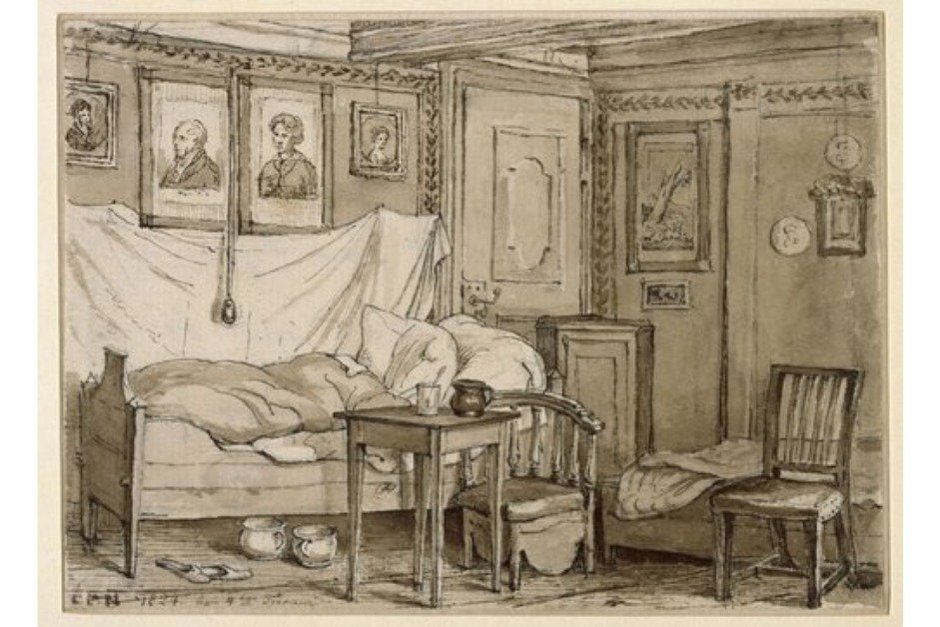
Simultaneously, Rumohr participated in the institutionalization of art. He consulted on the creation of the museum on Berlin's Museum Island — one of the first buildings specifically constructed as a public museum. Feofanov noted that Rumohr even applied for the position of director of this collection but ultimately didn't get it due to court intrigues.
In the academic sphere, Rumohr also engaged in reassessing the German artistic heritage. In particular, he was one of the first to turn his attention to medieval art and contributed to the popularization of Albrecht Dürer's work. Sergey Feofanov emphasized that in the early 19th century, interest in the national artistic tradition was only just forming: “When the Germans began searching for their own cultural identity, they needed to find their great artist. And one of those who addressed this topic and began popularizing German art was Rumohr.”
Besides studying the past, he supported contemporary art. In Rome, Rumohr interacted with the colony of Nazarene painters and provided them financial assistance. He even organized fundraising for Friedrich Overbeck's painting “The Entry of Christ into Jerusalem” and later secured its purchase for the cathedral in Lübeck. At the same time, Russian artists, including Alexander Ivanov, were also working in Rome — they were all part of the same artistic milieu.
The baron, broth, and the philosophy of taste
The book “The Spirit of Culinary Art” appeared in 1822 and was immediately published under an unusual authorship. The title page bore the name Joseph König, with Carl Friedrich von Rumohr only listed as the editor and reworker of the text. Sergey Feofanov explained that this form of publication was a conscious decision by the author. According to him, the idea for the book arose after Rumohr's long travels through Italy. “He returns from his Italian journey and wants to share new knowledge — not only about art. This is gastrosophy. Philosophy is the love of wisdom, and gastrosophy is the love of gastronomy," Feofanov said.

Joseph König did indeed exist — he was Rumohr's cook. “He takes a radical step: a baron interferes in what was considered the simplest of crafts. So he initially hides behind the figure of the cook," Feofanov explained. In the preface to the first edition, the author even invented a story about the manuscript's origin. It claimed that after the cook's death, his notes remained, and the publisher allegedly decided to publish them so the book's proceeds could help raise the deceased's children. After the first print run sold out successfully, Rumohr more openly acknowledged his involvement in the project in the second edition.
The book was structured not as a collection of recipes, but as a reflection on the nature of food and gastronomy. The text explores questions of taste, food pairing, regionality and seasonality of eating, and the role of food in maintaining health. Sergey Feofanov explained that the author viewed gastronomy as an independent domain of culture: “Rumohr and his followers said that a new muse should appear on Parnassus — the muse of gastronomy. There is a muse of dance, of history, of poetry. But why not gastronomy? It's also a sublime art form, not just a way to fill your stomach.”
The book's title, according to Feofanov, is directly linked to the philosophical language of the era. He reminded that the concept of “spirit” was actively used in early 19th-century German philosophy. “Hegel introduces the concept of Weltgeist — world spirit, world soul. It's an attempt to explain in philosophical language that there is a certain sublime principle governing the world," the art historian noted. According to him, it is in this context that Rumohr's book title should be understood: it was conceived as a philosophical discourse on the culture of food, not as a practical manual.
At the same time, the text also had a distinct cultural-political context. Rumohr compared various national cuisines and opposed the unconditional dominance of French gastronomic fashion. The author contrasted it with the simpler, more seasonal cuisine of Italy and Germany. “He writes that the coolest cuisine is Italian: fresh, honest, seasonal, and practical. And German, he says, is just as good because it has its own products and traditions," Feofanov paraphrased Rumohr's idea.
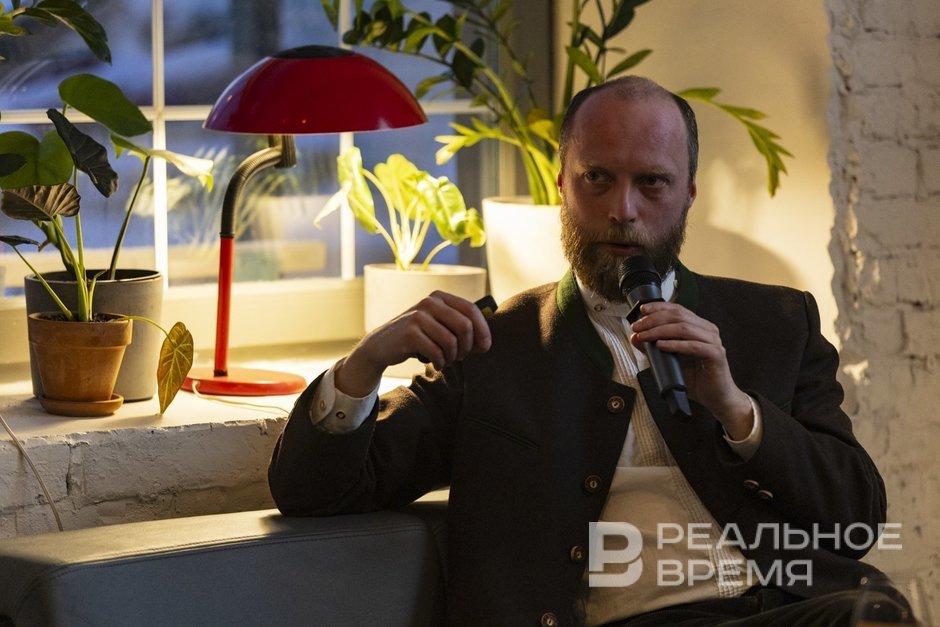
However, he also acknowledged the achievements of French cuisine. “Rumohr says that France invented the most important and honest dish — broth. It was the first fast food: a person would go into a small shop, quickly drink a cup of broth, and continue on," Sergey Feofanov noted. But then, according to Rumohr, French cuisine complicated this foundation: “The French turn broth into the base for endless sauces and complex combinations where the true taste of the ingredient disappears," the art historian stated.
After its release, the book was well-received and reprinted. However, it subsequently almost disappeared from view. One reason was the publication of another book on gastronomy — Jean Anthelme Brillat-Savarin's “The Physiology of Taste," which appeared just a few years later. Feofanov emphasized: “The difference between these books is four years. First, 'The Spirit of Culinary Art' comes out, and then the French write their bombastic book — 'The Physiology of Taste' — and it becomes an absolute bestseller.”
According to him, the French edition quickly gained wide circulation and displaced the German book from the cultural field. In the 19th century, French remained the main language of European culture, and gastronomic literature in French had a significantly larger audience. Interest in Rumohr's book revived about a hundred years later. It was then reprinted and gradually acquired the status of a classic text of German gastronomic thought. Feofanov noted that today it has several dozen reprints. “Nietzsche read this book; he references it," the art historian said.
In 1963, the Association of West German Chefs established a professional award called the “Rumohr Ring.” According to Feofanov, this prize became one of the main professional honors in German gastronomy. “Today, Rumohr is almost like Michelin, but in Germany," he noted.
Yekaterina Petrova is a literary columnist for the online newspaper Realnoe Vremya and hosts the Telegram channel «Булочки с маком»