“A witch's brew of love, passion, revenge, wealth and poverty”
Today sees the global release of the film adaptation of Emily Bronte's novel “Wuthering Heights” starring Margot Robbie and Jacob Elordi. We tell you what you need to know about the book and its new adaptation.
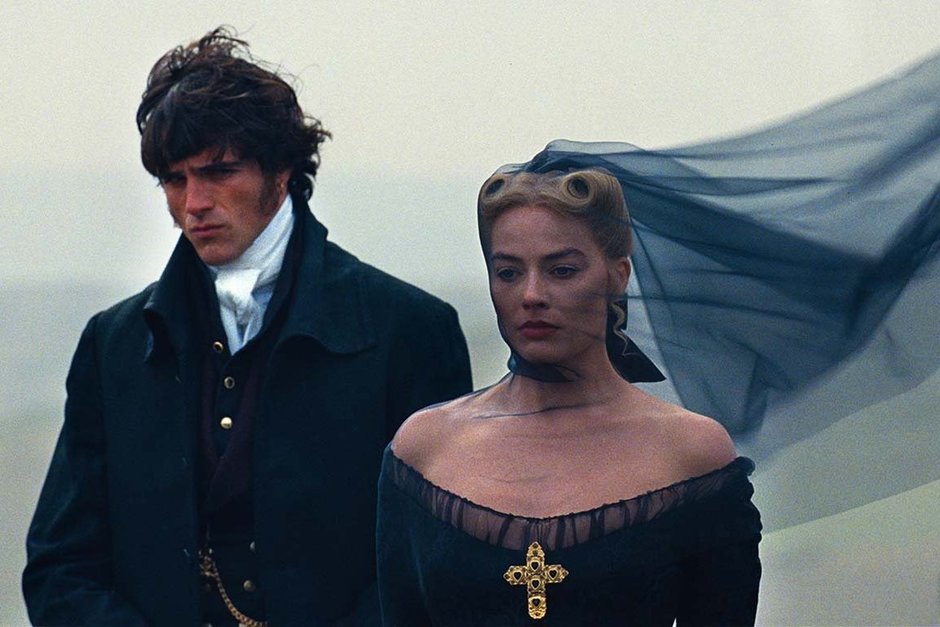
The new film adaptation of “Wuthering Heights” with Margot Robbie and Jacob Elordi has not only brought one of the most controversial novels of the 19th century back to the screen but has also caused an “extraordinarily large leap” in sales: in the UK they rose by 469%, and in Russia the time spent reading the book increased fourfold. The film, which director Emerald Fennell calls merely “her version," has already sparked debates about casting, the age of the heroine, and whether this story can be considered the “greatest love story” — or rather revenge story. Why a novel once called a “strange, inept story” and even a “devilish book” is experiencing a new wave of popularity today, and how its perception has changed from Victorian reviews to BBC rankings and Hollywood. Details are in the report by literary critic Yekaterina Petrova of Realnoe Vremya.
An “extraordinarily large leap”
The release of a new film adaptation of “Wuthering Heights” has provoked a sharp increase in interest in Emily Brontë's novel. According to the Kion Stroki book service, in January 2026, the time spent reading the book increased fourfold compared to the same period last year. Overall, from January to December 2025, interest in the works of the Brontë sisters grew by 70%, but it was with the start of the film's promotional campaign that the dynamics peaked: in January 2026, “Wuthering Heights” surpassed Charlotte Bronte's “Jane Eyre” in readership for the first time.
In the UK, sales of the novel rose by 469% compared to the previous year. In January, 10,670 copies were sold compared to 1,875 a year earlier, which Penguin Classics UK called an “extraordinarily large leap.” After the release of the first teaser trailer in September, sales increased by 132%. From September to the end of the year, the publisher sold 28,257 copies compared to 12,134 for the same period in 2024. In the US, according to Circana Bookscan, sales of the print version in 2025 exceeded 180,000 copies, more than double the previous year's figure. Six bookstores reported increased demand following the release of the trailer featuring Robbie and Elordi.
The surge in interest is accompanied by active engagement from a new audience. In the US, the novel became the first choice for Vogue's book club in 2026, and singer Charli XCX released a companion album to the film. Readers are coming together in offline and online formats: New York's P&T Knitwear store hosted a three-hour collective reading organized by the Belletrist club and 831 Stories. “My ego won't let me go see the film without reading the book," said 23-year-old Aadi Miglani, a first-time reader of the novel.
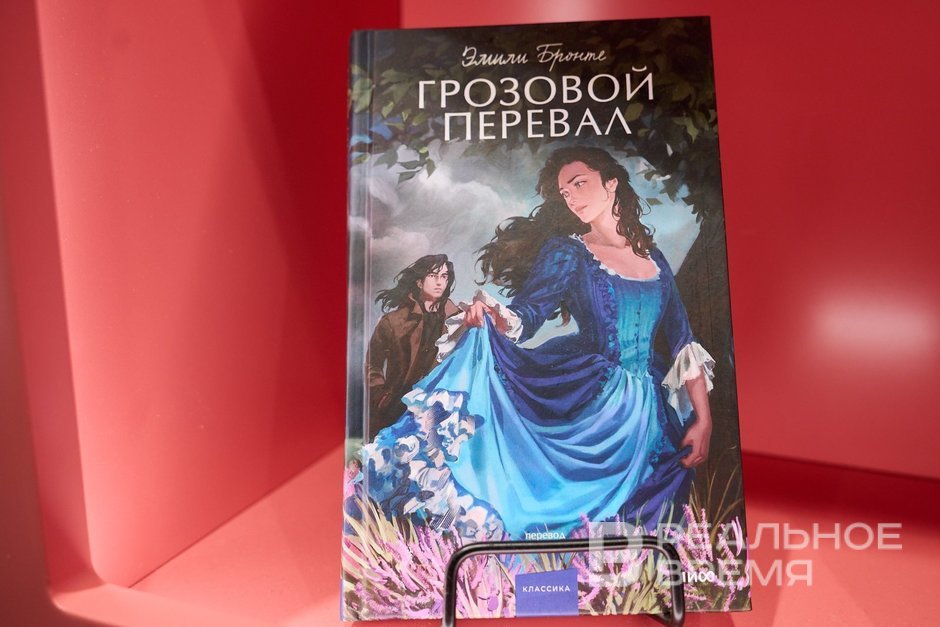
Penguin Classics publishing director Jess Harrison noted she couldn't recall another film adaptation generating “so much buzz around the book” and added that readers are showing “a real thirst for intense, maximalist, tragic love stories.” She also emphasized that “Wuthering Heights” stands out for its wildness and untamed nature — “it's an extreme book for extreme times.”
A “strange” book
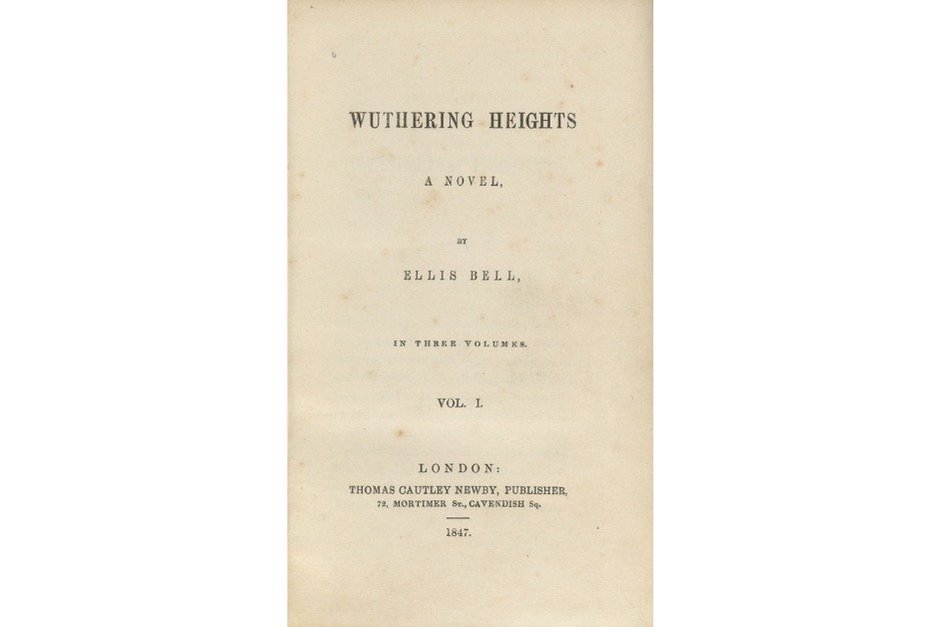
The novel “Wuthering Heights” was published in December 1847 under the pseudonym Ellis Bell and became the most famous work by Emily Brontë. Publisher Thomas Cautley Newby accepted the book for printing alongside Anne Brontë's “Agnes Grey” even before Charlotte Brontë's “Jane Eyre” received widespread recognition. The first edition came out in three volumes: “Wuthering Heights” occupied the first two volumes, and the third comprised “Agnes Grey.” Already in April 1848, Harper & Brothers released the first American edition in New York.
The novel, signed by one Ellis Bell, received rather mixed reviews: some critics were shocked by the “incredible cruelty” and portrayal of “semi-savage love," others acknowledged its “power and craftsmanship," as well as the “expressiveness and truthfulness of the depiction.” Many called the book “strange.” Professor of Victorian literature Claire O'Callaghan noted that “people didn't know what to do with this book because it lacks a clear moral stance.”
Three years after the book's release, Charlotte Bronte revealed that Ellis Bell was her younger sister Emily and wrote that the “immature but genuine powers displayed in 'Wuthering Heights' were barely recognized; its meaning and character were misunderstood.” Emily Bronte lived to read the first reviews: in her writing desk, kept at the Bronte Parsonage Museum in Haworth, five press clippings with reviews survive, mostly negative. The writer died of tuberculosis at the age of 30, about a year after the novel's publication.
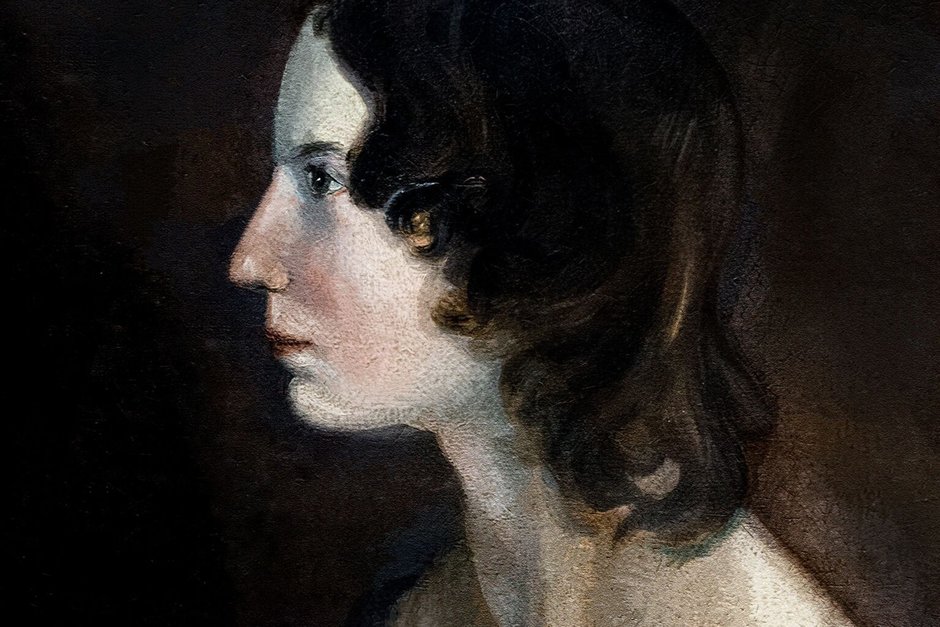
In 1850, after Emily's death, Charlotte Brontë prepared a second edition, providing it with a preface and editing the text. She corrected punctuation and spelling, and also softened the harsh Yorkshire dialect of the servant Joseph. In a letter to publisher W.S. Williams, Charlotte explained:
“It seems to me advisable to modify the spelling of the old servant Joseph's speeches; although as it now stands, it exactly renders the Yorkshire dialect to a Yorkshire ear, I am sure Southerners must find it unintelligible, and thus one of the most graphic characters in the book is lost on them.”
“Love and revenge are the engines of the book”
The action of “Wuthering Heights” unfolds on the West Yorkshire moors and centers on two vast, elevated estates and their landowning families — the Earnshaws and the Lintons — and their turbulent relationships with the Earnshaws' adopted son, Heathcliff. Professor T. Stovell characterized the book as “a witch's brew of love, passion, revenge, wealth and poverty, the supernatural.”
The novel is structured as a story within a story and spans about 30 years. In 1801, Londoner Lockwood, the new tenant of Thrushcross Grange, visits his landlord Heathcliff at Wuthering Heights manor. There he meets a withdrawn young woman, a cantankerous servant Joseph, and an uncouth youth Hareton. Caught in a snowstorm, Lockwood spends the night in the house, reads Catherine Earnshaw's diary, and has a dream where her ghost begs to be let in through the window. His cries deeply agitate Heathcliff. Falling ill, Lockwood listens to the housekeeper Ellen (Nelly) Dean's account of the families' past.
The novel's structure is non-linear, multi-layered, and features multiple narrators, both of whom are unreliable: Lockwood is a curious outsider, while Nelly controls the narrative and displays personal attachments to the characters.

From Nelly's account, thirty years earlier, Mr. Earnshaw brought an orphan, Heathcliff, from Liverpool, whose origins remained unclear. Earnshaw favored and spoiled him, arousing the hatred of his son Hindley. After their father's death, Hindley reduced Heathcliff to the status of a servant. Catherine Earnshaw grew close to him but, after accepting Edgar Linton's proposal, confessed to Nelly that she loved Heathcliff but couldn't marry him due to his low social standing. Overhearing part of this conversation, Heathcliff fled. Returning three years later mysteriously wealthy, he used Isabella Linton's infatuation as a means of revenge against Edgar.
According to researcher Claire O'Callaghan, “love and revenge are the engines of the book… there is no boundary to the depths he is prepared to go to make people pay.” Catherine died after giving birth to her daughter Cathy. Heathcliff, distraught, begged her ghost to haunt him. He gained control of Wuthering Heights through Hindley's debts and then engineered the marriage of his son Linton to Cathy to gain control of the Grange.
The final part returns the narrative to the present. After the deaths of Edgar Linton and Linton Heathcliff, Cathy remains under Heathcliff's power but grows close to Hareton. Their reconciliation leads to love, and Cathy teaches him to read. Heathcliff, increasingly obsessed with the deceased Catherine, avoids the young people, stops eating, and is soon found dead. Locals report seeing the ghosts of Catherine and Heathcliff on the moors.
In popular culture, the book is often called the “greatest love story," but the formulation “greatest revenge story” might be more accurate. O'Callaghan noted that the novel “is still capable of shocking” and poses questions to the reader about the nature of love and the boundaries of violence.
“How could any human being ever have dared to write such a book”
Early responses to “Wuthering Heights” in 1847 were polarizing. Contemporaries accused the novel of a “controversial depiction… of sociopathy and physical cruelty” and of challenging Victorian morality, religion, and the class system. A reviewer in Atlas called the book a “strange, inept story," while noting that “every chapter is filled with a certain rude power.” Graham's Lady Magazine wrote that it remained a mystery “how any human being could ever have dared to write such a book… It is a compound of vulgar depravity and unnatural horrors.”
The Examiner characterized the novel as “wild, confused, disjointed, and improbable," and its characters as “savages ruder than those who lived before the days of Homer.” Meanwhile, Literary World acknowledged that, despite the “disgusting awkwardness of the dialogues” and “improbability of the plot," the book “holds one spellbound.” The American Whig Review noted that before the reader is “a new region, a gloomy waste… with fierce passions and extremes of love and hate.”
Part of the contemporary audience highly appreciated the power and novelty of the text. Dante Gabriel Rossetti in 1854 called it the best he had read in a long time in terms of “power and resonance," but added that it was “a fiend of a book, an incredible monster… the action is laid in hell, — only it seems places and people have English names there.” Algernon Charles Swinburne wrote in 1883 that the book was “like the author's life… troubled and unspotted," and those who love it “will hardly find anything much better in poetry or prose.”
The writer's sister Charlotte Brontë, in her preface to the second edition, emphasized that the characters were products of imagination, but “the whole atmosphere of the region is depicted… with deep penetration.” Later, Virginia Woolf argued that it was “a more difficult book than 'Jane Eyre'" because Emily was “a greater poet," and it is the feeling of “the power beneath the appearances of human nature” that gives the novel its “huge scale.”
In the 20th century, the novel's status was reassessed. Until the 1880s, “Jane Eyre” was considered the sisters' best work, but after the 1883 biography of Emily, the assessment changed. Lord David Cecil wrote in 1934 that Emily had “never been properly appreciated," while critic Frank Raymond Leavis in 1948 excluded the book from the “great tradition," calling it “something of a sport” and an “anomaly.”
Nevertheless, by the 21st century, the novel was firmly established in the canon. Robert McCrum included it in his lists of the “100 Greatest Novels” and “100 Best Novels in English," noting that the book “unleashes extraordinary new energy… and almost reinvents the genre.” In a 2015 BBC Culture poll, it ranked 7th among the 100 greatest British novels. The book has been repeatedly adapted for film and stage, and a first edition was sold at auction for £114,000 in 2007.
From silent film to a black Heathcliff
The history of screen versions of “Wuthering Heights” begins with a 1920 silent film directed in England by A.V. Bramble. Unfortunately, this version has not survived. The earliest surviving adaptation is considered to be the 1939 film by William Wyler starring Laurence Olivier and Merle Oberon. The film won the New York Film Critics Circle Award for Best Film and received an Oscar nomination. This adaptation ends shortly after Catherine's death, with her ghost and Heathcliff wandering the moors.
Like many other versions, the film omitted the second-generation story — young Cathy, Linton, and Hareton. Usually, screenwriters use only part of the book's plot for adaptation, a practice established with the classic 1939 version.
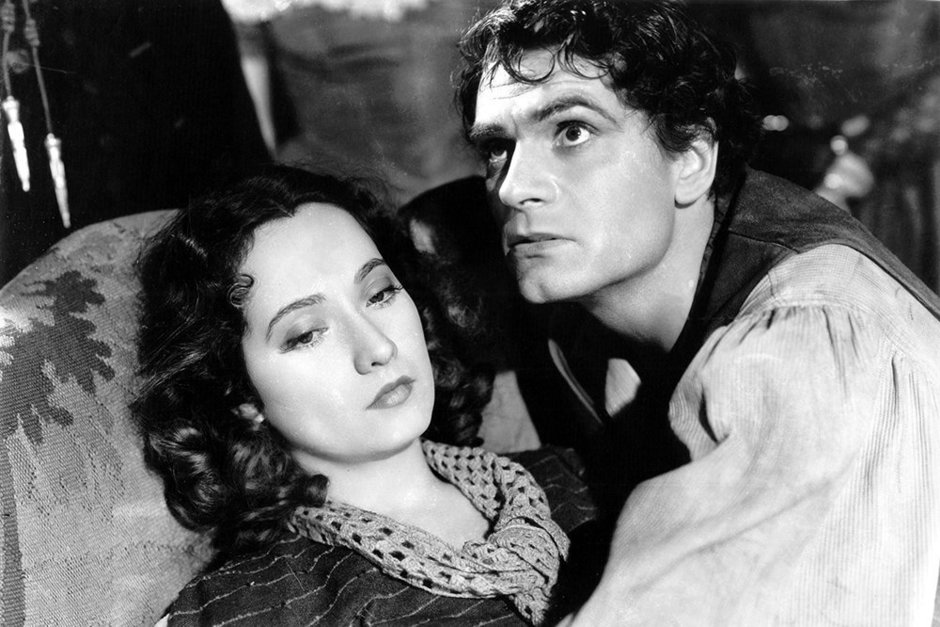
In subsequent decades, the novel was regularly adapted for film and television. Nigel Neale's script was staged live on the BBC in 1953 (recordings also lost) and again in 1962. The second version is held by the British Film Institute but is withdrawn from public access. In 1958, a television version aired on CBS starring Richard Burton, and in 1967, the BBC released a four-part drama.
The French miniseries “Wuthering Heights” by Jean-Paul Carrère (1964–1968) consisted of six 26-minute black-and-white episodes. The 1970 adaptation with Timothy Dalton was the first color version of the novel. Over time, it gained recognition, though initially met coolly; Hindley's storyline is portrayed significantly more sympathetically and altered. In 1978, the BBC produced a five-part film with a runtime of about five hours. This version is considered one of the most faithful adaptations of Emily Brontë's story, and the BBC calls it the closest to the complete text.
Many directors have transposed the action to other cultural contexts. Luis Bunuel, in his film “Abismos de pasion” (1954), moved the plot to Catholic Mexico and renamed the protagonists Alejandro and Catalina. In his version, Heathcliff claims he got rich by making a pact with the devil. A Japanese adaptation by Yoshishige Yoshida (1988) is set in medieval Japan, where the hero Onimaru is raised in a community of priests serving a fire deity.
The 1992 film with Ralph Fiennes and Juliette Binoche is notable for including the often-omitted second-generation story. ITV released a two-part drama with Tom Hardy in 2009, and Andrea Arnold directed a British version with Kaya Scodelario and James Howson in 2011. In this film, Heathcliff is played by a Black actor.
“You cannot adapt a book as dense, complex, and difficult as this”
The 2026 film adaptation of “Wuthering Heights” was announced by Emerald Fennell in July 2024. She served as screenwriter and director for the project. In September 2024, Margot Robbie and Jacob Elordi were cast in the lead roles of Catherine Earnshaw and Heathcliff. A bidding war for distribution rights ensued: Netflix offered $150 million, but Warner Bros. Pictures secured the film for $80 million after guaranteeing a wide theatrical release and a massive marketing campaign.
Fennell emphasized her distance from a literal adaptation early on: “You cannot adapt a book as dense, complex, and difficult as this. It's impossible. All I can say is that I'm making my version of it.” Hence the title is stylized in quotes — “Wuthering Heights”.
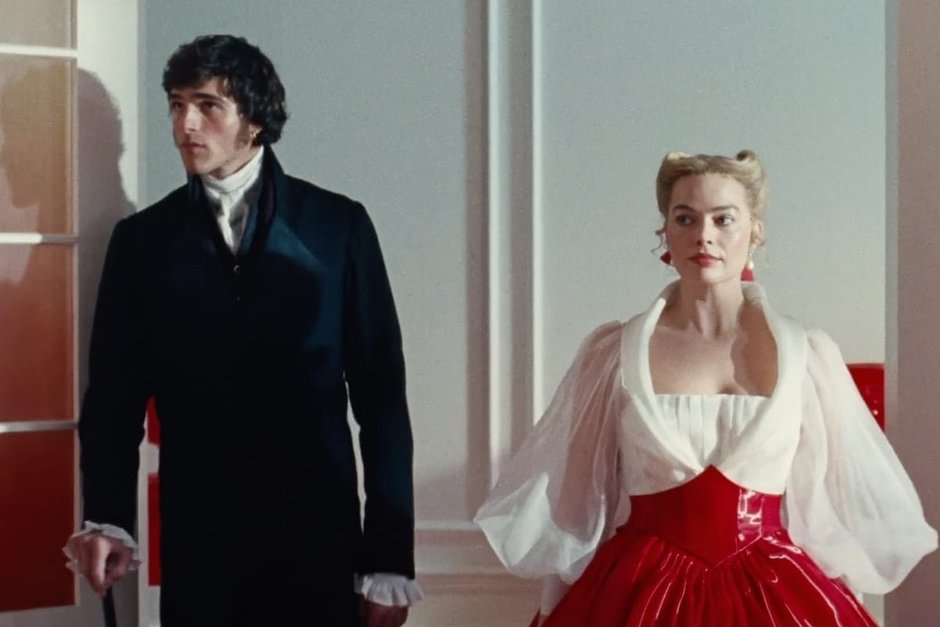
Principal photography took place in the UK from late January to early April 2025. Filming occurred at Sky Studios Elstree and on location in the Yorkshire Dales — in Arkengarthdale and Swaledale valleys, the village of Low Row, and the national park. During the first week of filming, Elordi suffered a second-degree burn after leaning against a hot brass door handle and was hospitalized. The actors stayed at Simonstone Hall. Hotel owner Jake Dinsdale recalled they “were wonderful people and remarkably undemanding," booking all 20 rooms, but the restaurant remained open to the public, and the crew “roasted marshmallows by the fire” and came for Sunday roasts.
The sets became a topic in themselves: the wallpaper in Cathy's room was created based on scans of Robbie's skin — “we asked her to send us all her veins and freckles, printed that on silk, stuffed it, and covered it with latex so the surface could 'sweat'.” But you can't notice it immediately, “it's just a pretty pink room.” Fennell also created “shrines” in the actors' bedrooms from their best photos to replicate the characters' obsessions.
Marketing centered on provocation. The first trailer and poster were released on September 3, 2025. The poster referenced “Gone with the Wind.” The trailer's tagline called the adaptation “the greatest love story of all time.” The music was composed by Anthony Willis, and Charli XCX created an album of original songs. The lead single “Home” featuring John Cale was released on November 10, 2025, followed by “Chains of Love” and “Sound Wall.” Fennell recounted sending the script to the singer, who, despite being on tour, “read it immediately” and responded to the idea of one song with “how about an album?”
The film premiered on January 28, 2026, in Los Angeles, with the UK premiere on February 5 at Leicester Square. The global release was scheduled for February 13.
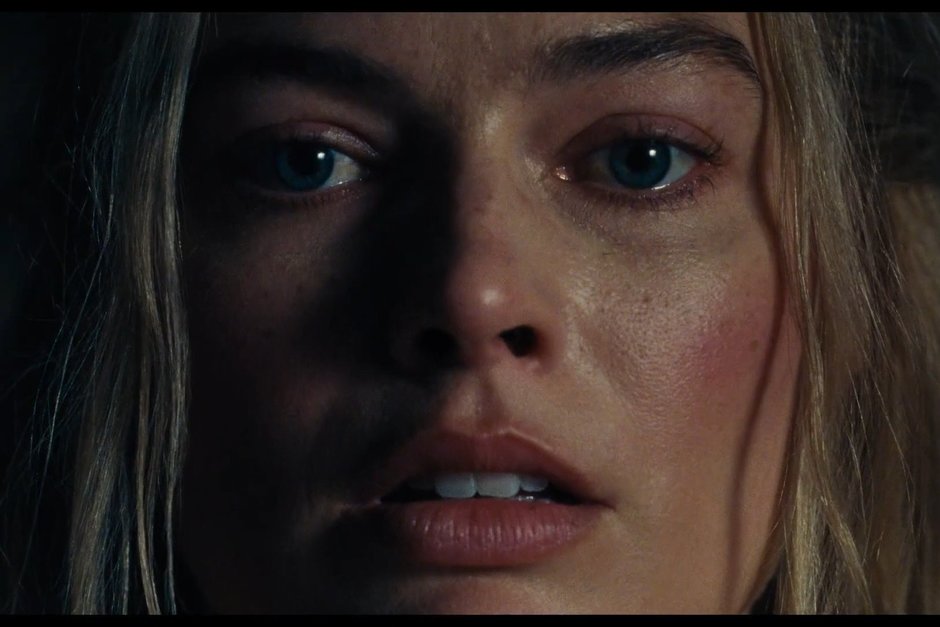
Even before its release, the film was accompanied by debates over Robbie's age (35 compared to the heroine's “late teen” years in the book) and the choice of a white actor for the role of Heathcliff, described in the novel as a “dark-skinned gypsy” or “Lascar.” Casting director Kharmel Cochrane stated that “there's no need to be accurate” and that “it's just a book.” Fennell insisted: “I can't adapt the book as it is, but I can get close to how it made me feel," and also emphasized the presence of “an enormous amount of sadomasochism” in the text.
The 2026 version completely omits the second half of the novel. The film ends with Cathy's death, as in the 1939 adaptation. Critics noted heightened physicality: according to David Sims, the camera lingers on “dripping egg yolks and sticky dough," and the heroine “walks through pig's blood to the moors.”
Early reactions in Los Angeles called the film “intoxicating, transcendent, seductive, mesmerizing, lust-worthy, hypnotic.” After the embargo lifted, reviews were mixed: on Rotten Tomatoes — 66% positive reviews, on Metacritic — 57 out of 100. David Rooney wrote in The Hollywood Reporter about a “pulpy, provocative” version, “saturated with blazing color and lush design," balancing “between silliness and wit.” Clarisse Loughrey of The Independent considered the film a “strikingly empty work” that had “gutted” the novel under the guise of interpretation.
British film critic and writer Peter Bradshaw called the adaptation an “emotionally empty misfire with torn bodices," while Caryn James from the BBC noted that beneath the “extravagant whirlwind," the direction still captures the “corrosive force of repressed desire.” When a film is simultaneously good and bad, the only thing left for the viewer is to form their own impression. However, no official theatrical release is planned for the film in Russia.
Age restriction 18+
Yekaterina Petrova is a literary critic for the online newspaper “Realnoe Vremya” and the host of the Telegram channel “Buns with Poppy.”