Savely Korostelev missed a medal by one and a half seconds
Daria Nepryaeva was unlucky with a fall, as was Andrey Larkov
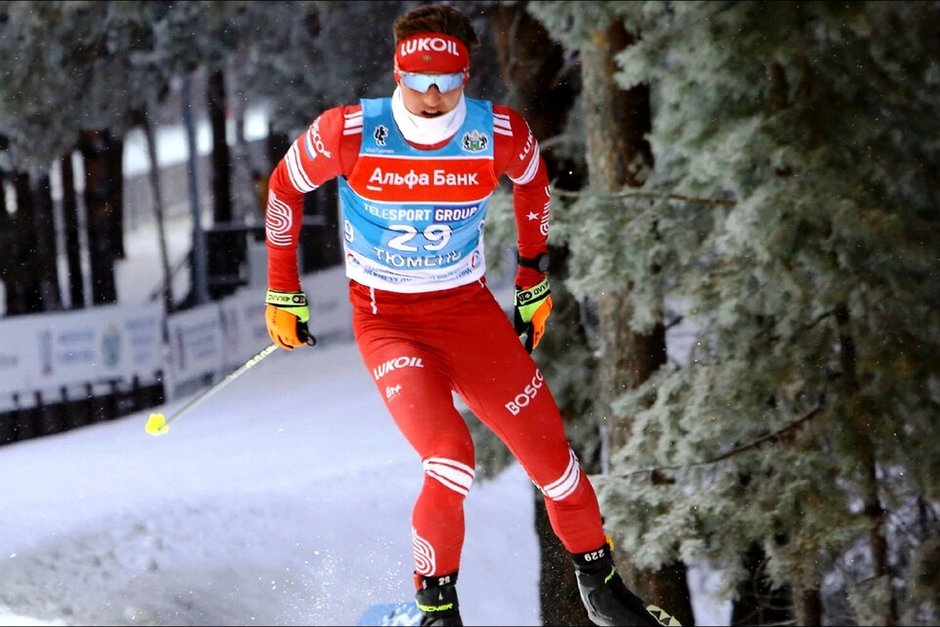
The women's skier Daria Nepryaeva's 10 km + 10 km skiathlon race marked the entry of Tatarstan athletes into the fight of the Winter Olympics. The debutante placed 17th after falling in the first half of the distance. Savely Korostelev finished fourth, trailing the bronze medalist by 1.5 seconds. Details are in the material of “Realnoe Vremya.”
Nepryaeva's fall had nothing to do with it
The first event of the Olympic ski program in Italy concluded with a double success for Swedish skiers Frida Karlsson and Ebba Andersson. The Norwegian Heidi Weng finished third. The Olympic women's 10 km + 10 km skiathlon is a debut event at the Olympic Games, as the distance was previously a quarter shorter. Until Beijing, female skiers raced 15 km, splitting the distance into 7.5 km classic and 7.5 km freestyle. And it was Natalya Nepryaeva, Daria's older sister, who won silver in the skiathlon in Beijing.
At the post-Olympic World Championships in 2023, they raced 15 km, and only at the pre-Olympic championships did female skiers debut at the 20-kilometer distance. Considering it's a contact race, potential leaders needed to break into open space. That's exactly what happened: the strongest skiers began forming several groups, and Nepryaeva ended up in the third, effectively the most unfortunate one. Among those racing in it, 34-year-old American Jessica Diggins, who is retiring after this Olympics, and debutante Nepryaeva fell.
Diggins was unlucky from the start, as she fell and moved into the chasing group, closer to Nepryaeva. Then Nepryaeva also fell, after which her race prospects were over. It's worth noting that at the 2018 PyeongChang Olympics in the same skiathlon, but 30 km, Norwegian Simen Hegstad Krüger fell, taking down two Russians at once — Tatarstan's Andrey Larkov and Denis Spitsov, but managed to recover, catch up with the leaders, and win gold. Spitsov didn't drop out of the fight then, finishing fourth, 12.7 seconds behind the champion, while Larkov was only 30th, 2:30 behind.
A fall in a race is not a death sentence if the skier is in optimal condition, continues fighting, and the track allows for skiing rather than struggling with snow.
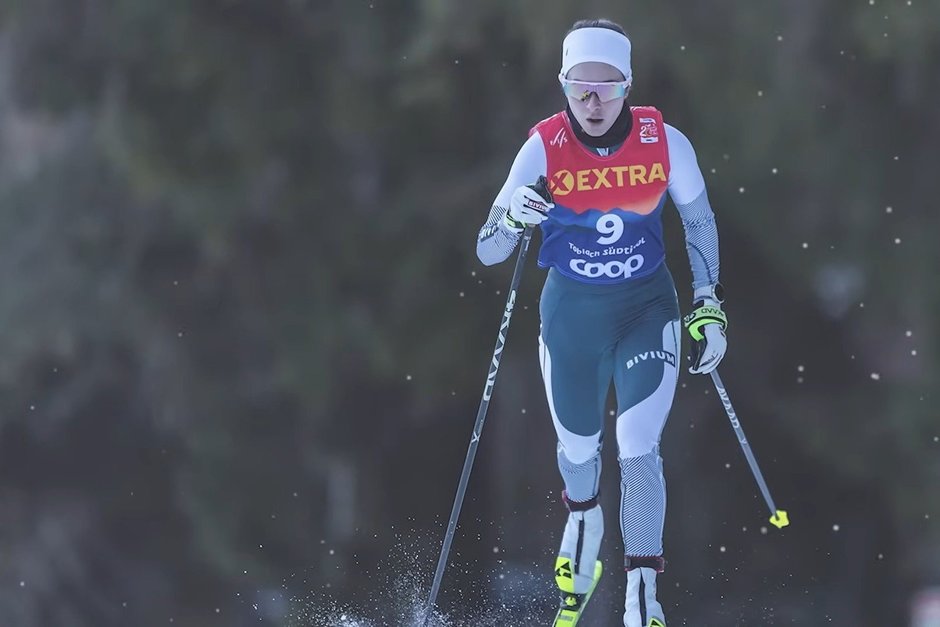
In Nepryaeva's race, everything coincided in the opposite way, which she confirmed at the finish: “Today was the worst skiathlon for me. It was a very hard race. From the very start, it didn't work out for me. On the classic part, I experienced a lot of problems and difficulties. It was very hard. There was also a fall; it finally knocked me out on the third lap. Slush everywhere, the ski just hit the slush — and veered into the other boot. The same kind of fall that happened to most of the group on the first lap, I also had on the third... I felt better on the skate part, but still, honestly, I felt terrible. Very upset.”
Savely Korostelev lacked just a little
The men's 10 km + 10 km skiathlon followed a completely different scenario. Here were the time gaps for the women: Karlsson was 51 seconds ahead of the silver medalist, Andersson was 35 seconds faster than the bronze medalist, Weng “brought” 25 seconds to her pursuer. And only after the medalists was there a kind of crowd and fight at the finish. For the men, everything turned out the opposite, moreover in the genre of a somewhat optimistic tragedy. From the start, Savely Korostelev slipped into the leading group, where there were no breaks; they raced as a monolith until the ski change from classic to freestyle and beyond. At one point, Norwegian Harald Østberg Amundsen lost balance and, falling, caught Korostelev behind him, forcing him to slow down.
But since the strongest in this quintet of leaders, Johannes Høsflot Klæbo, wasn't pushing the pace, and the others weren't capable of creating a breakaway, the group soon reunited. The tactics were read by anyone even slightly familiar with cross-country skiing. World skiing leader Klæbo was counting on a sprint finish, while the others mentally accepted that they would be fighting for silver. Thus, the skiathlon turned into a sprint. Amundsen's compatriot Martin Løwstrøm Nyenget — a distance skier, as was Frenchman Hugo Lapalus, who was in the leading group. By the way, before the suspension of Russians from international competitions, Norwegian Nyenget was called by the second part of his surname — Løwstrøm, but that's a detail.
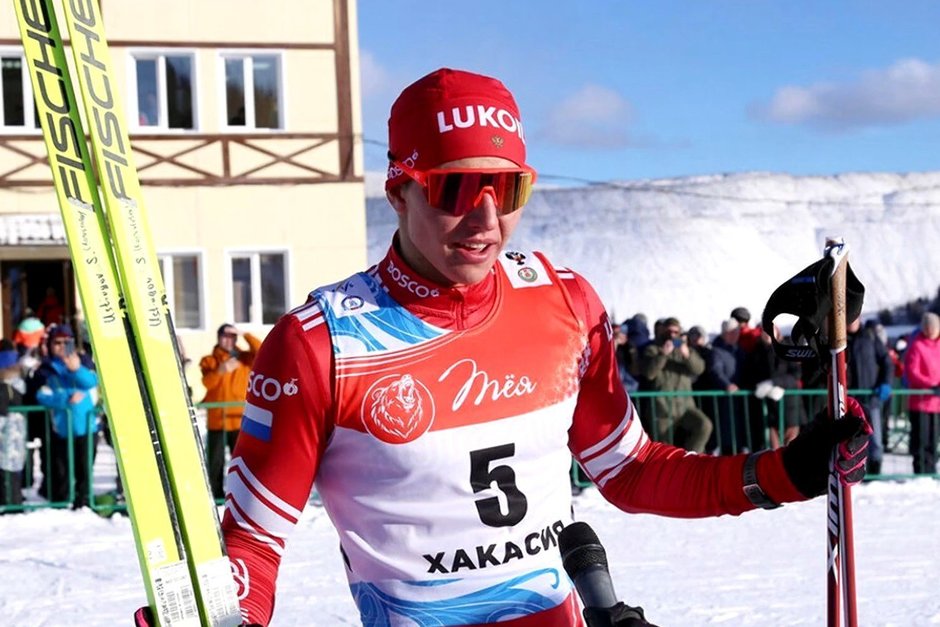
So the leading group rolled, with Klæbo unwilling and the others unable to break away, somewhat reminiscent of the Vancouver Olympic skiathlon, where Russian Alexander Legkov “carried” his breakaway partners — Swedes Johan Olsson and Daniel Rickardsson and German Tobias Angerer. And at the finish, his fresher breakaway partners fought for medals, while Legkov finished fourth. Korostelev couldn't “carry," especially since the outcome of this sequence of events was obvious.
How Russians were met at the Olympics
If Korostelev had had a teammate who could have shaken up the leading group to apply some semblance of team tactics. They would have settled up at the finish, even if all the glory went to the medalist. Like the French, when distance skier Lapalus stayed in the leading group, which wasn't rushing to the finish, and his national team partner Mathis De Sloovere caught up, after which Lapalus maximally complicated Korostelev's path by blocking his trajectory. The French are a known nation of sprint skiers. As was their longtime leader Maurice Manificat, behind him Renaud Jay (cousin of Olympic biathlon champion Vincent Jay), Richard Jouve, Jules Chappaz, the less stellar Lucas Chanavat. Now the 23-year-old De Sloovere has emerged. By helping him, Lapalus didn't deprive himself of a medal; most likely, his speed qualities wouldn't have been enough to finish on the podium, while De Sloovere's were enough to overtake Norwegian Nyenget, the former Løwstrøm, and lose only to Klæbo. Korostelev fourth, like Legkov in Vancouver, where, by the way, the skiathlon was 30 kilometers, 15 + 15, and now it's 20 km, like the women's. Lapalus ended up fifth, after Korostelev, the fallen Amundsen — sixth.
In the men's skiathlon, the dominance of one team wasn't as noticeable, except for the Norwegians, three of whom were in the top ten. Also because the skiathlon more resembled a sprint, and in that regard, the best sprinters of their national teams are still stronger than the average Norwegians. So the best Italians — Davide Graz — 8th, the famous Federico Pellegrino — 20th, one place above him Czech Michal Novák finished. It's a pity, but Korostelev doesn't have an Olympic license to start in the sprint, unlike Nepryaeva, who is set to start on Tuesday. Overall, Tatarstan skiers have a fairly packed Olympic program, although they won't participate in the team sprint or relay due to the lack of other partners.
That's also why individual Russians are being “invited” to participate in the Olympics for the second time, in Paris 2024 and now.
Conditions were equal for all
Regarding the “slush” on the track, one could argue that the difficult conditions were the same for everyone, especially since it was a mass start, not an individual start where skiers can start within an hour and race under different weather conditions. The “slush everywhere” was under Nepryaeva's skis and under the skis of another fallen athlete — Diggins, who managed to recover and finish eighth, 1 minute 58 seconds behind the champion. On the other hand, tough racing conditions prevented 18 out of 70 starters from finishing — a quarter of the total. Among those who did not finish, for example, are all four Ukrainian skiers, who, unlike the Russians, were not suspended from international starts but ultimately turned out to be unprepared for the Olympic debut of the 10 km + 10 km skiathlon. The entire quartet of Chinese skiers, prepared for the home Olympics in Beijing by Russian coaches Maksim Volkov, Nikolay Dundukov, Nikita Kryukov, and Roman Petushkov, also did not finish.
On the other hand, the reality is that among the top 15 finishers were the full quartets of Swedes and Norwegians, who demonstrated both their prospects in the relay race and their intention not to share medals with representatives of other countries. Not a single host nation athlete — the best of whom, Martina Di Centa (daughter of the famous Giorgio Di Centa, Olympic champion in Turin-2006), placed 28th. The Norwegians and Swedes are “graciously” ready to leave bronze in the relay to the Finns, who have Kerttu Niskanen and Krista Pärmäkoski. And it's the Swedes who currently dominate in skiing, having lost only Charlotte Kalla, while Norway has successively lost two “medal-winning machines” — Marit Bjørgen and Therese Johaug.
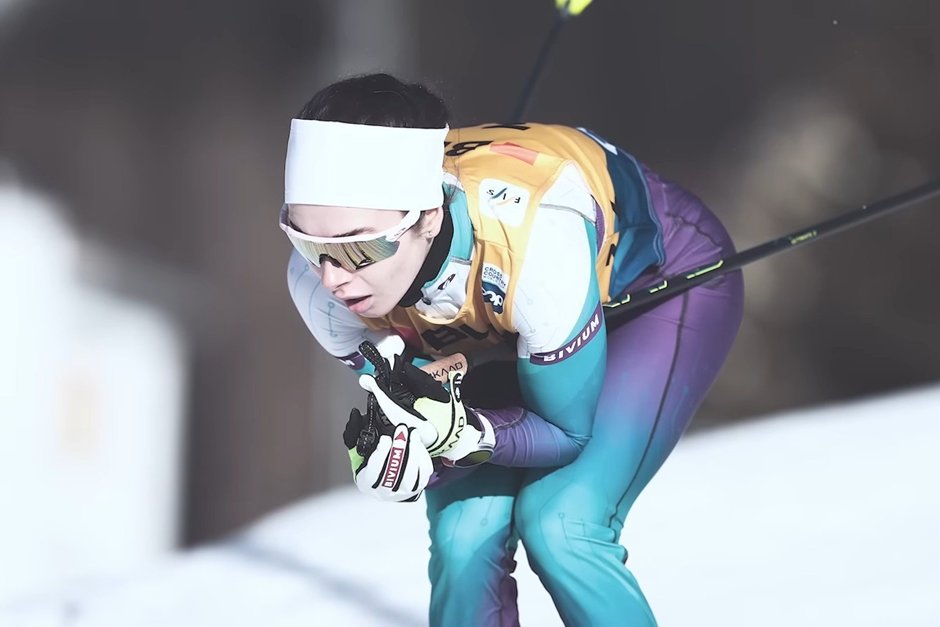
Unfortunately, an unpleasant forecast suggests itself: there will be no medals on the ski track for our athletes. This is also confirmed by Korostelev's quick comment at the finish: “Very happy that I managed to fight for the podium, but fourth place is the worst place at the Olympics because at the Olympics there are only three spots. This was my best race to be on the podium. And I chose the wrong position before the last climb, and before the finish, I found myself very far back. Everyone was shouting to me: don't go last! And I went last.”
Korostelev means his position before entering the finishing straight. After the finish, the Russians filed a protest regarding the actions of the French skiers, but the jury limited itself to a yellow card. Regarding this episode, when the Frenchman cut part of the distance, Korostelev said: “I don't know if De Sloovere should have been disqualified. I don't work on the jury.” Since the jury issued exactly this verdict — with a yellow card — we can only accept it as final, leaving aside fan emotions that will change nothing.