Rustam Iskhakov: “There is no fashion industry in Russia”
The famous clothing designer and theatrical costume artist discusses the development and prospects of the fashion industry in Russia and Tatarstan.
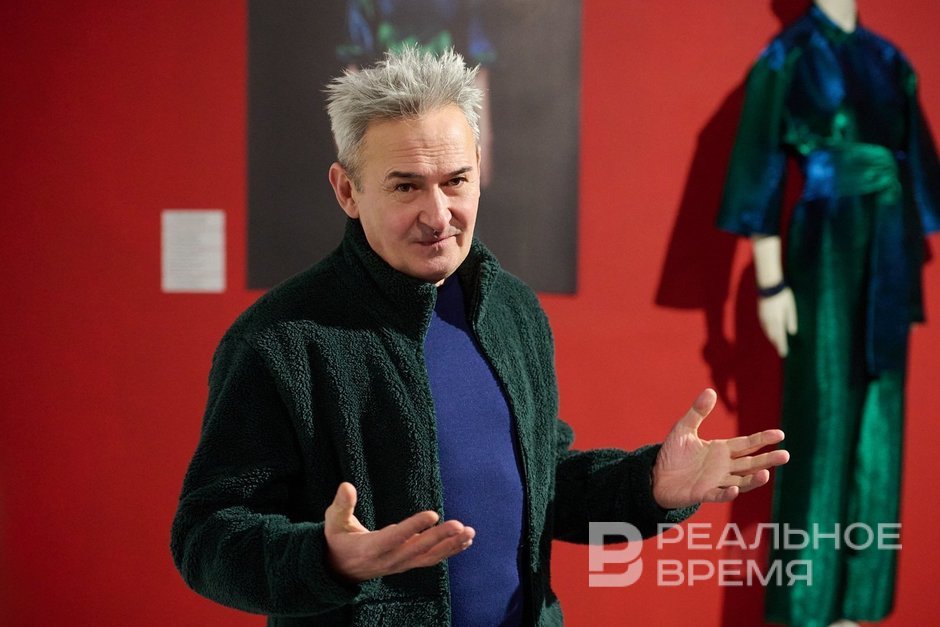
The Russian clothing market continues to shrink; last year, 12 brands closed or were on the verge of closing, most of them domestic. In 2026, analysts also do not expect an industry recovery. At the same time, brands like the “RUSTAM” brand by Tatarstan designer Rustam Iskhakov remain on the market. Can the fashion industry reach a new level and what trends have emerged in Russia? The fashion designer shared his thoughts in an interview with “Realnoe Vremya.”
— Rustam, you have had a 20-year creative journey, creating a brand recognized not only in Tatarstan but also in Russia and abroad. In what format are you working now?
— Over two decades, I've worked in a variety of formats. In 2005, the year the brand was created, we opened a design studio in the city center, which included a small production facility. Here we received individual clients and simultaneously sewed a ready-to-wear collection. A year later, our first boutique appeared. About ten years later, we opened a new, larger one, where production and the salon were again combined in one space.
The format changed significantly after 2020. Everyone remembers that time well, when we were sitting at home. Five years ago, we decided to give up the store and switch to working by appointment, like in beauty salons, for example. This saves time for both my clients and myself.
— How did you reformat the business?
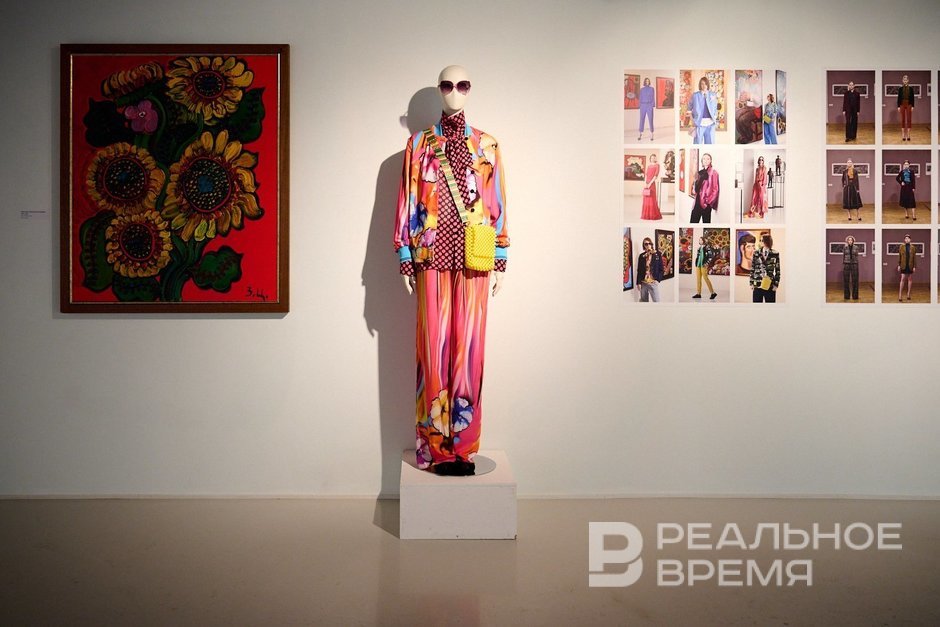
— The business process continues, but in a different form. I gave up a large staff and kept only three specialists — these are my “hands.” People who are directly involved in creating products: cutting, sewing, embroidering, and doing everything necessary. They are professionals, and they are enough for the volume we work with today. Namely, for creating one collection per season.
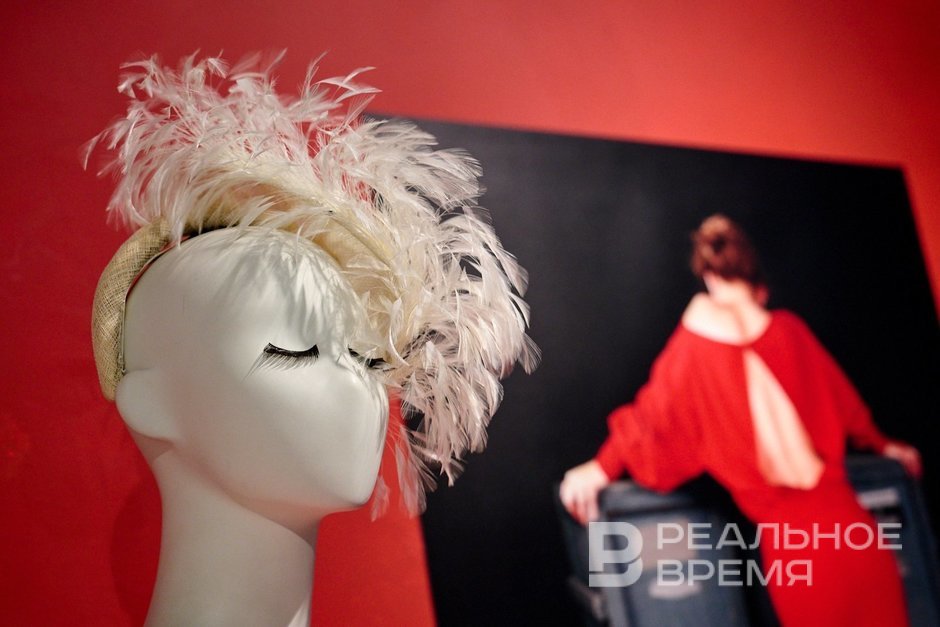
In addition, there are outsourced specialists I collaborate with. These are artisans making hats, accessories, knitwear, which allows complementing my collections with unique products. These are mainly Russian manufacturers. Connections with foreign partners also remain; I use their services as needed. For example, an Estonian workshop makes brooches, headbands, belts, necklaces, hand-embroidered for me. And for my oriental collection, hats were made in Bishkek.
— How did the geopolitical situation affect the business?
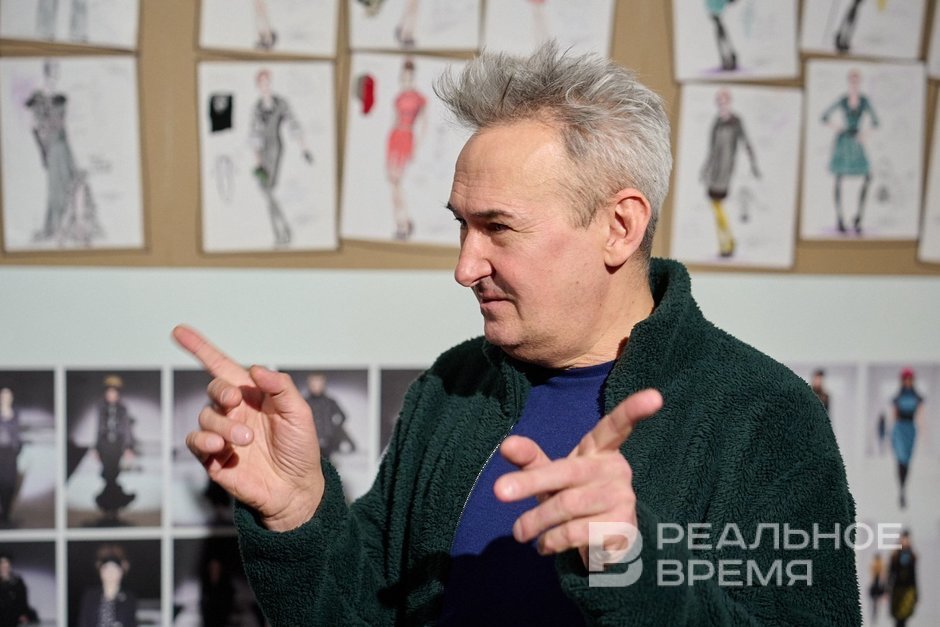
— First of all, it affected the depth of my work. I began looking at many things from a different angle. But in terms of business, not much has changed. Materials and accessories were and remain. The main change is the price. It has increased for almost everything. Rent costs, fabric and service costs are also rising, and accordingly, my products are becoming more expensive. The price range is roughly from 50,000 to 300,000 rubles. I think my customers understand what's happening in general. So I wouldn't say the situation is global and critical.
And besides, what I do is a special creative product where I invest my heart and soul; these are unique items. Not everyone can afford them. The main change in my work recently is that individual orders have become very few; now I more often offer my ready-to-wear collection.
I am asked if I want to expand the business, launch large-scale production. Any businessman would tell me it's strange to refuse that. I say: no.
I'm not interested in business for money's sake. For me, the priority is to enjoy what you do, fall asleep peacefully, and wake up joyfully. I know I will never chase the big ruble. That is not a value for me.
— In what direction do you plan to develop further? Were there ideas to create a Rustam Iskhakov school?
— I thought about it, and I really like this idea. I want it. I have something to say, I can share a lot, and I'm interested in working with young people. These could be inspiring masterclasses, even up to participating in creating some collections for young designers, to guide and advise them on which direction to develop. But I don't see myself as the organizer of this school; I am only ready to participate fully in it.
I know that Olga Paranishina, author of the “Anatomy of Fashion” project, deeply involved in the fashion world, is promoting the idea of creating an Institute of Fashion, Design, and Light Industry in Tatarstan. We have educational institutions teaching in this field now, but the system itself is outdated. Today, we need to nurture free designers who look at the world differently. Traditions and foundations must certainly be preserved, but at the same time, there must be some freedom and experimentation. We need to create a fashion laboratory where creativity and the search for the new come first. That doesn't exist now; I hope it's just for now and we will get there someday.
— You claim there is no fashion industry in Russia. How can the situation be changed and this niche revived?
— Yes, I believe there is no fashion industry in our country today. Once it existed, there were large enterprises creating clothing. Then this sphere fell apart, facilitated by certain events in the country. They decided there was no need to maintain whole production if there was China sewing everything for pennies. Serious competition arose from this.
It's very unfortunate, but the machinery rusted, the specialists passed away without having time to pass on their skills to the new generation. This is a sad reality, but I'm sure everything can be changed and it must be done — it must be revived, put back on its feet.
For now, we only have individual craftsmen who, out of love for the profession, somehow haven't abandoned it. For example, I met Rustam Bikmukhametov, who is reviving the art of shoemaking; he now has his own production. His grandfather and great-grandfather were shoemakers. And at one point, he told himself this was his history, roots — a tradition that needed to be restored. He took it on — and he succeeded, and now even Baldinini is ready to collaborate with him.
— To change the situation with the fashion industry in Russia, where, in your opinion, should we start, how to give an impulse to its development?
— This is only possible with the participation and support of the state. And not otherwise. I know that colleagues, concerned about the fashion world, have a thought-out project on how to develop the industry. But it remains only on paper for now.
The issue can undoubtedly be solved only at the government level. Create a unified space for creative, innovative ideas. After all, why did Italy become a fashion leader? Because in the post-war period, they realized the country's economy was not in the best shape, and you can't build an economy on pasta alone. Then they invented the brand “Made in Italy” and began developing it. At the state level, funds, premises, and equipment were allocated; moreover, such enterprises were not taxed. That is, all conditions and resources for development were created and given. And that's why the rise happened sharply; we see the results they achieved. Support is very important in any endeavor!
— A Union of Designers was created in the republic not long ago. Can this become a starting point for the growth of the fashion sphere?
— Let's hope so. I am also a member of this union, as an honorary resident; I act as a curator, advisor, and participate in projects. The union was created a year ago by Larisa Fomina to unite all designers and present them to society through events, reveal talents, and tell people about them. This is also a gem of our republic. And the main thing — they are all here. I also once stayed in my city, although I was invited to Moscow, convinced that I would have many more opportunities there, but I chose Kazan, which I love.
I like that now in Tatarstan they are promoting the cultural code in clothing; designers weave it into ordinary sweaters, for example, and into jewelry, and into mosaics. I can't say that the national is my story.
I think if I live in Tatarstan and I am Tatar — that doesn't mean I must necessarily use bright Tatar colors or traditional tulips and embroidery in my work. You can go another way.
That's what happened with my Kazan collection. It was created for the 1000th anniversary of our city. I decided to show identity through the silver coin found as proof of Kazan's centuries-old history. I remember, I then searched for buttons similar to it in almost all cities of Russia and used them later in my collection.
I more often choose the same position as Sofia Gubaidulina. She is world-famous. I remember, in some interview, she was told: but you are ours, you are Tatar, you are from Tatarstan, and she replied that first of all, she is a citizen of the world. And I agree with that. I think it's not entirely good when you tie yourself to a place. There is no freedom there. And when a person says: “The whole world is mine," and following their heart's call, their desire, praises Tatar culture today, and African culture tomorrow — there is nothing bad in that. Every creative person has the right to that. At the same time, I still remain a Russian designer from Tatarstan.
— What trends in the Russian fashion industry do you trace?
— This is directly related to what is happening in the world. Fashion does not exist by itself. Both the pandemic and sanctions have given people some understanding that, in principle, we are not immune from anything. We can find ourselves isolated, closed off from everyone at any moment. And here the question of who we are and what we can do comes to the fore. Can we be alone and still remain self-sufficient? I think the trend is heading that way, and that's encouraging. It's an opportunity to realize that we don't need to look around; we need to look within ourselves, understand what we can love ourselves for, what we should strive for, where we need to improve.
Large state-owned light industry enterprises were indeed lost. But I think the republic should eventually come to reviving such enterprises. I even heard recently that there are talks about reviving the “Spartak” shoe factory. I think everything is possible.