Yuri Larionov: “Preparation for the Olympics in Sochi was phenomenal”
How russian sport learned lessons from the unsuccessful Vancouver Olympics and transformed for the sake of hosting the games in its own country
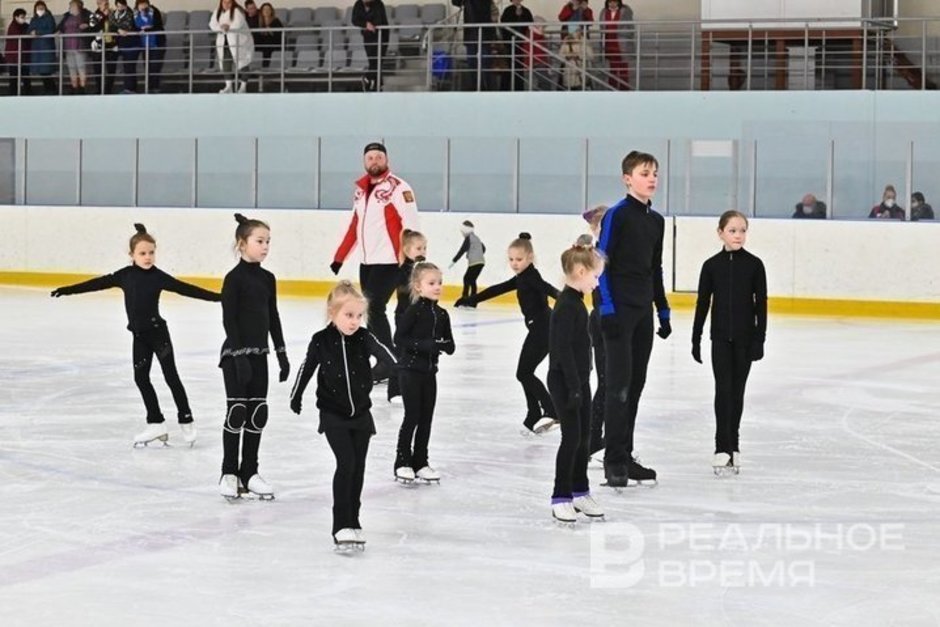
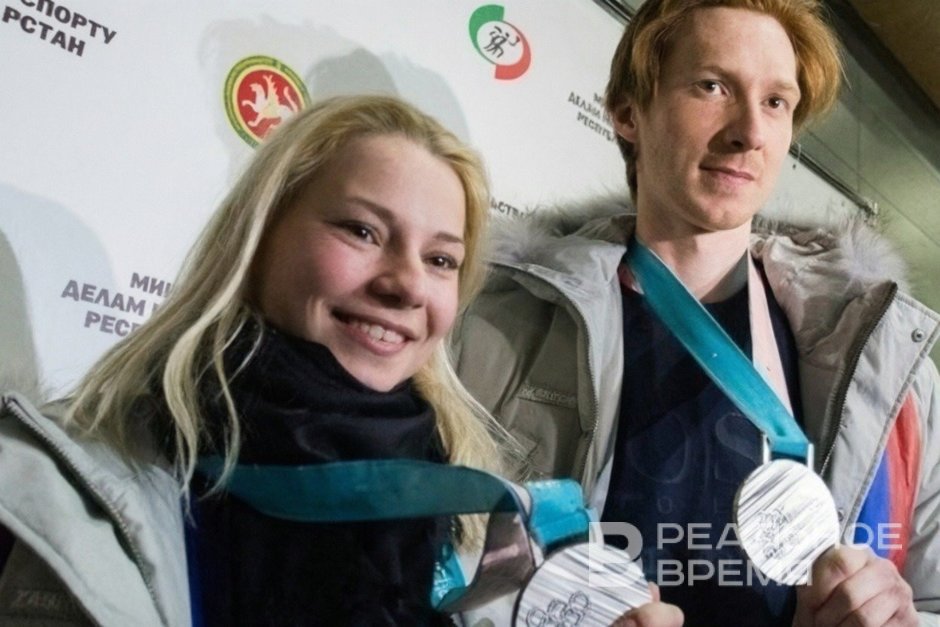
Figure skater Yuri Larionov participated in two Olympics: the most unsuccessful one for Russian sports in Vancouver in 2010 and the most successful one, at home in Sochi, in 2014. In an interview with Realnoe Vremya, the figure skater shared his reflections on these tournaments, which are very important from a comparative perspective.
“We underwent the doping control procedure according to all the rules”
— Yuri, memories of the triumph in Sochi cannot be separated from the Olympic aftertaste, when we were accused of the entire Russian national team taking doping.
— Yes, that happened. We faced the consequences for it all afterwards.
— In Sochi, there were three gold medals won by Viktor An, two by Vic Wild, another three by figure skaters, and one each by your RIOU classmate Tretiakov and Legkov. Nevertheless, you often hear debates about how such a rise after the failure in Vancouver couldn't be possible. Rodchenkov's words are also brought up.
— Honestly, I never even encountered Grigory Rodchenkov; I only watched his videos made from abroad and read his denunciations. We underwent the doping control procedure according to all the prescribed rules. Moreover, during the doping tests, we were observed unwaveringly.
— Legkov's victory was supported by the fact that after the Olympics, he successfully competed at World Cup stages all over Scandinavia, making the podium everywhere and passing clean tests. Rodchenkov accused six female hockey players of doping, yet they, bronze medalists at the previous World Championships in Canada, were eliminated in the quarterfinals on home ice.
— The same “cyclic athletes” used to tell stories about how, at international competitions, some ampoules would be planted in their trash cans when they left their hotel rooms, anticipating provocations of that sort. “Cyclic athletes” because I don't remember exactly who told this: biathletes or skiers.
“At the Ministry of sports, the coaching staff of all teams was gathered for a debriefing”
— Speaking of “cyclic athletes," a huge number of foreign coaches worked for us, some of whom later left the national team amidst scandals. The German Wolfgang Pichler was actually fired a year before the Olympics. Or, Olga Zaitseva's husband — a Slovak biathlete — could have unleashed negative PR on Russian biathlon if there had been any facts.
— As our coach from Perm, Lyudmila Kalinina, recounted, practically immediately after Vancouver, the coaching staff of all teams was gathered at the Ministry of Sports for a debriefing: what was the reason for the failures? Each coach reported on the training camps conducted, where, how, what was done, and what wasn't. For our pair specifically, it was one of the most modest reports, since we held our camp in a place called Klyuchi, near Perm, where the foundation for physical preparation was laid for those who ran through the forest, in the mountains, lugged and threw stones. We practically didn't have to account for money because we were allocated virtually nothing; the programs were designed and the costumes were bought at our own expense. That's how we made it to the world's top ten.
As for Sochi, everything changed diametrically; the preparation was simply phenomenal. Everything we asked for was done. Training camps, the training process, sports nutrition, and for figure skaters, that also meant costumes for performances, and stays in Sochi so we could get a feel for the competition arena. Moreover, we were constantly asked what needed to be done with the ice to make it as comfortable as possible. We changed, and they even asked us about the bedside tables: how conveniently they were placed. But after the Olympics, a lot changed regarding funding.
— You were initially considered the country's third pair, behind Kavaguti — Smirnov and the project Volosozhar — Trankov, created from two dissolved duets. And there you were, lurking behind them with Olympic experience but modest ambitions.
— But due to Smirnov's injury, we approached the Olympic start as the country's second pair, while Stolbova — Klimov were rated third. Why did things change regarding the second and third pairs by the Olympic start? I should mention that by that time, we had moved from Kalinina to Nina Mozer, and all three pairs were part of “Mozer Team," and Nina Mikhailovna herself, seeing all the dynamics, formed her own opinion. Perhaps, somewhere during the training process, she saw that we might mess up a certain element, and she changed her opinion regarding the distribution of places within the group, although, speaking of competitions, we didn't make mistakes there. I was personally informed that we wouldn't compete in the team event only a week before the Olympic start. Perhaps this morally affected me personally in such a way that I made a critical error, realizing it only after our performance.
“All the strong ones master the elements; what matters is performing them flawlessly during the programs”
— In other words, the results of the Olympic events could serve as substantial justification for the decision made. Stolbova — Klimov both performed successfully in the team event and, riding a wave of psychological uplift, became second in the individual competition.
— In the end — yes, the team became champions, and they came second, and winners aren't judged. That's all true. That's the essence of professional sports, where all the strong ones can do a lot and master the elements. What also matters is performing them flawlessly during the programs to make them championship-worthy.
— Returning to the post-Olympic scandals. It's enough to look at the results of our biathletes, who lost up to a minute to competitors in skiing. What kind of doping is that which worsens athletes' physical capabilities?
— I can only add that doping control was a constant attribute during our preparation for the Olympics, as we were part of the ADAMS out-of-competition testing system and had to be under the attention of anti-doping services almost every minute. These officers came to our training sessions, monitoring that process as well. I shared a hotel room in Novogorsk with dancer Nikita Katsalapov, and doping officers came for samples three times a week, starting early in the morning as soon as we woke up.
— Touching upon the Olympic victory in Sochi in the team event, we mentioned that champions emerged who won gold without actually competing.
— Who do you mean? Ilinykh — Katsalapov? They did compete. Ah, you mean that they competed already in the status of Olympic champions. Yes, that happened.
— Who would you have chosen for the men's team — Evgeni Plushenko or Maxim Kovtun?
— I have nothing against Evgeni Plushenko, but he had already skated so much by then and won so many medals. And if he started in the team event, he should have seen it through and competed in the individual tournament. I would have given the chance to a representative of the younger generation.
— The “younger generation” had a disastrous performance at the pre-Olympic World Championships, and their result led to us having only one quota spot for Sochi. Moreover, the youngster shouldn't have competed at the Worlds, but they were pushed ahead of three rivals, guaranteeing a successful outcome. Then in Sochi, Plushenko “handled Chan," and precisely his victory over the Canadian ultimately led to an undisputed win in the team competition.
— Regarding Kovtun's instability, I cannot disagree. You fundamentally need to understand that you might be in perfect order, but then you step onto the ice, the music plays, and a completely different life begins, which you have to “live," giving your maximum one hundred percent or more. And Maxim had performances that were either a plus or a minus. Nevertheless, I stick to my opinion. During my studies at RIOU in Sochi, we went to a figure skating show where Kovtun skated, and it seemed to me that he still has a thorn in his soul regarding not being given that chance. Still, athletes approach the Olympics at their peak fitness, making every effort to use their chance, and Kovtun was in decent form before Sochi.
“We were told that figure skaters don't usually favor RIOU with their attention”
— How did you become a student at the Russian International Olympic University?
— I became a winner of the scholarship program by the Olympians Support Foundation and received a grant to study at RIOU. The studies themselves follow an accelerated program, as many students already have higher education; we are now getting a second degree by completing the academic program in one year. The difference is that some study this entire year, staying in Sochi and attending classes daily — that's the “Master of Sports Administration” department. We, however, followed a more streamlined program, where the study cycle consisted of several modules. They took place in Sochi, in Moscow, with credit tests, exams, and a final thesis which we also defended in Sochi. During the studies, we received maximum information; in Sochi, classes stretched from about eight in the morning until seven in the evening. The course itself was titled “Master of Sports Management.”
— And all this time, you studied together with Kazan figure skater Evgenia Tarasova?
— Yes, I discovered we were in the same group when our group was formed, although we were told that figure skaters don't usually favor RIOU with their attention, and that I would be the first student among representatives of our sport. But already at the stage of forming study groups, it turned out that Evgenia had also enrolled.
— Evgenia, as I understand it, had an additional interest — to be closer to her husband Fyodor Klimov, who works in Sochi. Among his trainees is Danil Galimov from Kazan. By the way, did you visit the Sochi figure skating school?
— We were taken around the sports venues, given a tour of Rosa Khutor and the Olympic Park, allowing us to immerse ourselves in memories.
— Like Ostap Bender with Vorobyaninov, you could have left an inscription there saying “Yura and Vera were here.”
— There's no such inscription there, except perhaps a virtual endpoint in our partnership on the ice. Overall, our group is very decorated: there's the skier Maxim Vylegzhanin, who competed alongside me in Sochi and became a double vice-champion there; champion skeleton athlete Alexander Tretiakov; and Olympic fencers Adelina Zagidullina and Timur Safin.