How the Central Bank proposes to change developers’ installment plans
With the introduction of new rules, experts forecast a rise in the cost of the instrument that became a key driver of sales in 2025

The Russian real estate market is living in anticipation of a new instalment mechanism currently being developed by the Central Bank. One of the proposals is to prohibit the developer from receiving funds before the buyer obtains ownership rights to the property. Another concerns the possibility of concluding tripartite agreements involving banks. This will inevitably lead to an increase in the cost of instalment plans, market participants warn. Read the details in Realnoe Vremya’s report.
Russians have taken out developer installment plans worth 1.4 trillion rubles
The Bank of Russia is preparing new proposals to improve the mechanism of developers’ instalment plans. In particular, it proposes to legislate that a developer may receive funds only after the transfer of ownership to the homebuyer. The regulator believes that this measure will protect citizens’ rights and minimise unfair practices on the part of developers.
“To minimise risks for individuals, it is advisable to formalise the principle of ‘money in exchange for ownership’. Such a mechanism will fully contribute to protecting the interests of both buyers and sellers, regardless of the method of acquiring property,” officials in Elvira Nabiullina’s department believe.
In addition, the Central Bank considers it reasonable to move contractual obligations under instalment plans into a tripartite format involving banks, including for the purpose of providing information on individuals’ indebtedness to credit history bureaux (CHBs).
This year, the burden on citizens stemming from developer-based instalments has risen significantly — its volume has reached 1.4 trillion roubles, the Bank of Russia reported. At the same time, this information is currently not sent to CHBs and is not taken into account when calculating the borrower’s debt-service-to-income ratio (DSTI).
“At the beginning of the year, instalments accounted for a substantial share of sales, carrying both social risks (if the buyer is unable to repay the instalment) and risks for the developer (if money has to be returned to the buyer) and the bank. To prevent risky instalment practices, the regulator prepared recommendations for banks. As mortgage lending recovered, the share of instalments in housing sales decreased,” the regulator said, adding that their volume still “remains significant”.

‘In many ways, this was a request from the banking community’
Sales via this channel and through buyers’ own funds accounted for 55% of all sales in the first quarter, 40% in the second quarter and 34% in the third. The decline, according to the Central Bank, was driven primarily by the growth in mortgage lending, as well as the tightening of conditions among most developers (higher down payments and shorter instalment periods), including against the backdrop of more conservative attitudes from financial institutions.
“Nevertheless, around 40% of sales of projects due to be commissioned in 2026 and later — and currently sold by less than half — fall precisely on developer instalments,” the Bank of Russia reported. Overall, instalment services in the country have already been standardised — the relevant law was adopted in the summer and will come into force on 1 April 2026.
“The document introduces a new mechanism for regulating instalments. In many ways, this was a request from the banking community that products very close to credit products should be regulated — if not identically, then in a clear and transparent manner. There was also a need for this from the perspective of consumer protection,” explained State Secretary and Deputy Chairman of the Bank of Russia Alexei Guznov.
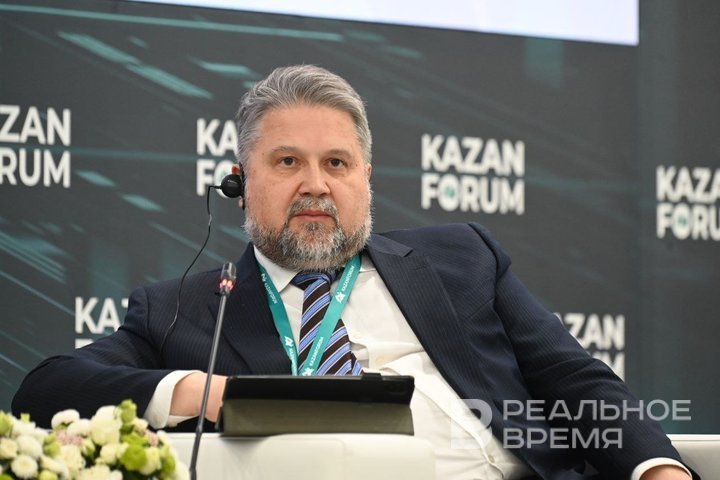
According to him, the Bank of Russia is now preparing “to take the next steps”. The issue was previously discussed at a plenary session in the Federation Council with the participation of the Central Bank Governor. “After that, there was a discussion, and senators proposed one of the directions for further developing this mechanism. They essentially stated that the government and the Bank of Russia need to present proposals on regulating the provision of instalments when purchasing real estate, so that issues of relations with developers — as organisations providing such instalments — are also standardised,” Guznov explained.
“Incidentally, this is also important for the general public. There must be high-quality information from the developer about what the instalment entails, its conditions and so on. And probably, if information goes through banks to CHBs (credit history bureaux), this would help ensure the quality of services,” he added.
‘The Central Bank intended to tackle this, but apparently not through the new law’
Notably, the new instalment law coming into force in the spring in its current form will not apply to the real estate market. The document aims to regulate only those companies providing instalment services and acting as a third party in the transaction.


Exceptions, he said, are possible only if certain housing transactions involve a third party providing instalments. In this case, the organisation must be included in a special register supervised by the Central Bank. But in practice, most instalment-based flat purchases take place directly between developer and client, meaning they fall outside the law. “And this, incidentally, raises certain questions, because the Central Bank had made statements about the new legislation and even set the task of regulating instalments in the real estate market. A large number of cases were identified where instalments were not in fact an interest-free deferred payment but simply meant an inflated property price. The regulator intended to tackle this, but it appears the new law will not achieve it because it regulates instalments only where a third party provides the service, not the seller,” Samiev noted.
Nevertheless, in the summer the regulator issued several recommendations on real-estate instalments. The Bank of Russia, in particular, proposes a number of restrictions:
- monitoring the share of flats sold via instalments (if the share exceeds 20% of total sales, this is a warning signal);
- tightening down-payment conditions — if the down payment is less than 50% of the property price, the developer must additionally reserve funds.
‘An initiative purportedly designed to “protect” the buyer will punish them financially’
In Tatarstan’s property market, opinions on this initiative vary. In the view of Nail Galeev, General Director of SMU-88, the Central Bank’s proposal to tie the developer’s receipt of funds to the transfer of ownership is somewhat excessive and even potentially economically harmful:

Secondly, he said, the introduction of new instalment rules will inevitably lead to higher housing prices in some cases, especially if tripartite agreements with banks are introduced. “The cost of bank participation over the entire instalment period will be built into the price per square metre. As a result, an initiative supposedly designed to ‘protect’ the buyer will punish them financially — any business will pass these costs on to the consumer,” the developer believes.

“The Central Bank says that ‘developer instalment programmes are often accompanied by inflated property prices and risks of financial losses for buyers’. But in the segment of the Tatarstan market that we observe, this is not the case. Instalment payments are fully transparent. We can look at examples in any of our developments. Here is the flat price; we divide it into several parts: the down payment, monthly payments and the final payment before commissioning. There is zero overpayment. But have you seen the overpayment on a mortgage?” Galeev noted.
In his view, the relevance of the Central Bank’s proposal is also questionable. He argues that instalments were effective as a short-term anti-crisis solution when the key rate was above 20% and banks introduced commissions on preferential mortgage schemes: “Today we see that instalments are not standing the test of time. Developers are now most interested in filling escrow accounts to reduce the burden of project financing. For this reason, we encourage deals specifically involving mortgage products — overall, they are more advantageous than instalments. Instead of allowing the market to function, the regulator is trying to ‘regulate’ a trend that is already fading, creating serious barriers for the industry and buyers.”
Developers will be unable to offer instalments or will raise their cost
Other experts partly agree that the regulator’s measures are aimed at protecting the interests of both developers and buyers. However, they believe the new instalment mechanism will inevitably increase the cost of the service.

The interviewee also confirmed that the number of instalment-based transactions is declining: “Even large national developers are trying to reduce them because of the issue of filling escrow accounts and repaying loan capital under project financing.”

He also confirmed that the number of instalments is starting to decrease, though “not drastically, depending on the property and time before completion”. Longer instalments are available if a housing project is to be completed in, say, two years; but if the building is nearly finished, instalments are fewer. “Developers do not see this measure as a guarantee that the buyer will remain with them until completion. Therefore, naturally, the developer is more interested in mortgage transactions,” Sadreyev said.
‘Instalments are an unjustified tool of expectations for both developer and buyer’
Developer instalments became one of the main drivers of sales after the end of mass preferential mortgages. Today, this is a functioning instrument for purchasing new builds alongside family and IT mortgages, because given high market interest rates, buyers who are not young families or IT specialists cannot buy property on commercial terms, explained Anastasia Gizatova, Head of the Happy Home real estate agency.

The reasons lie in the risks: the developer may not receive the funds. Most buyers, she said, are “financial romantics”, expecting that their financial situation will improve in the future: “They buy a flat now, paying one million roubles, and later they do not have the funds. They believe they can resell the flat after prices rise within a year and pay off the instalment using a new buyer. Or they hope to switch to a market mortgage at a lower rate — since a 20% mortgage is clearly unacceptable to them or they would have taken it immediately.”

There are far fewer people who have a realistic plan and capacity to repay the instalment in two to three years, for example by selling other property. Thus, the Central Bank’s concerns over the accumulated volume of instalments held by Russians are justified, and this is why the regulator is taking action, Gizatova believes:
“Fewer categories of buyers will now qualify for family mortgages — those who could already have taken them, and after 1 February it will no longer be possible to take a second one (in the spouse’s name), while new borrowers have not yet had children. Therefore, instalments will remain the main working tool on the market, and all this chaos needs to be structured. The measures aim to ensure that instalments are offered not to everyone but only to those who can afford them — whose incomes allow them to pay not only during the first year, when payments may be 10,000 roubles or deferred, but also in one, two or three years, for the entire period for which they are granted.”
The proposal to make instalment agreements tripartite, with bank participation, is also linked to risk mitigation, the expert noted. “Why are banks being introduced into the process? Because the developer alone, through its security service and sales department, cannot assess the borrower’s solvency and cannot even request a credit report from a CHB. Therefore, instalments as a working tool will now be formalised, with clear rules for their use — and that is very appropriate,” she concluded.