Transit via the Caspian: Sviyazhsk may be added to maritime route to Iran
Rosmorrechflot is considering the Sviyazhsk multimodal logistics complex as a container hub for exports from the Volga region
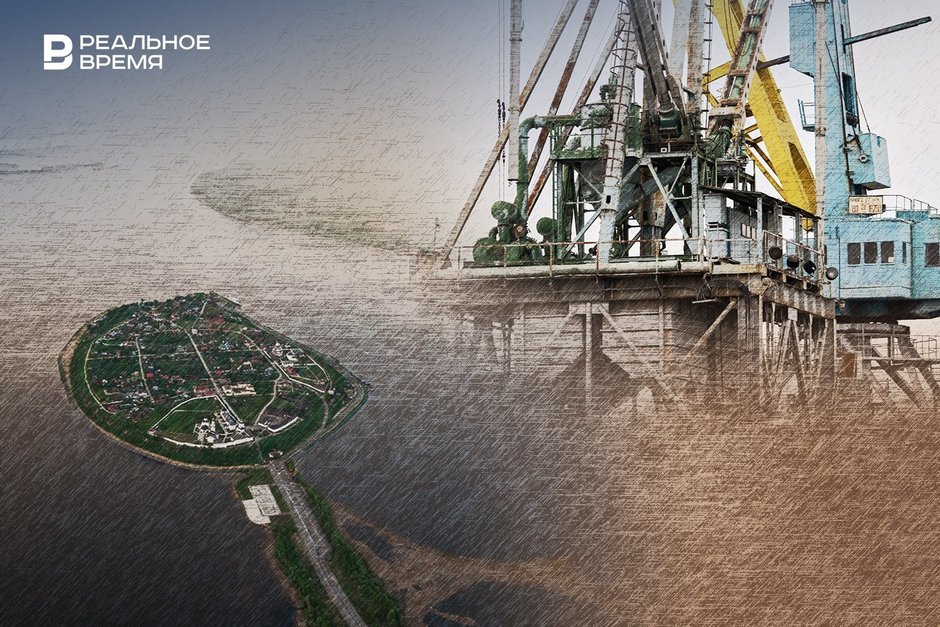
The Sviyazhsk multimodal logistics complex handles up to 390,000 tonnes of cargo per year, but its export “leg” remains weak. Activity could be revitalised by including the island in a maritime container route to Iran, which is being developed by Rosmorrechflot. “An alternative in the form of a Caspian Sea route is essential, as wagon downtime on Russian Railways is lengthy, leading to penalties for delays,” said Tatarstan’s Transport Minister Farit Khanifov in a conversation with Realnoe Vremya, supporting the initiative. Large exporters from the Kama region, however, are unlikely to agree to “load” the distant Sviyazhsk, though the location may be of interest to other market players.
Sviyazhsk as a backup option on the route to Iran
Russia and Iran are discussing the possibility of expanding container services across the Caspian Sea, selecting ports for dispatch and reception of cargo. “In Russia this may include not only the port of Makhachkala. Routes via Sviyazhsk, St Petersburg and other Russian hubs, including those still under construction, are also possible,” said the head of Rosmorrechflot, Andrei Tarasenko, on the sidelines of the Transport Week 2025 forum.
The decisive factors in choosing a route will be economic feasibility and the convenience of logistics from the candidate hubs. The maritime ports of Makhachkala and Astrakhan are the priority, but regional centres are being considered to cover cargo flows from the Volga region and central Russia.
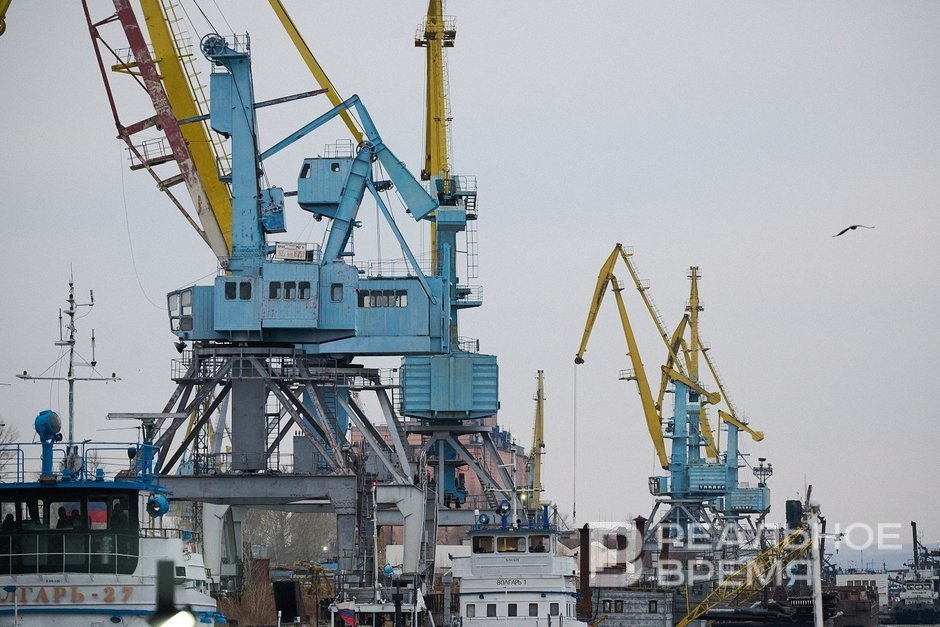
The head of Rosmorrechflot stated that it is important to calculate each stage of transport and determine the profitability of the entire logistical chain. Should transit shipments through the ports of Makhachkala and Astrakhan prove unprofitable, it will be necessary to calculate end-to-end economics, taking into account transportation costs from the Moscow region, St Petersburg and other regional transport hubs, he noted.
Working groups are conducting economic assessments of each proposed option, the agency’s press service clarified. “Selection of the optimal route depends on the volume of export cargo in the region and the cost of transport from a specific point of departure,” Rosmorrechflot added. Given that Tatarstan is a major exporter of petrochemical and chemical products, a hub for forming containerised cargoes for shipment by water may be located there.
A maritime alternative will ease congestion on RZD lines
The search for inland river hubs is linked to agreements between the authorities of Russia and Iran on creating a joint maritime consortium to develop freight transport. One of its tasks will be to unify tariffs for vessel calls at Russian and Iranian ports. According to Andrei Tarasenko, the existing disparity in tariffs requires regulation to ensure the competitiveness of container routes. Rosmorrechflot expects container shipments across the Caspian Sea towards Iran to begin in 2026.

“Sviyazhsk has long been part of the North–South International Transport Corridor. It is one of the pilot facilities built on the principle of multimodal transport. It has a two-kilometre quay capable of accommodating river–sea vessels with a displacement of 5,000–7,000 tonnes. Railway branches have been laid, a grain elevator has been built, and many resident companies operate here, engaged specifically in transport via both river and rail,” said Tatarstan’s Transport Minister Farit Khanifov in a conversation with Realnoe Vremya.
According to him, the volume of cargo transported via the Caspian is small, as the bulk of the flow goes by rail through Kazakhstan. The operator is RZD-Logistics. “An alternative in the form of a maritime route is necessary, as downtime on RZD is lengthy, leading to penalties for overdue deliveries,” he noted, adding that this issue had been discussed during a meeting with the head of RZD-Logistics in Moscow.
Large exporters in the Kama region are unlikely to agree to “load” Sviyazhsk because of the long distance. As Realnoe Vremya reported, they are considering rail transport to China through Kazakhstan. But the Volga location may be of interest to other market players.
Land routes to Iran risk penalties from Azerbaijan
Alexander Sharov, general director of RusIranExpo, noted that the countries are at the early stage of developing container transport, and volumes across the Caspian Sea remain insignificant.
“In Iran there are serious problems with container transport by land. Companies working in this area face heavy fines for wagon downtime — $89 per day. This is why RZD-Logistics ceased work on this route and reoriented eastwards. TransContainer suspended transport through Iran due to high fines imposed by Azerbaijan. In addition, the import of chemicals, propane-butane and polymers into that country is prohibited,” he said.
The launch of a maritime route across the Caspian will allow such fines to be avoided. “Here the container immediately arrives on the Iranian side, where free storage in the port for up to two weeks is provided,” the speaker clarified.
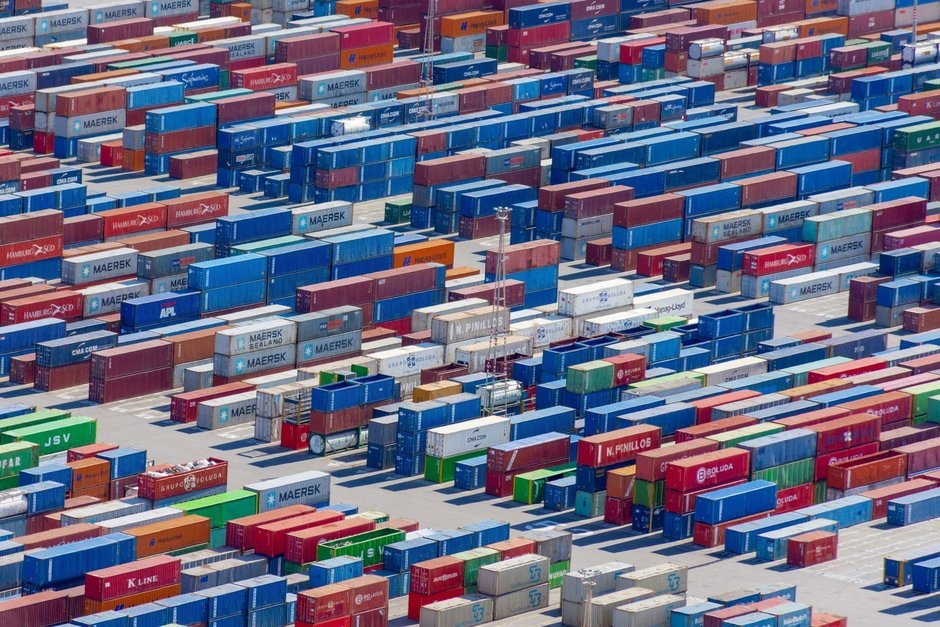
However, he doubts that Sviyazhsk could become a convenient location on this route. “Establishing a base in Sviyazhsk seems unlikely. The trip up the Volga takes about 20 days, and down — 15 days. This makes the turnaround far too long. As for Makhachkala, such an option is possible. However, at present it lacks the necessary facilities. In particular, there are no specialised cranes or container equipment. The container terminal is in an embryonic state,” Sharov listed. Notably, Sviyazhsk also lacks a container terminal. “This is the next stage in the complex’s development,” the Yadran management company’s press service clarified.
Restrictions on the trans-Caspian section of the North–South ITC persist
The national manager for intermodal logistics at NOYTECH Supply Chain Solutions, Fedor Tokarev, believes that the launch of a maritime container link via Iran will reduce delivery times between India and Russia. “But only if issues of using a single container pool across the entire route are resolved, eliminating the need for reloading, and if there is a sufficient number of specialised container ships in the Caspian Sea, along with unified and simplified transit customs procedures throughout the route,” he listed.
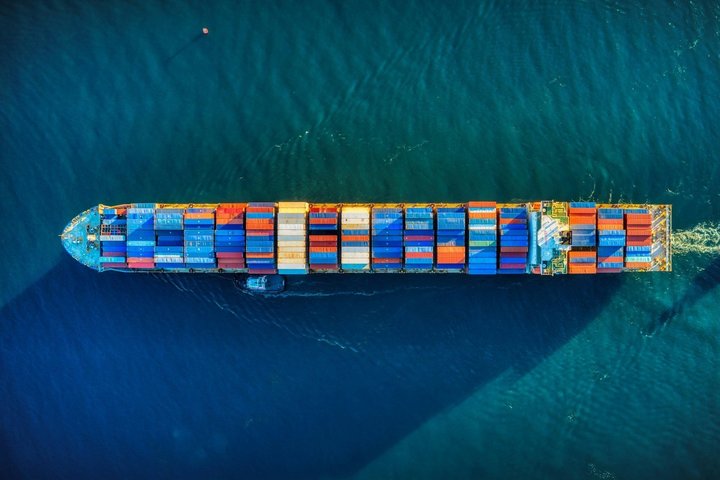
Logistical constraints on the trans-Caspian section of the North–South corridor have persisted for many years, he noted. Deficiencies in transport infrastructure include the absence of specialised vessels on the Caspian, draught restrictions — water levels in the Caspian Sea, silting of the canal and complicated vessel access to Astrakhan terminals in winter, and a shortage of well-equipped container terminals in the region. If a single operator with a container fleet emerges, capable of promptly ensuring reliability, regularity, stability and predictability of services on this route, cargo volumes will grow under favourable geopolitical conditions, the expert believes. According to him, in this case transit through Iran with all the countries of the Arabian Peninsula, East Africa, Central and Southeast Asia will also grow.