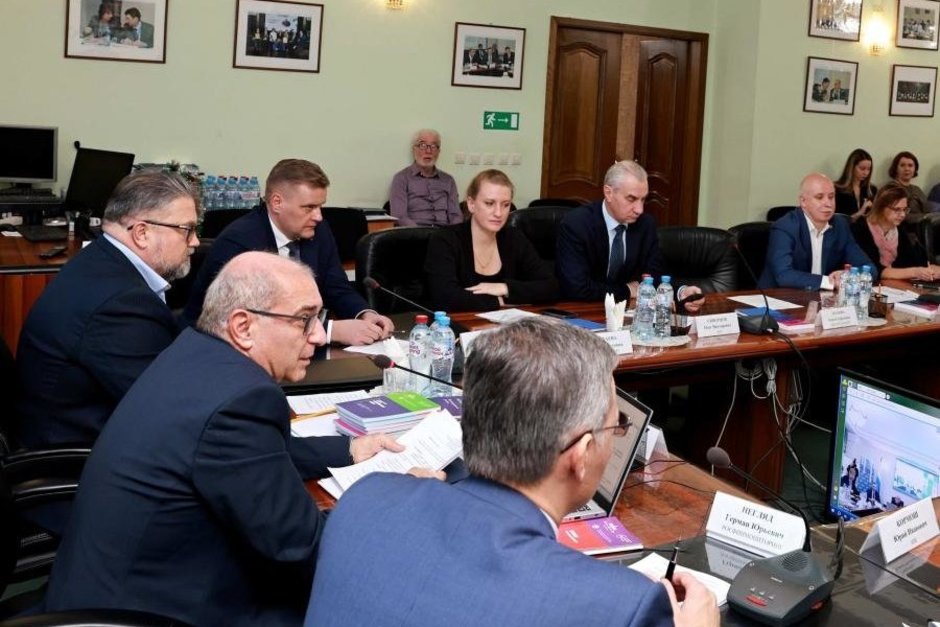
Garegin Tosunyan: ‘Central Bank's proposal to ban price cuts surprises us a little’
The ARB president has commented on the regulator’s position in the dispute between banks and marketplaces
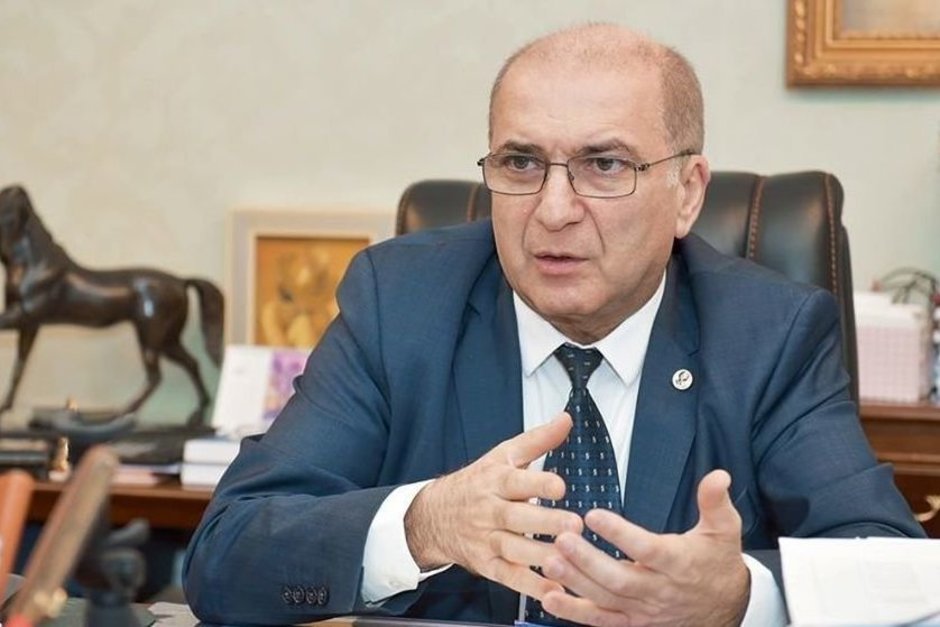
“Why do some banks remember competition only when they themselves become uncompetitive?” — asked the president of the Association of Russian Banks, Garegin Tosunyan, during an open discussion, commenting on Sberbank’s statements about 1.5 trillion rubles in lost tax revenue from marketplaces and the Central Bank’s proposal to prohibit them from selling their own banking products. In turn, the state secretary and deputy governor of the Central Bank, Alexey Guznov, stated that the issue is not a ban but that online platforms must display the price regardless of which bank’s services they use. More details are provided in the report by Realnoe Vremya.
“Why suddenly ‘discrimination’? Price reductions come from marketplaces cutting their own margins”
The conflict between banks and marketplaces has flared up with renewed force. Just over a week has passed since credit institutions complained about unfair competition from online platforms due to discounts offered to clients of their own structures. The Central Bank supported them in this matter: the head of the regulator, Elvira Nabiullina, proposed that the Ministry of Economic Development ban online platforms from selling their own banking products.
Shortly afterwards, Wildberries founder Tatyana Kim published an open letter, claiming there were attacks on Russian digital business. According to her, domestic platforms have created a new model of economy involving more than 1 million entrepreneurs, while Sberbank, by claiming 1.5 trillion rubles in allegedly lost tax revenue, portrays this legal business as criminal. The main point, she noted, is that marketplaces do not restrict banks in developing loyalty programmes.

The issue was further discussed during an open session at the Association of Russian Banks. The meeting focused on the operations of credit institutions amid a complex geopolitical environment and growing fraudulent activity in the financial services market, yet the work of platforms also became a major topic of discussion.
“I cannot avoid addressing the current conflict. Marketplaces regularly offer discounts when payments are made with their cards and payment services, while several major banks consider this unfair competition and call it hidden price discrimination. The Central Bank proposes banning price reductions on goods when certain payment methods are used, and this surprises us a little,” said ARB president Garegin Tosunyan.
Calling on his colleagues to engage, he noted that this complex issue directly concerns the creation of a competitive environment: “We cannot avoid asking the significant questions we have raised for many years. Why suddenly ‘discrimination’? Marketplaces reduce prices for a wide range of citizens by cutting their own margins. It turns out this is supposedly harmful. And on the other hand, why do some banks remember competition only when they themselves become uncompetitive? That is very curious.”
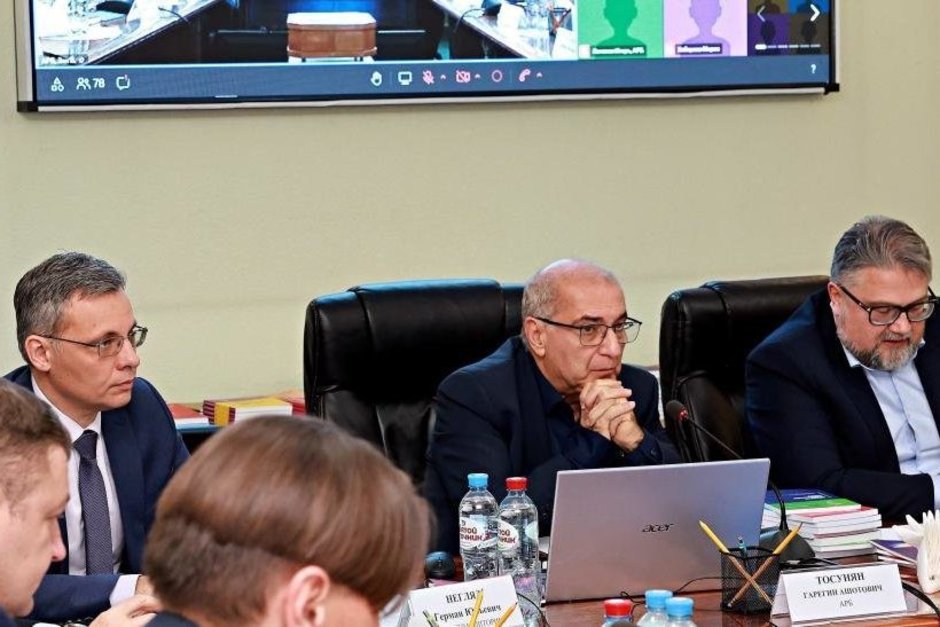
Central Bank: “We are not advocating any kind of ban”
At the same time, the ARB president reminded participants about the “exclusive position” of these banks due to state privileges, referring to pension payments, salaries for public-sector employees, participation in government programmes and other special priorities. “And now they suddenly recall violations of competition and even accuse others of not paying taxes. Later, of course, these accusations were withdrawn, because the absurdity lies in the fact that when prices fall for consumers, you receive less income, which means you pay less tax. So, are you proposing raising prices several times over so you can pay more? But who will buy anything and how will you pay afterwards? That is how you bankrupt an economy, not stimulate it. Driving arguments to such an absurd extreme is entirely nonsensical!” said Tosunyan.
According to him, the association supports anything that helps reduce the cost of goods and services and increase their accessibility for both consumers and suppliers. He highlighted the role of marketplaces in promoting market participants — especially SMEs — that “are unable to enter certain monopolised markets”.
“We believe this should be supported — the development of competition among banks, manufacturers and suppliers. Only this, and the absence of double standards in competition policy, will lead to a strong and healthy economy,” he concluded.

State secretary and deputy governor of the Bank of Russia Alexei Guznov, in turn, sought to clarify the regulator’s position on the development of the platform economy. He recalled the intense debate that took place during the spring session when the relevant legislation was adopted. According to him, the issue concerns unified conditions and equal rules for all organisations, including financial institutions that offer their services on platforms.
“It is clear that platforms represent a new stage not only for the Russian economy but also globally. We see how they are developing,” he said. “A question was raised about access, which is why I reacted the way I did. We are not advocating any bans. We are saying that platforms should display the price of a product regardless of which bank’s payment services are used. This should be a separate dialogue between the platform, its customer and the bank.”
“Platforms cannot be held hostage by a single financial organisation”
According to him, Russia needs to adjust platform regulation to address consumer protection issues. The Central Bank has already submitted proposals to the Ministry of Economic Development, covering two areas: the offering of financial products on platforms and the systemic impact of digital platforms on the financial market.
“The logic of this proposal is clear. Platforms play an infrastructural role, and in our view they cannot be held hostage by a single financial organisation. But neither can a single financial organisation be held hostage by a platform. At the same time, marketplaces and individual banks that provide financial services on a platform can independently (and no bans are being introduced or proposed here) offer their clients discounts, bonuses and other loyalty programmes.”
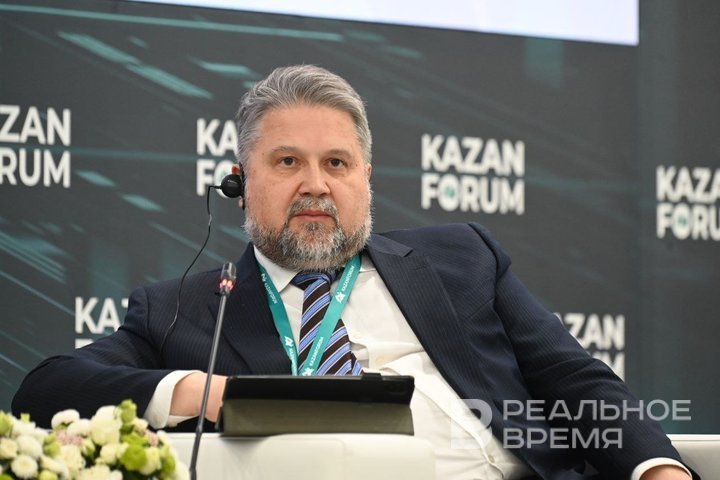
This is an important factor that strengthens customer loyalty and allows for long-term strategic engagement, Guznov noted: “But if this proposal does not work, we have already put forward a second idea — to establish a framework for cooperation between financial institutions, especially banks, and platforms in terms of mutual participation and the interconnection of corporate structures. I think this option is tougher in some sense, but it is also on the agenda.”
“For us it is important that sales rules be transparent. We see that platforms are increasingly influencing financial stability. And it is crucial for us to understand what a platform represents in terms of reporting, compliance with basic information-security standards and a range of other parameters,” the deputy governor added.
Fraudsters stole around 20 billion rubles from Russians
Returning to the main theme of the conference, the ARB president observed that geopolitical turbulence and economic challenges on one side, and the development of modern technologies and the growing scale of fraud on the other, create complex conditions that test the country’s financial system daily: “You feel this both personally and in your immediate surroundings.”
He added that we are now witnessing unprecedented technological development in many areas of life, including the economy and finance. “This is excellent and opens broad opportunities, but it also generates very serious and sophisticated risks. Under these conditions our shared goal is to create and maintain a competitive financial system that meets modern challenges under sanctions pressure,” he stressed, adding that the financial system must be secure.
Regarding the fight against fraud, Garegin Tosunyan stressed the importance of a comprehensive approach. Since 2019, there has been a continuous increase — 1.7-fold — in the number of transactions carried out without clients’ consent. “Why has this trend not been reversed? Perhaps because fraudsters possess significant resources: financial, technical, and in some cases corrupt, enabling them to stay one step ahead,” he lamented.

The statistics concerning data leaks are also discouraging, he said: from January to September 2025, fraudsters gained access to 13 billion lines of Russian citizens’ personal data — four times more than during the entire previous year. Meanwhile, Alexei Guznov reported that in the first nine months of the year, banks repelled 111 million attempts to steal client funds, preventing losses exceeding 11 trillion rubles. But the number of successful attempts remains high, leading to around 20 billion rubles stolen from the public.
Mikhail Mamuta, head of the Consumer Protection and Financial Services Accessibility Service of the Bank of Russia, spoke about positive trends in reducing cases of unfair sales practices in banks. “We used to be concerned about cases of inappropriate behaviour, involving the imposition of additional services or even misselling, which were fairly widespread on the market a few years ago. Now they have not disappeared entirely — they still exist — but their frequency has decreased significantly,” he said. As for fraudsters, this industry can be countered only through another industry and systemic methods, the speaker added, calling on colleagues for close cooperation in addressing this problem.