‘We are at the lowest point of birth rates’: why young people are postponing parenthood
Experts propose introducing psychological counselling offices in universities to encourage childbirth among students

“The modern student approaches parenthood like a rational manager. Without rejecting the idea of a family entirely, they subject the possibility of having a child to strict and pragmatic analysis,” said the respected psychologist, director of the Institute of Clinical Psychology and head of the Department of Psychology and Pedagogy at UGMU of the Ministry of Healthcare, Evgeniya Naboychenko, at the first interregional congress Demography 2025 in Kazan. Close attention to this phenomenon is driven by the fact that the authorities expect a demographic turnaround specifically from the intellectual and professional youth — yet it is not happening. The fertility rate in the country dropped to a historic low of 1.13 in 2025, and birth rates are also not rising in Kazan. Which Tatarstan businesses are promoting traditional family values and which illnesses prevent the republic from reaching the 80-year life expectancy target — all in the report by Realnoe Vremya.
Fewer children, more elderly
In the coming years, a new demographic transition awaits us, with birth rates in the country declining while people live longer. Young people are postponing childbirth, prioritising career development. At the same time, the older generation is in no hurry to retire and look after grandchildren, continuing instead to work and earn. These imbalances in social behaviour and the search for new approaches to demographic policy were discussed at the first interregional conference Demography 2025, held in Kazan. It was organised by the Union of Russian Cities with the support of the presidential council on the implementation of state demographic and family policy, the Ministry of Healthсфку of Tatarstan and the Kazan city executive committee.
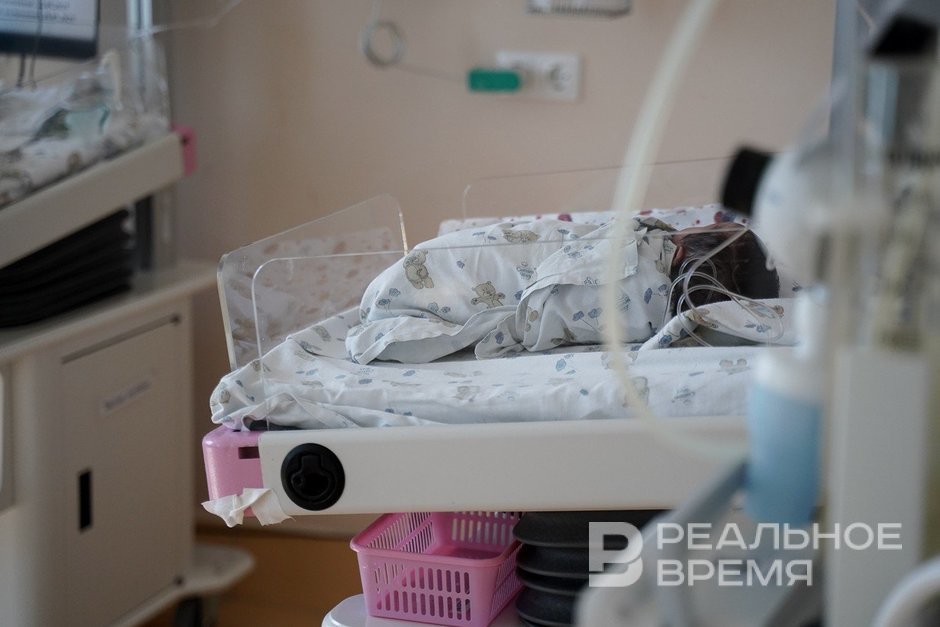
The organisers, moreover, plan to hold a series of such congresses in the regions. The first recommendations will be submitted to the State Duma, where on 16 December demographic policy problems will be discussed with the participation of Speaker Vyacheslav Volodin. Naturally, the main concern is the decline in birth rates, which threatens to turn into a demographic hole similar to that of the 1990s. According to experts’ forecasts, if the current trend continues, by 2030 there will be fewer children and more elderly people.
“Today we are at the lowest point of birth rates. Fertility has dropped to a historic minimum of 1.13 children per woman,” said the director general of the Union of Russian Cities and chair of the Public Chamber Commission on Territorial Development, Andrey Maksimov, explaining the urgency of the moment.
According to him, society is entering a so-called “demographic transition”, in which declining birth rates are driven by behavioural patterns. For comparison, the fertility rate in 2022–2024 stood at 1.41. Meanwhile, in France the figure is 1.8–1.9, and in Ethiopia — 6.4, noted later the director of the Institute of Clinical Psychology and head of the Department of Psychology and Pedagogy at UGMU of the Ministry of Healthсфку, Evgeniya Naboychenko.
The way out of the looming crisis lies not only in medicine — that is, in supporting pregnant women — but also in financial support measures, the organisers of the conference believe. The head of the Union of Russian Cities considers it necessary to search for new, fresh solutions in response to society’s “non-trivial” challenges. “We perfectly understand that the problem is complex, that medicine is only part of the necessary solutions we can bring to this programme,” he concluded.
Will Kazan stop growing?
Deputy Minister of Healthcare of Tatarstan Ildar Fatikhov acknowledged that improving the demographic situation remains a serious issue. “Of course, for now we are not growing in terms of the birth rate. But at least there is no major decline,” he said. He did not provide specific indicators for birth rate dynamics.

The picture of birth rates in the republic was clarified by the head of the Department of Medical Demography at MKDC, Chulpan Ildarkhanova. According to her, the total fertility rate per woman in Kazan is 1.5, whereas the level required for natural population reproduction is 2.2. However, prosperous Moscow with its high salaries has a rate of 1.4. According to her, Kazan has reached its desired population level, having grown by 38,200 people. She does not expect further growth.
“We have already reached the desired population level set during the strategy’s formation, with an additional 38,200 people. With the current total fertility rate, no growth prospects are expected in the near future,” she said.
What prevents people from living to 80?
At the same time, life expectancy among the elderly in the republic is rising. According to her, it stands at 76 years. The federal target of 80 years, set by the national project “Active Longevity”, is not being reached due to mortality from serious diseases.
What prevents people from living to the desired 80 years? According to Ildarkhanova, the greatest reduction in life expectancy comes from cardiovascular diseases. They shorten life by 10 years. The second strongest factor is cancer. “Neoplasms take away 4.7 years of life,” she reported.
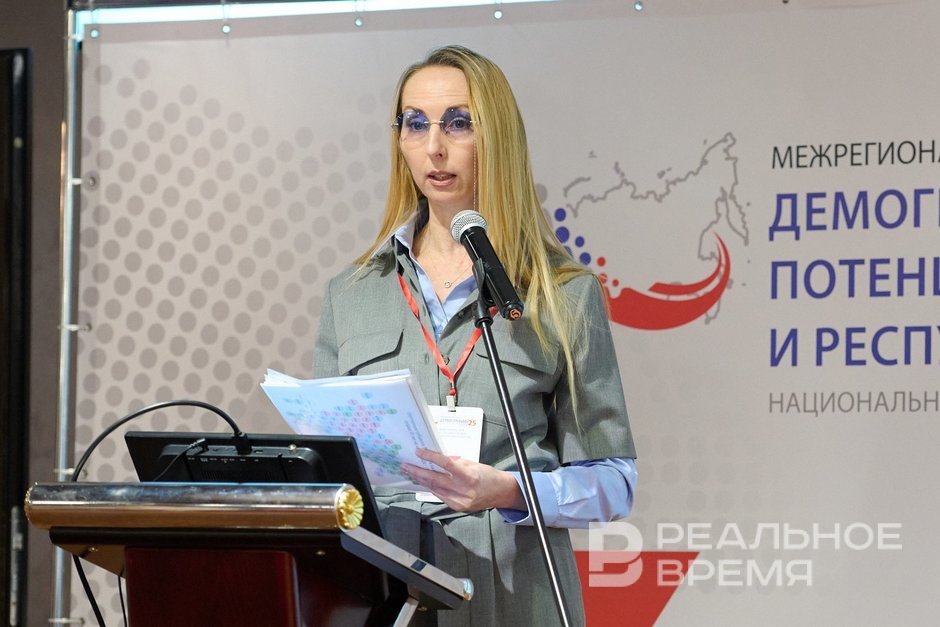
According to calculations by the Department of Medical Demography at MKDC, pensioners in Tatarstan could live on average 22 years longer if timely diagnosis and disease prevention were implemented.
“If I have a child, I’ll fall into a career pit”: what female students fear
The demographic landscape of the future depends on the priorities of student youth. Yet it is this generation that is postponing childbirth until later in life. “The modern student approaches parenthood like a rational manager. Without rejecting the idea of a family entirely, they subject the [possibility of having a child] to strict and pragmatic analysis,” noted the director of the Institute of Clinical Psychology and head of the Department of Psychology and Pedagogy at UGMU of the Ministry of Healthcare, Evgeniya Naboychenko.
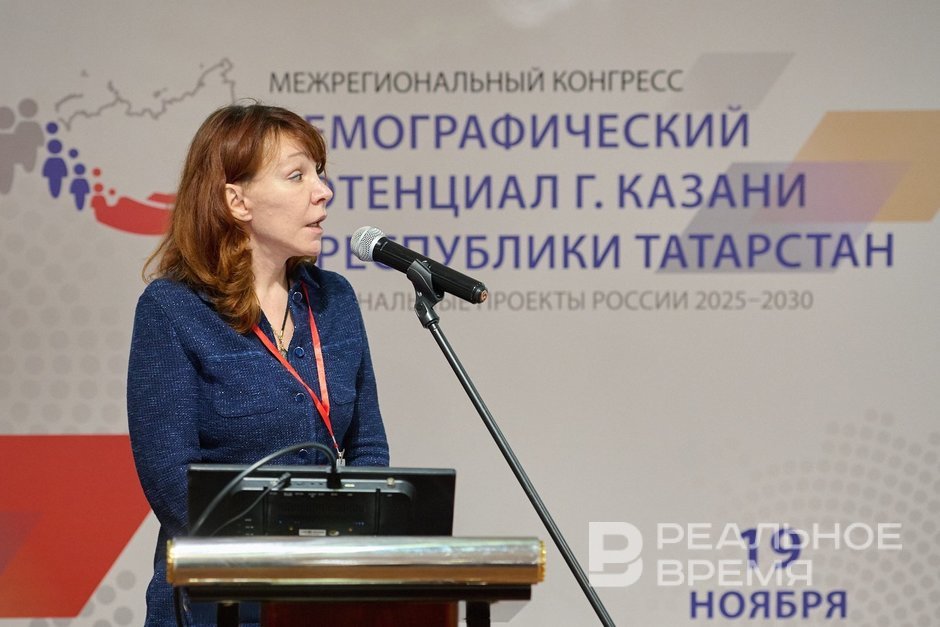
What lies behind these attitudes adopted by young people who form the intellectual and professional elite of the country? According to Naboychenko, in the post-industrial era youth has chosen career over parenthood: “Children become a kind of ‘ballast’ for young people, dependants in the long term, because studying at higher education institutions takes from 5 to 7 years.”
Self-fulfilment is especially important for young women. They perceive a career setback more painfully than men, said Evgeniya Naboychenko.
“Young women say: ‘If I have a child, I’ll fall into a career pit, I’ll drop out of life. There will be no one to look after this child’,” she explained.
On the other hand, the official upper age of youth has been extended to 45. “How can cognitive dissonance not arise? When we test university graduates, their psychological state corresponds to the age of 14–16, an adolescent period,” she noted.
In conclusion, Evgeniya Naboychenko stated that the creation of psychological services in universities is currently being discussed. “On 16 December we will talk about the creation of psychological support services in educational institutions. Such services must exist, and our task here is to develop and introduce new awareness-raising courses into the education programme,” she specified.
At the same time, she considers it important to form an appealing image of young parents. “These must be successful parents, parents who are positively realising their careers, and, of course, there must be psychological support to ease anxiety about the future and foster responsibility,” the psychologist concluded.
Meanwhile, Tatarstan employers are concerned about declining birth rates and have begun introducing measures to promote family values in the workplace. Among them, Tatneft and Ammoniy have stood out, conference participants reported.