Grants against cancer, Ayurveda, and friendship with ‘pharmacy of the world’ what will unite the medicine of Tatarstan and India
Indian pharmaceutical suppliers are proposing the creation of working groups to discuss the localisation of drug production in Tatarstan

“The medical profession in India is considered the most prestigious, and healthcare has become highly technological,” said Ravikant Davhale, a physician and graduate of Kazan State Medical University, during a panel session dedicated to cooperation between Tatarstan and India in the field of healthcare. It is scientists who have made the greatest progress in this direction: the team led by Professor Sergey Boychuk from Kazan State Medical University has won a grant from the Russian Science Foundation and India’s Department of Science and Technology (DST) to develop a cancer treatment. Meanwhile, a team from Kazan Federal University led by Irek Rizvanov is preparing to apply for a joint grant from Russia, India, and China. At the same time, India remains the largest supplier of generic drugs to Russia. Therefore, Satya Karm Poonia, a representative of the “pharmacy of the world,” proposed organising an Indian pharmaceutical forum in Kazan to discuss the prospects of localisation.
Almir Abashev: Ayurveda — an effective way to prevent illness
India is often referred to as the “pharmacy of the world” — the country remains the largest supplier of generic drugs (inexpensive equivalents of original medications), which Russia has increasingly purchased following the exit of Western manufacturers. As a result, the “medical” or pharmaceutical session became one of the highlights of the first business forum TIME: Russia — India. Mutual Efficiency. The event brought together leading figures from Tatarstan’s medical and scientific community, Indian doctors and pharmacists, and, of course, Indian students studying at medical universities in Kazan. For these students, it was a rare opportunity to see the “leading figures” of the country’s medical sciences and hear their presentations. The young female students, confident in their Russian, said in conversation with Realnoe Vremya that they enjoy life in Kazan so much that they are seriously considering whether to return to their home country.

The panel session was held under the title “Traditions and Innovations: How the Experience of the Past Shapes the Future of Medicine in Tatarstan and India.” Minister of Health of Tatarstan, Almir Abashev, spoke to journalists about which ancient traditions could influence trends in modern medicine. His appointment decree had been signed just a few hours before the session began, so he was slightly nervous.
“India has traditionally been strong in Ayurveda, an alternative system of medicine based on the use of herbs, plant oils, massage, and yoga. Up to 70% of the country’s population uses it. For us, it is of interest in terms of disease prevention, as it is accessible to the majority of the population,” he said, adding that traditional medicine has existed for a long time.
It was particularly popular in Kazan. The minister believes that now there is reason to revive this movement, as Ayurveda is based on promoting a healthy lifestyle. Speaking about approaches in the healthcare systems of Tatarstan and India, he noted that “views on how to develop medicine differ somewhat,” but overall, “the dialogue is constructive.”
Journalists could not resist asking about his priorities as minister. “The main goal is the care of the health of people living in Tatarstan,” Abashev stated succinctly. In addition, he believes it is necessary to strengthen dialogue within the medical community and to achieve new heights in disease treatment.
“This is close to us”
“Health and the attitude toward health are part of a person’s culture. The ancient people of India are bearers of traditional Indian medicine, and its principles are close to us — diet, lifestyle, sleep,” said session moderator Alexey Sozinov at the start of the session, in effect promoting Ayurvedic practice. He recalled that exactly 70 years ago, the great Indian public figure and Prime Minister Jawaharlal Nehru visited Moscow, marking the beginning of dialogue between the USSR and India. Today, relations between the leaders of the two countries, Putin and Modi, are on the rise, and the healthcare systems are similar.
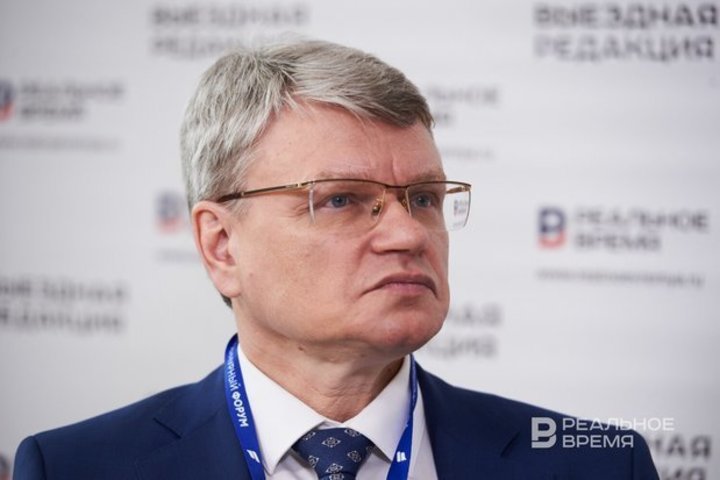
Secretary of the Ministry of Health and Family Welfare (AYUSH), Rajesh Kumar Kotecha, somewhat dispelled the myth that Indians rely solely on ancient practices in treatment. Three-quarters of the population use traditional methods. He proposed bringing Russian and Indian standards in treatment and surgery closer together.
At the same time, India has not abandoned Ayurveda. According to him, Indian doctors are ready to assist their Tatarstan colleagues in expanding preventive medicine, as they have extensive experience. In Russia, this branch of medicine, aimed at disease prevention and slowing the aging process, has not yet become widespread.
Another promising area, he noted, is the development of digital services for monitoring human health. He also proposed creating a platform for hackathons and startups in the field of traditional medicine. “Out of a thousand startups, three could grow into unicorns,” he said. His confidence is based on the steadily growing demand for various pharmaceutical and medical services. He predicts that by 2028, demand for these services will reach $9 trillion. Incidentally, shortly afterwards, Linar Garifullin, head of Pharmmedpolis, impressed him with the development of a software-hardware complex that can be installed on any device for monitoring blood pressure and heart function. The development is currently undergoing certification.
Kazan State Medical University receives grants from Russia and India, Kazan Federal University looks to China
Collaboration among scientists is developing even more closely. Albert Rizvanov, chief research fellow, professor of the Department of Genetics, and head of the OpenLab “Gene and Cell Technologies” at the Institute of Fundamental Medicine and Biology of Kazan (Volga Region) Federal University, spoke about the implementation of joint grant programs for the development of diagnostic systems in skin regeneration processes. At present, his laboratory is preparing to apply for a grant from Russia, India, and China to conduct research in the field of infectious diseases. “You remember how the world faced the pandemic,” he noted.
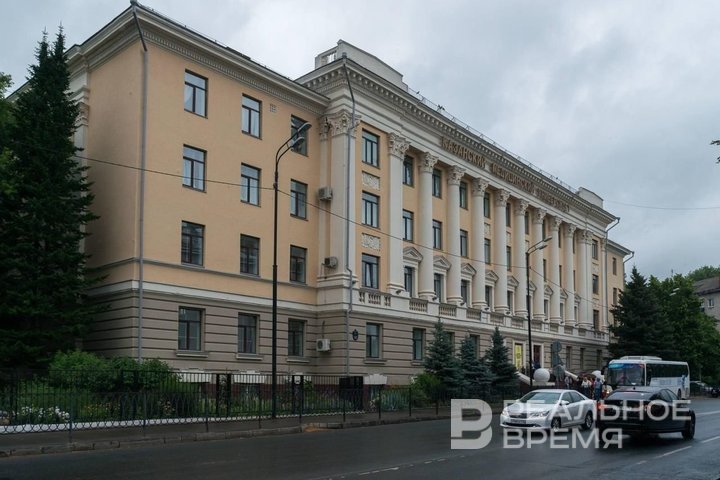
The team at Kazan State Medical University, led by Professor Sergey Boychuk, has already won a grant to develop a drug for treating gastrointestinal tumors resistant to modern medications, according to acting rector Diana Abdulganieva. The grant was awarded as part of the fifth joint competition of the Russian Science Foundation and India’s Department of Science and Technology (DST). The project team will receive funding of 7 million rubles annually over three years. The university’s project was among the 24 winners of the competition.
Scientists from the Molecular Oncology Laboratory at Kazan State Medical University will conduct research in collaboration with colleagues from the Indian Research and Educational Institute in Kolkata, under the leadership of Professor Arindam Mukherjee. As part of the joint project at Kazan State Medical University, studies will focus on the mechanisms of cytotoxic and antitumor activity of chemical compounds synthesized by Indian scientists. It is expected that the development and implementation of this new approach will help overcome secondary resistance of malignant tumors to targeted therapies. The application of the project’s results in practical oncology is expected to improve the prognosis for patients with malignant neoplasms that progress despite current chemotherapy, the developers say.
Russian was the hardest, but now I speak Tatar
“The medical profession in India is considered the most prestigious, and healthcare has become highly technological,” said Ravikant Davhale, an Indian physician and graduate of Kazan State Medical University, during the session. After completing his studies, he did not return to his homeland but stayed to work in Tatarstan. A native of the small town of Yavatmal, he graduated from Kazan State Medical University, fulfilling his father’s dream, and later worked at RBC. In recent years, he has served as deputy chief physician at Spassk Central District Hospital. “Russian was very difficult for me,” he admitted. But he now speaks Tatar, because his wife is Tatar.
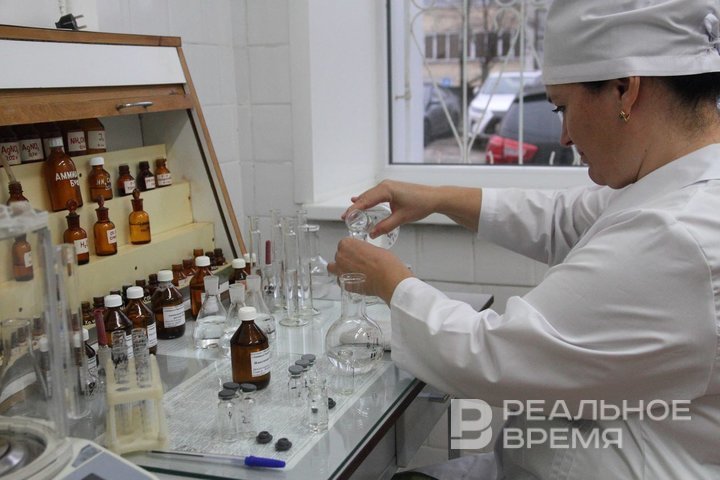
Divesh Kumar, honorary representative of the Council for the Promotion of Indian Pharmaceutical Exports, went beyond discussing opportunities — he even sang from the podium. He performed the popular Indian song Zindagi Ke Safar Mein, about how time cannot be returned. And, of course, neither can health. According to him, trade in pharmaceuticals with Russia is growing, creating a need to localise packaging in the country. He proposed forming working groups.
Finally, another representative of the “pharmacy of the world,” Satya Karm Poonia, suggested organising an Indian pharmaceutical forum in Kazan to discuss the prospects for localisation.