Kazan seeks buyer for city’s only bike-sharing service, priced at 12 million rubles
The capital of Tatarstan has struggled to host any bicycle rental service for long
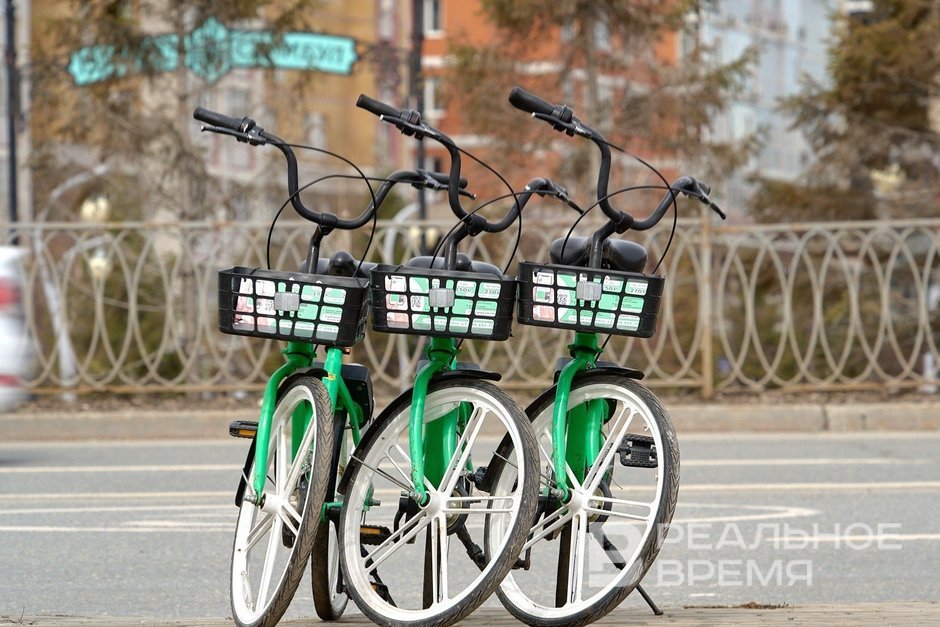
The bike-sharing service Green City has been put up for sale in Kazan. Over several years, it has become a part of the SIM market. The owner of the service told Realnoe Vremya the real reasons for selling the business, while experts interviewed by the publication say that Kazan is still far from earning the title of bicycle capital, but no one is in a hurry to give up on SIMs. Read more in the full report.
“No issues in dealing with authorities”
As Realnoe Vremya was told by the ready-business sales agency BNK-Invest, the bike rental service Green City has been put up for sale in Kazan. The asking price is 12 million rubles. According to BNK-Invest, the business has been operating on the market since 2022 and has the necessary infrastructure, including a network of 275 stations. The project is equipped with an IT platform for managing the service and holds exclusive rights to the bike-sharing market in Kazan. Over the season (six months), turnover reached 7.9 million rubles, with net profit of 5.1 million rubles. Monthly profit averages 857,000 rubles.
“The reason for selling is that I have been living in another city and other countries for a year, and my focus has shifted. I don’t have the resources to monitor, manage, invest in, and develop the business. As for why I don’t keep the business, I doubt my competence in managing small-scale projects across different cities. Regarding interactions with the authorities — there are no difficulties. They are only interested in electric scooters; bicycles don’t bother anyone. Sometimes bicycles get caught up in general regulations, but the leadership of Tatarstan supports the development of cycling — they were in favour from the start and still are. There are virtually no restrictions for bicycles in the city. I don’t think Kazan will give up on individual mobility solutions,” Anton Uskov, the owner of the business, told Realnoe Vremya.
At the same time, according to the Kazan city administration, the service began operating two years ago — in April 2023. At the launch, 200 bicycles were available in the Tatarstan capital. Two years later, according to the official website, the number of bicycles in the city has at least halved, with fewer than 100 units remaining. However, the mobile app shows 176 bicycles available for rent in Kazan. Some 87,200 people regularly use the service in the city.
Kazan authorities are not obstructing the service; it is already clear that individual mobility solutions are part of the transport infrastructure.
The same franchise operates in ten other cities besides Kazan: Krasnodar, Mariupol, Nizhnekamsk, Chita, Simferopol, Feodosia, Orel, Barnaul, Novy Urengoy, and Tula.

Other players in the individual mobility market also point to positive trends. According to Denis Balakirev, a representative of the scooter-sharing service Whoosh, micro-mobility transport remains in high demand in Kazan, and over the years, residents have become accustomed to using scooters daily to travel from home to the metro or bus stops.

It is worth noting that this is by no means the first bike-sharing service in Kazan. In July 2013 — ahead of the Universiade — the city launched Velik. The project was implemented by the company Russ Outdoor. In Kazan, rental points were located on central streets: Karl Marx, Pushkin, Kremlin, Tatarstan, Chernyshevsky, and Kavi Nadzhmi. The service was most active in 2014, when more than 20,000 rentals were made from April to October, 30% more than the previous year. Investments in the project amounted to 3 million euros, with a planned payback period of at least five years. However, after a couple of years, the service began to stagnate — in 2016, rentals operated only in the autumn, and by 2018, only six of the seven stations were functioning. In 2019, the project ceased operations in the city entirely.