AI on the road: Kazan prepares for driverless vehicles, while Perm ‘reads’ hidden license plates
Rosavtodor has proposed introducing two criteria for the effectiveness of ITS — reduction of travel time and increase of speed
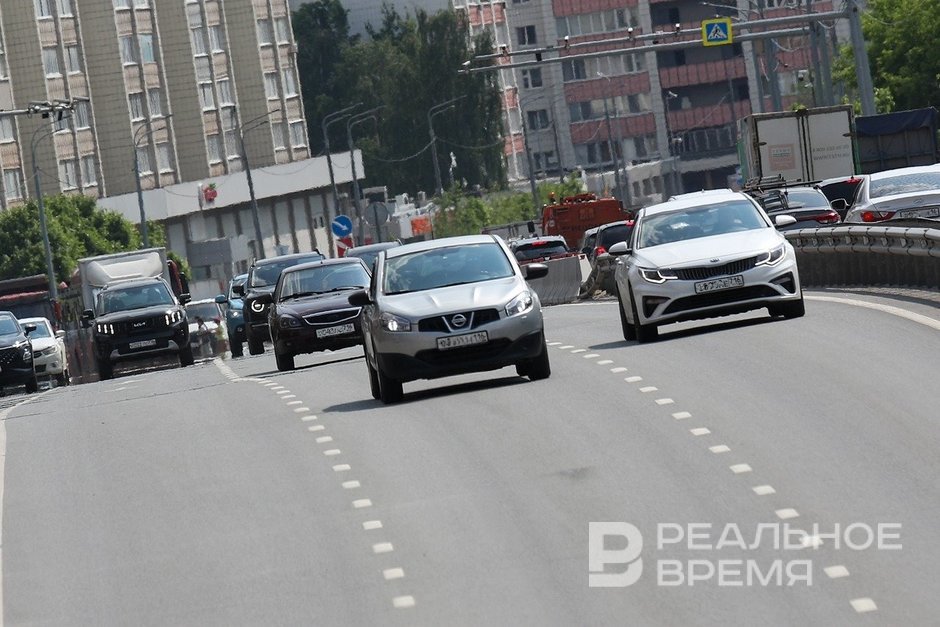
“Driverless transport will soon appear on the roads on a large scale. KAMAZ is being tested on the M11, while a driverless taxi is operating in Innopolis. Transport infrastructure must be viewed more broadly, with a perspective towards autonomy,” advised Rifkat Minnikhanov at a meeting of the ITS working group of the Rosavtodor Federal Road Agency. Tatarstan allocated 1.5 billion rubles of budget funds for the implementation of the intelligent transport system. However, 80% of that was “absorbed” by Kazan, where traffic has significantly improved, claimed Farit Khanifov. Perm surprised everyone: here they learned to read concealed vehicle number plates and issued 400 million rubles in fines in just two months after the new ITS module was introduced.
Kazan among the top cities with “smart” roads
Kazan, along with Perm, Tyumen and Krasnoyarsk, has reached the second level of maturity of intelligent transport systems (ITS). This means that road traffic is subject to “smart” regulation of overall flows, said the session moderator — Deputy Head of the Department for Regional Development of the Federal Road Agency, Denis Kiryukhin. Second-level ITS includes adaptive traffic light control, a system for collecting data on traffic parameters on main roads, and video surveillance systems at key intersections. Another 20 cities in the country will reach the first level of maturity by the end of the year, he specified. This means that initial functions for managing traffic flows will be established, but without data collection and analysis. Such are the results of the first “five-year plan” for the introduction of ITS in Russian cities, he reported.

The project was initially financed through the federal programme “Safe and High-Quality Roads,” and has now been incorporated into the national project “Infrastructure for Life.” Each year, the Federal Road Agency allocated up to 3 billion rubles to the regions for these purposes. Thus, Tatarstan received 1.5 billion rubles over five years, said the republic’s Minister of Transport and Roads, Farit Khanifov. The “beneficiaries” of ITS were two cities — Kazan, with a population of 1.4 million, and Naberezhnye Chelny, with a population of 600,000, he specified. “As a result, motorists in these cities began to move faster,” he noted. In 2025, the republic received only 120 million roubles (97 million from the federal budget).
“Well, cameras have been installed. But what does this give people?”
Will financing continue next year, if the budget is under pressure? Will there be a second ITS “five-year plan”? In a climate of financial uncertainty, the Federal Road Agency began to face direct questions.
“We are often asked: how is effectiveness assessed? Well, cameras have been installed on the roads. But is there a programme for placing the cameras? And what does this give people?” — shared with the audience the Deputy Head of the Department for Regional Development of the Federal Road Agency, Denis Kiryukhin.
According to him, the agency still has to “defend” the usefulness of ITS at the federal forum Road 2025.

Rosavtodor proposes setting two criteria for assessing the effectiveness of budget spending on ITS. First, to determine how much traffic speed has increased in cities with different levels of maturity. Second, to measure how much idle time and delays on the road have been reduced. At present, the regions receiving subsidies do not carry out such measurements. Perm provided them on an optional basis. After the ITS system was modernised, travel delays decreased by 26% and vehicle speed increased by 13.4%, said the Director of the Road Traffic Safety Centre, Alexander Vlasov. In Tyumen, it was calculated that public transport traffic increased by 25% following the introduction of the “green wave.”
Realnoe Vremya later asked the head of the Tatarstan Ministry of Transport how much traffic had improved in Kazan and Naberezhnye Chelny. It turned out that no measurements had been made. “This is homework, we will definitely complete it,” promised Farit Khanifov. The results may become available in October–November, closer to the Transport Ministry forum in Moscow.
Kazan to begin parking control
“Five years ago, ITS were a novelty for most regions, but today they have become the norm in organising road traffic,” said Rifkat Minnikhanov. “Tatarstan has reached the second level of maturity.”
The system includes six modules of various subsystems. One of the first was the video surveillance system. Later it was integrated with a comprehensive video analysis system for detecting abnormal traffic movement. Then a system was developed for blocking highways and automatic monitoring, along with cameras for recording violations, he explained.

By the end of the year, two new subsystems are planned to be launched. First, a module for analysing road accidents and a module for monitoring parking spaces will appear, said Rifkat Minnikhanov. In this way, Kazan’s ITS will receive eight control and analytics subsystems.
“Driverless transport will soon appear on the roads on a large scale. KAMAZ is being tested on the M11, while a driverless taxi is operating in Innopolis. Transport infrastructure must be viewed more broadly — with a perspective towards autonomy,” insisted Rifkat Minnikhanov at the meeting of the ITS working group of the Federal Road Agency Rosavtodor.
IT specialists’ battles for state contracts
This year, 2.77 billion rubles were allocated to the regions for the modernisation of ITS systems, said Denis Kiryukhin. Unlike in previous years, regional authorities have been more active in organising public procurement for ITS. The level of contracting reached 91%, he said with satisfaction. A total of 2.54 billion rubles’ worth of contracts were concluded.

But there are difficulties here as well. “Competitions are swarmed like bees to honey. When they see a large lot, the uncontracted amount immediately ‘flies away.’ Complaints [from businesses] are lodged about all sorts of violations in the conduct of tenders,” he lamented.
“There are quite a few who broke the rules. Therefore, after 1 September we will propose returning budget funds. And additional agreements will be concluded for redistribution in favour of other regions,” he warned.
How Perm calculated 400 million in fines
Perm has advanced the furthest in the development of ITS. It now has 10 modules for automatic traffic management. ITS specialists operate from the local data centre. “There are subsystems for video surveillance, video monitoring, adaptive traffic light control, and a dispatch service,” said the head of the Road Traffic Safety Centre, Alexander Vlasov.

This summer, a technology for detecting incidents was implemented here. Smart cameras were installed at all weigh stations, which “read” the licence plates of passing trucks. “We have learned to ‘read’ 85 percent of vehicles with concealed plates,” he said. The system has been certified. By 1 July, installation was completed at all weigh stations on the approaches to Perm. In two months of operation, 946 violators were held administratively liable. Fines totalling 400 million rubles were issued, though only 180 million rubles have been collected so far, he reported.
Authorities now plan to cover a greater number of points. A representative of one region said that the issue of holding violators accountable for refusing inspection is being considered. “The interpretation is as follows — if the plate is covered with a cloth, it is not considered overweight. Therefore, the possible fine for refusing inspection could be 600,000 rubles,” he warned. In other words, ITS can become not only a convenience for motorists but also an inescapable punishment for violators.