Xiang Bo: ‘The Memory of the Great Victory is a stand for historical justice’
The Consul General of China in Kazan speaks on the 80th anniversary of the Victory over Militarist Japan and the end of the Second World War
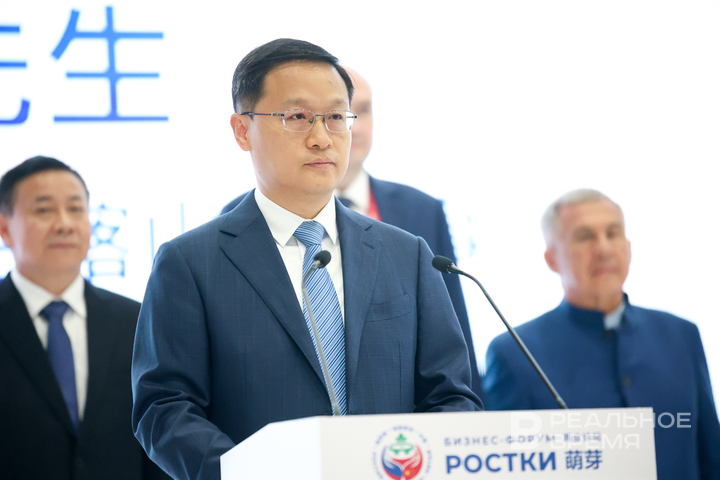
Russia has supported China’s leadership initiative at the extended SCO meeting in Tianjin. The president of China, Xi Jinping, put forward a proposal based on the need to uphold international law, defend the principle of multilateralism, reject double standards, and ensure equal participation of all countries in global governance. The meeting, attended by Vladimir Putin, is taking place alongside large-scale celebrations in China marking the 80th anniversary of the Victory over militarist Japan and the end of the Second World War. To mark the occasion, the Consul General of China in Kazan, Mr. Xiang Bo, wrote an article for Realnoe Vremya on the contemporary significance of the holiday and the gathering of world leaders.
Defending an accurate understanding of the History of the Second World War
On 3 September 2025, a ceremonial gathering and military parade is to be held on Tiananmen Square in Beijing to mark the 80th anniversary of the Victory in the Chinese People’s War of Resistance against Japanese Aggression and the Global Anti-Fascist War.
Chinese President Xi Jinping, 26 heads of foreign states and governments, including Russian President Vladimir Putin, as well as leaders of international organisations and politicians from many countries around the world, will take part in the event to honour the memory of fallen heroes, defend an accurate understanding of the history of the Second World War, and unite efforts to maintain peace.
The Chinese People’s War of Resistance against Japanese Aggression was the main front of the Global Anti-Fascist War in the East. From the Mukden Incident on 18 September 1931, when the first shot of the Global Anti-Fascist War was fired, until Japan’s surrender in September 1945, China’s war against Japanese invaders lasted 14 years — beginning before all others and continuing longer than any. The Communist Party of China became a strong guiding core in the resistance war against Japan, helped create a united national anti-Japanese front, and played a decisive role in it.
After 14 years of heroic struggle, the Chinese people achieved a Great Victory in the Anti-Japanese War at the cost of enormous national losses — 35 million military personnel and civilians killed or wounded — thus marking the ultimate victory in the Global Anti-Fascist War.
The Chinese front long held back the main forces of the Japanese army, thwarted Japan’s plan to “advance north” and invade the Soviet Union, and effectively supported strategic operations on the European front and in other regions of Asia, making a historic contribution to the victory in the Global Anti-Fascist War. China’s victory in the War of Resistance against Japanese Aggression is a victory of the Chinese people as well as a victory for the peoples of the entire world.
The smoke of the Second World War cleared, but the world remains unstable
The Great Patriotic War of the Soviet Union was the main front in Europe. Over 1,418 days of fierce fighting, at the cost of colossal sacrifices — 27 million dead — the Soviet people achieved the Great Victory. On the main fronts of the Second World War in Asia and Europe, the Chinese and Soviet peoples fought side by side, supported each other, were pillars in the struggle against fascism, and made a decisive contribution to the victory in the Global Anti-Fascist War.

It is particularly important to remember that on 9 August 1945 the Soviet Union declared war on Japan and sent troops into Northeast China, accelerating the defeat of Japanese militarism and providing crucial support for China’s ultimate victory in the war against the aggressors. The Chinese people will always preserve the memory of the combat merits of the Red Army and honour the fallen heroes resting on Chinese land.
Today, 80 years later, the smoke of the Second World War has long since cleared, but the world remains unstable.
We can see that in Japan there are always forces seeking to deny aggression, embellish it, distort and rewrite history, and even justify the war criminals of that time. This poses a challenge to the post-war international order. Japan is also significantly revising its security policies, increasing its defence budget annually, and pursuing breakthrough development of military capabilities. All of this inevitably raises serious doubts among its Asian neighbours and the international community as to whether Japan is truly committed to a path of peaceful development.
Defending historical truth and an accurate understanding of history is directly linked to international justice and peace worldwide. Japan must honestly confront its history, fully acknowledge the crimes of aggression, break definitively with militarism, and pursue the path of peaceful development and good-neighbourliness. Any attempts to distort the truth about the Second World War, deny the results of victory, or tarnish the contributions of China and Russia are doomed to fail.

We see that certain countries continue to condone and support the separatist forces of “Taiwan independence,” grossly violating international law and the One-China principle, undermining peace and stability in the Taiwan Strait. This constitutes a serious encroachment on China’s sovereignty and territorial integrity and a malicious disruption of the post-war order.
The return of Taiwan to China is an important part of the outcomes of the Second World War and the post-war international order. The Cairo Declaration, the Potsdam Declaration, and other international legal documents affirmed China’s sovereignty over Taiwan. These historical and legal facts are indisputable, and the authority of UN General Assembly Resolution 2758 is beyond challenge. The Taiwan issue is exclusively an internal matter of China, permitting no interference by any external forces. The Chinese side highly values Russia’s commitment to the One-China principle.
China and Russia will lead the international community in the right direction
We also see that the world is undergoing accelerated changes unseen in a century, and in the current international environment, change and disorder are intertwined, while unilateral actions, protectionism, and the use of force are gaining momentum. Certain countries pursue a policy of power, engage in unilateral hegemony, sacrificing the legitimate interests of other nations to serve their own hegemonistic aims. Humanity once again stands at a critical historical juncture.
The Chinese side has put forward an important concept of building a community with a shared future for humanity, responding to the epochal question of “where is humanity heading,” and pointing the way toward peace and development at this historical turning point. The initiative for the joint construction of the Belt and Road has been proposed, along with initiatives on global development, global security, and global civilisation. Building a community with a shared future for humanity has already evolved from a Chinese initiative into an international consensus, from a noble idea into rich practice.
The Chinese side has put forward an important concept of building a community with a shared future for humanity, answering the epochal question of “where is humanity heading.”
As founding members of the UN and permanent members of the Security Council, China and Russia work closely within the UN, the SCO, BRICS, and other multilateral platforms, and will continue to lead the international community in the right direction — toward the building of a community with a shared future for humanity.
On the occasion of the 80th anniversary of the Victory in the War of Resistance against Japanese Aggression, the Chinese side is holding commemorative events precisely to demonstrate its firm determination to follow the path of peaceful development, to show an unwavering will to defend state sovereignty and territorial integrity, and to display strong capabilities for maintaining peace and stability in the world.
The Chinese people suffered greatly from aggression and have a deep understanding of the value of peace. Peacefulness is woven into the lifeblood of the Chinese nation. No matter how much China develops, it will always be a force for peace, stability, and progress in today’s world. The entire world will see a more confident, open, and responsible China and will feel that the world has become more secure.
Meeting of Xi Jinping and Putin provides a new direction for the development of relations
In May of this year, celebrations were held in Moscow to mark the 80th anniversary of the Victory in the Great Patriotic War of the Soviet Union, attended at the invitation of the Chinese side by President Xi Jinping. The leaders of our two countries made it clear that the truth about the Second World War cannot be distorted, the results of victory cannot be denied, and the post-war international order is not subject to revision.
President Putin’s participation in the commemorative events marking the 80th anniversary of the Victory in the Chinese People’s War of Resistance against Japanese Aggression once again underscores the high level of China–Russia relations of comprehensive partnership and strategic cooperation, while also demonstrating the unity and determination of the two countries in defending the results of victory.
The latest meeting between Chinese President Xi Jinping and Russian President Vladimir Putin in Beijing provides a new strategic direction for the development of China–Russia relations. Interregional cooperation between China and Russia is developing comprehensively. Recently, the fifth session of the Yangtze–Volga Interregional Cooperation Council and the third forum ROSTKI: Russia and China — Mutually Beneficial Cooperation were held in Kazan, taking interregional cooperation between the two countries to a new stage of qualitative development.
The baton of developing China–Russia relations has now passed into our hands. The historic achievements of the older generations of our two countries will inspire us to move forward and strive for the development of China–Russia interaction for the benefit of the great peoples of China and Russia.