Olga Pavlova: “Tatyana Pokrovskaya praised our Agniya: 'Now that's a ballerina!'"
How Tatarstan won two silver medals at the World Aquatics Championships
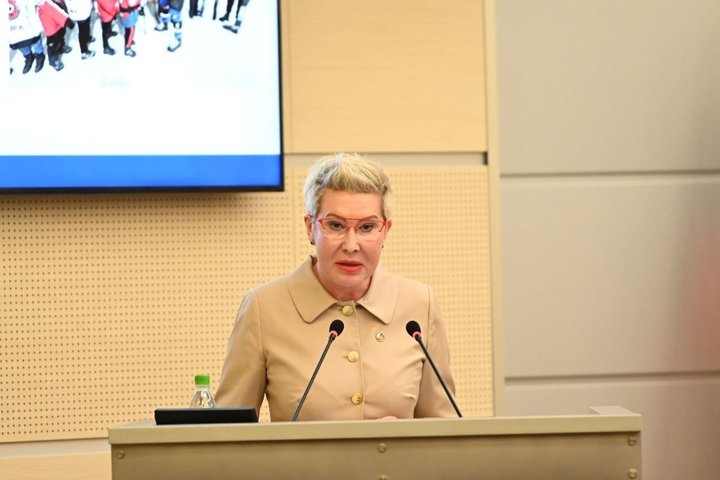
The World Aquatics Championships in Singapore brought four medals to athletes from Tatarstan. Two representatives of the sports club “Sintez” — Andrey Minakov won gold in swimming and Nikita Shleykher took silver in diving, as well as two silver medals by Agniya Tulupova in synchronized swimming. In an exclusive interview with Realnoe Vremya, honored Russian coach Olga Pavlova spoke about the outstanding performance of the athlete.
“For me, all our athletes are familiar people, not just faces from TV”
— Olga Ivanovna, did you continue watching the World Championships, or did it end for you with the last synchronized swimming event?
— No, I kept watching. In fact, our interview today is scheduled an hour and a half after the Singapore broadcast finished, so we could meet calmly. The thing is, here in Tatarstan, we hold so many water sports competitions that for me, all our athletes—not just synchronized swimmers or members of the Tatarstan national team—are familiar people, not just faces on TV. After all, they come to Kazan and compete almost every year: “Games of Friendship," “BRICS Games," national championships. Moreover, it is important that they broke the blockade and now compete, representing our country.
Also, the Water Sports Federation has merged, and now all the information I need is posted in one place on their online resources. It’s very convenient, and I know where and when to watch not only the events themselves but also the awards ceremonies.
For example, I noticed after the mixed medley relay, when our team became champions, all the athletes from China, Canada, and other prize winners stood on the top podium hugging each other.
“Our youth’s performance in Singapore was truly admirable”
— That’s important. Water sports have had scandals during the last decade: at the Kwangju World Championships, there were Anglo-Saxon disputes with the Chinese swimmer Sun Yang, and at the Rio Olympics, American Lilly King led a protest against Yulia Efimova.
— In Singapore, in my opinion, the organizers and judges created a well-balanced atmosphere aimed at demonstrating the sporting result. In the end, I admire our team which returned to the world stage after four years—a full Olympic cycle. There were very few veteran athletes with international experience, like Sasha Maltsev in synchronized swimming, Kirill Prigoda in swimming, Nikita Shleykher in diving. Mostly it was their international debut. They had no experience not only in adults’ competitions but also in junior or youth international events, except those held by the Russian Federation. Our youth performance truly impressed me. To me, they are avatars.
— From general to particular. What about synchronized (artistic) swimming?
— Worldwide it is now called artistic swimming, but our federation decided to keep the old name — synchronized swimming — because all our great victories were won under this name. The renaming is a detail; the main thing is that in our absence, the sport’s rules changed four times, so returning to the World Championships felt like entering a completely different sport. Without going into details, I will say that it would have been very difficult for our current Olympic champions to perform the program presented by our girls in the team event in Singapore.
Besides, one must remember that our sport is judged subjectively. Whereas our swimmers competed this winter at the short-course World Championships, for the synchronized swimmers it was their very first start with zero ranking. They were placed first, but judges tend to hold back scores for athletes performing first. Our group was very young; the oldest is around 20 years old, and they can still compete as juniors.
“We have a direct connection to the current state of synchronized swimming in the country”
— I realize that our synchronized swimming is experiencing its third birth. Not youth — birth itself. Initially, we had no such sport at all during the first World Championships in 1973. Our debut should have been at the 1984 Olympics, but we missed it due to boycott. The second rebirth occurred under Russia’s flag, because after the USSR collapse, strong synchronized swimmers remained in other countries, including leader Kristina Falasynidi from Georgia, who moved to compete for Greece. Now the third rebirth.
— I agree, and I want to note that while the previous history of synchronized swimming in the country barely involved our republic, now we have a direct connection to the sport’s current existence in Russia. Yes, we had Olympic champion Elvira Khasyanova, who competed for Tatarstan in parallel classification since her mother is a native of our republic. Yes, we had 2015 World Champion Lilia Nizamova, who came to the republic from Samara as part of Ninell Kozhedub's coaching group, but Nizamova won her gold at the Kazan World Championships as a reserve on the team. Now Nizamova works successfully as a coach in Rostov-on-Don.
Starting from 2015, our republic became one of the centers for the development of synchronized swimming in the country, hosting championships at the peak of coronavirus restrictions. An unheld Russian championship impacts salaries for athletes and coaches, as there is no result to pay for. But the President of Tatarstan, Rustam Minnikhanov, decided to hold the Russian Championship and a World Cup stage. During the ban on Russian sports, we organized the “Games of Friendship” and “BRICS Games.” This allowed our republic to become a close friend of the Russian team’s head coach Tatyana Nikolaevna Pokrovskaya, who agreed to open a school named after her in Kazan.
— The school where Agniya Tulupova became a student?
— Exactly. In 2015, during the World Championships in Kazan, Agniya and her mother sat watching synchronized swimming in admiration. At that time, she trained in a paid section at the Youth Center pool under Oksana Makhotkina. Later, Makhotkina invited me to a session of her group at the Youth Center, and there I noticed Agniya. Afterwards, during the Svetlana Romashina Cup, we personally invited Agniya to compete. Romashina also noticed the girl, who placed second. Later, we recommended Agniya to a famous Moscow coach, Natalia Mendygalieva, who also saw the girl’s potential despite some gaps in training. Agniya started receiving this “school” in the first group of the “Pokrovskaya School,” where Tatyana Nikolaevna personally selected students alongside choreographer Marina Grigorievna Terekhova. They singled out Agniya, with Tatyana Nikolaevna saying: “Now that's a ballerina!”
“I am grateful to Rustam Minnikhanov for helping open the Pokrovskaya School”
— Did Agniya have a chance to go to the Tokyo Olympics, especially since it was postponed by a year?
— Agniya suffered a severe injury that required two surgeries. She returned to sport like Valery Brumel. We just missed the Tokyo Olympics but came close; at the World Cup stage held during COVID-19 restrictions, Agniya took second place. Now we look to the future with great optimism. I want to express huge gratitude to Rustam Minnikhanov for helping in 2019 to realize the innovative project of opening the Pokrovskaya School. Two of its students — Tulupova and Alexandra Klenina — are now on the national team.
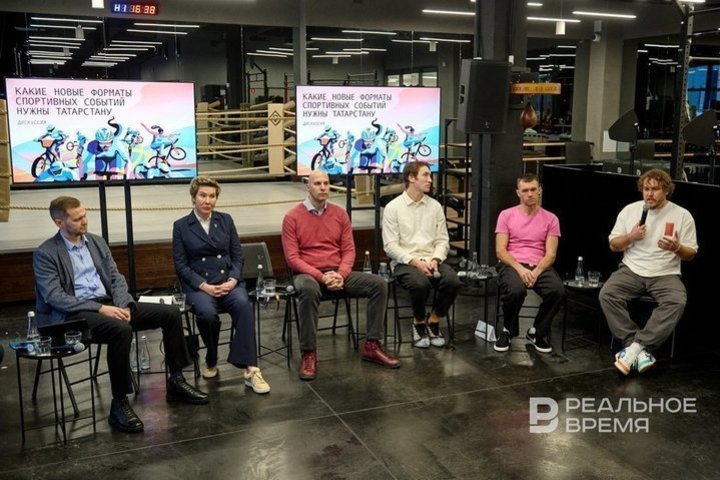
Agniya is a very good girl and our candidate for the Los Angeles Olympics.
— So the Olympics story in Los Angeles is the saddest for our sport. In 1932, USSR was not part of the IOC, in 1984 we boycotted ourselves, and now…
— But now we will go. This is my feeling. The world misses competing with us; Americans miss it. I saw warm communication after the finish line between American Kate Douglas and Evgenia Chikunova. Only in such competition can world records be set; it’s more interesting to compete. While we were away, competitors won medals at the Olympics and three World Championships. Now they want to test themselves again against us.
“Alexandra Klenina is a synchronized swimmer at the national team’s main squad level”
— Another point: the short course was in Hungary, with which we have normal relations. Singapore was neutral. Returning to European competitions, however, we will be competing in openly hostile countries.
— That is why my forecasts are based on the water sports situation we are discussing.
— Klenina is a rare last name. I remember in mini-football, there was a man with that name — Evgeny Klenin.
— That’s her father. Her mother Polina Klenina studied at the Pedagogical University where I worked. She specialized in acrobatics and came from a sports family. Grandma did acrobatics too, and grandpa played water polo for our “Sintez” club.
If she progresses, Sasha Klenina will be a synchronized swimmer at the main national team level. She has a very sporty character and knows how to focus before competitions.