Winners of Designed and Made in Russia biennial competition brought to Kazan
Felt, wood, recycled plastic are among the materials of the exhibition. The authors sought to find identity
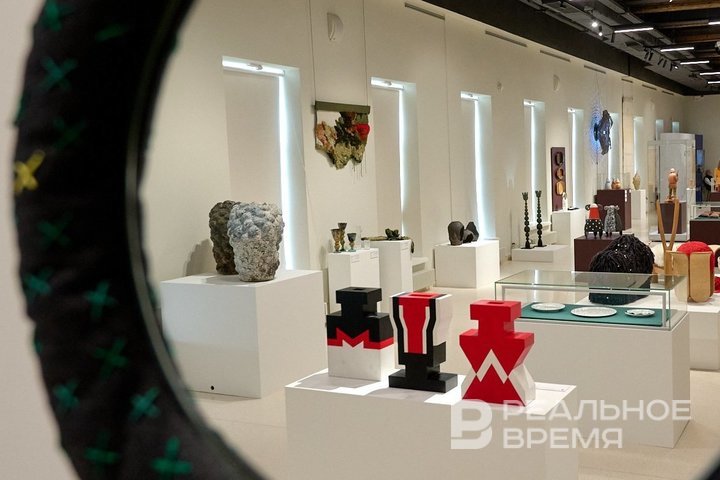
A travelling exhibition of the winners and nominees of the shortlist of the 4th Designed and Made in Russia all-Russian biennial competition (0+) opened in the Government Offices of the Kazan Kremlin Museum-Reserve. Kazan authors are also among the participants.
The 4th biennial, 940 applications
In Kazan, 200 items are located in two halls of the Government Offices — ceramics, furniture, textiles, lamps, sculptures, dishes, art objects. Some of them can easily be imagined in everyday life, others are created as artistic compositions. These are the results of the 4th biennale, which took place from 22 March to 12 August 2024. The competition started in 2018 as a project of the All-Russian Museum of Decorative Arts, founded in February 1981.
The museum occupies the house of Count Osterman, in different years there was a struggle for the building — they tried to evict the cultural institution, place the apparatus of the Union State (Russia — Belarus) and the Public Chamber here. Today, the museum's collection contains more than 250,000 items.
As noted by Director of the Kazan Kremlin Museum-Reserve Ilnur Rakhimov, the first talks about the exhibition began two-three years ago. Director of the All-Russian Museum of Decorative Arts Tatyana Rybkina came to its opening. She has been in this job since 1 July, previously she was the Minister of Culture of the Tula Region.
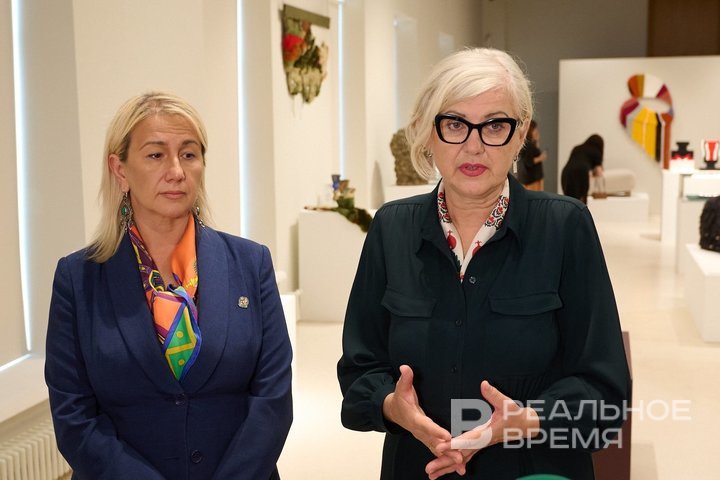
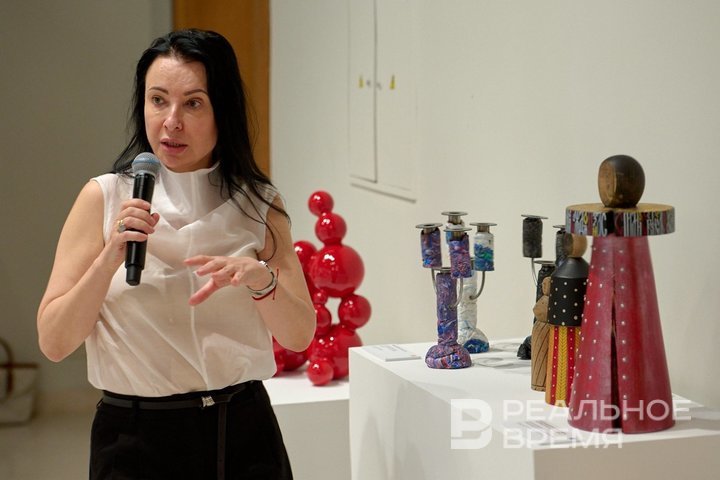
“The ideology of the project is to stretch the thread from household items, home decorations, women's jewellery, men's items, room design, interior design — to the present day. Our goal is for people, especially young people, to form a cultural code of our multinational country,” Rybkina pointed out. “Behind each object is a story, an author and a cultural context.”
At that moment, it became clear that each exhibit, as befits an object of contemporary art, requires an explanation, preferably directly from the manufacturer. However, it was interesting to study the objects even without comments.
The goal of the biennial competition is to form a collection of the 21st century. It is held every two years, this time it had six nominations: industrial, studio, circular, jewellery design, youth nomination, AI — Technologies in Design. This time the jury included representatives of the CIS, South Africa, India, Southeast Asia and Latin America. 940 applications came from 15 countries, the expert council, which included Minister of Culture of the Republic of Tatarstan Irada Ayupova, selected 426 items.
From Kazan — Tatar Home and qullar
As for the winners, first of all, this is the FRESH.GLASS company with the MEDUSA light collection (Grand Prix). They, as well as Semyon Lavdansky from Lavdansky Studio, presented a coffee table from the Castes collection. Other winners were Dima Loginov with his Brera furniture collection, earrings made of recycled wood Gutta-Percha 2 by Yevgeny Korovin, Aliens furniture collection by Vaagn Mikayelyan, a fur stool by Luane Avetisyants, and furniture by Nadya Levina Brass Forest. The winner in the special nomination was a designer from Belarus, Mikhail Kurnosov, with a hanger called Gallows. Circular, by the way, means the use of recyclable, renewable, reusable materials. So, the exhibition included items from the Kazan studio qullar, which makes furniture from recycled materials. At the exhibition, you can see their Tashlar Recycled coffee table made from recycled plastic.
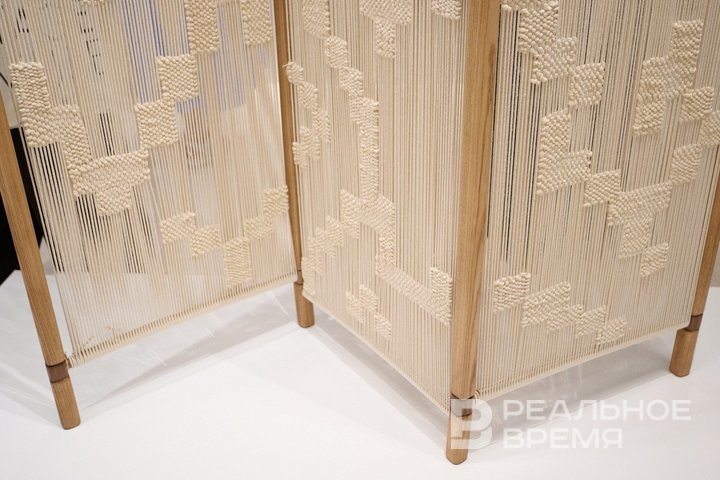
The exhibition begins with a Kazan object — this is the screen Yasheren (Hidden) by Raushaniya Polosina, one of the owners of the chak-chak museum, created as part of the interior brand Tatar Home.
“We always start with local design,” noted supervistor of the exhibition Vera Savelyeva, head of the Fashion and Design Centre of the All-Russian Museum of Decorative Arts. “We tried to collect everything that resonated with modern authors, this is, first of all, the search for national identity, local features, lost materials, technologies. In general, this is where the list of local representatives ends, which means that Kazan residents should participate in competitions more often. The local context seemed to be close to the table Felt + Marble. Its authors are Sergey Dolzhenok and Daniyar Uderbekov.”
Tow scutchers, punks, ichigi
Along with modern exhibits, the Moscow museum brought some things from its collections — these are items dating back to the early 20th century — to show where modern design comes from. This is the peculiarity of the Kazan exposition. It is interesting that the only exhibit without a label was Tatar ichigi, which originally neighboured Novgorod tow scutchers. Here you could also see bread dishes, Arkhangelsk spinning wheels.
Some modern works were very interestingly executed: for example, the bench Horse by Dmitry Belyayev could be mistaken for ancient Russian vintage from afar. Or Cherepovets punk dolls by Yuri Bezobrazov — the base is ancient, but the toys are new.
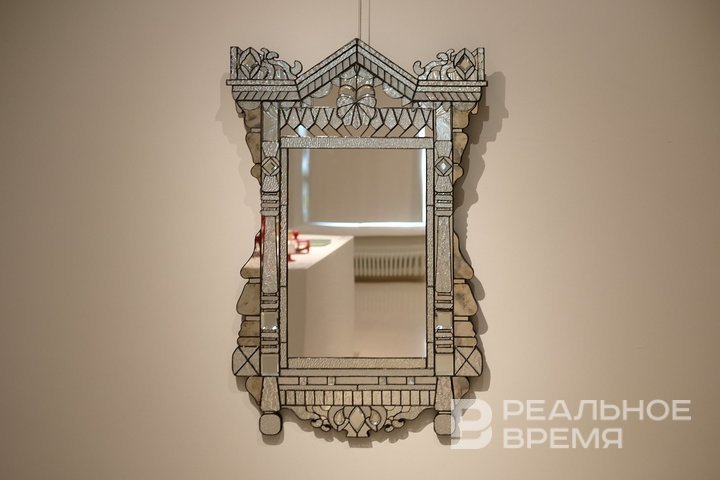
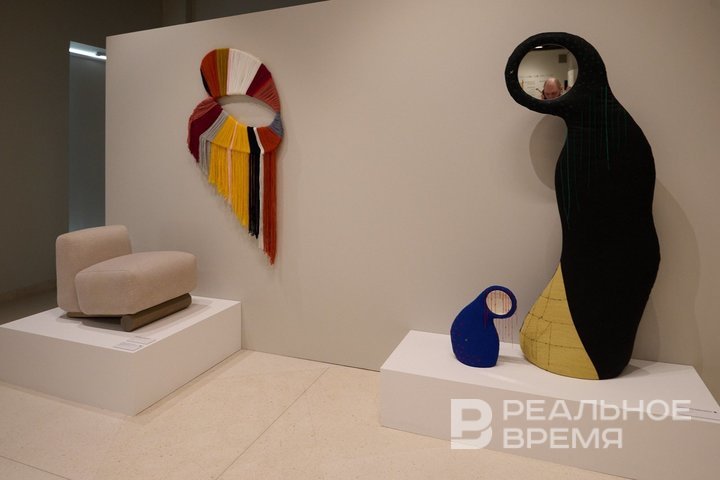
After the second hall, the level of “modern” reached the hundred mark. The exhibition presents works by masters from such different cities as St. Petersburg, Yekaterinburg, Makhachkala, Cherepovets, Vologda. It can be noted that, first of all, the designers are inspired by the avant-garde of the early 20th century with its play with form, content, irony: an armchair inspired by Suprematism, a stool in silks, cotton and jacquard, elongated, as if in Dali's dreams, cups. Or, for example, mirrors that generally echo the image of the Virgin Mary (and for a Kazan resident, also the works of Yevgeny Golubtsov).
In this regard, Kazan is noted as the city where one of the founders of Soviet design, Alexander Rodchenko, studied — he was a student of Nikolai Feshin at the Kazan Art School in 1911-1914. Here he met Varvara Stepanova, and together they moved to Moscow.
“It used to be shameful to wear ‘your own,’” Irada Ayupova summed up. “We were embarrassed, thinking that if it was made in the Soviet Union, in Russia, then it was second-rate. Today we are breaking this paradigm. We are proving that what is made here is worthy of replication, worthy of being popular.”
The exhibition will run until 28 September.