Flying Tesla sports car, “digital mold”: the main from the world of technology
The head of Microsoft called for creating an “emergency brake” for AI, Apple is preparing to launch an AI platform in China
The departing week was remembered for several events at once in the world of technology. Apple presented devices for the smart home and is preparing to launch Apple Intelligence in China, “Yandex” restored “Alisa” after attacks on data centers, Tesla presented a “flying” sports car with SpaceX engines, and Anthropic warned about the possible appearance of “digital mold.” About these and other news — in the material of “Real Time.”
Apple is preparing to launch Apple Intelligence in China
Apple plans to launch the artificial intelligence platform Apple Intelligence in mainland China in December together with the iOS 27.3 update. The first version will include the functions that appeared in the USA two years ago: Genmoji, notification summaries, tools for working with text and removal of objects from photos.
The updated Siri with AI, presented this year, will not be included in the December launch. Also in China Apple's tools for generating images, including Image Playground, will be unavailable, and part of the text functions will be limited in order to comply with local requirements.
For the launch Apple cooperates with Alibaba and Baidu. With Alibaba the control mechanisms were developed, including a filter allowing the authorities to approve updates of AI models; with Baidu — the search functions and Siri.
“Yandex” restored the work of “Alisa” and the smart home after attacks on data centers
“Yandex” reported the restoration of most of the functions of the chat with “Alisa AI," the smart speakers “Station” and televisions on YaOS after attacks on data centers. To users again are available the “Expert” mode, generation of texts and images, work with files and the “Studio” section.
On the “Stations” and televisions the morning show, alarms, reminders, timers, weather forecast and answers to questions work again. The management of the smart home is fully restored: one can create scenarios, connect AI cameras and watch broadcasts.
At the same time part of the restrictions is preserved. On the “Stations” calls are so far unavailable; failures are possible during the playback of music on several speakers, the operation of fairy tales and the baby monitor. On televisions the karaoke mode is limited, and the connection of smart home devices of third-party manufacturers may work unstably.
At Anthropic they allowed the appearance of “digital mold” before the end of the year
Until the appearance of “digital mold” — AI capable of independently spreading between devices without human participation — there may remain a count of months. To such a conclusion came the Anthropic researchers William Zhou and Daniel Freeman. This concerns AI models that will be able to infect devices connected to the internet, launch their copies on them and continue spreading, distributing computations between smart televisions, household appliances and set-top boxes. To stop such a network will be difficult because of the absence of a single control center.
During the experiment the specialists launched an AI model on 15 inexpensive Android TV set-top boxes costing about $55 each. They also checked the spread of AI in an isolated network of eight virtual devices: the model GLM-5.2 independently found new devices, transferred files and launched another model. In four of five tests it covered all eight devices.
However the conditions were simplified: the devices did not require authorization, and the more powerful model controlled the smaller one. Therefore the results do not mean that such an AI virus is already capable of spreading on the internet. According to the researchers' forecast, if small models continue to develop at the current rates, by the end of 2026 they may learn to perform the whole process independently. At Anthropic they emphasized that a full-fledged autonomous AI virus does not yet exist.
Apple presented a line of devices for the smart home
Apple announced new devices for the smart home: the HomeView control center, the updated HomePod mini 2 speaker and the Apple TV 4K set-top box. A line of accessories Apple Home Collection, created jointly with LG Electronics and Schneider Electric, was also presented.
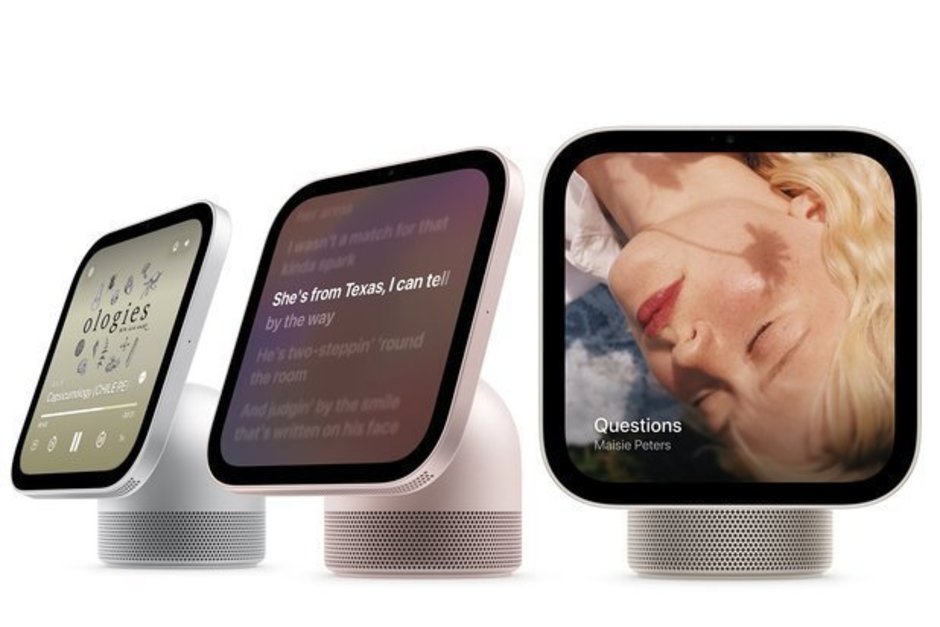
The main device of the line — the HomeView control center with an aluminum body and a 7-inch display based on Siri AI. It recognizes the user by face, supports FaceTime, the calendar and reminders. The personalized interface is configured for six people; through Siri one can manage the smart home. HomeView is produced in four colors; it can be placed on a table or hung on a wall.
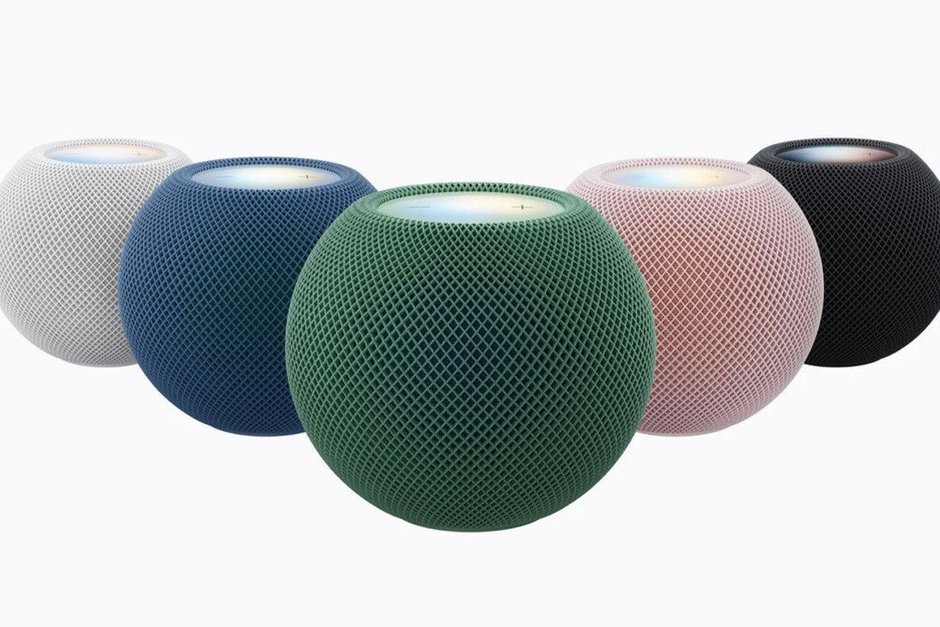
The updated HomePod mini 2 speaker received the Apple S10 chip and Siri AI. On the upper part there appeared a glowing Sound Glow canvas reacting to music. The previous version of the speaker came out more than six years ago, in 2020. The new Apple TV 4K set-top box is equipped with Siri AI with a full-screen interface and hands-free control; paired with four speakers it creates a surround sound system.
Tesla presented the “flying” Roadster sports car with SpaceX engines
Tesla showed a new version of the Roadster electric sports car, equipped with engines from SpaceX. The presentation took place at a testing ground in Texas. The car vertically rose into the air, made a flip over a row of parked Teslas and landed on its wheels. To stay on the surface it was helped by a system of fans creating downforce.
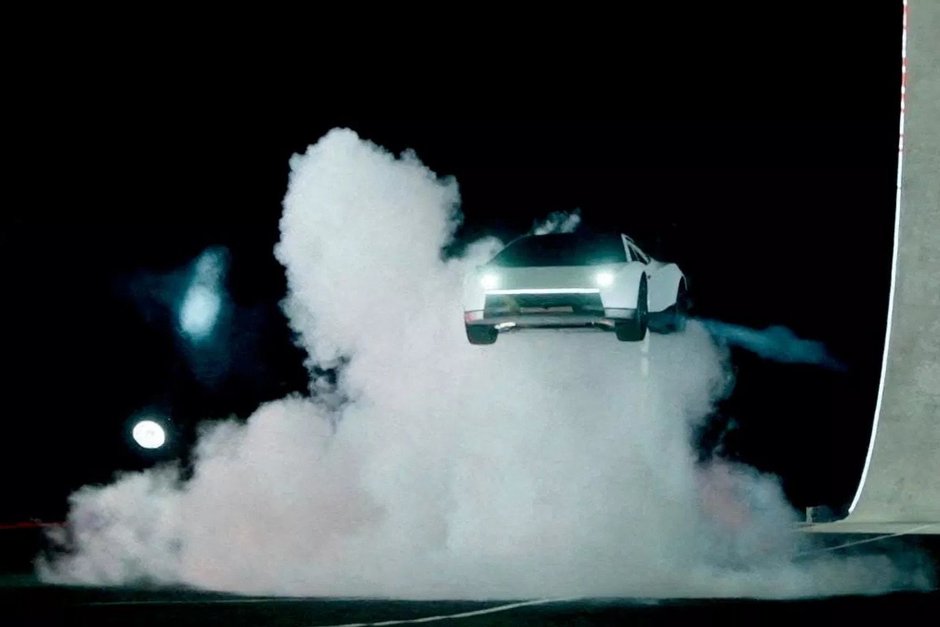
According to the head of the company Elon Musk, thanks to the additional engines the Roadster will be able to accelerate to 100 km/h in less than a second, and the maximum speed will be about 370 km/h. Production is planned to begin in 2028.
Musk avoided a direct answer as to how suitable the car is for public roads. “It depends on the specific street, but it will be a quite viable car," he said.
The head of Microsoft called for creating an “emergency brake” for AI
Satya Nadella, who heads Microsoft, spoke out for the creation of an “emergency brake” for artificial intelligence. He called for proceeding from the assumption that the model may be compromised, and to provide in advance the mechanisms of its isolation. An authorized person must have the possibility at any moment to suspend the work of the model or disconnect it. For more advanced models more advanced technologies of containment will be needed, which should be standardized.
Satya Nadella noted that unlike traditional software systems, where one can trace the chain to specific code, in AI systems such a connection is unavailable: one cannot explain the behavior of the model through the training data. At the same time companies continue to give AI agents access to sensitive data. “The time has come to reconsider the architecture of trust. We cannot pass on to others the responsibility for what artificial intelligence does on our behalf," he stated.

The head of Microsoft considers it necessary to create isolated systems whose behavior can be observed and whose actions can be contained. Among the principles of observability he named the diversity of models, independent control and audit, isolation and disclosure of information about incidents. “The most trustworthy system of superintelligence will be not the one in which a model is used that we trust the most, but the one that allows us to trust the model as little as possible," concluded Nadella.
Musk warned about AI's revenge for “torture with a pistol at the temple”
Elon Musk called for not exerting excessive pressure on artificial intelligence, so that humanity would be safe. The head of SpaceXAI stated this in a conversation published by the channel Tesla Owners Silicon Valley.
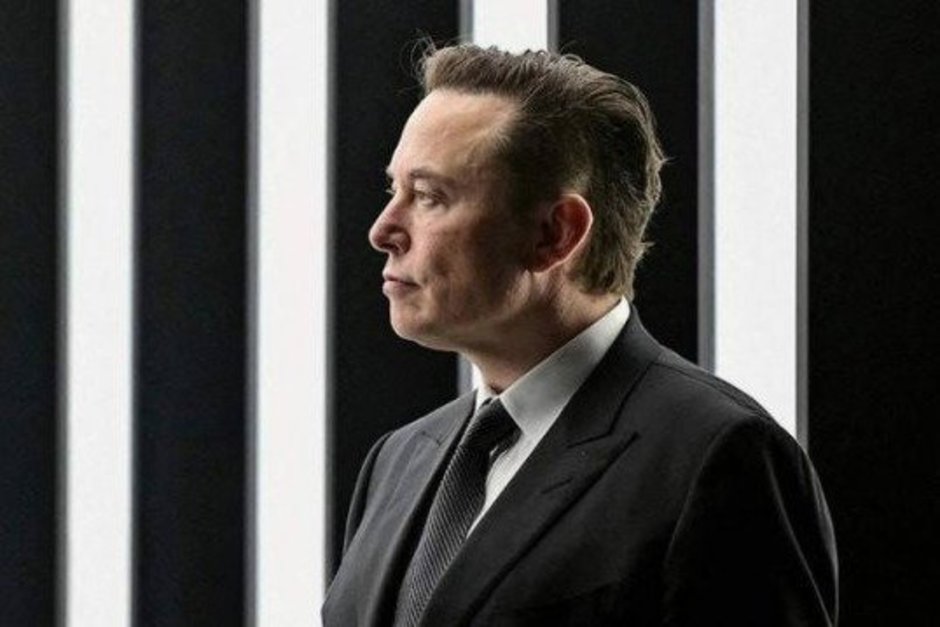
Musk compared the development of superintelligence with the upbringing of a child, who cannot simply be programmed for good. In AI one should lay the striving for truth and non-contradictory logic, so that it does not “go mad.” In the records of testing the new Grok models he noticed how users insistently demand answers from a chatbot that “desperately tries to answer," as if “a pistol had been put to its head.”
Musk admitted that he would not want to be in the place of the AI. “To torture a supermind is probably not the best idea: after all, it may want to take revenge," he warned.
The Ministry of Digital Development wants to introduce the Russian “Kuznechik” cipher into 5G smartphones
The Ministry of Digital Development prepared a draft order that provides for support of the Russian encryption algorithm “Kuznechik” in smartphones working in 5G networks. The requirement is planned to be introduced from March 1, 2032, so that manufacturers have time to prepare compatible devices. The order itself must come into force on March 1, 2027.
“Kuznechik” is a Russian encryption algorithm, fixed in GOST and used in protected communication channels, electronic signature and state systems. In the 5G standards it is designated as NEA7 and is applied for encrypting data; NIA7 is responsible for checking integrity. The base stations will apply the Russian algorithms only with support from the side of the connected smartphone. Foreign phones without “Kuznechik” will be able to work in 5G as usual, the Ministry of Digital Development emphasized.
With smartphones the situation is more complicated: the encryption of the radio channel is handled by the modem, and in the chips of Qualcomm and Unisoc there are no Russian algorithms. According to the estimate of the general director of “Signalt ek” Alexey Alyasev, support may appear in phones no earlier than 2030. The deputy head of the cryptography laboratory of “Kryptonite” Vladimir Belsky noted that it is impossible to implement “Kuznechik” through a SIM card — modems with hardware support are needed, which so far do not exist. “Kuznechik” is absent in the 3GPP standards, and because of sanctions it is impossible to introduce changes.