“A College of One”: who was the last student of Francis Scott Fitzgerald
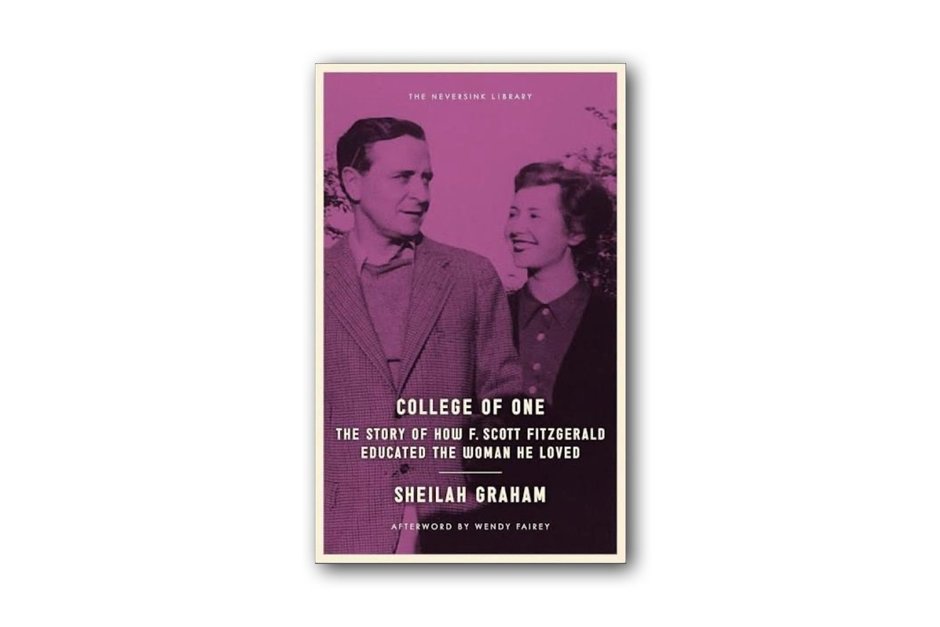
Book of the week — Sheila Graham's memoirs “A College of One” about life with Francis Scott Fitzgerald

This week, on September 24, marked 130 years since the birth of Francis Scott Fitzgerald. In the last years of his life, when his books had almost disappeared from bookstores and a new career as a screenwriter was not working out, the writer unexpectedly became a teacher. For his beloved, the Hollywood journalist Sheila Graham, who had not received a systematic education, he compiled a program of reading and lessons, which he jokingly called “A College of One.” The literary reviewer of “Real Time” Ekaterina Petrova tells how this romance began and what Fitzgerald taught Graham.
“I like you”: the acquaintance of Fitzgerald and Graham
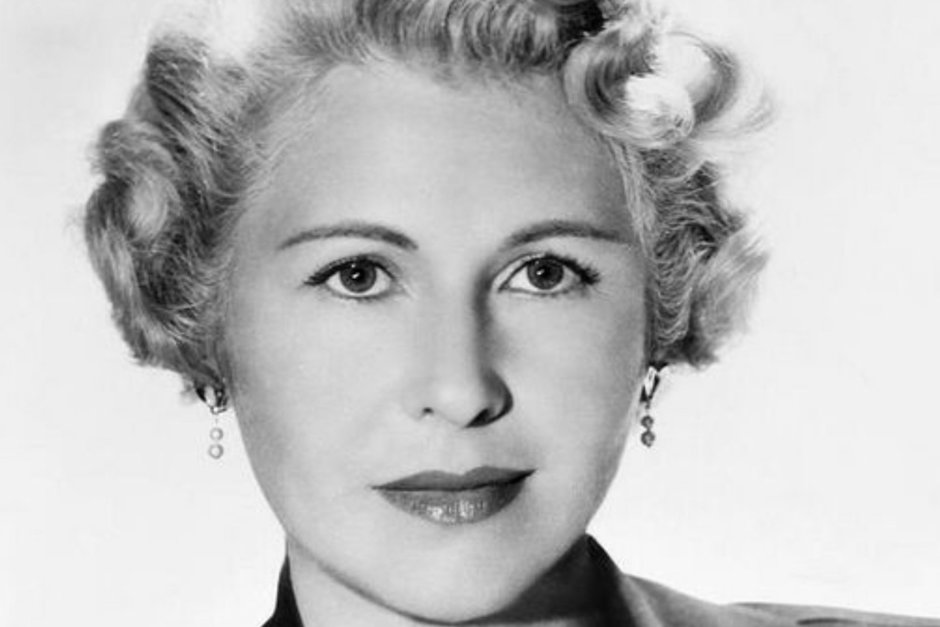
The first meeting of Francis Scott Fitzgerald and Sheila Graham happened at a party. In July 1937 Robert Benchley arranged a reception in Hollywood on the occasion of Sheila Graham's engagement to the British journalist Edward Chichester, Marquess of Donegall. By that moment Graham was already writing a column about cinema. She was known in Hollywood, and she was quickly strengthening her position in the Hollywood crowd. And Fitzgerald had recently come to Los Angeles to work as a screenwriter for Metro-Goldwyn-Mayer. His literary fame of the 1920s was behind him; he suffered from alcoholism, which more and more often interfered with his work. At the same time he could not be denied charm; he easily attracted attention.
Benchley asked Fitzgerald to drop in at the party. Since the writer lived in one of the bungalows of Garden of Allah, he came, although he did not like noisy companies. Alexander Livergant in the book “Fitzgerald” described the episode of the acquaintance of Fitzgerald and Graham. She noticed a man who was sitting under a lamp and almost not participating in the general conversation, and then he went out. Graham asked Benchley: “Who is that silent subject who was sitting under the lamp?” The host of the house answered that it was F. Scott Fitzgerald and that he “cannot stand parties.” In the memoirs “A College of One” Graham recalled that Fitzgerald noticed her belt with small cut-out stars and at first thought that she was the actress Thala Birell.
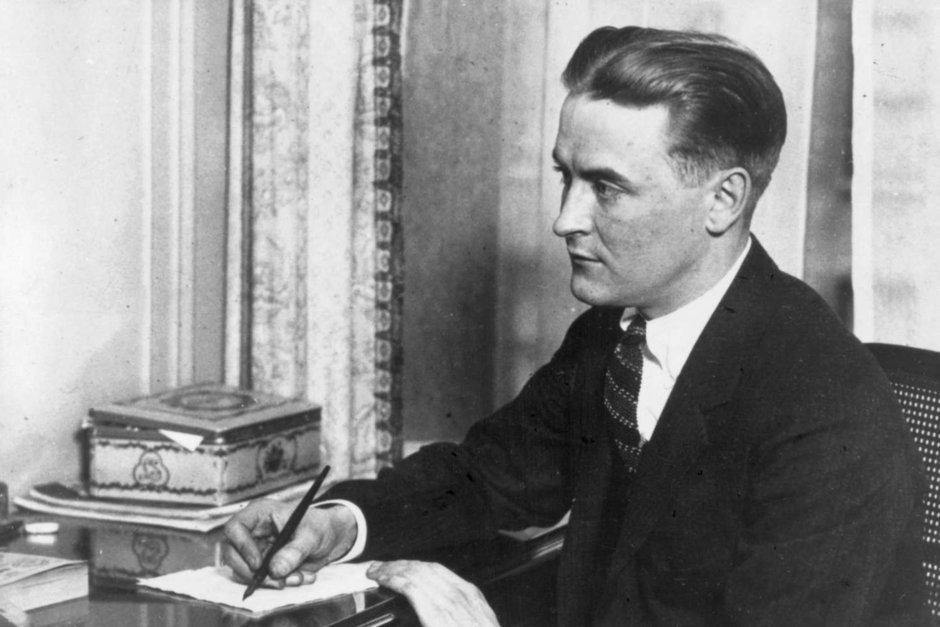
A few days later Fitzgerald and Graham met again; this happened at a dinner of the Writers League at the Cocoanut Grove. They recognized each other, smiled, and Fitzgerald said: “I like you.” Graham answered: “And I like you.” Then she suggested dancing. The third time they saw each other at a dinner at the producer Eddie Mayer's. After it Fitzgerald drove Graham home in his car. After three meetings the romance began. The engagement to Donegall soon ended. The Marquess himself years later again proposed to Graham, but she again refused.
How Fitzgerald taught Sheila Graham
In the company of Hollywood writers Sheila Graham tried not to show that she did not know something. She was already working as a journalist, associated with Robert Benchley, Marc Connelly, Dorothy Parker and Fitzgerald, but the gaps in her education made themselves felt. Back in New York she kept silent when her interlocutors discussed politics, poetry, painting and books. She lacked elementary knowledge:
— Who is Einstein? And was it Freud or Freud and what is the difference between them?
She dropped out of school at fourteen and never studied systematically anywhere again. In the orphanage Sheila had managed to fall in love with Charles Dickens's “David Copperfield," learned French and participated in debates, but further study stopped. She had to return home and care for her sick mother. In Hollywood Graham at first hoped that others' lack of education would allow her not to stand out. But next to educated colleagues the problem became more noticeable. Fitzgerald did not begin to read her lectures. He proposed to fill the gaps and to compile his own course. Thus “A College of One” appeared.
Fitzgerald immediately excluded mathematics, botany, biology and Latin. French at first entered the program, but the course of French dramaturgy was soon postponed, and then French was abandoned altogether after a conversation about Racine. But the plan included history, literature, poetry, philosophy, religion, music and art. Fitzgerald expected to finish the course in eighteen months or two years. In May 1941 Graham was to pass written and oral examinations, put on an academic cap and gown and receive a diploma as the only graduate of “F. Scott Fitzgerald's College.”
At first Fitzgerald prepared a general plan and detailed lists of books, and then changed the program as the lessons went on. In a letter of March 3, 1940, Graham herself listed the sequence: No. 1 — history, No. 2 — poetry, No. 3 — religion and fiction, No. 4 — philosophy, history and economics, No. 5 — music, after which Spengler was to follow. Between the courses she read novels and biographies connected with the theme. She also recorded the results of the lessons in letters. In a letter of April 22, 1940, Sheila wrote that she was reading A. L. Morton's “A People's History of England” and sorting out the emergence of parliament and the bourgeoisie.
In the literary part Fitzgerald assembled a large program. He gave Thackeray's “Vanity Fair," Dickens's “Dombey and Son”? No. The first Dickens novel on the list became “Bleak House," then came “A Tale of Two Cities," “The History of Henry Esmond," and then — “Pendennis” and “The Virginians” by Thackeray. The program also included Henry James's “The Portrait of a Lady," Tolstoy's “War and Peace” and “Anna Karenina," novels by Dreiser, Conrad, Dostoevsky, Joyce, Proust, Hemingway and other authors. Fitzgerald discussed Joyce's “Finnegans Wake” with Graham, but she herself refused to read the book. He in the end also excluded the late novels of Henry James and Tolstoy, since he considered them too difficult or slow.
When they studied poetry, Fitzgerald did not place a big emphasis on analysis of the work. He demanded memorization and understanding of individual lines. On his list were Byron, Keats, Shakespeare, Blake, Tennyson, Swinburne, Verlaine and other poets. He made Graham reread and memorize the lines that he considered important. When the time came to study the poetry of Arthur Rimbaud, the writer made his own translation of the poem “Vowels.” In it he connected vowels with colors:
— A — black, E — white, I — red, U — green, O — blue.
Fitzgerald also did not bother much with history; he compressed its study to the main names and events. The writer allotted three weeks to ancient history and explained to Graham that he would give her only a “sketch” — names, places and dates. He allocated the same amount of time to acquaintance with medieval history and the history of France. In the latter case Fitzgerald wrote the poem “Let Us Not Forget” so that Sheila would better remember the main milestones. In it he connected rulers and events with rhymes. Graham learned this poem by heart and considered it a great help.
Fitzgerald excluded the architecture and art of Élie Faure, and instead Graham studied capitals, pediments and the transition from the Roman arch to Gothic architecture from the book “The Legacy of the Cathedral.” He also cancelled the course of decorative art and furniture. At the same time in the library catalog books on art, music, history, philosophy and literature were preserved. Among them — Thomas Craven's “A Treasury of Art Masterpieces," David Ewen's “From Bach to Stravinsky," Oswald Spengler's “The Decline of the West," Plutarch's “Lives of the Noble Greeks and Romans” and Matthew Arnold's “Essays in Criticism.”
Fitzgerald made lists and left Graham notes; two of them survived. In one he explained that the appearance of Dickens's “Great Expectations” disrupted the schedule of poetry and required retyping the whole course. In the other he sent a new version of the table and asked to fit it “on one large page.”
The main part of the course remained books and conversation about them. Fitzgerald read in advance, marked what was important and discussed what had been read with Graham in the evenings. Later she wrote that without his explanations the lists alone would not have been enough. The program included about two hundred books, but Fitzgerald himself considered his main instrument to be precisely the joint reading and discussion. He also asked Graham not to be afraid of questions. Once she said that she did not know a scene from Shakespeare. Fitzgerald said: “But everyone knows that.” Graham took offense and asked him not to laugh at her anymore: “You see, I am so vulnerable.” He apologized and never repeated this again even after the simplest questions.
Fitzgerald's last lesson
Francis Scott Fitzgerald in his last years could hold out without alcohol for weeks, but the former life returned along with drinking bouts. Livergant in his book describes his outbursts: after quarrels he swore, threw dishes, got into fights, insulted Sheila. Once, having learned about her former affairs, he wrote on her photograph: “Portrait of a prostitute.” After his death Graham found the picture in the drawer of his desk. At the same time the same man continued to teach her.
In the last year Fitzgerald stopped drinking, wrote “The Last Tycoon," walked, swam in the ocean and played ping-pong. His health no longer allowed him to return to his former life. A year after giving up alcohol he said to Sheila after a bout of weakness:
— I think people will decide that I am drunk.
The course broke off together with Fitzgerald's life. On December 21, 1940 he was in Graham's apartment in West Hollywood. The evening before they had gone together to a film premiere. The next day Fitzgerald was reading the “Princeton Alumni Weekly," got up from the armchair, grabbed the fireplace shelf and fell. Graham called for help, but the doctors could no longer save him. Fitzgerald died of a heart attack at the age of 44.
By that moment he had written only the first five chapters out of nine planned for “The Last Tycoon.” He also did not manage to finish Sheila's education. However Graham preserved the materials of the course. In 1968 she handed the archive to the library of Princeton University. It included books with Fitzgerald's markings, lists and cards that he used for the lessons. A year before that, in 1967, Graham published the memoirs “A College of One.” In the appendix she published the curriculum compiled by Fitzgerald in the form of a facsimile.
Publisher: Melville House
Number of pages: 309
Year: 2013
Age restriction: 18+
Ekaterina Petrova — literary reviewer of the online newspaper “Real Time," host of the Telegram channel «Булочки с маком».