Purple prose of decay
Rick Moody's “Purple America” — a novel about the decay of the American family, the American dream, and the American language

“Who knows the folds and subtleties of one's mother's body will never die” — so begins Rick Moody's novel “Purple America.” This promise of immortality immediately connects the mother's body with memory, death, family, and America. From the first sentence grows a story about people who do not know how to care for each other but desperately need one another. Moody has not been published in Russian before, although he is called one of the most striking contemporary American authors, a successor to the traditions of William Gaddis. Rick Moody's work has been highly praised by Michael Chabon and Thomas Pynchon. In 1997, when “Purple America” was first published, critics read the book as a work about a disintegrating American family. However, the literary critic of Realnoe Vremya, Ekaterina Petrova, notes that today the novel reads differently: decay always begins with the inability to speak to one another.
A writer who made family a model of America
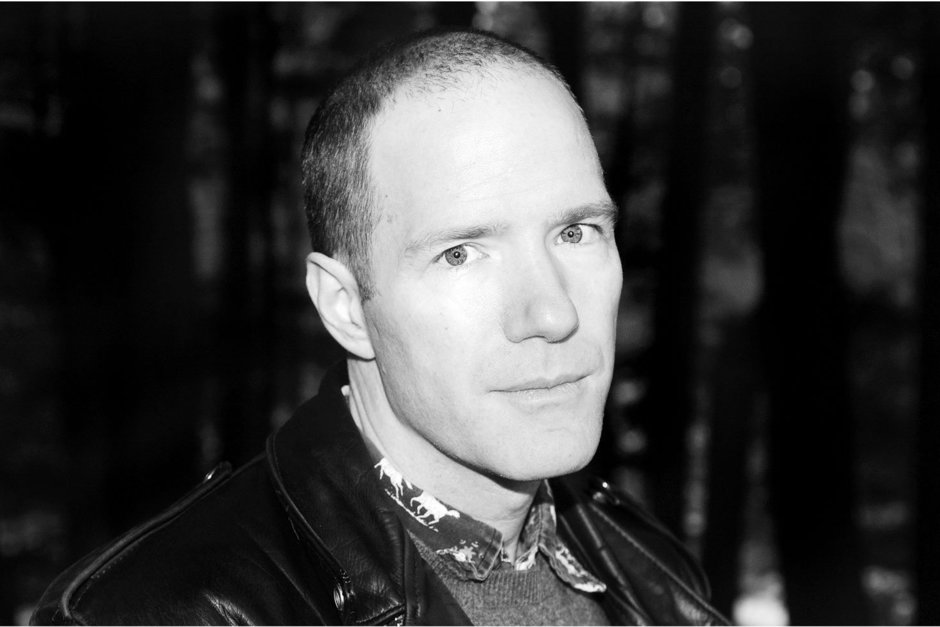
Rick Moody was born in New York on October 18, 1961, but at the age of two, he moved with his family to Connecticut and spent most of his childhood in the towns of Fairfield County. In sixth grade, Rick read Ernest Hemingway's “The Old Man and the Sea” and then began reading his books one after another. Alongside Hemingway, he read Tolkien, Heinlein, Salinger, and Fitzgerald.
Moody recalled that nothing “particularly interesting” happened to him in childhood. The only thing that set Rick apart from other children was that he “read like a maniac.” Later, he studied English literature and creative writing at Brown University under Robert Coover, Angela Carter, and John Hawkes, and then received an MFA from Columbia University.
Moody began writing stories as a teenager, and in 1992, his first novel, “Garden State," was published, winning the Pushcart Press Editors' Book Award. In 1994, he published the novel “The Ice Storm," and in 1995, the story collection “The Ring of Brightest Angels Around Heaven.” In April 1997, his third novel, “Purple America," appeared. In his early work, Moody was particularly concerned with the lives of people who, after college, did not know what to do next. At the same time, he did not reduce his prose development to a single sequential program. Looking back, the writer said that such assessments turn the history of one's own work into a “game of retrospection.” According to him, he simply “got better.”

Moody's formation as a writer was strongly influenced by the school of American experimentalists of the 1960s and 1970s. At Brown University, John Hawkes, according to Moody, particularly persistently fought against his early tendency toward “superficial comedy” and the desire to add jokes for their own sake. Hawkes helped him get rid of this tendency. The writer himself explained his interest in different forms as an influence of Coover, Carter, Hawkes, and other experimental authors. They made breadth of vision and ambition an important part of their literary work. Therefore, defining Moody as a chronicler of suburban angst describes only part of his prose. Critics noted his constant interest in language and form, and Moody himself said that when working on a book, he uses his “whole personality.”
At the same time, Moody does indeed repeatedly turn to the American family, suburban life, addiction, infidelity, illness, guilt, and responsibility. “The Ice Storm” explores marital infidelity, “Garden State” examines ethics violations among people involved with drugs, and “Purple America” explores the desire to avoid responsibility for a person who has lost their independence.
Private catastrophe: body, family, love, and guilt
Hex Raitliff comes to Connecticut to see his mother, Billie. Due to a degenerative neurological disease, she is losing control of her bowels, bladder, and speech. Lou Sloan, Billie's second husband, has already left the family. Now Hex must take on what others are trying to escape. But Moody immediately complicates this choice: Billie herself asks her son to help her die when she can no longer use the computer to communicate. The writer deliberately placed the hero in a situation where his mother's illness intersects with Hex's own difficulties. According to Moody, it is precisely this kind of maximum pressure of circumstances that creates drama.
Hex does not appear as someone ready to take on such responsibility. He is an alcoholic, stutters, and struggles to manage his own life. As a child, he got the nickname Hex because the letter “x” was easier for him than the “d” in his real name, Dexter. He grew up in a wealthy family, received an inheritance, and became a not-too-successful freelance journalist. In the past, Hex attempted suicide, and now he retains a teenage tendency toward self-indulgence and the ability to create new problems for himself. At the same time, Moody did not want to make him a typical loser. In an interview with BOMB Magazine, he said he aimed to write about “ordinary people” and did not consider it necessary to create heroes for the reader to admire.
— If you tell the truth about human psychology, people ultimately evoke sympathy.
With Billie's body, Moody also connects the novel's central problem — the loss of speech. The disease almost deprives the woman of the ability to speak, so the family buys her a computer with a speech synthesizer. Hex spends a long time choosing a word to convey his feeling for his mother and presses “hallelujah.” But the computer's voice sounds like the impersonal voice of science and technology. Billie hears an artificial female voice reproducing the words her son has chosen.

Hex and Lou try to persuade her to accept the gift. Lou says she should try because they love her. Hex suggests adding new voices and compares them to additional fonts on a computer. Billie refuses to use the device in response. Moody considers communication problems an “integral part of human nature.” The writer noted that he was never a good conversationalist, so his literary voice became the opposite of his spoken speech — a voice that cannot be spoken aloud.
The relationships between Billie, Hex, and Lou do not fit into a simple “love versus indifference” scheme. In one scene, each of the three acts both well and poorly at the same time. Billie defends her dignity when she refuses help from her loved ones. Lou wants to help his wife, but his words about needing to “try” are also linked to his fatigue from years of caregiving. Hex pities his mother, is angry at his own helplessness, and tries to compensate for her suffering by talking about the computer's possibilities.
This combination of motives does not allow the novel to turn into moralizing. Moody shows in a single act attachment, irritation, guilt, and a desire to escape responsibility. It is too ambivalent to be obvious. The writer himself also said that he did not seek to pre-assign blame among the characters. In Hex's story, the decision to help his mother die arises from an already existing situation, not from a pre-designed scheme by the author.
Love in “Purple America” constantly encounters the limits of human speech and the ability to care. Hex loves his mother but cannot speak to her normally. Billie retains her will and dignity, but the disease takes away her usual way of expressing herself. Lou loves his wife but simultaneously wants to leave a life he can no longer endure. Moody consciously places these people in a single closed crisis and forces them to make decisions from which love, guilt, and responsibility cannot be separated. Moody gives his characters the opportunity to manifest all human impulses — both the most destructive and the most unexpected. The family story in the novel develops around the question of what a person does when love no longer allows them to stand aside.
National catastrophe: the “nuclear family," America, and language
The Raitliffs live next to the atomic industry. Hex's father participated in the development of nuclear weapons during the war, and his stepfather, Lou Sloan, works at a nuclear power plant. The family crisis connects with the history of the American nuclear industry. In an interview with The Missouri Review, Rick Moody said that during the writing process, he realized that in “Purple America," the “nuclear family was indeed nuclear.”
This connection takes the Raitliffs' story beyond family drama. The novel's characters are simultaneously participants in their own story and representatives of a certain segment of American society. National problems in the novel are not separated from the characters' problems.
Moody also connects the private story with American history through the setting. The novel remains in suburban Connecticut but extends far beyond the Raitliffs' home. The writer combines concrete details with economic forces and social history. One episode begins with a listing of people. Among them are losers, fanatics, drug addicts, and people who have lost everything. Then Moody narrows this scale to one nuclear plant worker — Dave McClusky. Thus, Moody constantly shifts the view from an individual to the country — and back. Concrete details prevent general reflections from turning into abstract universals, while the discussion of economics, history, and society expands the characters' private problems. “Purple America” simultaneously remains the story of a family in Connecticut and tells of a wider world.
This structure is supported by the novel's language. The first chapter takes up almost five pages, and the second sentence occupies almost the entire chapter. Moody connects its parts with the repeated word “who.” Later, he uses long phrases, stream of consciousness, and vocabulary that requires the reader to consult a dictionary. The reader seems to enter the characters' consciousness.
The language of the novel is inseparable from its content for Moody. The writer said that language “delights," that it is “amazing and beautiful," so it must be used. He called his style more “decadent.” While working on “Purple America," Rick Moody abandoned his previous manner of writing quickly, as he had done before. Here, he began using large, convoluted paragraphs and then rewriting them dozens of times.
His previous novel, “The Ice Storm," was criticized for excessive intellectualism, so Moody decided to make “Purple America” emotionally saturated. In the first chapter, Hex bathes his terminally ill mother. Moody pushes the emotional intensity almost to the level of opera. And the long sentence here is the writer's way of telling about the characters and their state. It conveys the pain and confusion of the characters but sometimes makes the action itself difficult to follow.
Purple in the title can be understood in different ways. The novel was published in 1997, long before red and blue states became a political cliché, so the mixing of these colors here is more about an America that does not fit into a simple binary scheme. But purple is also the color of a bruise, a trace of a blow, and it directly corresponds to a novel about a damaged mother's body and a damaged family. Often this color is associated with storm clouds and nuclear explosions, adding a catastrophic overtone. Finally, there is the English expression “purple prose” — overly ornate, elaborate narration. And the title may describe not only America but also Moody's own style, with its five-page second sentence.
Publisher: Pollen Press
Translation from English: Sergey Karpov
Number of pages: 352
Year: 2026
Age rating: 18+
Ekaterina Petrova — literary critic for the online newspaper Realnoe Vremya, host of the Telegram channel «Булочки с маком».