The American family story of Vladimir Mayakovsky
Book of the week — “My Dear Ellie...” by Galina Antipova

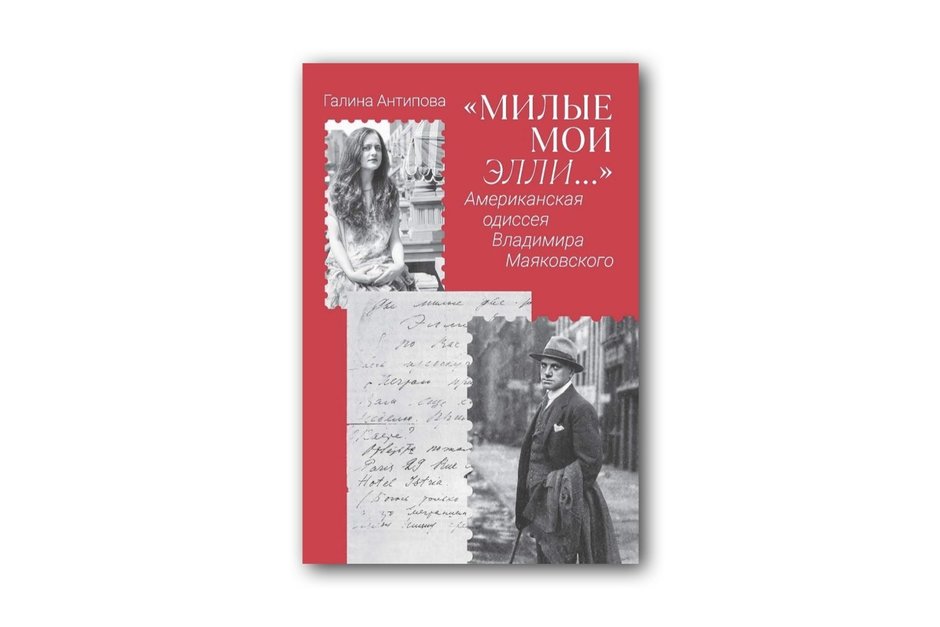
Tomorrow, June 15, marks the centenary of Helen-Patricia Thompson — a woman known in Russia as Elena Mayakovskaya. Until the early 1990s, almost no one in the USSR knew of the existence of Vladimir Mayakovsky's daughter. Her arrival in Russia forced a fresh look at the poet's biography, his work, and the monumental image of the “poet of the revolution” that had been formed during the Soviet era. In her book “My Dear Ellie...”, published for Thompson's anniversary, Galina Antipova reconstructs events from a hundred years ago. The literary critic of Realnoe Vremya, Ekaterina Petrova, tells us who the two Ellies in Mayakovsky's life were and why Antipova's book is not a biography but a story of great love.
A Russian German in New York
There are stories that remain outside official biographies for decades. Such was the fate of Ellie Jones — a woman whose name was not linked to Vladimir Mayakovsky for a long time. Only at the end of the 20th century, when the poet's daughter, Helen-Patricia Thompson, came to Russia and spoke about her origins, did researchers gain a new perspective on Mayakovsky's life.
Galina Antipova's book “My Dear Ellie...” is, first and foremost, a love story. Although formally it is a biography, Antipova relies primarily on the memories of Ellie Jones herself, which her daughter recorded on audio cassettes shortly before her mother's death. Later, Helen-Patricia Thompson transcribed these recordings and published them as a book. Antipova honestly notes: much of this can no longer be verified today, as witnesses have long since passed away. But it is precisely these memories that preserved the story of Ellie Jones and the American chapter of Mayakovsky's life.
Antipova structures her book in an unusual way. She compares Ellie's fate to Dorothy's journey in “The Wizard of Oz," Mayakovsky's trip to America to Odysseus's return, and the love story itself to the legend of Tristan and Isolde. She weaves literary quotations and plot parallels into the documentary narrative. The result is not just a biography of two women and the poet, but a very cinematic story. Reading the book, one cannot help but think that it fully deserves a major film adaptation.
Before meeting Mayakovsky, in Russia, Ellie Jones was called Elizaveta Petrovna Siebert. She was born on September 30, 1904, near Ufa into a family of Russian German Mennonites. At home, she was called Lizchen, and in Russia, Lisa. The family gave her a good education. She received her basic knowledge not at school but at home. The revolutions and anti-German campaigns long bypassed the Sieberts. Bashkir shepherds and workers treated the family well and did not allow them to be touched. But after the October Revolution, familiar life came to an end. The Bolsheviks confiscated the land, and the Civil War raged in the Volga region. Relatives left through Siberia into emigration, while fifteen-year-old Lisa remained in Russia.
First, she ended up in Samara and worked in a shelter for homeless children. Then she moved to Ufa and became a nurse in a typhus ward. There she met Colonel Walter Bell from the American Relief Administration (ARA). When Bell fell ill with typhus, Lisa nursed him. Later, he helped her get a job at the ARA. Through this organization, she met George Johnson, and on May 23, 1922, they married.
This marriage was not a love story. It helped the young woman leave Russia. First, the couple moved to London, then went to the United States. Antipova cites an interesting detail: across the ocean, Lisa carried only one book — a collection of Mayakovsky's poems. Not because she considered him her favorite poet. Simply, the book was at hand. After the move, Elizaveta Siebert became Ellie Jones.
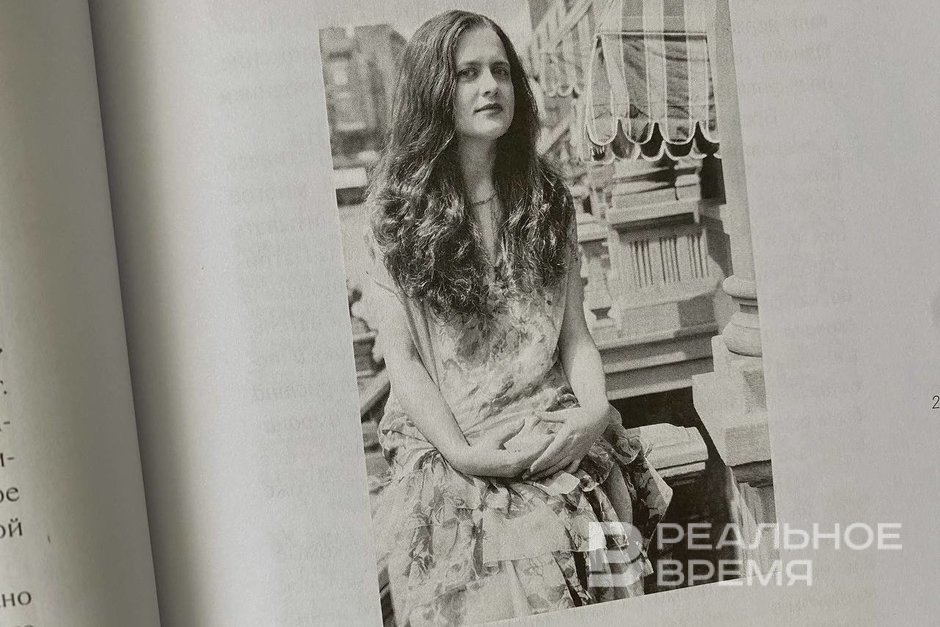
In America, she lived separately from her husband. Their marriage remained a formality, but it was precisely this that gave her the right to be in the country. Ellie worked as a model, rented an inexpensive apartment near Central Park, and sent part of her earnings to her parents, who had emigrated to Canada. One of her few close friends remained Walter Bell. The Mennonite upbringing had long since left her life, but the habit of discipline and sense of responsibility remained. It was during this period that Vladimir Mayakovsky arrived in New York.
Mayakovsky's American chapter
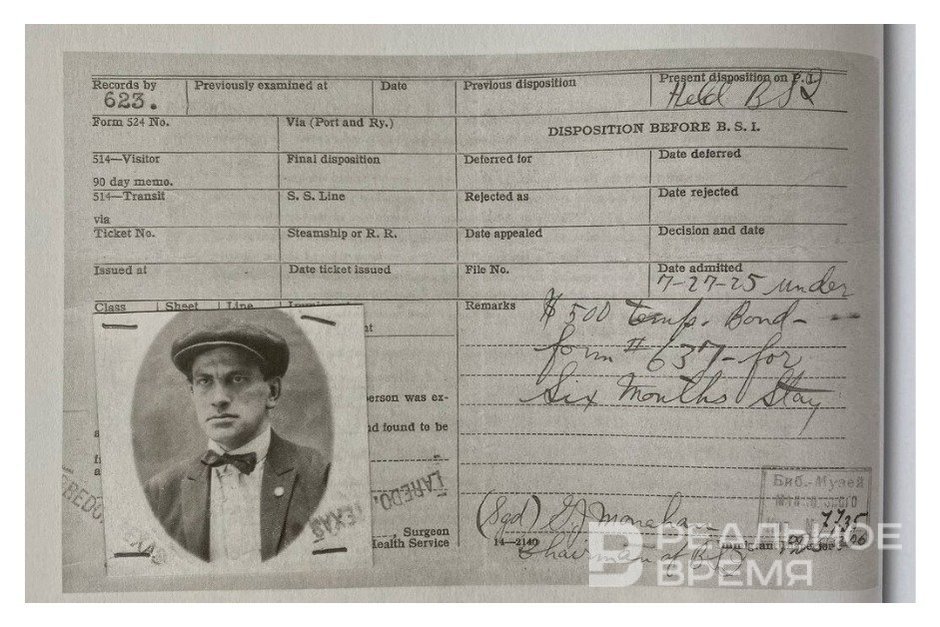
Galina Antipova describes in detail how many obstacles Mayakovsky had to overcome to get to the United States. In New York, the poet found himself among the Russian emigration. Through mutual acquaintances, Ellie knew David Burliuk and Isai Khurgin from Amtorg. A few days after Mayakovsky's arrival, Khurgin died under mysterious circumstances together with Ephraim Sklyansky. Among emigrants, there were rumors of Soviet secret services' involvement. It was this fear of the Soviet Union that later forced Ellie to conceal both her relationship with Mayakovsky and the birth of her daughter. Shortly before his death, Khurgin invited Ellie to an evening in honor of the poet's arrival. However, he warned:
“He would not introduce her to Mayakovsky, because he was not only an 'interesting man' but also a 'conqueror of women's hearts,' what we would call a 'womanizer,'" Thompson recalled.
That party ultimately became a kind of wake. Ellie came there with her official husband, George. Mayakovsky was also there. Ellie was not among the admirers who idolized the poet. However, she could talk about literature as an equal. According to the memoirs, this is what immediately attracted the poet. When George Jones left, the introduction took place. Ellie was twenty years old. Helen-Patricia Thompson quotes her mother's words:
“Mayakovsky insisted that we both [together with her friend Lydia] go to dinner with him; I went with them, although I had developed a terrible fever.”
From the very beginning, the poet warned that he was married. He meant Lilya Brik. Nevertheless, he still took Ellie's phone number. After that, they began meeting almost daily. They walked along the Hudson, crossed the Brooklyn Bridge, went to concerts and clubs. Antipova does not go into the details of their intimate life. She shows something else: all the free time that remained between performances and trips, Mayakovsky spent with Ellie. According to Ellie's own memories, he once said:
“Let's just live for each other. This time, let's keep everything just for us. It's no one else's concern. Only you and me.”
After some time, Ellie moved to Greenwich Village and rented a room almost around the corner from where Mayakovsky lived. They socialized with David Burliuk, visited him. Burliuk painted a portrait of Ellie. Mayakovsky also left several portraits of her. Many acquaintances said they looked like a surprisingly beautiful couple.
But Lilya Brik was constantly present. She regularly sent telegrams and asked for money. Galina Antipova describes these strange relationships: Mayakovsky loved Lilya Brik, Lilya loved Osip Brik, and Osip loved his work above all. The poet remained the main source of income for the Brik family and constantly deferred to their interests. Moreover, Ellie and Mayakovsky's relationship went through several unpleasant episodes. In one of the communist camps, the organizers put them in the same tent. Ellie was indignant:
“I felt insulted. Mayakovsky was embarrassed. They treated me as if I was only there to provide Mayakovsky with a sex partner!”
Later, during an argument about anti-Semitism, Mayakovsky declared: “My wife is Jewish," referring to Lilya Brik. Ellie recalled: “One young man said, 'Oh, so he's married!' Then I said, 'I'm married too.' I felt anger not only at these people but also at Mayakovsky.” According to Helen-Patricia Thompson, her mother sometimes considered him a sexist and did not understand how a socialist could behave that way. But after quarrels, they made up. Mayakovsky apologized. In public, he called her Elizaveta Petrovna or Mrs. Jones, and in private — Yolka and Yolkich.
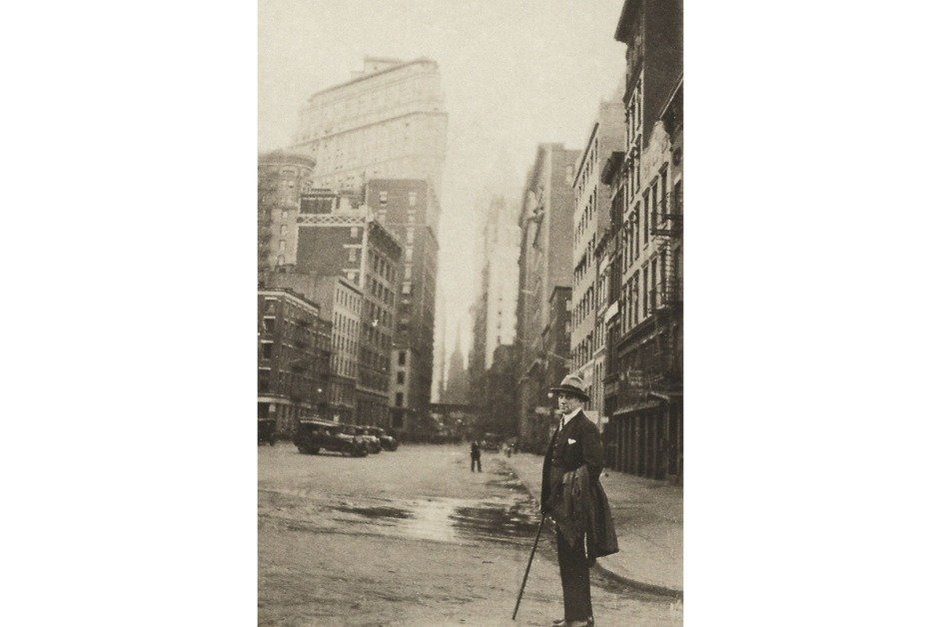
In October, it became clear that this story was coming to an end. The visa was expiring, and Mayakovsky was preparing to go home. He asked Ellie to write to him through his sister Olga, as other correspondence might be read. Ellie described the last night before parting briefly:
“We made love all night. And in the morning, as usual, I had to leave so that the newspapermen and acquaintances... would not find us together.”
On October 28, 1925, the steamer took Mayakovsky back to Europe. Ellie came to see him off. Returning home, she found an unexpected gift.
“I wanted to throw myself on the bed and sob — because of him, because of Russia — but that turned out to be impossible. My bed was strewn with flowers — forget-me-nots. He had almost no money left. But he was so... Where did he get forget-me-nots at the end of October in New York? Most likely, he ordered them long before the parting.”
The other Ellie
Mayakovsky's departure from New York did not put an end to this story. A few weeks later, Ellie Jones realized she was pregnant. She immediately made two decisions. First — to keep the baby. Second — not to tell anyone in the Soviet Union about the future child. Ellie was afraid not only for herself. After Khurgin's death, which many believed was a murder, she tried to stay as far away as possible from anything that might draw attention to her. She also could not inform Mayakovsky about the pregnancy. Ellie understood that his correspondence was read. Shortly before giving birth, she nevertheless sent a short letter:
“In three weeks, $600 must be paid to the hospital. If you can, send it to this address... I think you understand my silence. If I die — all right; if not — we'll meet. 'Yolkich.'"
She had no money for the hospital. She lost her job at the Elizabeth Arden cosmetics firm when her pregnancy became noticeable. Ultimately, on June 15, 1926, a private midwife delivered the baby at home in New York. Thus, Helen-Patricia Jones was born.
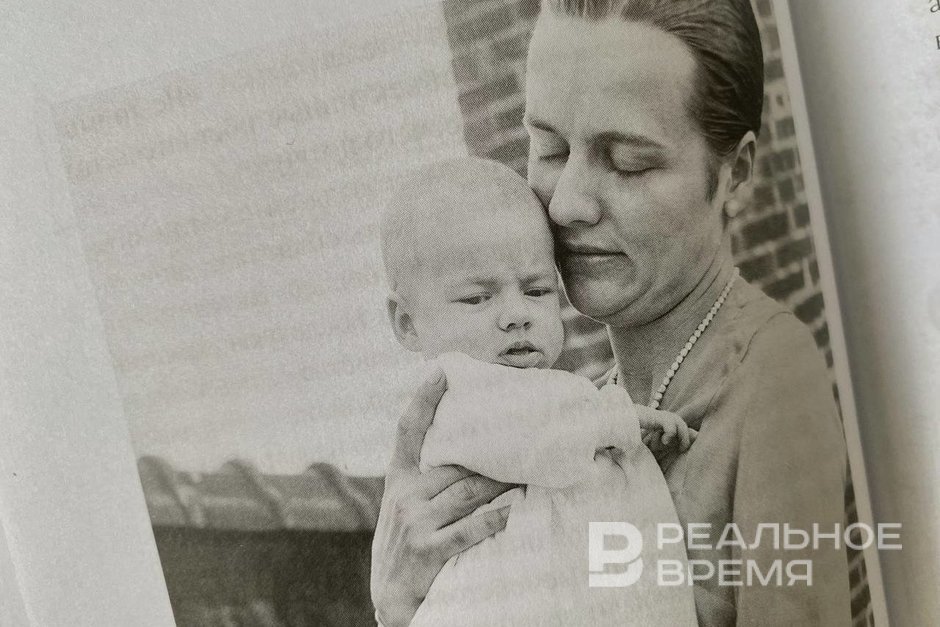
Fate soon gave Mayakovsky his only chance to see his daughter. Ellie could obtain a long-term visa to the United States, but it had to be done through the American consul in London. Her husband, George, was willing to pay for Ellie and her daughter's trip and maintenance in the amount of one hundred dollars a month. The visa required a year of waiting. But when doctors suspected the girl had rickets, Ellie decided to leave England for a warmer climate. She had only enough money to live in Nice. There, mother and daughter spent almost a year waiting for documents.
In the fall of 1928, Mayakovsky arrived in Paris. At first, he did not know that Ellie was nearby. A chance meeting with acquaintances changed everything. Upon receiving the news, the poet immediately left for Nice. On October 22, he appeared on the doorstep of Ellie's apartment. They spent three days together. Mayakovsky constantly held his daughter in his arms, walked with her, and bought her a toy elephant on wheels. It was this elephant that Helen later called the only gift from her father. Ellie recalled that they even discussed the possibility of living together then, but both understood the impossibility of such a decision.
“I know you are not free. You are twice not free. First, the communists, your dear revolution, and second, Lilya Brik.”
After these three days, Mayakovsky left. They never met again. For a long time, Helen herself had little interest in the name of her famous father. At ten years old, her mother told her the truth, but the girl decided to build her own life. She later explained it this way:
“I could not become a poet, playwright, graphic artist, or just an artist, because I would be compared to my father.”
She graduated from Barnard College, worked as an editor for literary magazines, wrote stories, and then pursued an academic career. After marriage, Helen took the surname Thompson. Her research focused on the sociology of the household and Christian feminism. Over time, her attitude towards her parents changed. She admitted:
“I miss my dad, who could have been my guide in work and in life.”
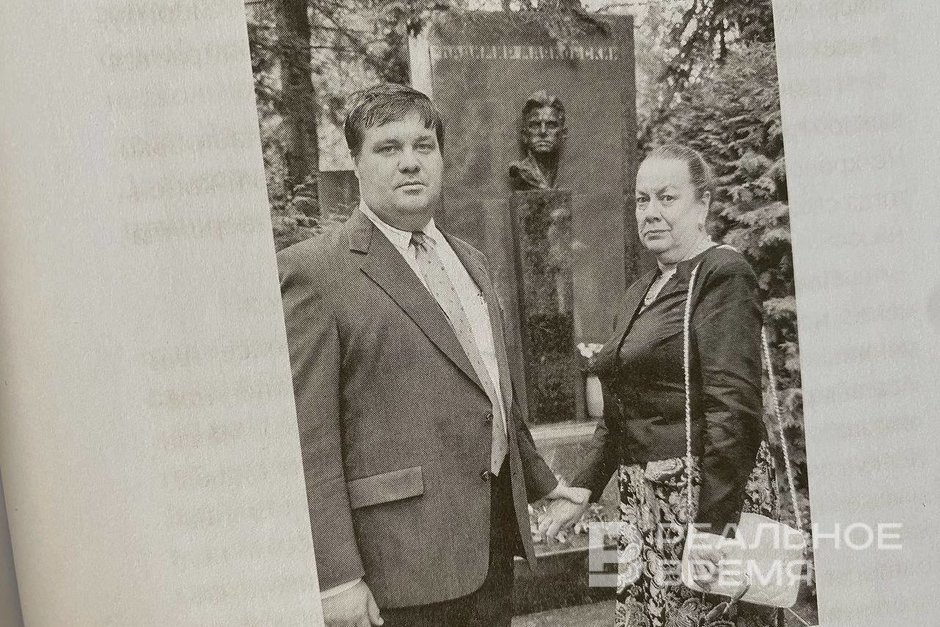
After her mother's death, Helen transcribed six cassettes of memories and began to reconstruct her family's story. In the summer of 1991, she first stepped out of the shadows. On the eve of Mayakovsky's ninety-eighth birthday, Helen-Patricia Thompson came to Moscow with her son Roger. By that time, publications about the existence of the poet's American daughter had already appeared in the USSR, but many doubted and suspected a hoax. The doubts disappeared immediately after her arrival at the airport.
According to contemporaries, the resemblance to Mayakovsky was so obvious that questions almost vanished. Soon, Helen visited the Novodevichy Cemetery to her father's grave. It is this episode that Galina Antipova turns into one of the most powerful scenes in the book.
The arrival of Elena Vladimirovna Mayakovskaya coincided with the collapse of the Soviet era and simultaneously destroyed another myth — the view of Mayakovsky exclusively as the poet of the revolution. The story of Ellie Jones and her daughter recalled another Mayakovsky — a man whose personal life remained outside official biography for decades.
Publisher: Boslen
Number of pages: 224
Year: 2026
Age rating: 16+
Ekaterina Petrova — literary critic for the online newspaper Realnoe Vremya, host of the Telegram channel «Булочки с маком».