Central Bank standards for Islamic banking: Aksakov promises Sharia transaction rules
Russian Islamic economic forum held in Kazan
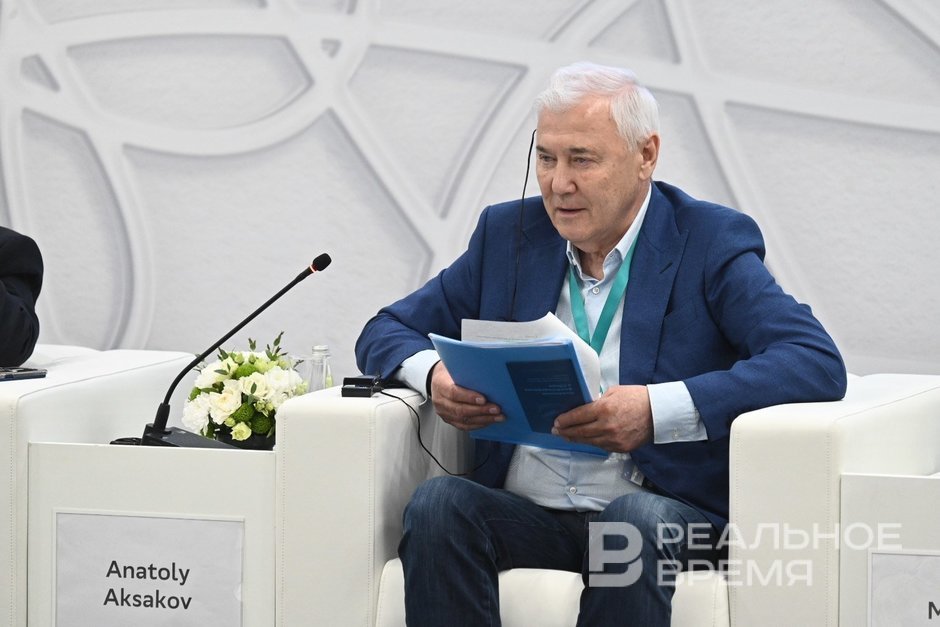
This year, the Central Bank's standards for all popular Sharia-compliant transactions — from Murabaha to Sukuk — will come into effect on the Russian financial market. This was stated by Anatoly Aksakov, Chairman of the State Duma Committee on Financial Markets, during the Russian Islamic Economic Forum (RIEF), which took place at the KazanForum-2026 venue. The first standard for issuing sukuk in the Russian Federation is almost ready, and several more standards for Ijara and Murabaha are in the pipeline, undergoing approval at the Central Bank, he clarified. The introduction of standards in the Russian Federation will help foreign investors trust Islamic banking. “Many do not understand what an experiment is at all. Can one plan and enter into medium-term and long-term relationships?” Alexei Yakovlev, Director of the Financial Policy Department of the Russian Ministry of Finance, agreed on the necessity of standards. More details in this report by Realnoe Vremya.
Aksakov: Chuvashia, Crimea, and the Caucasian regions are requesting to join the experiment
Islamic financing transactions are fundamentally different from traditional credit operations: interest income is prohibited in them. Islamic transactions are diverse, but sometimes they do not directly correlate with current financial and tax legislation. How to integrate them into the Russian financial system was discussed at a panel session of the Russian Islamic Economic Forum (RIEF), which was held for the first time at the KazanForum-2026 venue.
The session moderator, Denis Lipaev, Vice-President of the Association of Banks of Russia, recalled that the experiment on partnership financing in the country has been ongoing for the third consecutive year, many banking products according to Islamic canons have appeared, and there is a steady demand for these services. But can the partnership financing system move from an experiment to a functioning financial model? He addressed this question to the participants of the discussion.
— From my point of view, the implementation of this instrument was initially not as active as expected. The volume of operations carried out with its help significantly lags behind the enormous potential inherent in it. That is why we extended the law for another three years, — said Anatoly Aksakov, Chairman of the State Duma Committee on Financial Markets.
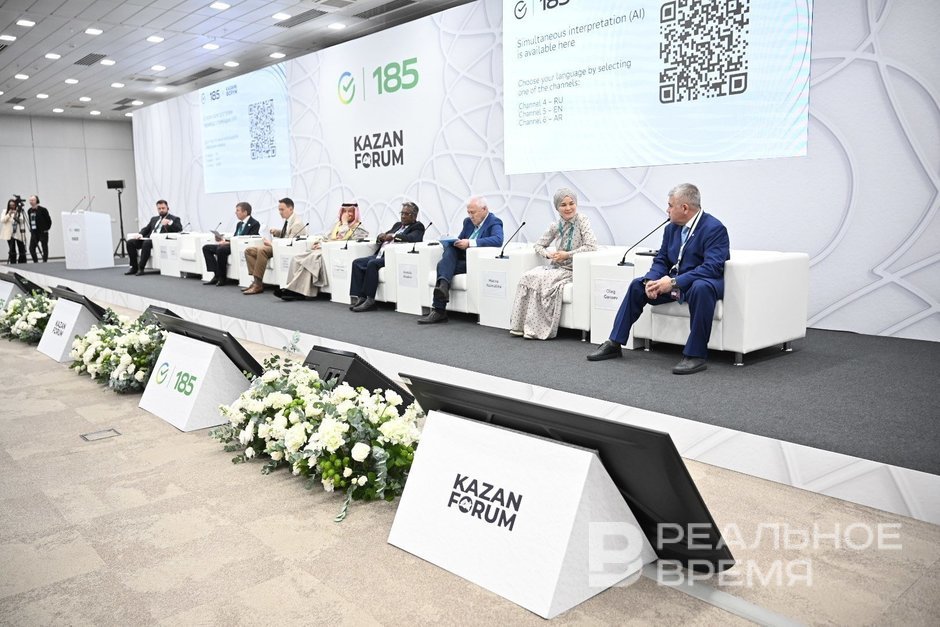
At the same time, there were discussions about why only four federal subjects are participating in the experiment. According to Aksakov, he proposed expanding the number of experiment participants.
— I proposed including Chuvashia, — he said. — Firstly, because a significant part of the population there practices Islam, and they approached me. Secondly, I myself am a deputy from Chuvashia, and I was interested.
Another contender for inclusion in the experiment is Crimea. “I discussed this topic with the head of Crimea, Aksyonov. He expressed readiness to support everything that helps finance projects," Aksakov said. Moreover, the Caucasian republics continue to show interest.
At the same time, those already participating in the experiment have not yet fully realized or felt the prospects that could be realized, Aksakov believes. The exception is Tatarstan, where almost half of the organizations working with Islamic financial instruments within this experiment are concentrated.
Partnership financing standards are the key to promotion
He considers the lack of uniform standards for conducting Sharia-compliant transactions to be the main obstacle to promoting partnership financing in the country. It is no secret that they change from region to region, and the status of the experiment does not inspire confidence among investors. “The first standard has already been developed. It is based on the principles and approaches of AAOIFI, which are followed in the international market," Aksakov said.
True, the Central Bank had comments, but the developers expect to finalize them within a month.

— I expect that within a month we will do all this, and the first standard will appear. There are plans to prepare four more standards. Accordingly, these instruments will be able to work this year, operations will be carried out according to a clear regime, including the tax regime, — Aksakov noted.
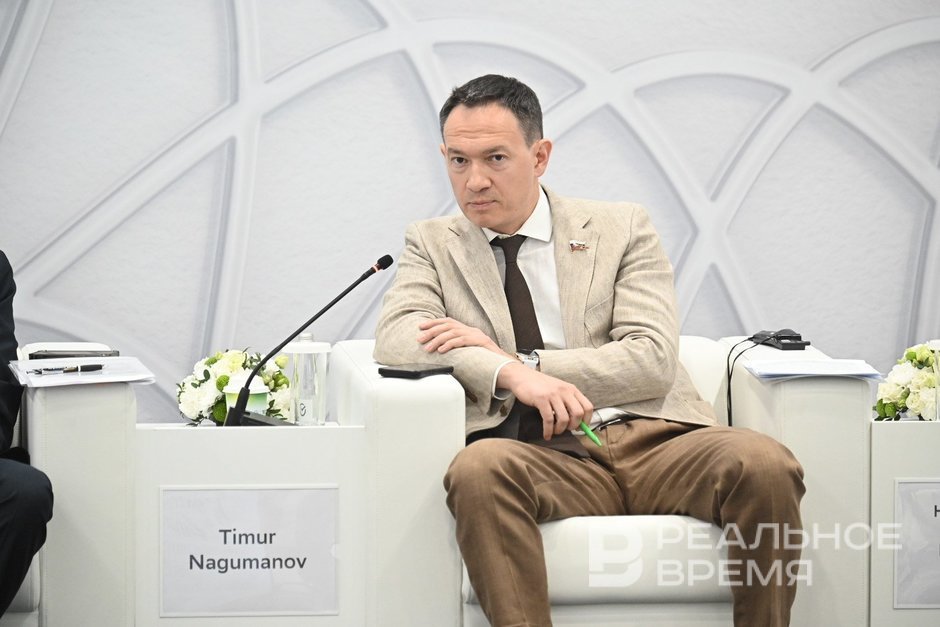
Senator from Tatarstan Timur Nagumanov expressed confidence that the introduction of standards for partnership financing transactions will send a clear signal to investors that the experiment is ready to outgrow its narrow framework and become a fully-fledged, reliable instrument. “With the adoption of the first Russian partnership financing standards this year, the status of the experiment may be lifted," he said.
According to his data, the volume of operations for 2025 increased sixfold. However, exact figures were not disclosed.
Is this for today or tomorrow, or for the long term?
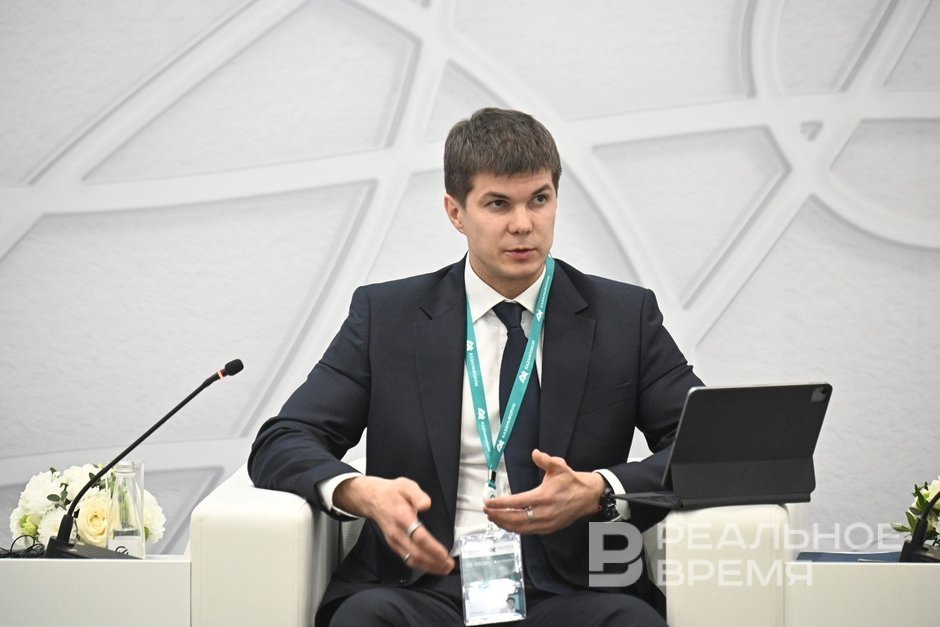
The need for standards in the Russian Federation will help foreign investors trust Islamic banking, agreed Alexei Yakovlev, Director of the Financial Policy Department of the Russian Ministry of Finance, at the Russian Islamic Economic Forum in Kazan.
— Many do not understand what an experiment is at all. Is it for today or tomorrow, or for the long term? Can one plan and enter into medium-term and long-term relationships? We ourselves want to answer this question as quickly as possible. By and large, our key task is to approach the end of the experiment with a final decision. Regulation should be permanent, but for that, a number of issues need to be resolved, — he outlined the position of the Russian Ministry of Finance.
According to him, DOM.RF is structuring a transaction in the housing sector, and banks are preparing a pilot sukuk issue. “But we are really waiting for standards, because many questions are coming in, and it's impossible to work without clear standards," said the representative of the Russian Ministry of Finance.
For whom will the standards be written?
Anatoly Aksakov explained to Realnoe Vremya which Islamic products the Central Bank's standards are being prepared for. First of all, we are talking about the rules for issuing sukuk (Islamic bonds) and “everything related to investments, the participation of joint-stock companies in capital issuance," he said. The priority in their development is set to ensure that the pilot issue of sukuk on the Moscow Exchange for the benefit of the Alabuga SEZ is successful in the summer. VEB.RF, Gazprombank, and Sberbank will participate in the placement, he confirmed. Later, the loan organizers told journalists that the sukuk placement volume would be 3.5 billion rubles, whereas previously the head of the Tatarstan Investment Development Agency, Taliya Minnullina, cited 5 billion rubles.
The most popular among businesses is Murabaha (trade financing), and Central Bank standards are also being prepared for it. First of all, they are aimed at limiting the trade markup so that users understand that there is a ceiling. Standards for Ijara, i.e., for transactions on leasing equipment according to Sharia canons, are also being prepared.
The standards for Islamic banking transactions have been submitted for approval to the Central Bank. According to Anatoly Aksakov, the regulator has essentially approved them, but there remain “four points that need to be further regulated.” This concerns the regulation of disputes in arbitration.
— Partnership financing transactions do not always fit into the traditional system of regulating business relations. In such cases, tax arbitration and regulatory difficulties arise, since the legislation of the Central Bank is often focused on traditional systems. For example, if a situation arises where payment is impossible, the issue of the legality of imposing fines arises. This creates a conflict: the obligation to the creditor has not been fulfilled, which represents a risk. This risk, naturally, must be reflected in the price of the funds provided. As a result, money becomes more expensive. The borrower likely will not attract such expensive funds under partnership financing but will prefer to go to a bank for cheaper loans. These aspects require careful consideration, he explained.
Why do disagreements arise? Islamic financing transactions are not credit agreements; each has its own nature. For instance, Murabaha (sale and purchase) is based on trade financing, and here a problem arises related to VAT. Especially for banks that must pay VAT. Investment transactions carry the risk of losses — they need to be regulated, added certified Sharia advisor and auditor Madina Kalimullina.