An Argentine anti-road story
Selva Almada’s “Wind of confusion” is a novel about the road, power, faith, and provincial Argentina
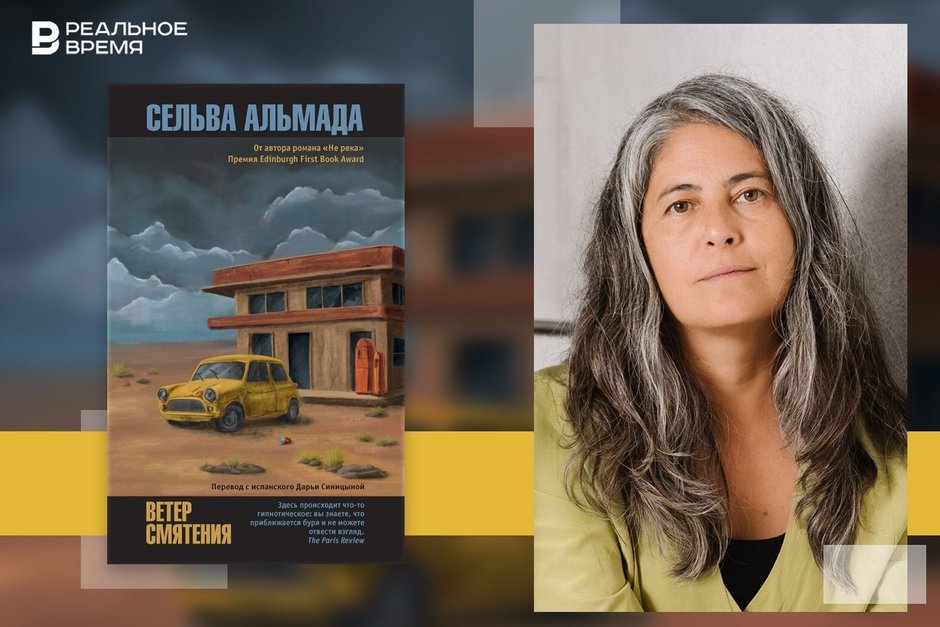
Selva Almada is one of the most prominent voices of the new Latin American boom, a writer whose texts combine a regional perspective with international recognition. Almada's book “Not a River” was shortlisted for the Booker Prize. “Wind of Confusion” is the writer's debut novel, in which an accidental stop turns into a closed system of conflicts. Literary columnist Yekaterina Petrova of Realnoe Vremya explains how this text breaks the road story canon and how Almada's simple language creates an almost physical sensation of heat, dust, and an approaching storm.
The new Latin American boom
In the 1960s, the global literary map changed dramatically when several authors from Latin America entered the world market almost simultaneously. The so-called Latin American boom quickly turned the region into a centre of literary attention. European publishing houses actively published young writers' texts, and the continent began to be associated not only with political events but also with a literary upsurge. Colombian Gabriel García Márquez, Argentine Julio Cortázar, Mexican Carlos Fuentes, and Peruvian Mario Vargas Llosa played key roles in this process. Their books transcended national contexts and created a shared regional language.
These texts were not limited to plots of private life. The boom authors experimented with form while simultaneously reacting to the political reality of the 1960s. They broke conventional canons, mixed realism and fantasy, introduced non-linear structures, and built texts as spaces for ideas. At that time, the Argentine tradition already included a wide range of styles, from the social novel to philosophical prose and fantasy. Jorge Luis Borges, Adolfo Bioy Casares, and Silvina Ocampo had already established themselves on the world stage.
But the military dictatorship of 1976–1983 disrupted the country's cultural life, forcing writers to seek new ways to discuss trauma. In an essay for The Times Literary Supplement, Argentine writer Mariana Enríquez notes that society still discusses the fate of the “children of the disappeared” and continues to write about it. However, already in the 1980s and 1990s, authors used irony, parody, minimalism, and intimate lyricism, combining heavy themes with experimentation. After the economic crisis of 2001, self-organization within the literary community intensified. Writers created independent publishing houses, magazines, and cultural centres, often working outside the traditional market.
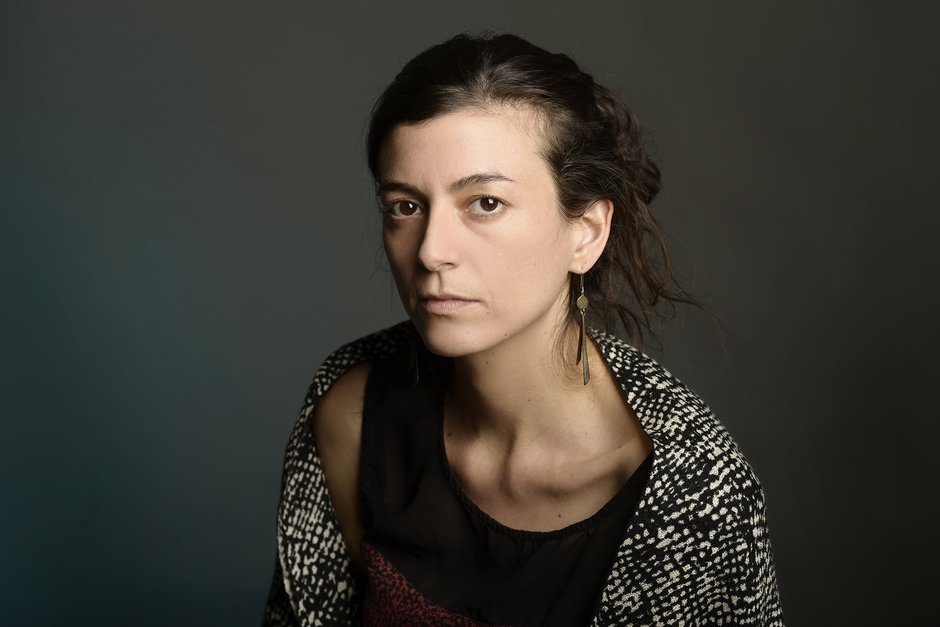
Today's scene looks even more fragmented, but incredibly lively and powerful. Enríquez describes contemporary Buenos Aires as a space of constant readings and meetings. Young writers gather every week and read texts outside conventional structures. There are over a hundred independent publishing houses in the country, and not one has closed, even amid inflation.
Contemporary authors write in a variety of genres, from horror to documentary prose, from science fiction to memoirs. In an essay for The New York Times, Argentine writer Samantha Schweblin says the new generation actively works with language: capturing colloquial speech, describing marginal communities, exploring different layers of identity, and using digital formats.
This literature is also shaped through collective practices. Creative workshops, open readings, and festivals are the main platforms for producing texts. Enríquez emphasizes that these very gatherings shape the “future of literature in Argentina.” Samantha Schweblin adds that there is a paradox in the country: “there are more people who want to write than those who read.” However, even today, many authors remain limited to the national space, reaching the international market only through publishing their books in Spain.
Who is Selva Almada
Selva Almada's books have solidified her status as one of the most prominent voices in contemporary Argentine literature, with critics comparing her prose to the tradition of William Faulkner and Juan Carlos Onetti. Almada does not build her texts around predetermined ideas. “We write not because we want to explore a theme, but because some scene or person stirs thoughts," the writer says of the creative method of her generation's authors.
At the same time, recurring motifs regularly appear in her books: crumbling families, sexism, hidden violence, hard physical labour, and religious practices of the Argentine province. Her non-fiction book “Dead Girls” (2014) describes three femicides from the 1980s and cemented her reputation as a feminist writer. Her novel “Wind of Confusion” (2012) was declared “Novel of the Year," quickly bringing Almada beyond a local readership.

Selva Almada was born in the province of Entre Ríos, read Jules Verne and Louisa May Alcott in a rural library as a young girl, and later left to study literature in Paraná. She published her first short stories in the local newspaper and ran her own cultural project, Caelum Blue, in the late 1990s. In Buenos Aires, Almada attended Alberto Laiseca's workshop for nearly two decades. According to the writer, he “helped her find her style” and became her main teacher. She began with poetry and short stories, then published the novels “Wind of Confusion” and “Bricklayers” (2013), later expanding into non-fiction and screenplays.
In 2020, Almada opened the book project “Federal Savage” to promote regional authors and launched her own festivals and residencies. International awards and translations gave her a new wave of fame: her books are published in several languages, and her work “Not a River” (2020) was shortlisted for the Booker Prize.
The novel “Wind of Confusion” grew from a scene that Almada held in her head and began to unfold. At first, she knew only one thing: “there would be a daughter and a father forced to live in a car, without a home, without a place, constantly on the road.” Later, a mechanic and his assistant appeared in the text, and the story built a system of paired characters, where one relationship reflects another.
The book was published in 2012 by the small publisher Mardulce in a print run of 1,500 copies, following the practice of independent publishers. The plot revolves around an accidental stop: the car breaks down on the road, and a preacher and his daughter find themselves in a workshop where four characters are forced to spend time together as a storm approaches the plain. Already during the writing process, the structure shifted: Almada noted that the male characters gradually took centre stage, even though the daughter was initially supposed to be the main figure.
In the year of publication, Revista Ñ called the book “Novel of the Year," and critics and readers ensured its wide reception. The novel was reprinted many times and translated into French, Portuguese, German, and other languages. The English translation won the First Book Award at the 2019 Edinburgh International Book Festival. The jury noted its “cinematic precision and the sensation of a road frozen in one place.”
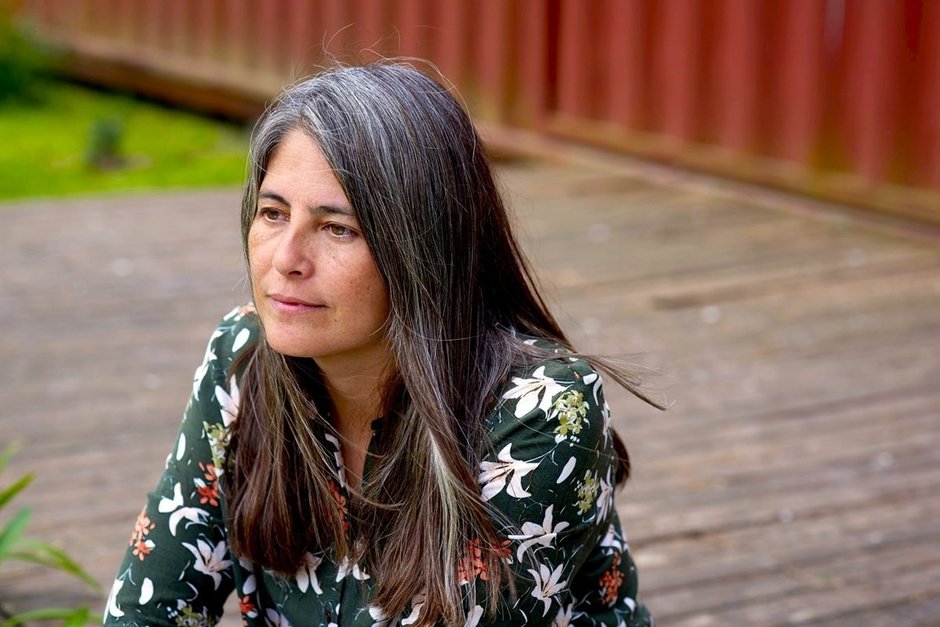
The text continued to move into other forms. In 2016, an opera by Beatriz Catani and Luis Menacho was based on it; later, work began on a film adaptation, which was released in 2023 under the title “The Wind That Sweeps Away.”
Wind of change
The dusty road ends abruptly, and with it, the heroes' movement stops. Preacher Pearson is driving his daughter Leni across the Argentine province in an old car with a trunk full of Bibles. Pearson lives the life of a traveling evangelist. When the car breaks down on the border of the Santa Fe and Chaco provinces, they end up at the workshop of a mechanic named Brower, with whom a teenager called Tapioca lives.
Four people from different worlds spend one day and one night together as a storm gathers over the plain. Pearson immediately notices Tapioca and sees in him a “pure soul.” This unsettles the atheist Brower, who is used to believing only in his own strength, not relying on the Almighty. The story holds the characters in one place but unfolds their relationships like a road movie stopped at a point where every step changes their future.
The road in this novel deceives expectation: it exists but does not lead forward. The classic road story builds its plot around movement, changing spaces, and the hero's inner transformation. But Almada stops this mechanism. The car breaks down, the heroes get stuck, and the text becomes an “anti-road story” where time stops. Moreover, the heroes themselves exist in a temporal and spatial vacuum. The reader expects a return to the road but instead witnesses immobility, where almost nothing happens and meaning is born outside of dialogues and actions.
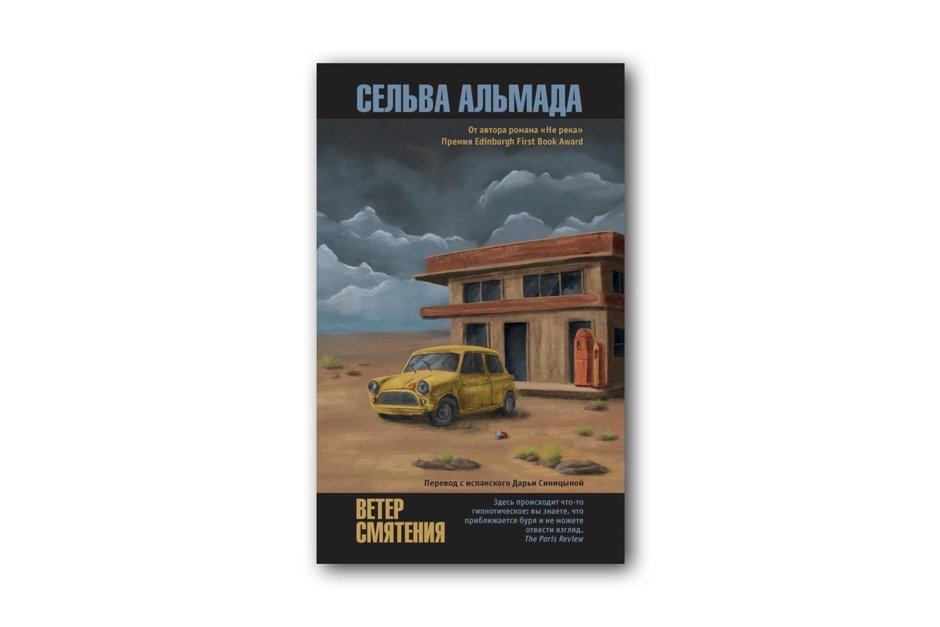
Preacher Pearson leads his daughter Leni, subordinating her life to his “mission," which he understands as God's will. Leni is silent and submits because everything always happens as her father — or, as he says, God — wishes. The mechanic Brower lives with a teenager, Tapioca, whom he is raising as a son, and lets nothing from outside into his life. When Pearson sees a “pure soul” in Tapioca, he tries to take him away, heightening the conflict between the men. The young characters find themselves in a worse position: they depend on the adults but simultaneously resist them and seek their own way out.
Religion in this system provides no support. Pearson acts as a man burning with the flame of Christ's love, seeing himself as an arrow that God directs toward a target. The preacher believes his purpose in this life is to cleanse “dirty souls” and fill them with the word of God. Yet faith does not liberate him; it holds him in a role from which he cannot escape. The history of his own family echoes the theme of abandonment: he abandoned his wife, his father abandoned him, and these episodes return in memories.
The novel builds its form on pauses and understatement. Short chapters assemble the story from fragments of memory and hints, and the reader reconstructs the connections themselves. In one interview, Almada said she “works a lot with punctuation” and strives to give the text its own “respiratory rhythm.” The result is simple language, but each word carries weight and feels like a drop of sweat slowly moving down the back. Within this almost musical structure, the characters move amidst heat and dust.
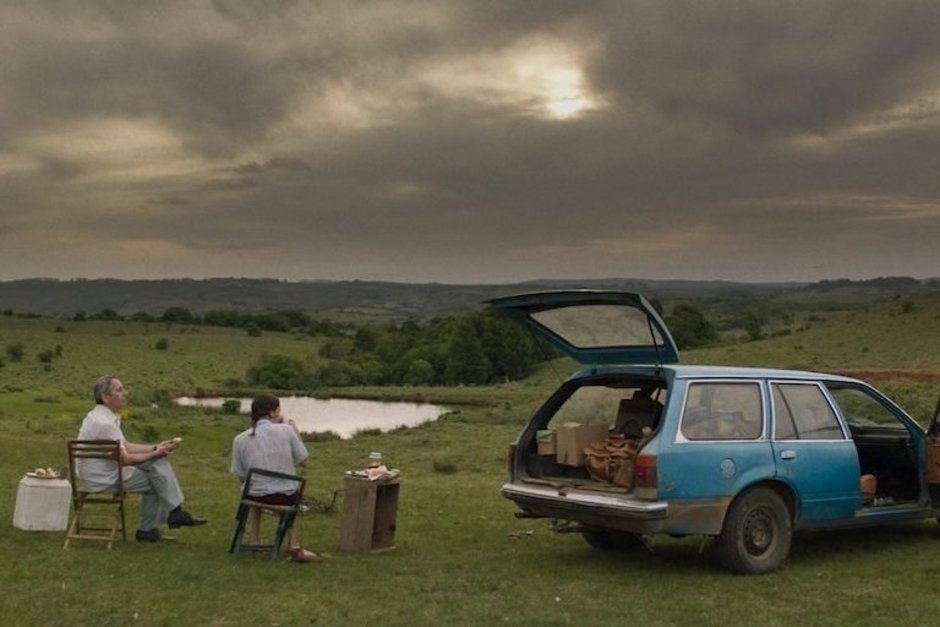
Leni sees a lifeless landscape around her. The space seems to her a place abandoned by people, with dry, twisted trees and hard grass. She thinks that God also abandoned this place from the first day of creation. Almada shows not the Argentina one expects to see, but a dry, provincial, almost unknown territory to the reader. With its scorching wind, which will bring not only confusion but also change.
Publisher: Livebook
Translation from Spanish: Darya Sinitsyna
Number of pages: 192
Year: 2026
Age rating: 16+
Yekaterina Petrova is a literary columnist for the online newspaper Realnoe Vremya and hosts the Telegram channel «Булочки с маком».