Dmitry Volkostrelov explained why 2016 worries so many people
The St. Petersburg experimental director talked at “The Corner” about how everyday life has changed.
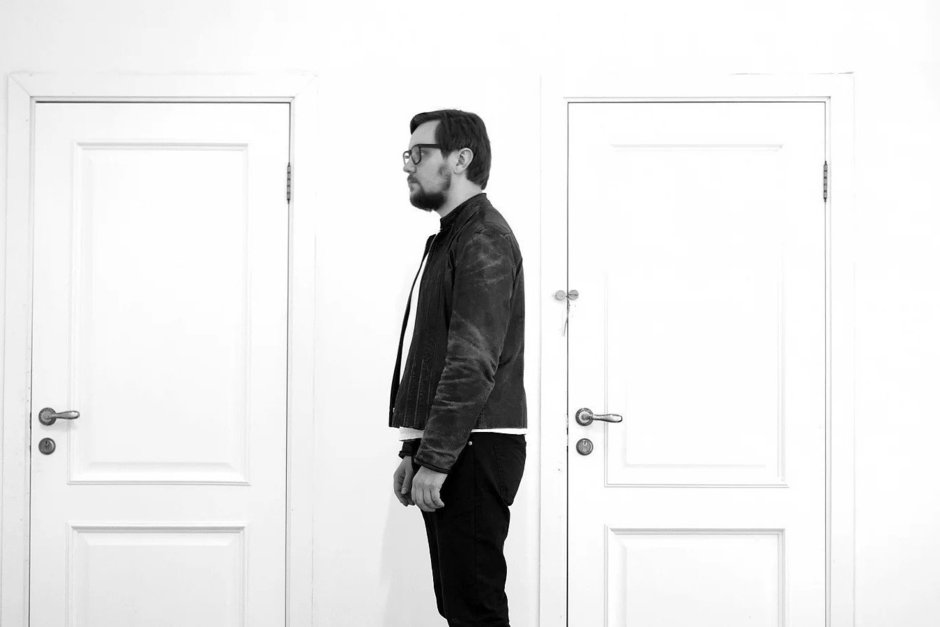
In Kazan's “The Corner” space, St. Petersburg director Dmitry Volkostrelov gave a lecture about everyday life: how it turns into theatre and an exhibition. Along the way, he unexpectedly explained why 2016 is so important, which has become a trend on social media in recent weeks. Furthermore, Volkostrelov told why it's so difficult to experiment with the mundane in 2026.
“The Street. Nothing remarkable about it.”
Dmitry Volkostrelov came to Kazan for a reason: his meditative performance “Our Books," in which he also participates, was shown at the theatre venue MOÑ. And at “The Corner," the meeting with him was moderated by the founder of the “Culture of Everyday Life” project.
In 2015, the first repertoire piece appeared in the building on Paris Commune Street — it was the play “Karina and Dron” by Pavel Pryazhko, directed by Volkostrelov. Its text was based on the speech of teenagers who go to the metro to listen to some underground hum. He also brought his “theatre post” on tour to Kazan and worked with Sviyazhsk.
In general, the mundane occupies a large part in the projects of the St. Petersburg director. In particular, he himself recalled how “theatre post” began when the text “The Evil Girl” by the same Pryazhko was staged in 2011.
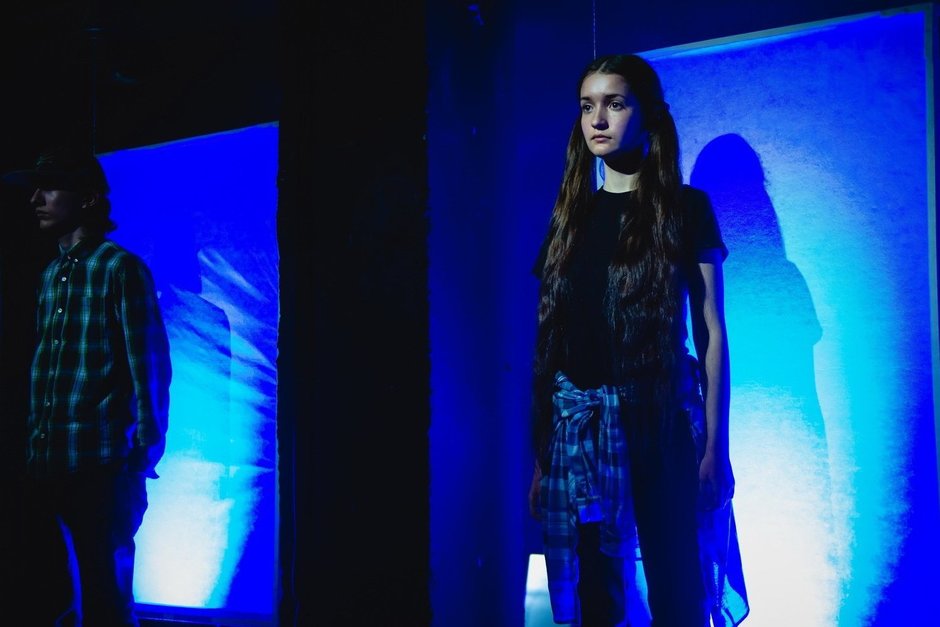
The Belarusian playwright often intentionally writes plays in which, essentially, nothing special happens. So it is in “The Evil Girl” — the hero introduces his friends to his girlfriend, and then they break up. That's the whole plot. And there's also a constant stage direction: "...looks around at everything.” And then: “The street. Nothing remarkable about it.”
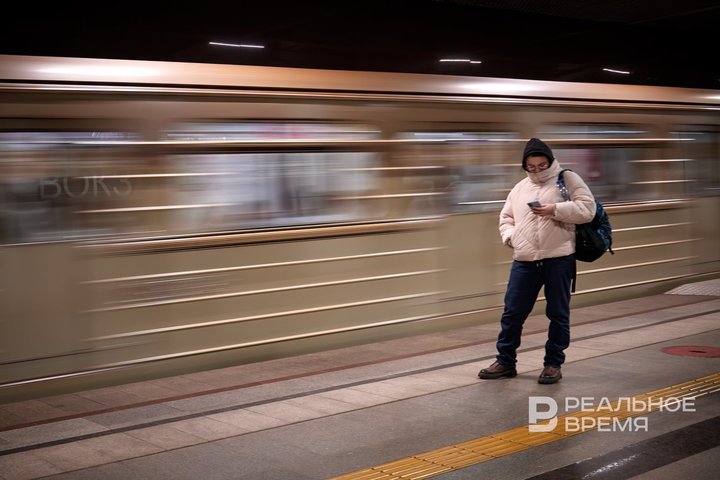
At the same time, the hero films what's happening with a camera. The photos shown were taken by the actors themselves using cameras — phones still didn't have powerful cameras. That's how Volkostrelov himself first went to the St. Petersburg bedroom district of Kupchino then.
Thus, a series of photos emerged of what people pass by and don't notice. But at one of the showings, a female spectator said to her friend: oh look, they showed my entrance.
— It's an amazing experience of what theatre can do, — noted Volkostrelov. — When you understand that your unremarkable entrance, which you pass by, living in dashes from home to pleasant places — that these places are a significant part of our everyday life. And theatre can work with them.
The Mundane as an Exhibition
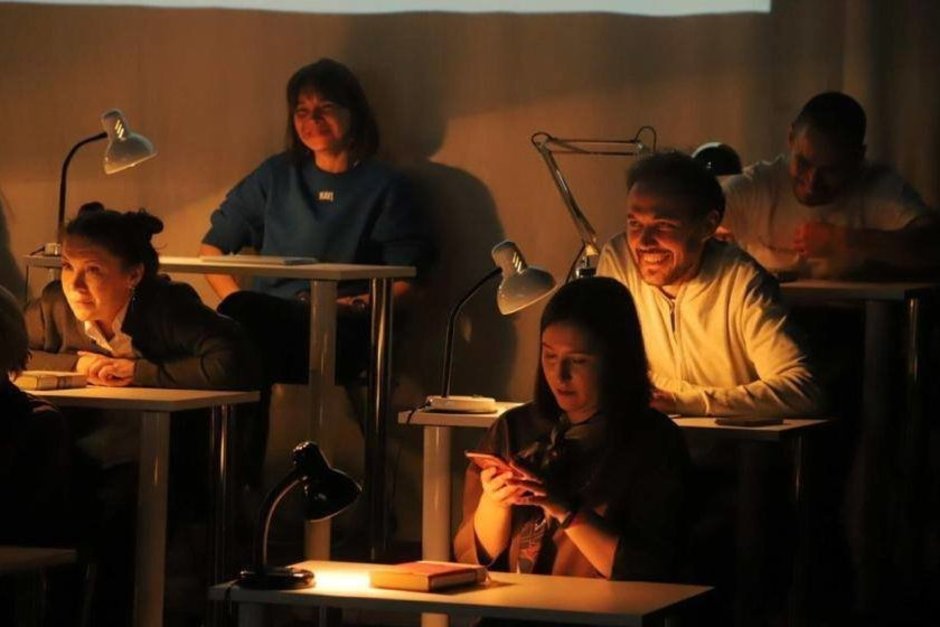
In 2016, Volkostrelov was invited as an artist to the “Territory” festival — to make an exhibition. Thus, “Everydayness. Simple Actions” appeared. Viewers were invited to become its co-participants: write on the wall the words they use most often, enter their card PIN code, put their signature... And at the same time, also think about why the code or signature is like that. A room with pouffes, where one could simply sit on the internet, was especially popular. And on the last day of the month-long exhibition, works were presented.
There were many conversations, in particular with film scholar Mikhail Ratgauz, who noted: it's strange to talk about everyday life now because the world is starting to fever and shake. But “theatre post” continued to work with this theme.
— At some point, it became a form of escapism, since everydayness didn't leave the sphere of attention but acquired a retrospective view, — recalled the director.
One example is the performance “The Artist from Outside and Inside," based on the notes of the Florentine Jacopo da Pontormo, who creates beauty but writes down what he ate for lunch. It was brought to Kazan, by the way, back in distant 2017. That is, already after 2016.
Why 2016 is Important
— 2016 was a turning point in human history because the number of internet accesses from mobile devices exceeded those from computers, — explained Volkostrelov. — We finally transitioned to these devices.
In connection with this, a case that recently happened to the director in Egypt is characteristic: he saw two tourists enter Tutankhamun's tomb. Without looking for a second at where they were, they filmed themselves, each other, filmed the surroundings, looking at it all through the phone. And left.
— The main question is — what do we want? — he reflected. — It seems that everydayness is what we avoid in theatre. We want to make theatre interesting, for events to happen. And the manifesto of “theatre post” was about the fact that we deal with the uninteresting, with what is non-events. Because then it seemed that no events were happening.
And contemporary everydayness is very radical, noted Volkostrelov. For example, can one now stage a play based on messages in chats of modern Belgorod residents? He recalled that last year, a reading of a diary of one girl from that city was organized; later it turned out that new Muscovites who had recently moved from Belgorod said they didn't understand why they needed to hear that.
Now we cannot talk about the current reality, we cannot invent a language for it, noted the director. This doesn't mean there are no attempts — for instance, two years ago Volkostrelov staged “Monologues about Suzdal and Everydayness” by Viktoria Kostyukevich at the Hydroelectric Power Station on the Nerl.
And finally — a valuable experiment from Volkostrelov, which he conducts when starting a performance with a new group of actors.
What is needed for a performance? Two people. One watches, the other does something. What is the minimal point in this? What to do if you abandon everything? Volkostrelov suggests the actor simply stand. And the others — watch the action.
— The importance is that the performer determines the duration of the performance, — noted the director. — Once it lasted an hour and a half, it was incredibly interesting. Then, reflecting on the experience, we inevitably come to a simple and tragic thought: a person stands, we look at them. And the person who does nothing, with every second, gets closer to death. And we experience it all together, experience the passing time.