Eduard Boyakov: ‘Our culture can only be preserved by setting new challenges’
Artistic director of the Theatre on Malaya Ordynka on a shift in the coordinates of Russia’s cultural life and global leadership
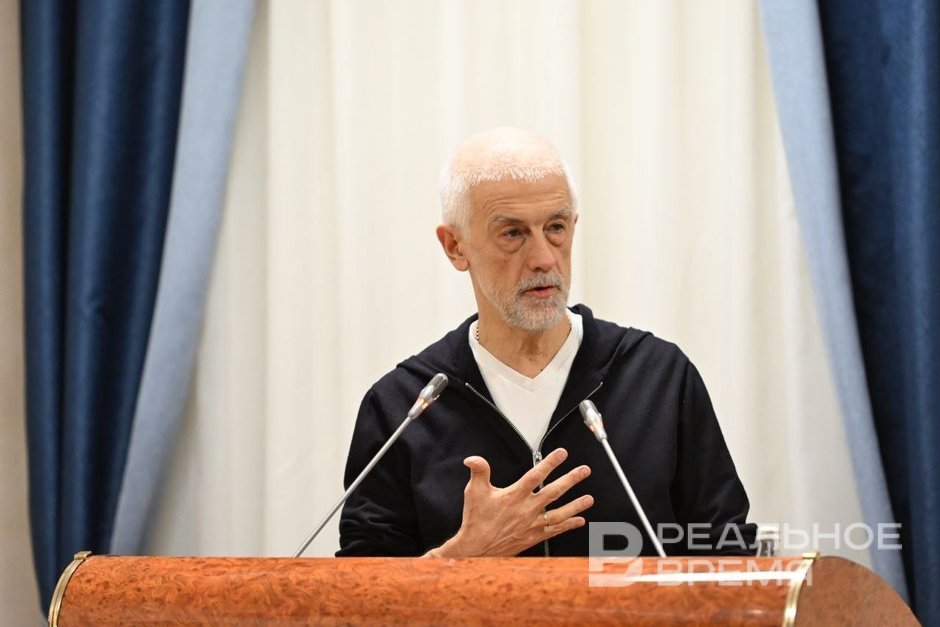
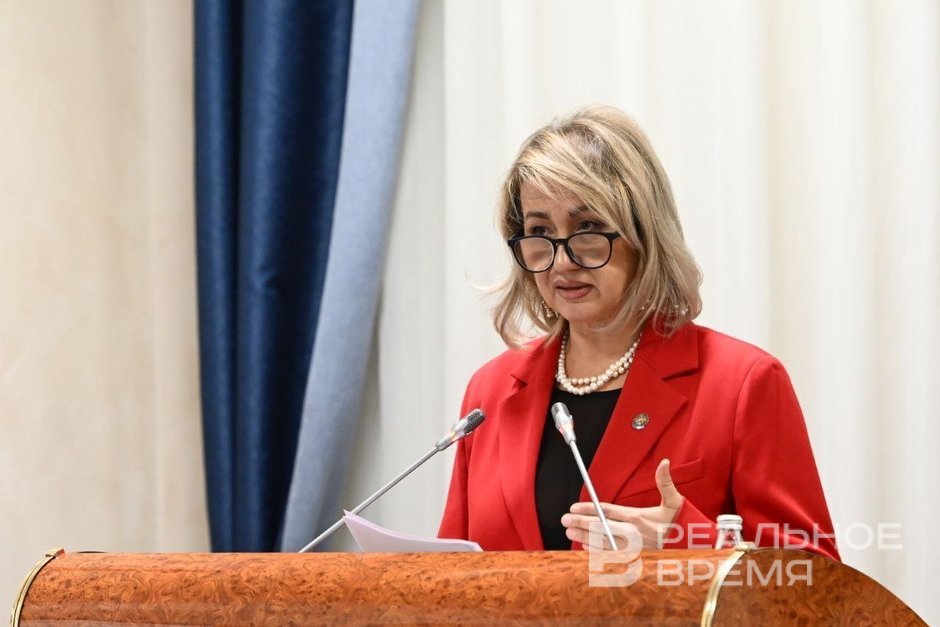
At the final board meeting of the Ministry of Culture of Tatarstan, the key word was “audit” of the sector. Minister Irada Ayupova called for an inspection of the republic’s network of cultural institutions, while Eduard Boyakov, artistic director of the Theatre on Malaya Ordynka, who had come from Moscow, proposed conducting an audit of culture as a whole. In addition, colleagues were introduced to a genuine “zemstvo” worker — a trumpeter from Moscow.
Circus versus Salavat youth centre
The meeting of Tatarstan’s Ministry of Culture was held in the institution’s conference hall, where participants were searching for free seats until the very last moment. Apologising for being late (she had been rushing from a meeting of the Ministry of Sport), Tatarstan’s Deputy Prime Minister Leyla Fazleeva entered the hall with the others. The participants did not complain, however, noting that it is not often one gets to see all the key figures of culture in one place.
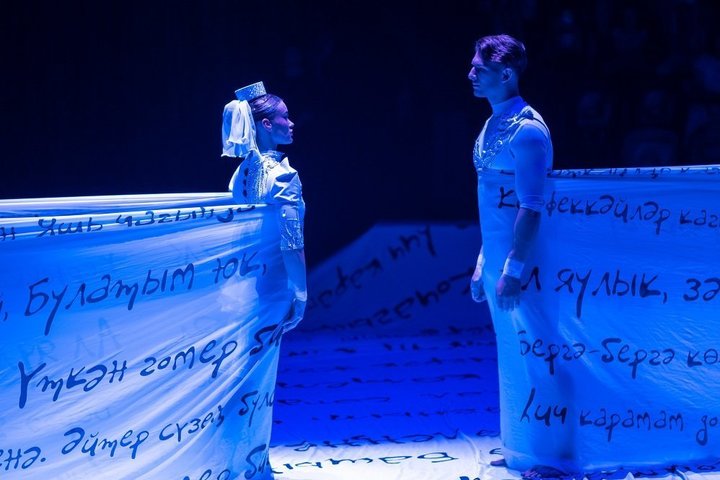
Traditionally, in her report Irada Ayupova highlighted both positive trends and shortcomings. Among the points of pride were the Kazan Circus and the fantasy production Miras: 127,000 spectators in Kazan and 66,500 in Minsk. The circus, as usual, also leads in revenue — more than 669 million roubles. In second place is the Kazan Kremlin with almost 360 million, and in third the Kamal Theatre with 347 million. At the bottom of the list are the Nizhnekamsk music college museum, the Mgnovenie dance theatre and the Salavat youth centre — the latter with 501,200 roubles.
Tatarstan is once again among the leaders in the use of the Pushkin Card, immediately after the two capitals. At the same time, there is a sharp difference between leading and lagging districts: Almetyevsky district sold tickets worth almost 8.5 million roubles, while Kaybitsky district sold 721,800 roubles’ worth.
Clearly mindful of recent кадров changes at Tatarkino, Ayupova also drew attention to film materials in museums and libraries:
“Their restoration and screening should not be limited to a single institution. National films need to be shown more often in other regions of Russia and abroad — together with the World Congress of Tatars and public organisations," the head of the Ministry of Culture of Tatarstan said. “Libraries need to strengthen their work within interlibrary cooperation inside the library community. The National Library of the Republic of Tatarstan, together with the Republican Youth Library, should analyse refusal logs in local libraries and establish routing for fulfilling requests.”
The question of how to ensure that any book in a centralised network reaches the reader has been raised before. But, evidently, there is simply not enough resources for this.
Jubilees to be celebrated in decades
As for events, this year it is planned to hold a “Decade of Arts Professionals” twice a year — in May and October — dedicated to celebrating anniversaries across different genres.
“The audience will see not scattered names, but a holistic picture of a cultural generation, where poetry, music, painting and theatre were interwoven into a single canvas of an era," Ayupova said, adding that the theatrical project Kazan Tours would also be revived, when state theatres presented their productions in community centres and other venues outside their home stages.
Speaking of these venues, Irada Ayupova demanded that by 1 June 2026 there should not be a single cultural institution left non-operational for any reason, instructing the resource centre to conduct a full audit of the entire network in the republic by 1 August this year.
“If any remain, we will publish their names," the minister added. “If you want to be on a kind of board of shame, then there will be nothing you can do in the remaining time.”
At-risk teenagers left out, number of zemstvo workers to increase
The most alarming figure in the report was 5%. That is the share of registered minors who are engaged in cultural and leisure institutions.
“Every municipality must know which of your children are on the register and which clubs they attend, who supervises them, and what results they achieve. We must know at-risk children by name, which institutions they attend, and analyse the effectiveness of this work," Ayupova explained.
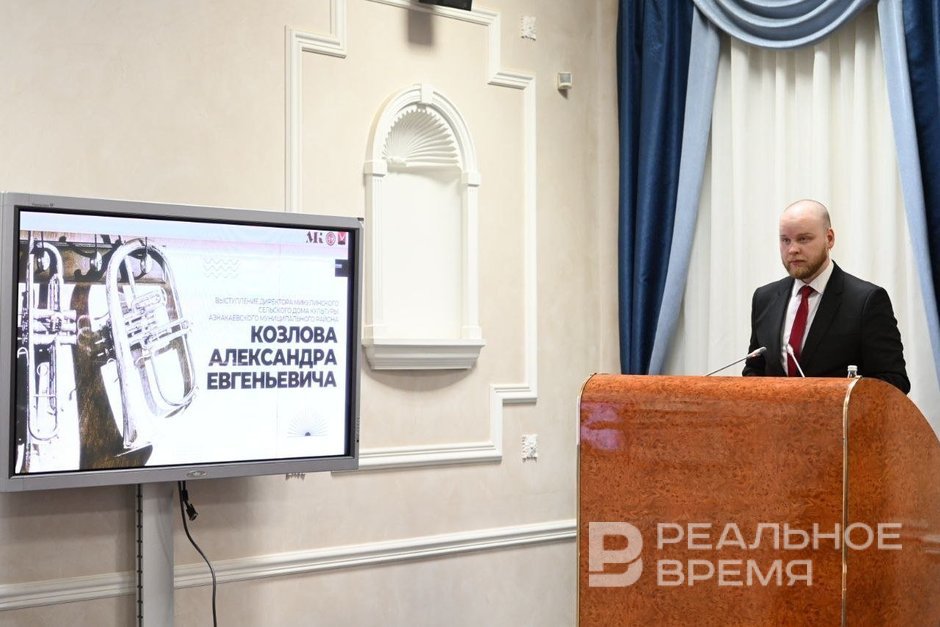
The Zemsky Cultural Worker programme to attract staff to rural areas will be expanded from 20 to 50 people. Those employed receive one million roubles. A living example was presented in the person of Alexander Kozlov, director of the Mikulino rural community centre in the Aznakayevo district, formerly a trumpeter of the Central Concert Exemplary Orchestra of the Naval Federation and a teacher in Khimki. Until last September he lived in Moscow without owning a flat, and then moved to Tatarstan with his wife. He now has a house with a garden plot, which the family has bought.
“I dreamed of creating a place in a rural community centre that would attract residents of all ages," Kozlov said, adding that the centre now hosts an after-school club, the Mikulino Activegroup, yoga clubs, experimental gardening, responsible animal care, and a patriotic section. Kozlov himself, in particular, teaches aikido.
Creativity a priority, staff under threat
From 2026, the law On the Development of Creative Industries in the Republic of Tatarstan comes into force. It has been decided that the territory of the former TsUM department store will become the site of a creative cluster, where a Centre of Unique Craftsmanship will appear and a register of creative industries will be created. This was announced at the meeting by TsUM curator Ranko Tepavčević, who said that the cluster would house not only shops and workshops, but also an educational centre.
Overall, the staffing issue in the cultural sphere was raised repeatedly. In particular, the president of the Academy of Sciences of the Republic of Tatarstan, Rifkat Minnikhanov, noted that the number of young researchers in Tatarstan is declining:
“By these indicators, the republic has fallen to 53rd place. Without radical measures, a collapse in the humanities will occur in five to seven years.”
The staffing problem was also highlighted by the artistic director of the State Chamber Choir of Tatarstan, Milyausha Tamindarova, who proposed her ensemble to the Kazan Conservatory and the Institute of Culture as a platform for “growing” talent, noting that the State Song and Dance Ensemble could also join such an experiment.
Tamindarova also pointed out that musical heritage of the past is completely absent from digital platforms.
“This is the time we live in: if it is not uploaded, it does not exist. In this regard, we need help with copyright issues," she said, explaining how she herself once travelled to heirs, but, for example, never obtained permission from the heirs of Rustem Yakhin.
Meanwhile, Rifkat Minnikhanov reproached his colleagues. He said that the Academy of Sciences of Tatarstan had sent a calendar annual plan of 63 forums and conferences to all interested parties, but received no response.
“We only receive a letter when we are invited to this or that event," Minnikhanov explained. “We wrote to the prime minister to say that we would ignore such events. Dear colleagues, let us work in a planned way. If you cannot plan for a year, plan for six months and send invitations six months in advance.”
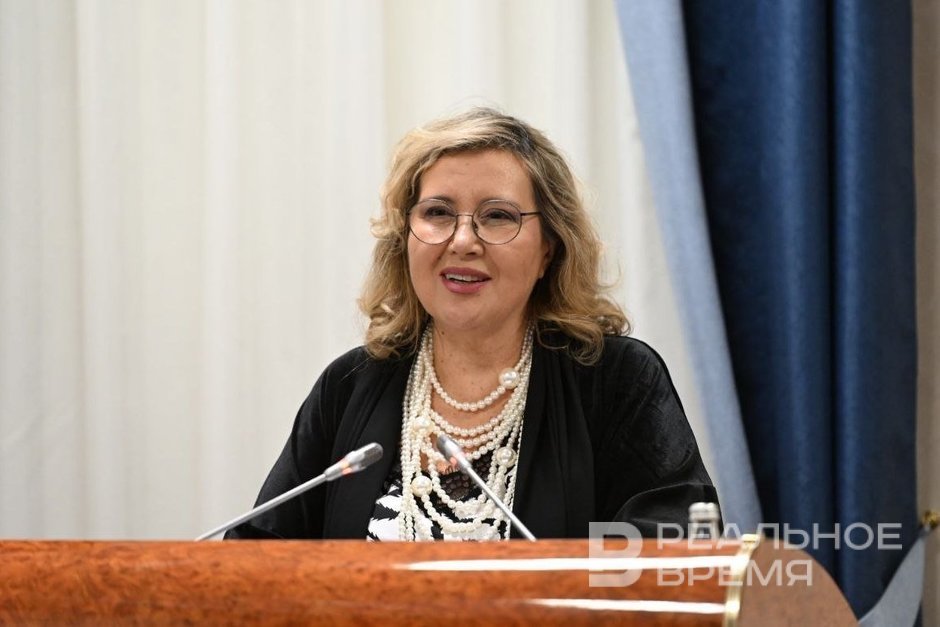
“A new system of coordinates is needed”
A programme-defining, one might say curatorial, speech at the meeting was delivered by Eduard Boyakov, artistic director of the Theatre on Malaya Ordynka.
“Today we find ourselves in a situation of rethinking the recently emerged course towards Russia’s civilisational sovereignty, precisely as a sovereign civilisation. This did not exist before," Boyakov noted. “Today, preserving our culture, preserving the wealth we have, is only possible by setting new challenges.”
In this context, he quoted Ayupova’s remark about an “audit”:
“A new audit is needed. A new system of coordinates is needed. The old classification does not work. If we use the old cultural classification, we will either fall into the Soviet past or into recent liberal imitation of the Western mainstream, which today constitutes the main problem of our Moscow artistic reality.”
There is not a single Russian artist or composer today who is known all over the world, Boyakov said, citing Tchaikovsky, Shostakovich, Stravinsky and Rachmaninoff as examples from the past:
“We are facing the danger of provincialisation, of closing our culture, of creating a kind of cocoon. Therefore, if we want to once again become global leaders in politics, ideology and economics, we must first become global leaders in culture. And how to do this is answered precisely by national culture," Boyakov concluded, noting that he is particularly interested in what the Kamal Theatre and the Tinchurin Theatre will present to the world.