‘Needs fine-tuning’: Tatarstan State Duma deputy outlines key problems with the tourist tax
According to the parliamentarian, the current mechanism creates an excessive burden on the hotel business and requires radical recalibration
How the mechanism is proposed to be refined
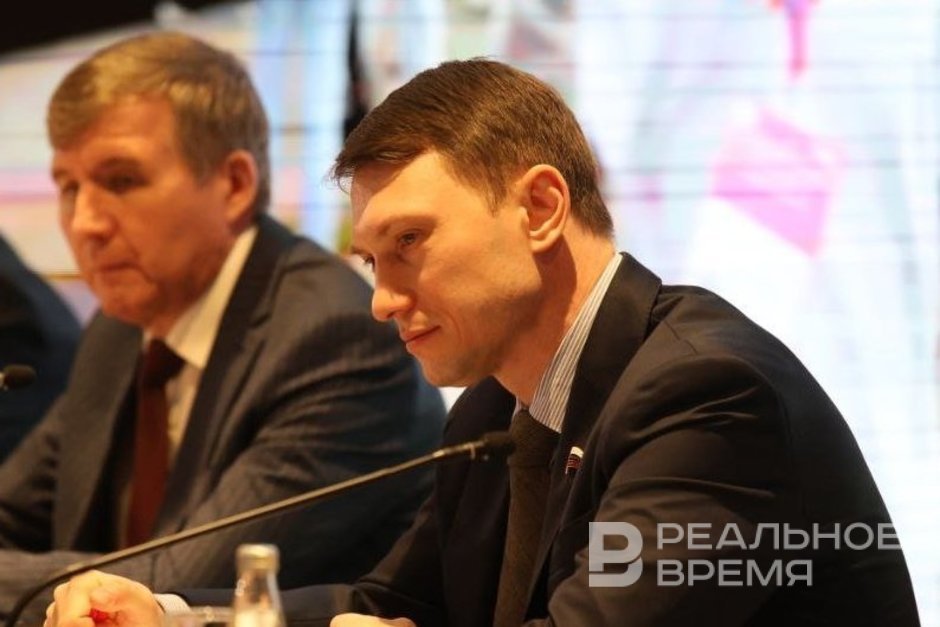
At a roundtable meeting of the State Duma Committee on Tourism and the Development of Tourism Infrastructure, interim results of the tourist tax were reviewed. A report was delivered by State Duma deputy from Tatarstan (Communist Party of the Russian Federation), member of the Committee on Tourism and the Development of Tourism Infrastructure Artem Prokofyev, who, based on an analysis of law enforcement practice and appeals from hoteliers, outlined the key problems of the mechanism.
According to Prokofyev, the first year of applying the tourist tax revealed systemic shortcomings that require legislative adjustments. He paid particular attention to the moment at which the tax is calculated: it is currently charged at the time of full payment for accommodation, although the service is in fact provided upon the guest’s departure. This leads to constant recalculations due to booking cancellations, no-shows, date changes and adjustments to the length of stay, significantly increasing the administrative burden on businesses and tax authorities.
The deputy also pointed to the problem of the minimum tax rate set at 100 roubles per day. For budget accommodation facilities — hostels and low-cost hotels — such a rate creates a regressive taxation scale: the actual burden exceeds the established percentage rate. At the same time, the fiscal effect remains insignificant, while the labour costs of administering the tax are high.
The issue of reporting has proven no less acute. According to the parliamentarian, the requirement for detailed data, including personalised records by surname, is incompatible with automated hotel management systems. This leads to an increase in manual work, higher transaction costs and a lack of any tangible effect on transparency of oversight.
“I will not say that the tourist tax itself is a tool without potential, but the first year of its application has shown that the current model, as a replacement for a mechanism similar to the resort fee, seriously requires fine-tuning, above all with regard to the practical realities of accommodation facilities and municipalities," Prokofyev said.
A separate block of problems is linked to the interaction between the tourist tax and the zero VAT rate. As the deputy noted, hotels form service packages in order to apply the zero VAT rate, but when calculating the tourist tax the full cost of the package is included in the tax base. This creates additional financial losses and increases the burden on consumers.
Significant difficulties have also arisen with the application of benefits. Despite legislatively established exemptions for certain categories of citizens, the mechanism for their implementation does not work. Since the tax is paid by the accommodation facility rather than the guest, hotels have no incentive to request supporting documents. In addition, if a beneficiary stays in a room registered to another person, the benefit is not applied. The deputy cited an example from Gelendzhik, where the tax is charged to organisations involved in children’s recreation, demonstrating the absence of a unified approach to forming benefits at the municipal level.
In his speech, the parliamentarian referred to a response from Russian Finance Minister Anton Siluanov, which states that problems with calculating the tax are relevant and that, following an analysis of law enforcement practice in 2024–2025, the issue of amending the Russian Tax Code will be considered.
As a result of the discussion, key proposals for refining the mechanism were formulated: to shift tax calculation to the moment the service is actually provided (the guest’s departure), to revise or abolish the minimum tax amount, to unify basic preferential categories at the federal level, to simplify reporting with regard to hotels’ digital capabilities, and to prepare methodological clarifications from the Ministry of Finance and the Federal Tax Service on disputed situations.
The deputy stressed that the goal of improving the mechanism is to turn the tourist tax into an effective tool for territorial development, rather than a source of conflict between business and the state.
State Committee of Tatarstan for Tourism: “We are exploring the possibility of reforming the system”
Similar issues were previously outlined by the chairman of the State Committee of Tatarstan for Tourism, Sergey Ivanov, in a conversation with Realnoe Vremya.
According to him, the main problem of the existing system lies in its complex administration. Hotels are forced to keep detailed records of numerous preferential categories and determine payer status for each booking, creating an additional burden on business.
It should be recalled that at the final board meeting of the State Committee for Tourism, Sergey Ivanov reported that in 2025 Tatarstan received a record 4.5 million tourists. At the same time, the sector faces challenges: a slowdown in the growth of tourist flows, more cautious spending by guests, a lack of diversity in tourism products, and tough competition from the short-term rental market.