Students of the Russian figure skating school won four medals at the European Championship
Russians did not participate in the European Figure Skating Championship, but each medal-winning pair has a connection to both Russia in general and Tatarstan in particular.

The European Figure Skating Championship has ended in Sheffield. According to the results of the ЧЕ, Georgia took the lead, winning two gold medals, and in both cases it is the success of former Russians. Our ex-compatriots also brought awards to Hungary, Germany and the Czech Republic. Details are in the «Realnoe Vremya» article.
Pair skating: dominance of ex-Russians
Even the results of the pair skating tournament, which ended before the others, made figure skating fans understand that no major event can do without Russian figure skaters. After the European Championship, the Four Continents Championship will take place — a kind of parallel event for representatives of Australia, Africa, Asia and America — and even there there will be Russians, not only in pair skating, in which Russians have set the tone since the 1960s.
In the results of the European Championship, in which Russians did not participate, each medal-winning pair not only has a connection to Russia in general, but also to Tatarstan in particular. The champions are athletes Luka Berulava and Anastasia Metelkina, who competed for Georgia. Muscovite Berulava began his career with Kazan figure skater Alina Butaeva, who is now a part-time student at the Volga Region University of Sport. In the past, Butaeva and Berulava won bronze at the Youth Olympics, and even earlier she skated in Ksenia Ivanova's group with Kamila Valieva and Nadezhda Volynets (daughter of the former children's ombudsman of Tatarstan Irina Volynets). Butaeva also competed with current figure skating judge Angelina Kharchik, daughter of former Rubin goalkeeper Pavel Kharchik.
If we take the silver medallists from Germany, Minerva Hase and ex-Petersburger Nikita Volodin, we remember the episode when Volodin won gold at the Russian youth championship in Kazan.
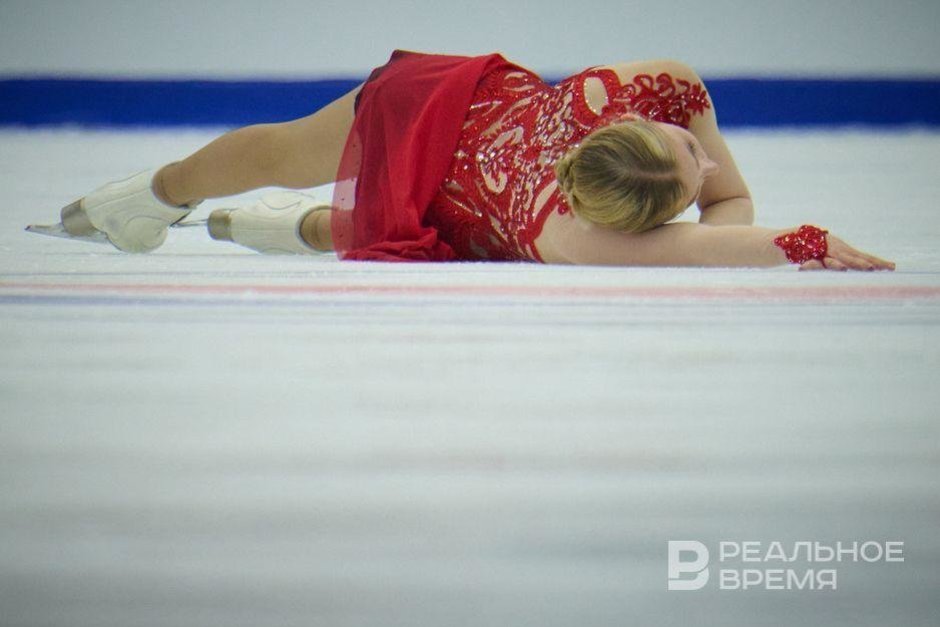
They may still return
The same applies to the bronze medallists — Maria Pavlova and Alexey Svyatchenko, who competed for Hungary. Firstly, they train in Sochi with Fedor Klimov, the husband of Tatarstan figure skating star Evgenia Tarasova. Secondly, Pavlova's first partner in pair skating was Kazanets Ilya Spiridonov, who skated with her after he stopped skating with Atakhanova, who paired up with Volodin.
By the way, the interest in ex-Russians in other figure skating teams is quite explainable. This sport is among those where competing for a foreign team does not close the door to returning. Among those who returned are pair skaters Natalya Krestyaninova and Alexey Torchinsky, who returned to Russia after competing for Azerbaijan. Dancer Nikolai Morozov also returned to his homeland after competing for Azerbaijan and then went to compete for Belarus with Ukrainian-born Tatyana Navka (who later became an Olympic champion representing Russia). Andrey Novoselov went to compete for France, returned and paired up with Ksenia Stolbova. Anastasia Grebennikova returned from Latvia and after competing in Russia went to Armenia.
Another list includes foreigners who started competing for Russia: Andrey Deputat, Tatyana Volosozhar, Yulia Obertas, pair skaters Viktoria Maksyuta and Vladislav Zhovnirsky (Ukraine), Jérôme Blanchard (France), Natalya Zabiyako (Estonia), Tiffany Zagorski (England), Yuko Kavaguti (Japan), Elena Iovanovich (Serbia). Children of Soviet coaches: Fedor Andreyev (Canada), Jonathan Gureyro (Australia), Ksenia Makarova (USA).
In this line of sports where athletes easily move from one national team to another are both types of wrestling: freestyle and Greco-Roman, as well as water polo and chess.
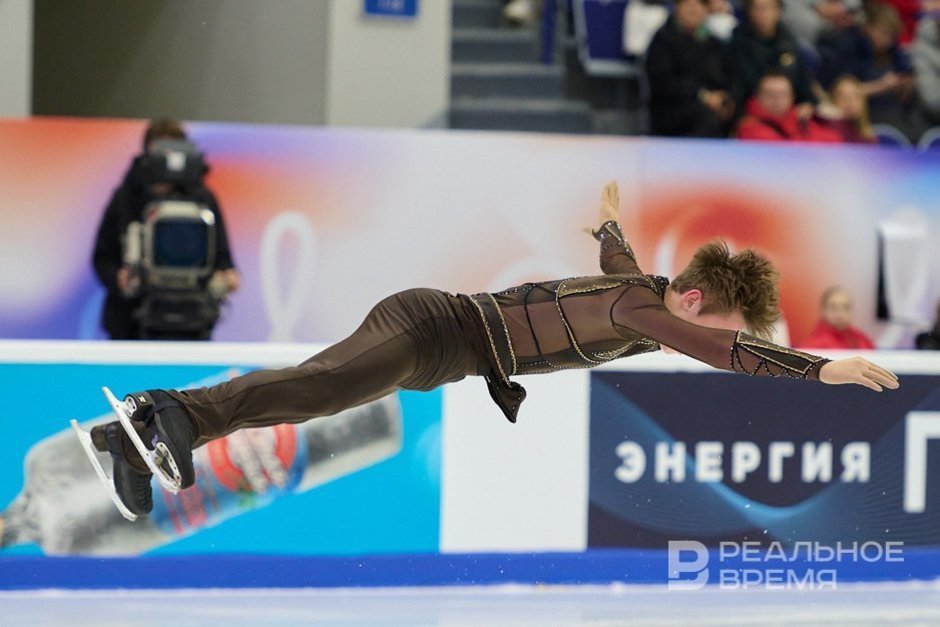
Ladies' singles: Nina Petrykina pushed the leaders aside
The women's competition was won by Estonian Nina Petrykina, far ahead of the others. Somehow inexplicably, she gradually pushed Kristina Shkuletu-Gromova and Eva-Lotta Kiibus out of the leading roles in Estonian figure skating and has won two European gold medals since last year. It should be noted that figure skating has suddenly become popular in the Baltic states in the last 10 years; the European Championships have been held in Tallinn (2022), Kaunas (2024), Tallinn (2025) and three junior world championships, all in Tallinn. However, this has only benefited Estonia, where the Selevko brothers have shown good progress, as well as Lithuania with the dance duo Rid-Ambrulevichus.
Summarising the ladies' performances: Lune Hendrix from Belgium rose to second place, and Lara Naki Guttman from Italy took third. Former Russian Anastasia Gubanova, competing for Georgia, had an unsuccessful performance. In the spring, at the team world championship in Japan, Gubanova was at her best among the best skaters, уступая only to American Alice Liu and Kaori Sakamoto from Japan. She and American Amber Glenn scored almost the same points. But the Georgian team at that event was not competitive because they had to include Moris Kvitelashvili and Alina Urushadze. Georgia qualified for the World Championship without having a second male or female singles skater. But Gubanova fought there and was competitive at the Olympic qualifying tournament, уступая only to Adeliya Petrosyan. Now everything looked gloomy, especially against the background of the Russian championship, which ended less than a month ago.
In men's singles skating, there was no expectation of Russian dominance. The Italians, the Balts (including the Estonian Selevko brothers and Latvian Vasiljevs), the Swiss Brichgi and the French Aymoz were too strong and united. The first of the medal contenders to fall out was Kevin Aymoz, who experienced another inexplicable failure at the European Championships. Three times in his long career, this talented athlete failed to qualify for the European Championship free program, finishing in 22nd, 26th and 31st places. At the same time, he has a bronze medal from the Grand Prix Final, two more appearances in the final, plus 4th, 5th and 9th places at the World Championships. The Grand Prix is held in mid-December, followed by the European Championship, and the season ends with the World Championship, so the explanation that Aymoz cannot reach his peak by mid-January can be dismissed. We can only refer to bad luck.
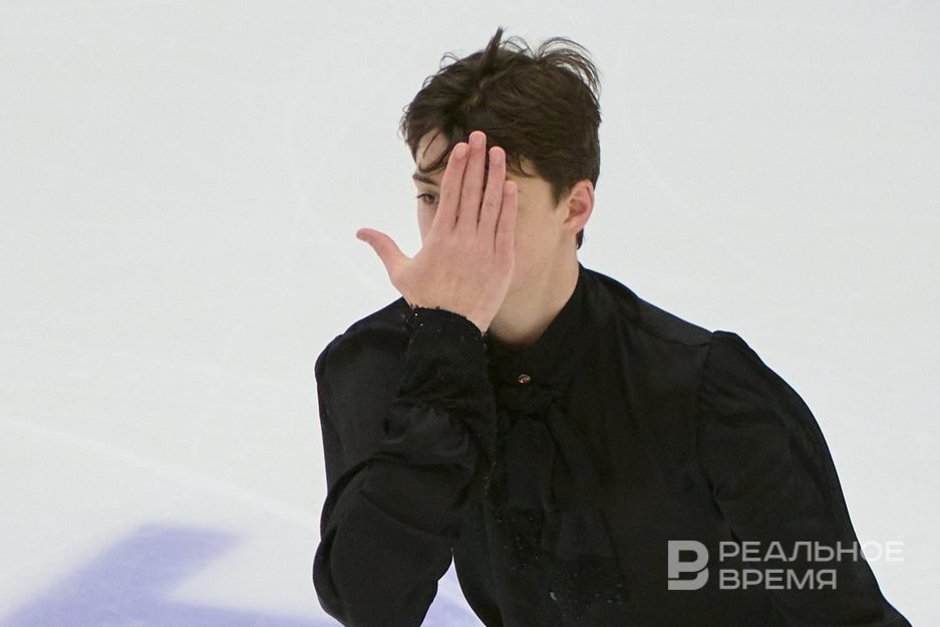
The short program was won by Nika Egadze, another Georgian figure skater who grew up in Russia. Even the president of the figure skating federation is ethnic Georgian Anton Sikharulidze, from St. Petersburg. After that, Nodari Maisuradze from Lipetsk, the champion of the 2011 Winter Universiade, which was memorable for Tatarstan because our Nizhnekamsk skier Aliya Iksanova and hockey players from Tatarstan teams filled the «real content» of the Russian national team's champion roster, skated in the pairs.
Now the Georgian team includes Muscovites Berulava and Diana Davis, St. Petersburger Gleb Smolkin, Togliatti native Anastasia Gubanova and Metelkina from Vladimir. And only Egadze was born in Tbilisi, starting to conquer Moscow and the heart of coach Eteri Tutberidze at the age of 15. This happened in 2017, when his contemporary Alina Zagitova loudly announced herself by winning the Grand Prix Final.
In 2017, Eteri Georgievna had a lot on her plate when her two students — Evgenia Medvedeva and Alina Zagitova — were fighting for the title of the leading figure skater in the world. In the same year, Alena Kastornaya, Tutberidze's third student at that time, brilliantly outperformed everyone in Kazan. Eteri Georgievna took on a newcomer and a contemporary of Alina Zagitova, who had already entered the elite of world skating at that time.
Eight long years have passed. Zagitova returned to the ice, now as the host of «Lednikovy Period». As for Egadze, there were fears that he would not be able to maintain his lead in Europe after the short program, and this actually happened.
Free program of singles skaters
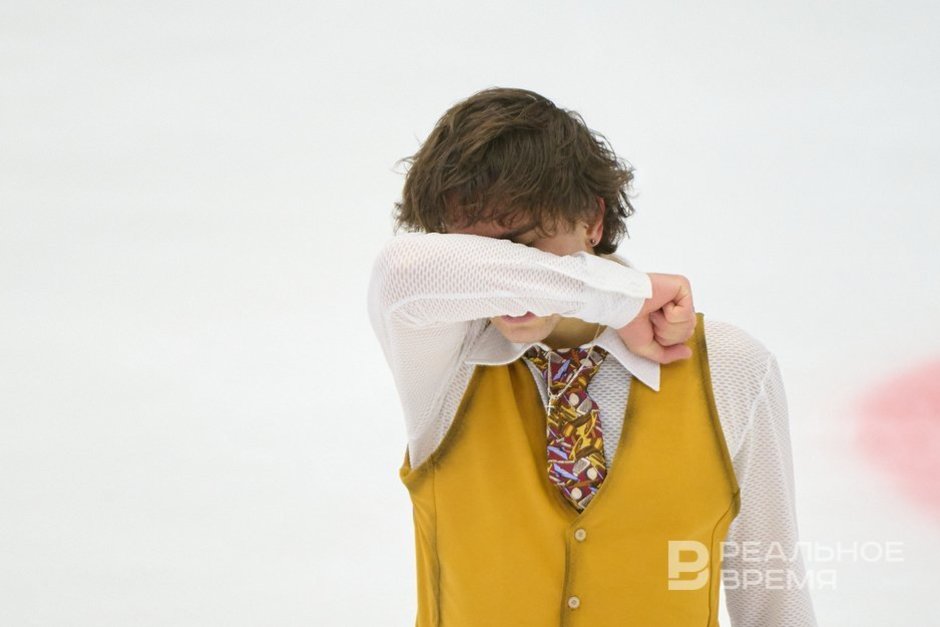
The free program of singles skaters at the European Championship reminded of the finish of the Olympic final at the 2002 Olympics. This refers to short track speed skating, when five athletes rushed to the finish line, four of whom knocked each other down like skittles. As a result, Steven Bradbury from Australia, who was in last place and the only one to cross the finish line on his feet, became the champion. And now in Sheffield, Grassl and Brichgi, the two Selevko brothers, who were in second and third place after the short program, fell during their performances. The brothers Alexander and Mikhail were fighting not only for a European Championship medal, but also for the only ticket to the Olympics. And the luck that smiled on their compatriot Petrykina a day earlier turned away from both Estonians this time.
As a result, Georgy Reshtenko, representing the Czech team, climbed the podium. The Czechs had a singles skater Michal Brezina, whose counterpart is now Kevin Aymoz. The participant of four Olympics throughout his career won only one European bronze medal, stopping at the foot of the podium so many times. Twice at the European Championships, once at the Grand Prix and once at the World Championship in Moscow, when he was beaten by Artur Gachinsky.
The silver medal was won by Italian Matteo Rizzo, and the gold went to a student of Eteri Tutberidze's group — Nika Egadze, the second after the victory of the pair skaters coached by Perm coach Pavel Slyusarenko. In Sheffield, former Russians Daniilyants (singles skating), Akopova and Rakhmanin (pair skating) could have competed for Armenia, but the British did not issue visas. The Azerbaijani Russian Litvinov and the Georgian dance duo Kazakova — Kasinsky withdrew from the tournament.