Alontsev: «The peculiarity of the protests in Iran in recent years is the absence of a single leading force»
An Iran expert, associate professor at HSE, on what is happening in Iran

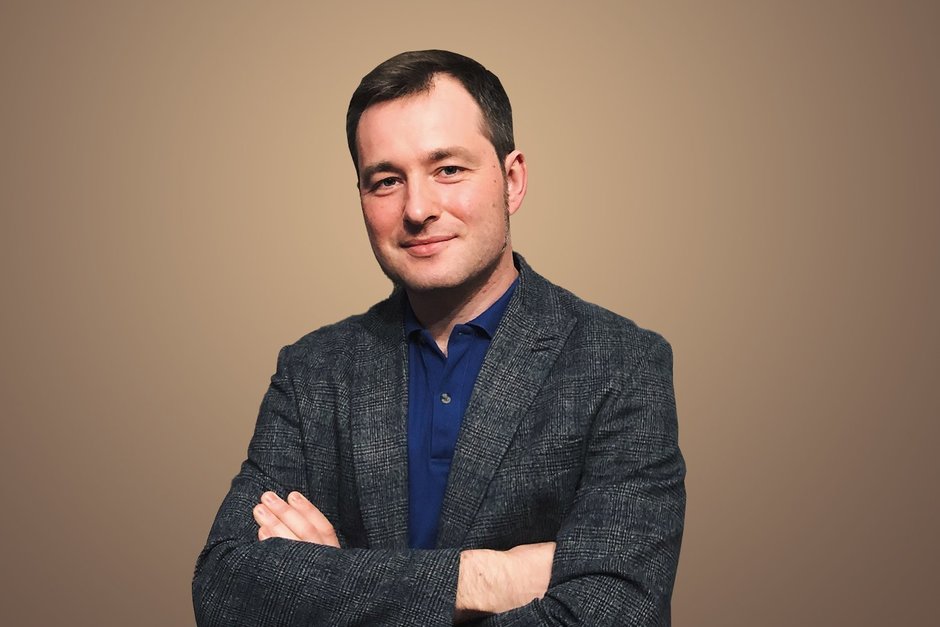
What is really happening in Iran: are external players or the economic situation in the region to blame for the unrest? Why are mosques burning? Will Iran become a secular state? What are the chances of the Shah's heir to restore monarchy in the republic? What are Tehran taxi drivers saying? An Iran expert and associate professor at the Institute of Classical East and Antiquity, Faculty of Humanities, HSE University, Maxim Alontsev, reflects on these issues in a conversation with Realnoe Vremya.
«Iranian authorities accuse the US and Israel of inciting unrest»
— What triggered the current Iranian protest and what are the protesters demanding? Do you have any information about what is happening in the country right now?
— It's no secret that Iran has faced many economic problems in recent years due to sanctions and management failures. The wave of protests began on December 28 amid the collapse of the national currency, but the range of demands quickly expanded and moved into the political sphere.
People associate the rise in prices and the decline in living standards with the policies of the authorities. The «cumulative effect» has also played a role in the current protests. For example, there were big problems with water resources in the summer and autumn, which were caused not only by ineffective management but also by climate change (the summer was quite hot and dry).
As for information about the current situation in the country, I'm afraid no one has a clear understanding of how the situation is developing. The internet is currently down in Iran, which is a major obstacle to getting a more or less complete picture of what's happening. Even before the shutdown, the information that was coming in was to some extent biased, which, of course, does not contribute to a balanced analysis.
— Who is the main driving force behind the protests and does it have a main driving, leading force? Is it possible that this is a staged situation, or has the country really erupted from within, from the grassroots? After all, Iran has been restless for a long time.
— The protests began with the actions of the bazaar and small traders, this wave was подхвачены by students, and then the situation escalated.
The peculiarity of the protests in recent years in Iran is the absence of any single leading force. Iranian emigration is actively vying for this role, part of which names the heir to the last Shah's dynasty, Reza Pahlavi, as the leader of the protest, but the validity of such declarations is difficult to verify.
The Iranian authorities accuse external forces (mainly the US and Israel) of inciting unrest, but here it is necessary to separate conspiracy theories from the real degree of influence of foreign players. Of course, it would be foolish not to take advantage of the weakness of a key rival in the region — almost all means are good in such a confrontation, but we still have to find out how important a role external actors have played.
— What were the prevailing moods in society until now and did the ayatollah regime enjoy the support of the majority of the population? What have been the main problematic points in the relationship between the authorities and citizens so far — if you look at it through the eyes of an ordinary Iranian?
— Again, we don't have a complete picture describing the real popularity of the authorities among the population, if only because of the lack of verifiable sociological data. Any Tehran taxi driver will immediately say that no one supports the authorities, but they have been saying this for the last 15 years, as far as I remember. The regime has its supporters — not only beneficiaries, but also people who fully share the official ideological установок and support the foreign policy course.
The main points of tension are centered around economic and political problems. We've already talked about the economy, but the level of political activity in the legal field also indicates tension in this area. Throughout the 1990s and 2010s, Iranians regularly went to the polls, ensuring a fairly high turnout and demonstrating a willingness for political change. However, recent electoral cycles have recorded a decline in interest in politics (and, consequently, trust in the political system as a whole), which is reflected in the drop in turnout.
— The US authorities held a meeting with the son of the last Iranian Shah, Reza Pahlavi. What do you think this was? Are there any assumptions among experts about the future restoration of monarchy in the country, and what scenario of further developments could be realized if this happens?
— Reza Pahlavi is certainly a big irritant for official Iran, if only because of his origin. Actually, the very fact of the meeting (and it was a meeting with Steven Whitcoff) doesn't mean anything yet, because the same Donald Trump said that Reza is a nice guy, but not ready to rule Iran.
In general, talks of restoring the monarchy are largely speculative. Reza Pahlavi himself says that he is ready to be a kind of transit figure, and the future structure of the state should be determined by a referendum. Any talk of restoring the monarchy at the moment is more likely driven by nostalgic sentiments, imaginary rather than real. There are fewer and fewer witnesses of the Shah's times who would have experienced them in a more or less adult age, and the nostalgic interest in the «bygone times», a kind of lost «golden age», is a quite understandable (and familiar to us) mood of people.
— Could Iran return to the status of a secular state and is there a demand for this in society?
— I have two judgments on this matter, which may seem quite paradoxical. The first paradox is that we must realize that Iran has never been a completely secular state throughout its history. Such a judgment is the fruit of two opposing propaganda myths. The current leadership accuses the Pahlavi regime they overthrew of being godless, and its supporters, in response, construct an image of a «secular» Iran of the Shah's times. The books and interviews of the last Iranian Shah, Mohammad Reza Pahlavi (especially from the 1970s), are imbued with messianic sentiments and clearly create an image of a divinely chosen ruler who should lead the Iranian civilization to a bright future. The Shah called himself a believing Muslim (as did the vast majority of the country's inhabitants, according to the censuses). Can such a leader or country be called secular? The image of a «secular» Iran arises as a counterbalance to the «religious» Islamic Republic, although in reality only a small stratum of the population of large cities, which we can see in endless collections of photographs under the general title «Iran before the revolution», led a secular lifestyle. At the same time, the core of the мировоззренческих установок of a large part of the population has hardly changed significantly over the past 60 years. Religion has played and continues to play a big role in their lives, and the change of regime has not had a significant impact on this.
The second paradox is that researchers have been noting the secularization of life in the «religious» Islamic Republic for a decade and a half. The population of large cities (especially the young) has a demand for reducing the role of religion in society, eliminating the ideological dictate of Islamic norms, etc. It is important to understand that these are the aspirations of a certain part of the population, not a social consensus.
I am ready to assume that if there is a hypothetical reconfiguration of the regime, this issue will be one of the most difficult if it is really about expressing some kind of public will, and not imposing a certain type of future on the population. The experience of imposing secularism in Iran in the 1920s and 1930s (during a process that researchers call «authoritarian modernization») has already been, and it caused a lot of personal tragedies.
— Donald Trump has said that «help is on the way». What could he mean by this? If the US strikes Iran, will it be a repetition of the events in Libya and Iraq — the current leaders will be eliminated, and the country will plunge into political and economic chaos for a long time? And will this strike happen, in your opinion? If so, why hasn't it happened yet — after all, Trump's statement was made more than a week ago?
— It seems to me that the absence of a strike (at the moment) is the best indicator of how complex and multifaceted this decision is. Of course, no one knows Trump's intentions, but we can try to rationalize the situation based on his previous actions.
As we have seen, the public image is very important for the American president, and his goal-setting is largely based on this. He is hesitating with a military action because he is apparently not completely sure of its success. It's one thing to remove an unpopular leader from power with a quick operation (like Maduro), and another to ignite an uncontrollable conflict in one of the hottest regions of the world, involve a key ally in the region (Israel) in an armed confrontation, spoil relations with the Gulf monarchies and provoke volatility in the oil market. It is much more difficult to emerge victorious (even rhetorically) from such a situation.
This does not mean that there will be no strike, but any forecasts about the development of the situation seem groundless to me due to the large number of variables.
— The information background on the events is quite blurred: there are contradictory reports about real events, and a number of experts call photo and video evidence fabricated. Do you have any information about what is really happening on the streets of Iranian cities? There are reports of 2,000 deaths — how credible are these figures? It was reported that several cities have been captured; which cities are these and what is the situation there now?
— Yes, along with the expansion of the information vacuum and a large flow of biased information, there is also the problem of fakes. Social networks quickly pick up unverified information, which then seeps into the media, which to some extent immediately legitimizes it. This is how information about the «capture» of cities appears — protesters announce this, the information spreads on social networks, and it is impossible to verify it. Usually we are talking about small cities in the west of the country, where the forces of law and order are not enough to suppress these protests at the moment. Nothing indicates that the city has finally fallen into the hands of the protesters, but a catchy headline is already guaranteed.
Regarding the information about the number of deaths, I will give an example from recent Iranian history. There is still no consensus among researchers on the number of people who died during the Islamic Revolution of 1978–1979. Similarly, the number of prisoners and victims of SAVAK, the Shah's state security agency, is disputed. Although these events are already part of history (not in a everyday, but in a scientific sense) and all information about them can be verified. However, due to the ideologization of these events, we are forced to operate with estimates from different sides, each of which seeks to present them in a favourable light. As a result, the range is significant, and we are talking, I remind you, about events half a century ago.
I understand that people want quick answers to their pressing questions, but now we cannot give any balanced assessment of any figures.
— What is behind the attacks on mosques?
— Some protesters (the Iranian authorities call them «rioters» and «terrorists») consider mosques to be one of the main symbols of the regime. In addition, there were reports that forces aimed at suppressing the protests were gathering in mosques (again, it is hardly possible to verify this information now). But it still seems to me that the symbolic component is important in these acts — the «religious» facade of the current authorities is under attack.
In general, this is a rather unique case in Iranian history. I may be wrong, but it seems that even the troops of foreign states that were in Iran in the 20th century did not attack mosques.
— What could be the consequences of the two main scenarios (overthrow of the government in Iran/suppression of the protest) for Russia in political and cultural terms?
— The history of Russian-Iranian relations, frankly speaking, is ambiguous — we can recall two Russo-Persian wars, the colonial policy of the Russian Empire, and the Soviet-British intervention during World War II. These events may seem insignificant to us or fall into the category of «old legends», but for Iranians, these episodes are symbols of their state's lack of independence and weakness and are perceived as a national humiliation.
However, at the moment, relations between the two countries are quite good. It is clear that to some extent the current closeness is forced — both states are in relative isolation and are seeking to develop new partnerships. But we can't attribute everything to «forced friendship». Rationally, and not emotionally, bilateral cooperation is beneficial to both Russia and Iran. And if we form foreign policy on such grounds, then relations will develop regardless of who is in power in Tehran and Moscow.
Let me give a simple example. One of the most fruitful periods of cooperation between the USSR and Iran was the 1970s — at that time, the Iranian monarchy was one of the main regional allies of the «American militarism». During this period, Soviet specialists built a number of industrial enterprises in Iran and also began work on a nuclear power plant in Bushehr. The US, by the way, was not happy with this cooperation: Iran was supplied with advanced American weapons, the information about which should not have fallen into the hands of Soviet intelligence. However, pragmatism was above ideology.
Russia will remain a neighbour of Iran in any case (even though we only have a maritime border). And the two states will have to build relations in any case.