Jack London: «I would rather be ashes than dust»
«Martin Eden» is the most famous work by Jack London, whose life journey resembles the story of the hero of the novel. On the occasion of the 150th anniversary of the American writer's birth, we are telling how much autobiography is in this book.
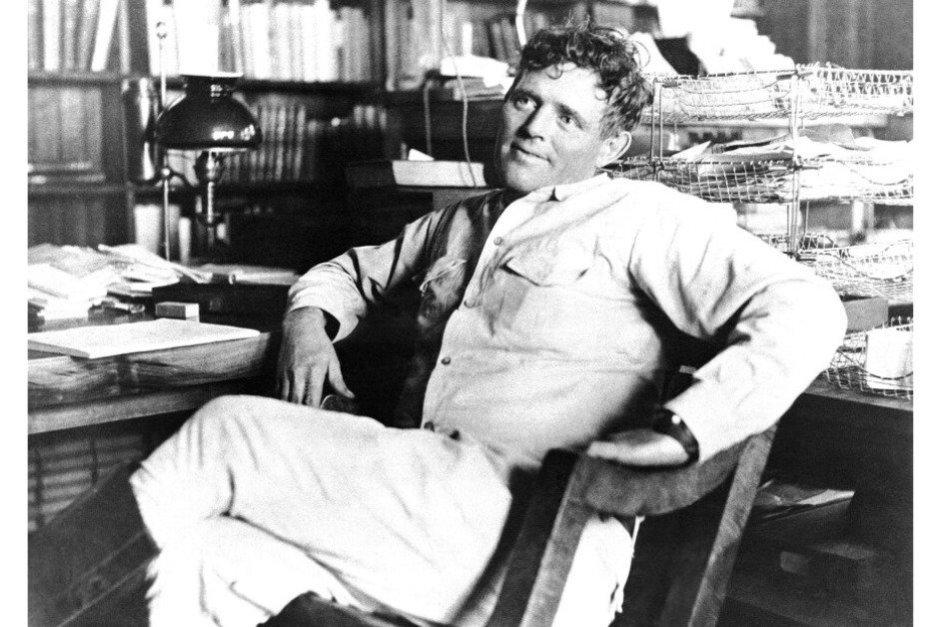
«Martin Eden» was conceived by Jack London as an «attack on the bourgeoisie» and became one of the harshest statements about the price of individual success, writing work and the illusions of the American dream. The story of Martin Eden is not an autobiography, as London insisted, but a documentarily accurate portrait of the path of a «people's artist» in the capitalist society of the early 20th century and the key to understanding the fate of the writer himself. Literary reviewer of «Real Time» Ekaterina Petrova tells us how the author and his hero are similar.
«An attack on the bourgeoisie»
Jack London created the novel «Martin Eden» at a time when he had already gained international fame thanks to the books «The Call of the Wild», «The Sea Wolf» and «White Fang». In 1907, at the age of 33, London set off on a long voyage on the yacht «Snark», built according to his own design. The journey was intended to be a round-the-world voyage and was supposed to last up to seven years. The writer planned to study the life and customs of different countries and prepare a book of essays about the voyage. In practice, the route turned out to be shorter and more difficult: the «Snark» set sail in April 1907 with an unfinished hull, and the journey itself was accompanied by constant financial difficulties and a deterioration in London's health. It was in these conditions, against the background of fatigue and disappointment, that the idea for the novel was formed.
Work on «Martin Eden» began in the summer of that year during the first stop in the Hawaiian Islands and was completed in February 1908. The novel was published in The Pacific Monthly magazine from September 1908 to September 1909 and was released as a separate book by Macmillan Company in September 1909. In the working materials, London initially called the novel «The Mad Lover of God Himself», and also considered the options «Success» and «Stardust». There was also a neutral option — «Martin Eden», which the publisher insisted on. The author himself defined the idea as follows: the novel, he said, was an «attack on the bourgeoisie and everything it stands for».
London insisted that this book is not an autobiography. In a public letter written in response to a sermon by Charles R. Brown in January 1910, the writer emphasized:
«I did not write «Martin Eden» as an autobiography, not as a parable about the terrible end that awaits an unbeliever in God, but as an indictment of this pleasant, like a wild beast, struggle of individualism. He fought to get into bourgeois circles, where he expected to find refinement, culture, a secular lifestyle and sublime thinking. He made his way into these circles and was shocked by the colossal, unattractive mediocrity of the bourgeoisie».
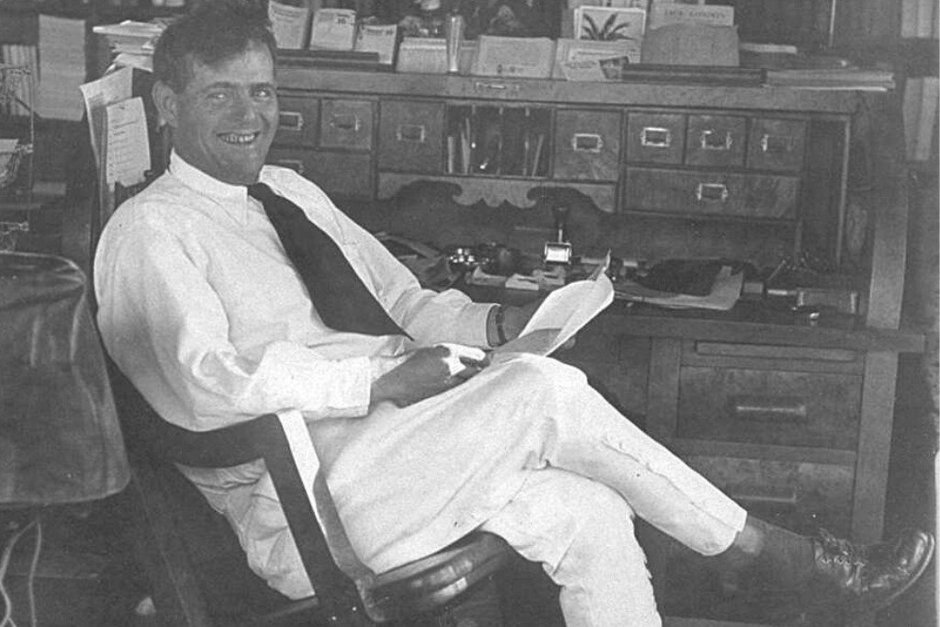
At the same time, many characters had real prototypes: the hero's name was borrowed from the Swedish worker Morten Edin, the image of Ruth Morse went back to the writer's first love, Mabel Applegarth, and Russ Brissenden was created based on the poet George Sterling.
The publication of the novel coincided with a period of active discussions about the «American dream» and social success. Contemporary criticism in the USA received the book with restraint: many reviewers, including socialists, accused the author of apologizing for individualism and deviating from socialist positions. At the same time, London himself bluntly stated that the story of Martin Eden is a story about a man who, having achieved success, does not find in it the basis for further life and struggle. Later, literary critics, including Sam Baskett, considered the novel as a reflection of the American intellectual and social environment of the late 19th and early 20th centuries, emphasizing its historical conditionality.
The collapse of the American dream
The plot of the novel «Martin Eden» takes place at the beginning of the 20th century in Oakland, California. The main character is a young sailor and worker from the lower classes, about 21 years old. He accidentally meets Ruth Morse, a girl from a wealthy bourgeois family, and this acquaintance becomes a decisive impulse for his self-education. Striving to become worthy of Ruth, Eden develops a strict self-improvement program: he works on his speech and pronunciation, reads philosophical and fiction literature.
Martin begins to write poetry and prose and sends it to magazines. He lives in extreme poverty, scrapes by with odd jobs, goes hungry and lacks sleep, but is convinced that his texts are stronger and more honest than those that are already being published. Relations with Ruth develop against the background of a growing social gap: her family is wary of Eden and links the possibility of marriage with his material and social success.
The central line of the novel is the long wait for recognition. For two years, Martin promises Ruth that success is inevitable, but publishers return the manuscripts, and the girl's patience is running out. In a letter, she reproaches him for not «settling down» and not trying «to become someone».

During this period of Eden's life, the poet and philosopher Russ Brissenden plays an important role, who highly appreciates his talent and sharply criticizes the bourgeois literary environment. The posthumous publication of Brissenden's poem «Ephemeris» causes a loud resonance, and soon the publishing house releases Eden's own philosophical book «The Shame of the Sun», which brings him wide fame. The paradox of the novel is that recognition comes precisely when the hero has internally turned away from the environment that used to ignore him.
The main themes of the novel are formulated by London through the experiences of the hero himself. Having achieved success, Eden bitterly notes that society values him not for his work or personality, but for his fame:
«You are treating me not at all for my work, but because everyone else is treating me».
Martin realizes that the texts for which he is now being honored were written in years of need and were rejected by the same people. The breakup with Ruth, the loss of interest in literature and the feeling of inner emptiness lead the hero to the decision to leave life. Thus, the hero goes from faith in social and creative success to complete disappointment in its value, which determines the key themes of the novel: self-education, social inequality, writing work and the illusory nature of recognition.
«From that time on I had no childhood»
The novel «Martin Eden» is difficult to separate from the personality of the author himself due to many biographical intersections, no matter how London denied the autobiographical nature. There are many similarities between Martin Eden and Jack London — and this is a fact. First of all, the social origin. Eden is a worker and sailor from the lower classes of Oakland, starting life without education and connections. London grew up in a working-class environment in San Francisco and Oakland, in conditions of chronic need and early work. Both paths begin in a port, factory and semi-vagrant environment, where physical labor, odd jobs and constant instability shaped the life experience of the future writer and his hero.
The facts of London's childhood and youth largely coincide with the social position of Martin Eden. The London family lived south of Market Street, in poor neighborhoods, where, in the words of literary critic Vil Bykov, «the oppressed majority lived, suffering from constant malnutrition». Jack started working early to help his family: he delivered newspapers, did odd jobs, giving the money he earned to his family. Later he recalled:
«Every cent I gave to my family, and going to school, I was ashamed of my hat, shoes, clothes... From that time on I had no childhood. Up at three in the morning to deliver newspapers. After selling the newspapers, I didn't go home, but to school. After school — evening newspapers. On Saturdays I worked with the ice vans, on Sundays I went to the bowling alley and set up the pins for drunken Dutchmen... I gave every cent and was dressed like a scarecrow».
Similarly, Eden in the novel lives in poverty, combines hard work with self-education and literary work. Both in the biography and in the literary text, the starting point is the same — a working-class environment, devoid of cultural capital, but full of survival experience.
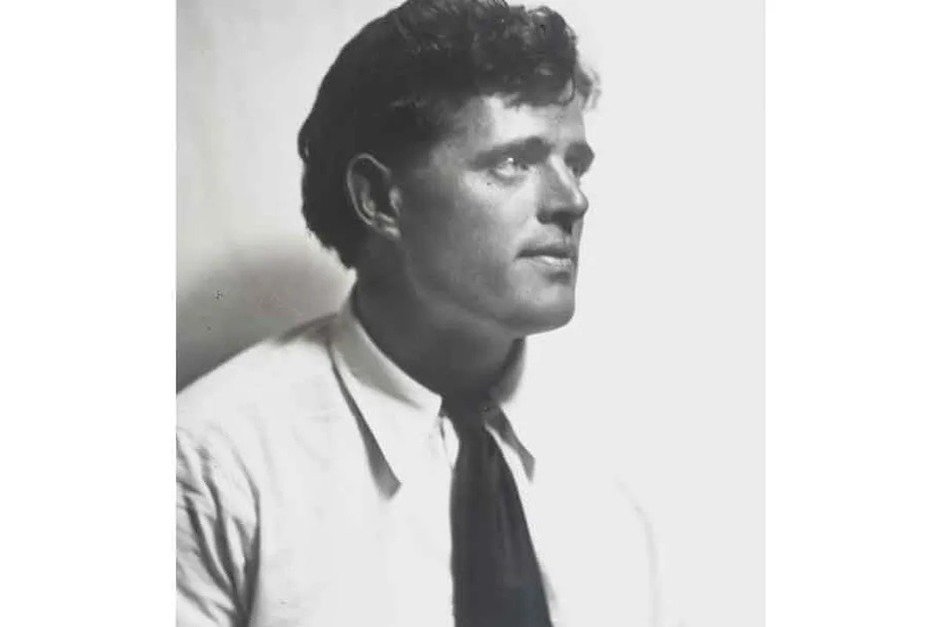
London tried many occupations. He wrote about the professions of a sailor, factory worker and laundry worker with full knowledge of the subject. As a schoolboy, Jack London cleaned beer pavilions, and at the age of fourteen he went to work at a cannery, where the working day began at dawn and ended late at night. In the novel, Martin Eden has a similar trajectory: he works in a laundry, which is described as exhausting and draining, preventing not only rest, but also mental work.
The common experience of the writer and the hero is associated with the sea and with semi-legal or risky earnings. At the age of fifteen, London borrowed money and bought a used schooner «Razzle-Dazzle», becoming an «oyster pirate» in the San Francisco Bay. According to him, one night of such fishing brought more than a month's work at the factory. Later he served in the fishing patrol, and in 1893 he signed on as a sailor on the trading schooner «Sophie Sutherland», which set sail for the shores of Japan. These biographical facts are reflected in the novel: Martin Eden is a former sailor from a working-class background.
After returning from the voyage, London worked in a jute factory, in a laundry and as a stoker at a power plant, throwing coal to the furnace. He later learned that his labor replaced the work of two adult men, one of whom, unable to withstand unemployment, committed suicide, after which London immediately left this job. In the book «The Road» he wrote about imprisonment for vagrancy, emphasizing that the horrors of prison are «unprintable and indescribable». Both the writer and his hero went through a series of hard, unstable jobs before literature became a way of existence for them.
«Selling my brains»
Vil Bykov emphasized that the novel reflects «the fate of an artist from the people in a capitalist society», as well as the real conditions in which a talented person found himself in the USA at the end of the 19th and beginning of the 20th centuries. Jack London himself began as a self-taught man: as a schoolboy he was published in the Oakland High School magazine «The Aegis» and wrote the story «Another Unfortunate» about a young talent who committed suicide out of disappointment in his talent. Later, researchers associate this early plot with «Martin Eden», with the fundamental difference that in the novel London already relied on his own life experience and a more mature understanding of the social environment.
London's actual path to success was slow and unstable. His first notable publication, the essay «Typhoon off the Coast of Japan», was published on November 12, 1893 and brought a monetary prize, but did not relieve him of need. In the following years he wrote essays about vagrancy and prison. And then he came to the conclusion that physical labor could not provide a person with a decent existence and that the only way out was to become a writer.

London viewed writing as a business, as an opportunity to «sell his brains» and break out of the trap of hired labor. However, magazines paid symbolic fees for a long time: The Overland Monthly magazine valued the story «For Those Who Are on the Way!» at only five dollars, and London himself admitted that he was «literally and literarily saved» when The Black Cat magazine paid forty dollars for the story «A Thousand Deaths».
The same path — years of rejections, studying editorial tastes and forced compromises — is taken by Martin Eden. In the novel, he analyzes publishing policy and comes up with a «three-part formula» for mass literature: «two lovers must be separated; then reunited; then — the sound of wedding bells». Martin insists on the right to write the truth:
«This is life!.. This is real. This is the truth. I must describe life as I see it».
These formulas and реплики directly relate to London's own practice, who, according to Bykov, «decomposed the beauty of other people's works into their constituent elements», trying to understand the secret of success, and for years sent manuscripts that were returned without explanation.
«The world belongs to the strong»
In the spring of 1894, Jack London joined the march of the unemployed to Washington, organized in the face of an economic crisis, and traveled the country with the «industrial army» of the unemployed, living on begging and occasional theft. London witnessed mass strikes, including the Pullman workers' strike and the repression against them, the arrests of socialist leaders, including Eugene Debs. It was these impressions, according to his own admission, that led the writer to socialism. Vil Bykov emphasized that socialism was «driven into him by life». In 1895, London joined the Socialist Labor Party of the USA, later the Socialist Party of America, actively participated in rallies and street protests, for which the police arrested him several times.
London viewed socialism as the result of inevitable class struggle. In the article «Revolution» and in the preface to the collection «War of the Classes», he argued that the goal of socialists is to «destroy the capitalist society» and that when the authorities use violence, they «respond with fury to fury». At the same time, he emphasized the importance of the organized working class, stating that «the strength of organized labor lies in brotherhood». In his journalism, London defined socialism as a «new economic and political system» that ensured a more just production and distribution of food. By the way, in these years he often ended his letters with the formula «Yours — for the revolution».

In the novel «Martin Eden», socialist ideas are present indirectly and do not coincide with the views of the main character. Eden is mistakenly attributed with socialist beliefs, while he himself remains an individualist. The bearer of the socialist position in the novel is Russ Brissenden, who directly warns the hero about the consequences of individualism in bourgeois society:
«You see, I would like you to become a socialist before I die. This will give meaning to your life. Only this will save you in times of disappointment, and you cannot avoid it».
This thesis correlates with London's own views, who in real life was an active socialist publicist and lecturer, ran for mayor of Oakland as a socialist and published the collections «War of the Classes» (1905) and «Revolution and Other Essays» (1906).
In addition to socialist ideas, Jack London's worldview was significantly influenced by the philosophy of Herbert Spencer. Along with Charles Darwin, Karl Marx and Friedrich Engels, Spencer was among the key authors who shaped London's life philosophy. According to Bykov, London recognized the validity of Spencer's provisions on the continuous adaptability of living organisms to the environment and viewed natural selection as the «basis for the existence and improvement of organisms». He was attracted by the seemingly scientific стройность of Spencer's system, which transferred the laws of evolution from the natural world to society.
London himself called Spencer his teacher, although his acquaintance with his works was fragmentary and mediated through followers, in particular the British sociologist and philosopher Benjamin Kidd. At the same time, London fundamentally disagreed with Spencer in his assessment of social processes: if the English philosopher denied revolution and socialism, then London, relying on Marxism, considered class struggle and revolutionary transformation of society inevitable.

In the novel «Martin Eden», Spencer's ideas manifest themselves already at the level of the hero's worldview. Martin's views are based on a mixture of Spencer's materialism and Nietzsche's rationalism and ethics. The hero himself refers to the biological law of natural selection and claims that «the world belongs to the strong», противопоставляя himself to socialists and calling them bearers of «slave morality». However, the author's intention was different. In the copy of the novel presented to Upton Sinclair, London wrote:
«One of my motives in this book was to attack individualism (in the person of the hero)».
Jack London emphasized that Martin's collapse was supposed to be a debunking of individualism and Nietzsche's idea of the «superman», and later admitted that this intention «was not discovered by any reviewer».
Spirit, deity, goddess
One of the important characters in the book, who mirrors the main character, is Ruth Morse. Her image is built through the perception of Martin Eden himself and is immediately set as a contrast to his past life. At her first appearance, she appears as a «pale, airy creature with large spiritual blue eyes», which Martin perceives as a spirit, deity, goddess. The author emphasizes the social difference between the characters through appearance, speech and manners: Martin's slang and physical strength are contrasted with Ruth's «correct speech» and refined intellect.
Later, Ruth acts not only as an object of love, but also as part of the bourgeois environment: she suggests that Martin «get a job» and links the possibility of marriage with his social success, and the breakup occurs under pressure from parents and class prejudices.
The image of Ruth is inspired by Jack London's first love — Mabel Applegarth. According to V. Bykov, London met her in a literary circle: Mabel belonged to an intellectual environment and seemed to him «the embodiment of tenderness and refinement», that very «sublime thing that his poetic soul irresistibly strived for». And their feelings were mutual. It was during this period that London began to systematically engage in self-education and literature, which later almost unchanged would be transferred to the plot of «Martin Eden».

The biographical details of London and Mabel's relationship are largely repeated in the novel. Like Ruth, Mabel had a brother (Edward), through whom the acquaintance took place. As in the novel, the real beloved suggested that London «settle down» and choose a stable job — in his case, it was about the postal service. Mabel's mother was strongly opposed to marriage with an unprovided writer and called him a «savage», which is also reflected in the image of the Morse family. London later wrote that, looking back, he understood the reasons for the breakup: he generalized the facts of his own biography and considered them against the background of social contradictions, seeking to reveal the class essence of the characters.
After the breakup with Mabel, London linked his personal experience with the artistic concept of the novel. In «Martin Eden», according to V. Bykov, through Ruth and her surroundings, the writer «stigmatized the morality of a society infected with the pursuit of dollars», противопоставив ему the world of simple workers. London himself recorded that love in this novel acts as a driving force: it motivates the hero and pushes him to fight against circumstances.
«Outwitting the instinct of self-preservation»
Jack London died on November 22, 1916, on his ranch in Glen Ellen, at the age of 40. In recent years he had been seriously ill: he suffered from uremia, dysentery, the consequences of scurvy and tropical infections, experienced severe pain and took morphine and opium, which were freely used as painkillers at that time. The death certificate lists uremia after acute renal colic as the cause of death.
Soon after his death, the version of suicide arose: it was based on the fact of morphine use and the testimony of a servant who claimed to have seen the calculation of a lethal dose. However, this document has not been preserved, and the writer's family rejected such statements. Most modern biographers agree on the formulation: death from uremia, aggravated by an accidental morphine overdose.
The version of suicide was fueled by London's own texts. The theme of voluntary departure from life was present in his work long before 1916. In the autobiographical novel «John Barleycorn», he wrote about his own youthful episode when «some vague fantasy — to leave with the отливом — suddenly seized me», and he almost drowned in the San Francisco Bay. In the novel «Martin Eden», suicide becomes a key motif: first Russ Brissenden dies, then the hero himself consciously goes under the water in the Pacific Ocean, «outwitting the instinct of self-preservation».
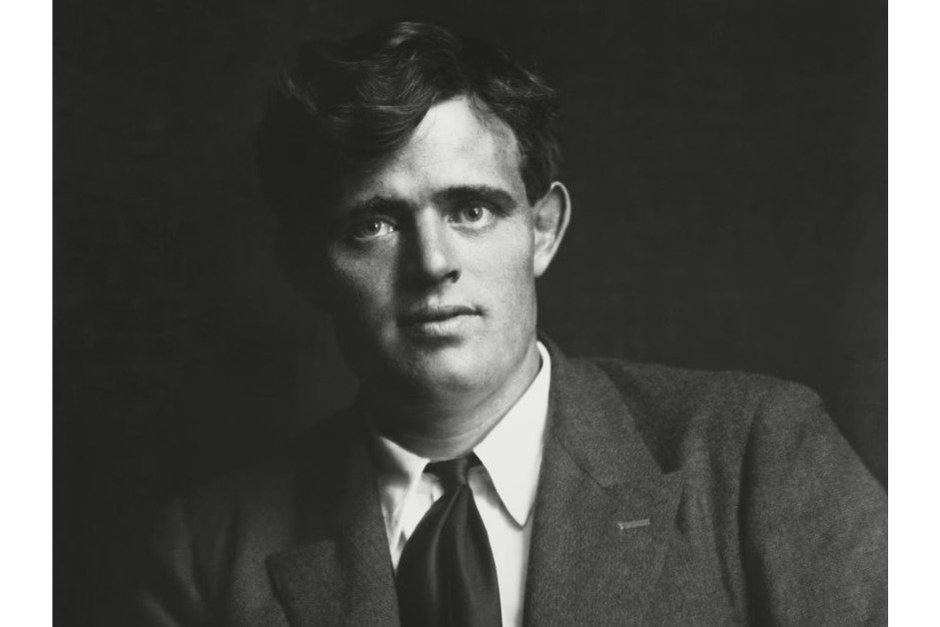
Martin Eden's death is often compared with the fate of the author, but London himself made a clear distinction. In a letter dated October 7, 1916, he wrote:
«And why shouldn't I feel a little sorry for Martin Eden. Martin Eden is me. Martin Eden was an individualist, I was a socialist. That's why I stayed alive, and that's why Martin Eden died».
The end of London's biography turned out to be associated with the loss of the «great goal», as Vil Bykov wrote: severe illness, withdrawal from public struggle and creative crisis coincided in time. In March 1916, London officially left the Socialist Party of the USA, stating that freedom and independence cannot be «presented to nations and classes on a silver platter by outstanding individuals».
His ashes were cremated and buried on the ranch grounds under a stone from «The Wolf House» with the laconic inscription «Jack London». The symbolic epilogue of his entire life and work was the formula that London truly considered his own: «I would rather be ashes than dust» — a phrase recorded in his 1909 letter and later repeatedly cited as the writer's life credo.
Ekaterina Petrova is a literary reviewer for the online newspaper «Real Time» and the host of the telegram channel «Macaroon Buns».