Her story, not his
This week's book is the biographical novel «Also Einstein» by Marie Benedict, which tells the story of Mileva Marić, the first wife of the famous scientist.
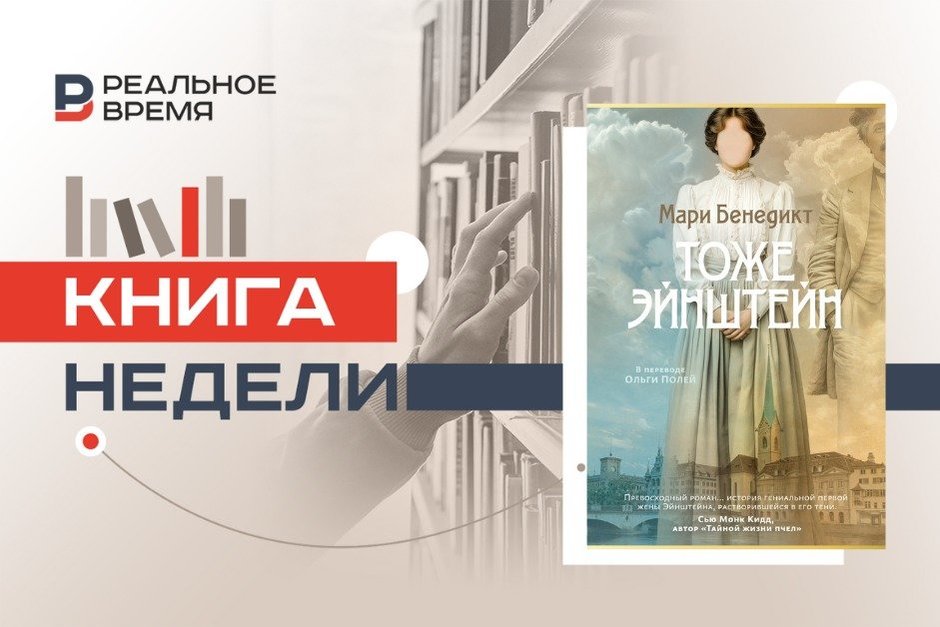
On Friday, December 19, it was 150 years since the birth of Mileva Marić — a physicist, mathematician and the first wife of Albert Einstein. This date brings back into focus a figure whose biography has been on the periphery of the history of science for decades. Marie Benedict builds her novel «Also Einstein» as an attempt to restore the lost voice and show Marić's life from the inside — from her studies at the Zurich Polytechnic to the breakdown of her marriage. The book does not retell Einstein's story, but consistently shifts the focus to the woman who was рядом with the key events of the scientific 20th century.
The demand for a new voice
Marie Benedict is the literary pseudonym of American writer and lawyer Heather Benedict Terrell. She received a degree in history and art history from Boston College, which she graduated with honours, and then studied law at the Boston University School of Law. Terrell worked as a trial lawyer in New York for more than ten years. According to her, the law «never suited her», and over time she «took a more risky, but genuine path» — she began writing historical prose about women of the past. After the release of her debut novel «Chrysalis» in 2007, she left her legal practice and focused on literature.
As Benedict herself emphasises, her authorial task is «to bring out the most important, complex and interesting women of history from the past and bring them back to the present», so that «the scale of their contribution and the insights they provide for modern problems are visible». This interest was formed in her childhood: the writer recalled that it was reading Marion Zimmer Bradley's novel «The Mists of Avalon» that made her think about «how history is actually constructed» and what female stories remain hidden in it. Under the name Marie Benedict, the writer has published a number of bestsellers devoted to such figures as physicist Mileva Marić, actress and inventor Hedy Lamarr, politician Clementine Churchill and biophysicist Rosalind Franklin. Benedict's books have been translated into nearly thirty languages.
The decision to write «Also Einstein» did not come to Marie Benedict immediately. She said that she almost gave up on this book: Mileva Marić's story «insistently asked to be told», but inevitably required the presence of Albert Einstein — a figure that she called a «secular saint» and a person with a stable set of cultural ideas around his name. Benedict doubted whether she was ready to deal with this myth. The turning point was the realisation that the novel is «not about him, but about her» — about a woman whose biography was «buried by time, prejudices and distortions». At that moment, according to the writer, she felt «obliged to extract Mileva from the wreckage of the past and share her story with the world».

Interest in Marić also arose from a more private situation. Benedict said that she was reading a children's biography «Who Is Albert Einstein?» with her son and noticed a brief mention of the scientist's first wife — a physics student whom he met at university and was married to during the period of his key scientific works. This fact prompted Benedict to conduct research: at first, she was attracted by the opportunity to look at the formation of Einstein's theories «from a different point of view», but the more she learned about Mileva's journey — from the outskirts of the Austro-Hungarian Empire to the physics classrooms of Switzerland at the turn of the century — the more obvious it became that it was her life that needed to be written about. The prospect of telling Einstein's story was not even considered: his past, according to Benedict, «has been exhaustively researched», while Mileva's story required «a new voice».
«Obscured by time, marriage and her husband's reputation»
Mileva Marić was a Serbian physicist and mathematician who was born on December 19, 1875, in Titel, in the territory of the then Austro-Hungary. She showed an early aptitude for the exact sciences and received an education that was rare for a woman at the end of the 19th century. After studying at gymnasiums in what is now Serbia and obtaining special permission to attend classes at men's educational institutions, Marić entered the Zurich Polytechnic (now ETH) in 1896, choosing a diploma course in physics and mathematics. She was the only woman among six students in her group. Albert Einstein joined the course in the same year, and Marić quickly became close to him.
Marić's studies in Zurich included higher mathematics, theoretical and experimental physics, mechanics and astronomy. Her results in physics in the intermediate exams of 1899 coincided with Einstein's grades, but she failed the final exams: in 1900, Marić failed the graduation test due to a low grade in function theory. In 1901, her academic career was finally interrupted by a pregnancy with Einstein. This period would later be called key for interpretations of their relationship. As Marie Benedict emphasised, Mileva made a «dramatic rise from the intellectual periphery of Eastern Europe to the advanced world of European physics», but this path was broken by the circumstances of her personal life.
Marić and Einstein's relationship developed in parallel with their studies and early scientific searches. In 1902, the couple had a daughter, Liserl, about whose fate no reliable data has been preserved. Einstein never saw her. In 1903, Marić and Einstein got married in Bern, where he worked at the Patent Office. Two sons were born in the marriage — Hans Albert (1904) and Eduard (1910). It was during these years that Einstein published his 1905 works, later called annus mirabilis. There have been long-standing disputes about Marić's role during this period: from claims of joint intellectual work to the position that she was a scientifically educated but non-authorial partner. These discussions are based on the couple's correspondence, relatives' memories and conflicting testimonies of contemporaries.
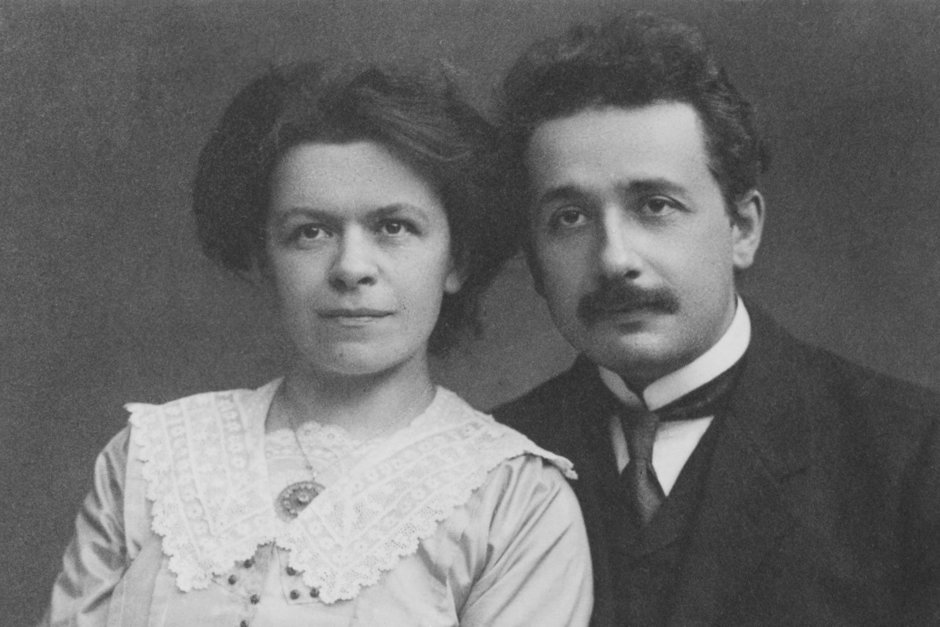
The marriage of Marić and Einstein broke down amidst the scientist's move to Berlin and his affair with his cousin. In 1914, Marić returned to Zurich with the children, the breakup became final, and in 1919 they divorced. By agreement of the parties, the money from the Nobel Prize received by Einstein in 1922 was transferred to Marić in the interests of their sons. She later lived in Zurich, raising her children and caring for her younger son, who suffered from schizophrenia. Marić died in 1948. Speaking about her biography, Marie Benedict emphasised that Mileva's story is the story of a woman whose life and work were «obscured by time, marriage and her husband's reputation», and it is this context that determined the focus of the book «Also Einstein».
The novel «Also Einstein» is structured as a consistent biography of Mileva Marić, and the story is told from her point of view. The plot begins with the heroine's departure from Serbia to Zurich, where she enters the Polytechnic and becomes the only woman in the physics and mathematics course. It is there that Mileva meets Albert Einstein — first as a fellow student, then as a close intellectual partner and lover. As Marie Benedict noted, the novel traces «Mileva's rapid journey from the remote outskirts of the Austro-Hungarian Empire to the physics department of a European university». The narrative captures her university years, joint classes, correspondence and the gradual formation of their personal and professional union.
The next part of the plot focuses on the relationship between Marić and Einstein outside the classroom. Mileva's pregnancy, failed exams and abandonment of her academic career become a turning point. After the wedding and the birth of children, the novel shows how the heroine's scientific ambitions are вытеснены by family responsibilities, while Einstein's career develops. The book explores not only Mileva's path to science, but also the role she could have played in her famous husband's theories when her own scientific plans were destroyed by personal tragedy and social circumstances. The story ends with the breakdown of the marriage and divorce, recording the gap between their joint beginning and the different outcomes of their lives.
Reconstruction of the lost female experience
The novel «Also Einstein» is entirely constructed from Mileva Marić's perspective, and the author has repeatedly emphasised this choice: even when she works in detail with the figure of Albert Einstein, the novel «never becomes his story, it always remains hers». This focus determines the structure of the text: the biography, love story and scientific episodes are subordinated to one task — the reconstruction of the lost female experience within a well-documented male biography.
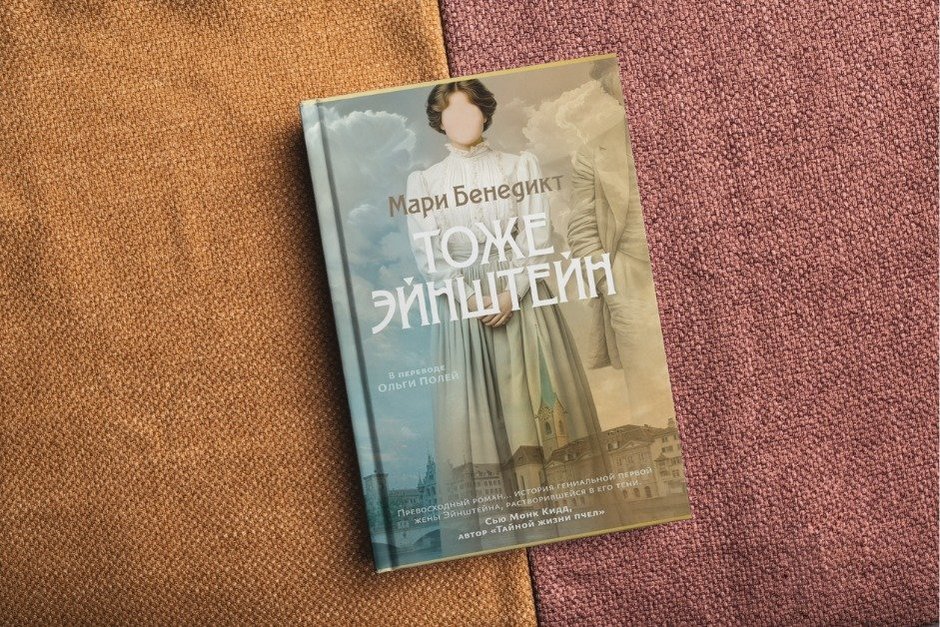
One of the key techniques of the novel is «humanising» Einstein through Mileva's gaze. Benedict described in detail how, in the process of work, Albert ceased to be an «icon with disheveled hair» for her and turned into a specific person: a student, a partner in scientific discussions, a musician, a lover, a husband and a father — «remarkable and at the same time imperfect, like all people». This shift allows the author to integrate Einstein into the narrative not as an unattainable genius, but as a participant in the relationship whose actions directly influence the heroine's fate.
Formally, «Also Einstein» belongs to historical prose, but Benedict emphasised the degree of uncertainty of the sources. She called the work on the book both «inspiring and disappointing»: there is «a huge amount of material» about Einstein's life, while information about Mileva is fragmentary. That is why the key documentary basis of the novel is letters — Mileva's correspondence with Albert and letters to her friend Helene, which, according to Benedict, were «indispensable for recreating her voice».
On this foundation, Benedict builds the central line of the novel — the intersection of personal relationships and scientific work. The writer was interested not only in «the trajectory of a passionate romance that dramatically falls apart over time», but also in «the process of scientific creativity between them — the moment of insight — and how attribution later occurs». In the text, this is expressed in the depiction of Marić and Einstein's collaboration as an intellectual alliance where ideas are born jointly but attributed to the one who has academic status — the man.
This aspect has become the subject of the greatest controversy surrounding the book. There is no evidence of Marić's participation in the development of Einstein's theories. Nevertheless, as a novelist, Benedict takes the imaginary to the limit, suggesting that ideas could have been appropriated. This conscious artistic step radically intensifies the conflict but simultaneously moves the text from the zone of reconstruction to the zone of hypothesis.
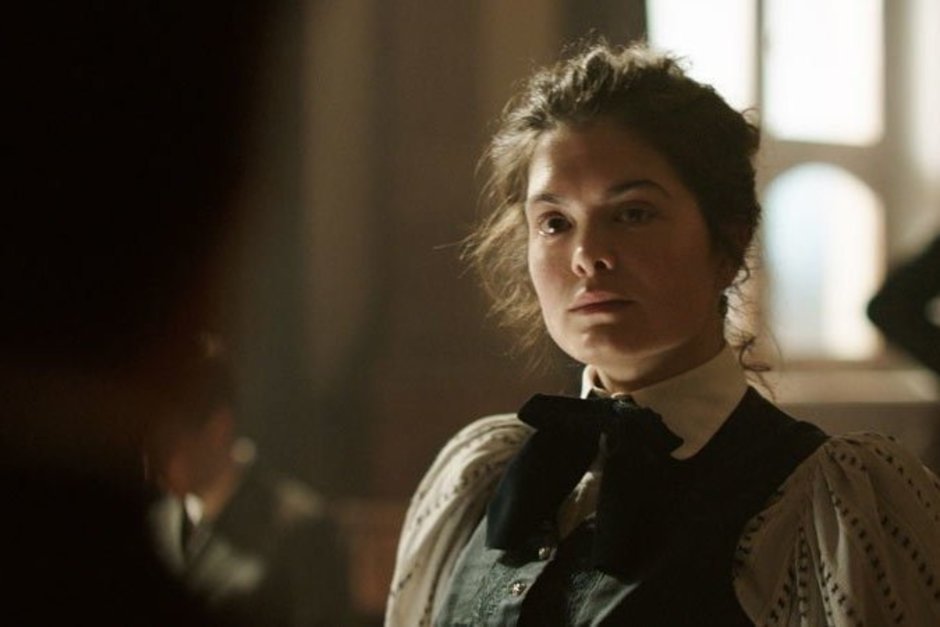
The social context in the book is built as an active force. The novel captures the everyday sexism of the university environment, professional isolation and the conflict between home and work — problems that remain recognizable today. These elements are not presented declaratively: Benedict shows how restrictions gradually narrow the heroine's range of choices, despite her academic abilities and ambitions.
Special attention deserves the way Benedict relates her own experience to the material of the novel. She said that when describing Mileva's studies at the Polytechnic, she drew on her years as a young lawyer at a large New York firm, where she was often «the only woman in a room full of men». This autobiographical transfer is not declared in the text, but it affects the accuracy of the scenes — especially those where the heroine hesitates before expressing a scientific opinion, even when she is sure she is right.
In the end, «Also Einstein» is constructed as a novel about the loss of authorship — personal, professional and historical. This is a strong argument in favour of the idea that behind the recognised genius there was a brilliant woman who played a key role in his success. At the same time, Benedict herself insists: her book does not claim to restore the truth, but only uses facts as «anchors» between which a logically and psychologically plausible fictional text is built.
Publisher: «Azbuka»
Translated from English by Olga Poley
Number of pages: 384
Year: 2025
Age rating: 16+
Ekaterina Petrova is a literary reviewer for the internet newspaper «Realnoe Vremya» and the host of the Telegram channel «Buns with Poppy Seeds».