‘Such initiatives often meet resistance from the business community’
State Duma deputies have proposed increasing Russian citizens’ annual leave, but there is a nuance

Right now, all organisations operating under the Russian Labour Code are finalising their leave schedules for the coming year. The final deadline expires two weeks before the New Year, that is, by 17 December. Against this backdrop, a proposal has been made in Russia to exclude weekends from the 28 days of paid annual leave. At present, this practice is observed only in several European countries. However, for Russia it may result in an irrational calculation of days off for employees with different work schedules. Read more details in the report by Realnoe Vremya.
“The bill will not be adopted by the majority”
State Duma deputies from the LDPR, led by the head of the faction Leonid Slutsky, have proposed amendments to the Labour Code. According to the bill, weekends will not be included in the 28 days of paid annual leave.
The parliamentarians were outraged that the current leave period includes regular weekends, which by law are guaranteed to every employee. They are not surprised that people are hardly delighted by the need to take at least two weeks off at once once a year: “One way or another, weekends will fall within this period and will be paid as working days.”
Experts interviewed by Realnoe Vremya believe that the change has two sides to it. On the one hand, it promises more favourable working conditions. But on the other — it will impose a new financial burden on employers.

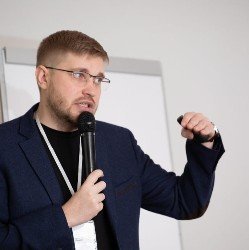
However, according to Alexander Yuzhalin, head of legal practice at SuperJob, employers will face no difficulties.
How will the initiative affect holiday pay?
Another question concerns the possible impact on employers, particularly those with continuous production cycles and those who follow schedules such as 2/2, 3/3 or the rotational method. Will this lead to additional costs or complications in planning working hours?
“This is the most contentious issue in the proposed bill. The fact is that employees working under different regimes will effectively find themselves in an unequal position. Here is an example: an employee’s leave is 28 days (or now — four calendar weeks). If an employee on a five-day workweek uses their leave under the new rules, it will be extended by 8 days (two weekend days per week for four weeks). But if we take an employee who works, for example, 24 hours on / 72 hours off, their leave will be extended by 21 days, which seems illogical. (The extension refers not to paid leave days but to the total rest period, including leave and weekends.) Thus, in the case of employees working on shift or rotational schedules, the bill appears unworkable, since the employee will be absent for significantly longer than now," Yuzhalin explained.
According to Kirsanova, if the bill is adopted only for state institutions, this will lead to legal inconsistency between the public and private sectors.
“In such a scenario, employees in state institutions will enjoy more favourable conditions than their colleagues in the private sector. This may create tension and dissatisfaction among workers in private companies," she said.
Another question is whether this will affect the calculation of holiday pay.
“The calculation of average earnings for paying holiday days should not be affected by the bill, but the final payments to employees will be. At present, all leave days are paid, including those that fall on weekends. For example, if an employee takes a week of leave, they receive payment for their weekend days as well (for example, Saturday and Sunday), which is more advantageous compared to working that week (since wages are not paid for weekends). If the bill is adopted, weekends will no longer be paid during leave because they will no longer be included in it. This means employees will rest more, but there will be a difference in the final payment for that leave," Yuzhalin clarified.
“And how do they do it in Geneva?”
In EU countries, as in Russia, the average duration of leave is four weeks. The record-holders for the longest leave periods are Sweden, Denmark, Finland, Austria and Canada, where it lasts at least five weeks.
Where do people get less leave than in Russia?
| Region | Country | Number of days of paid leave | Notes |
| Europe | Belarus/Ukraine | 18 days | |
| Netherlands | 20 days | ||
| Africa | Nigeria | 17 days | |
| Republic of Chad | 12 days | ||
Middle East | Israel | 10 days for a five-day workweek | Granted during the first four years of employment, then increases |
| Asia | China | 5 days | After 10–19 years, 10 days; after that — 15 days |
| Japan | 10 days | After six years, increases to 20 days | |
| North America | USA | No mandatory paid leave | Not regulated at the federal level; conditions vary by state and employer |
In Sweden, for example, annual leave amounts to 25 working days and does not include weekends. Twenty days may be used between June and August, while the remaining five constitute the so-called ski leave.
In the Netherlands, the minimum leave period is four weeks, but in practice it ranges from 25 to 30 days. Leave is calculated in working days rather than calendar days. This means that weekends and public holidays are automatically excluded — leave lasts only on days when the employee normally works.
In addition to salary, employees are entitled to Vakantiegeld — a holiday allowance amounting to 8% of the gross annual salary, usually paid in May or June, just in time for the holidays.