Cash in the digital era: why Russians still choos banknotes and coins
Russia is demonstrating a unique phenomenon: alongside the rise of cashless payments, the volume of physical cash is surging
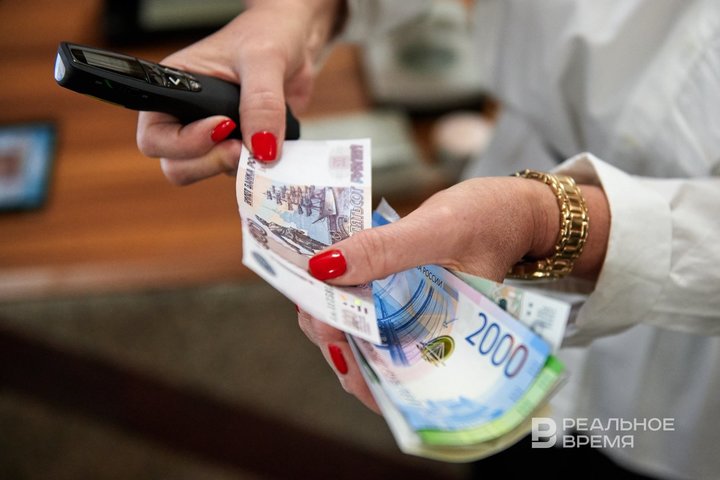
Despite the rapid development of cashless technologies in Russia, cash is not only maintaining its position but showing impressive growth in circulation. According to Bank of Russia data as of 1 October 2025, the volume of cash in circulation (the M0 aggregate) reached 18.6 trillion rubles. The increase in the third quarter is particularly notable — 659 billion rubles, which is 4.8 times higher than in the same period last year (137.4 billion rubles). What lies behind this trend is examined in detail in an article by digital economist Ravil Akhtyamov for Realnoe Vremya.
An unexpected renaissance of cash
Statistics from the Bank of Russia reveal a fascinating phenomenon: despite a decline in the share of cash within the overall M2 money supply from 15.6% to 14.2%, the absolute volume of cash continues to grow. This indicates that Russians are not so much abandoning digital payments as diversifying their payment methods, choosing the most suitable instrument for each situation.

The record rise in cash during the third quarter can be viewed as a rational response to a combination of factors.
Key indicators of cash circulation (M0)
| ||||||||||||||||||||
A “safety cushion” against technical and regulatory risks
According to the Central Bank, technical issues and regulatory changes are key drivers behind the growth of cash usage. Particularly indicative is the increase in ATM operations — deposits rose by 7.3% and withdrawals by 5.9%. At the same time, tighter banking controls and new powers granted to the Federal Tax Service have heightened public caution regarding financial transparency, making anonymous cash more attractive.
- Digital infrastructure outages. More frequent mobile internet disruptions are prompting people to create “live” cash reserves. The Bank of Russia directly links the increased demand to recurring internet outages, which make cashless payments unpredictable. In such conditions, cash serves as a reliable safety net for everyday transactions.
- Stricter financial oversight. As of 1 September 2025, banks have tightened monitoring of suspicious transactions, resulting in more card blocks and delayed transfers. This encourages people to diversify their financial tools to minimise risks.
- Tax monitoring. Another factor has been the Federal Tax Service’s new authority, from 1 July 2025, to selectively inspect individuals’ bank cards as part of anti-tax-evasion efforts. This has heightened public concern regarding financial transparency.
The “active circulation” phenomenon
Central Bank data confirm that the rise in cash is not driven by panic. The total volume of cash withdrawals via banks actually decreased by 4.3%, while deposits fell by 2.2%. At the same time, ATM activity increased markedly, pointing to changing patterns of cash use — money is circulating more actively in the economy, changing hands multiple times.
Regulator data show significant shifts in the composition of cash flows:
- cash inflows from retail sales fell by 24.1%;
- inflows to personal accounts declined by 17.9%;
- inflows related to securities operations rose dramatically (+21,202.1%), as did tax payments (+17.4%).
Regional specifics. Data across federal districts show a mixed picture:
- Central Federal District: operations up 10.9%;
- North Caucasus Federal District: withdrawals up 5.7%;
- Southern Federal District: operations down 1.9%.
The future of cash in the era of the digital ruble. Central Bank statistics confirm that the introduction of the digital ruble does not signal the end of cash. The share of banknotes in total cash remains stable at 99.3%, and the number of banknotes per capita has risen from 57 to 61. This highlights the continuing importance of cash within the payment ecosystem.
Economic growth drivers and their link to cash circulation
According to the RSPP, the main drivers of the economy in 2025 were food service, agriculture, retail trade, services and construction. These sectors traditionally have high shares of cash transactions. With GDP growth expected at 0.5–2% (compared with 4.1% in 2024), the economic slowdown is evident. In such conditions, businesses and households naturally gravitate towards simpler and well-established financial tools.
Bank of Russia data show that these growth-leading sectors indeed rely heavily on cash transactions. However, in the third quarter of 2025, there was a decline in cash inflows from retail sales (-24.1%) and services (-0.3%), which may indicate a redistribution of monetary flows across the economy.
Macroeconomic implications. The continuing significance of cash carries important consequences for the economy, as confirmed by Central Bank data:
- rising operational costs for banks (ATM turnover up 6.6%);
- complications for monetary policy (the share of cash in M2 is falling, but the absolute volume is rising);
- reduced transparency of financial flows (growing cash turnover amid declining cashless inflows).

Prospects for the payment ecosystem
Central Bank data suggest that current trends will persist in the near term. Over the longer period, however, a gradual return to a more balanced model is expected — as indicated by the declining share of cash in M2 alongside the continued growth of its absolute value.
The persistence of cash in the digital age highlights the complexity and multidimensionality of economic processes. Russian consumers and businesses are not rejecting financial technologies but pragmatically combining them with time-tested tools. This hybrid approach reflects mature financial behaviour and the ability to adapt to changing conditions.
The key task for financial institutions and the regulator is to build a balanced payment ecosystem in which different payment formats do not compete but complement one another, providing maximum reliability and convenience for all participants in the economic process.