‘Eastern recipe’: Why has India managed to tame inflation?
Expert: India’s experience demonstrates the possibility of achieving price stability without sacrificing economic growth
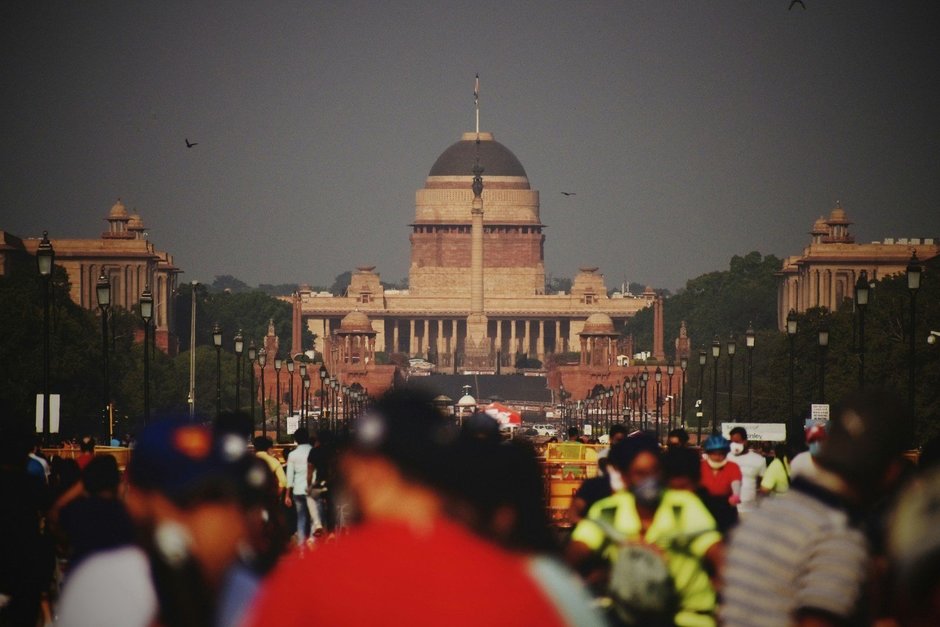
India is one of Russia’s key partners among the major economies of the Global South. In early December, President Vladimir Putin will travel to New Delhi on a working visit and take part in the Russian-Indian Forum. The sides will discuss the potential of mutual trade, opportunities for expanding access for Indian suppliers to the domestic market, Russia’s increasing import of labour resources from India, cooperation in tourism and the growth of tourist flows. Russia may also adopt from its Indian colleagues the successful experience of combating inflation, says digital economist Ravil Akhtyamov. The expert explains this important economic achievement and the methods that led to it in an opinion column for Realnoe Vremya.
Structure of the consumer basket and inflation in India
In the global economy, where many central banks continue their fight against inflation, India is demonstrating impressive success. In September 2025, the country’s inflation rate fell to 1.54% year-on-year, which is not only below the Reserve Bank of India’s (RBI) target range of 4±2%, but is also the lowest level since June 2017, when a rate of 1.46% was recorded. After rising to 2.07% in August, the September decline continued the overall trend of slowing inflation. This achievement has become particularly significant against the backdrop of steady economic growth.
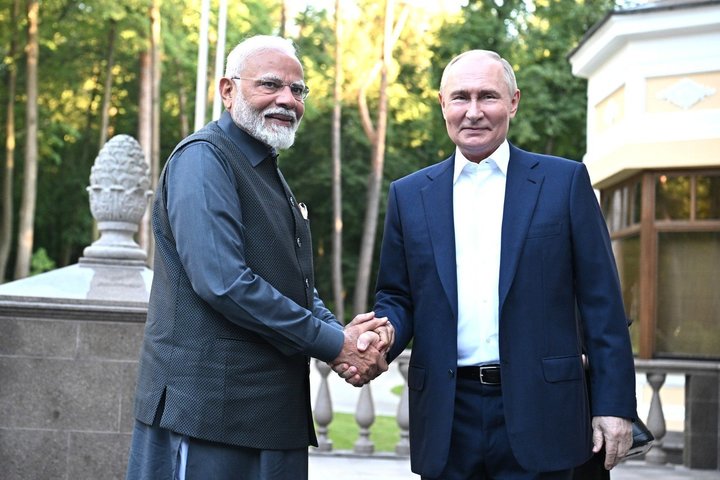
The following table contains verified data on the structure of the Consumer Price Index (CPI) and the contribution of various components to inflation as of September 2025.
CPI component | Weight in basket (%) | Inflation in September 2025 (%) | Main drivers |
Food and beverages | 45,86 | -2,28 | Vegetables (-21.38% in September) |
Housing | 10,07 | 3,98 | Sustained growth in demand |
Fuel and light | 6,84 | 1,98 | Decline in global oil prices |
Clothing and footwear | 6,53 | 2,28 | Moderate growth |
Miscellaneous | 28,32 | 5,35 | Transport and communication (8.59%), Healthcare (5.89%), Education (4.46%) |
Source: tradingeconomics.com/india/inflation-cpi
Special attention should be paid to the food component. Deflation in this segment (-2.28%) became the main driver of the overall decline in inflation, given its almost 46% weight in the consumer basket.
Success factors: monetisation and managing expectations
The calculation of the monetisation ratio (M3/GDP) given in the article is an estimate. The calculation uses the money supply M3 and nominal GDP for the same period. The following table contains data for the 2024 calendar year and the 2024–2025 financial year.
Indicator | Value | Period |
Money supply M3 | 272,866 billion | 2024/25 financial year |
Nominal GDP | $3,909.10 billion | 2024 calendar year |
Nominal GDP | 300.22 trillion (300,220 billion) | 2024/25 financial year |
Source: themirrority.com/data/money-supply-m3; tradingeconomics.com/india/money-supply-m3
The calculation of the monetisation ratio (M3/GDP) in Indian rupees shows that the level of monetisation of India’s economy is approaching 91%.
An important nuance is the persistent gap between actual inflation and household inflation expectations, which in September 2025 amounted to 8.70%. This indicates ongoing psychological tension despite low actual inflation and presents a challenge for RBI’s communication policy.
For understanding the lessons of the Indian experience, it is particularly important to compare the level of monetisation in the two countries. As of the end of 2024, the level of monetisation of the Russian economy (M2/GDP) stood at 58.62% — a record figure for modern Russia, showing steady growth from 15.75% in 2000.
Comparative analysis with other BRICS countries
Against the background of other developing economies, India’s success looks especially impressive:
- Brazil: inflation 5.17%,
- South Africa: inflation 3.4%,
- China: deflation -0.3%,
- India: inflation 1.54%.
At the same time, India is demonstrating steady economic growth, which refutes the notion of an inevitable trade-off between low inflation and high growth.
Structural Reforms and External Economic Pragmatism. A distinctive feature of the Indian approach has been the skilful use of external economic conditions. As noted by VEB chief economist Andrey Klepach, “declining global prices for crude oil and the import of inexpensive Russian oil have had a positive impact on India’s economy.” In parallel, the government is implementing systemic structural reforms:
- The Production Linked Incentive (PLI) programme to develop domestic manufacturing.
- The PM Gati Shakti infrastructure mission aimed at reducing logistics costs.
- Targeted regulation of the food market through buffer stocks.
Lessons for Russia. India’s experience offers valuable lessons for Russian economic policy:
- Synchronising monetary and fiscal policy is a key factor for success.
- Targeted influence on volatile CPI components makes it possible to avoid excessive monetary tightening.
- Optimising the level of monetisation with a focus on 70–75% of GDP.
- Developing a system for rapid response to imbalances in key sectors of the economy.
India’s success in combating inflation is based on a comprehensive approach that combines balanced monetisation of the economy with systemic structural reforms. Achieving a rate of 1.54% while maintaining economic growth demonstrates the effectiveness of this model.
For the Bank of Russia, the Indian experience is of particular value, showing that price stability can be achieved without sacrificing economic growth. The key condition for successfully adapting this experience is the development of mechanisms for targeted influence on the structural components of inflation while maintaining overall monetary discipline.
Reference
The article is based on data from the Ministry of Statistics and Programme Implementation of India and the Reserve Bank of India.