‘Truck market slumps as dealers flood supply’
Amid falling demand for vehicles, the republic entered the top five regions for new transport sales
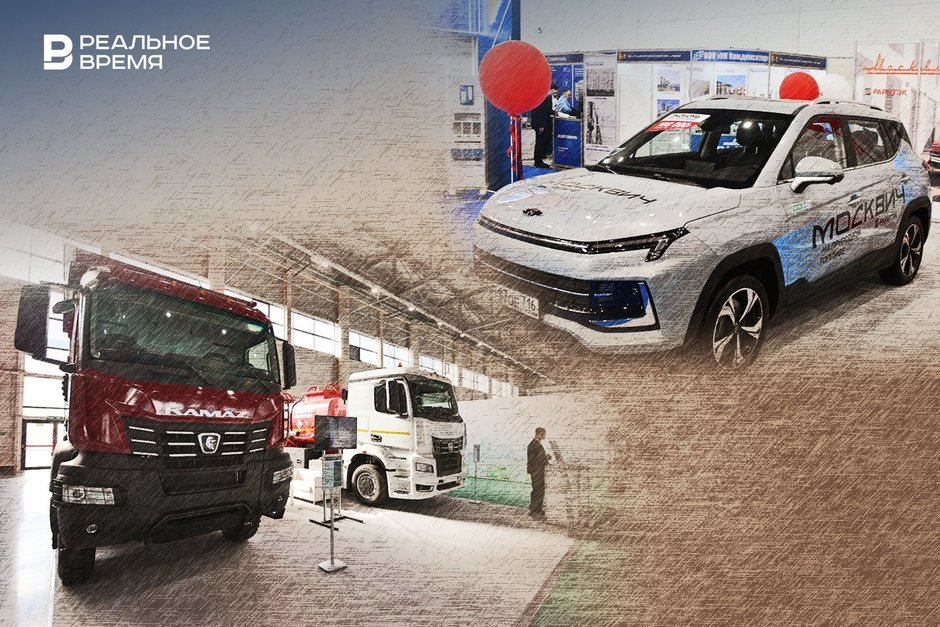
Russia has recorded a sharp drop in demand for new vehicles: from January to October 2025, sales fell by 22% to 1.197 million units, the Ministry of Industry and Trade reported. The market for heavy-duty trucks was hit especially hard — according to Autostat, only 37.9 thousand trucks were sold over ten months, 57% less than a year earlier. Nevertheless, KAMAZ remains the market leader, accounting for more than 25% of the segment and slightly ahead of China’s SITRAK. Sales of new passenger cars fell by 20% over the year, and bus sales by 42%. The reasons behind the shrinking Russian automotive market, the expected consequences for the economy, and the proposed ways to pull out of the steep “dive” — in the report by Realnoe Vremya.
The market is shrinking
According to the analytical agency Autostat, from January to October 2025 only 37.9 thousand new heavy-duty trucks were sold in Russia — 57% fewer than in the same period of 2024. Sales of medium-duty trucks amounted to 1,169 units, down 46% compared to the previous year.
At the same time, according to the Ministry of Industry and Trade of Russia, Tatarstan entered the top five regions for new vehicle sales, ranking fourth after Moscow, the Moscow region, and St. Petersburg. The republic accounted for 5% of all new passenger cars sold in Russia (49,657 units), 4% of light commercial vehicles (3,883), 5% of trucks (2,175), and 4% of buses (380).
In its published report on the vehicle market, the Ministry stated:
“From January to October 2025, the new vehicle market amounted to 1,197,394 units (-22% compared to the same period in 2024, when it was 1,544,849 units). Of these, 657,587 new vehicles were manufactured in the Russian Federation (-3% compared to the same period in 2024).”
The report also noted that sales of passenger cars fell by 20% compared to January–October 2024, light commercial vehicles by 23%, trucks by 56%, and buses by 42%.
According to the Ministry, the total volume of the new vehicle market fell by 16% year-on-year as of October 2024 (imports dropped by 144%). Meanwhile, the market for domestically produced vehicles grew by 10%, and the electric vehicle segment rose by 68%.
New recycling fee “boosted” dealers in October
Over the first ten months of 2025, the passenger car market amounted to just 1.055 million units, according to the Ministry of Industry and Trade. However, according to the AEB Automobile Manufacturers Committee, total sales of new passenger and light commercial vehicles in October 2025 rose compared to the previous month, reaching 167,649 units — though sales for January–October 2025 were still down 21% compared to 2024.

He also suggested that total 2025 sales of new passenger and light commercial vehicles could exceed the Committee’s earlier forecast of 1.28 million units, but would still remain below 2024 levels.
Throughout 2025, the Committee recorded monthly declines in new passenger and light commercial vehicle sales — from 9% to 24% year-on-year. As a result, total sales for the first half of 2025 were down 27% compared to the same period in 2024.
Leaders — KAMAZ and China’s SITRAK
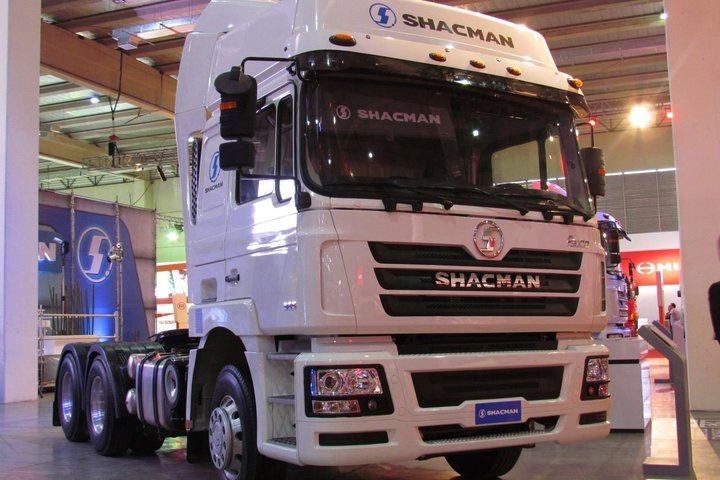
Autostat reports that nearly half of the heavy-duty trucks sold in October were produced by KAMAZ and SITRAK — 1,300 and 1,200 units, respectively. The top five also included FAW (553), Shacman (482), and MAZ (352).
A similar situation was observed in the medium-duty segment: from July to October 2025, 1,169 units were sold — 46% fewer than in the same period of 2024. The sharpest decline came in June, when sales fell by nearly 62% year-on-year.
Will things get worse?
Former head of the Tatarstan-based transport company Avtoalliance, Ilsur Shaikhutdinov, predicts a further decline in the automotive market, especially in the truck segment, and warns of negative consequences:
“Our company closed because it became impossible to operate with such high prices for spare parts and fuel. Many others shut down as well, which affected demand for trucks. The role of freight transport in supporting numerous sectors of the Russian economy cannot be overstated. The collapse of this market will inevitably lead to price increases for virtually everything.”
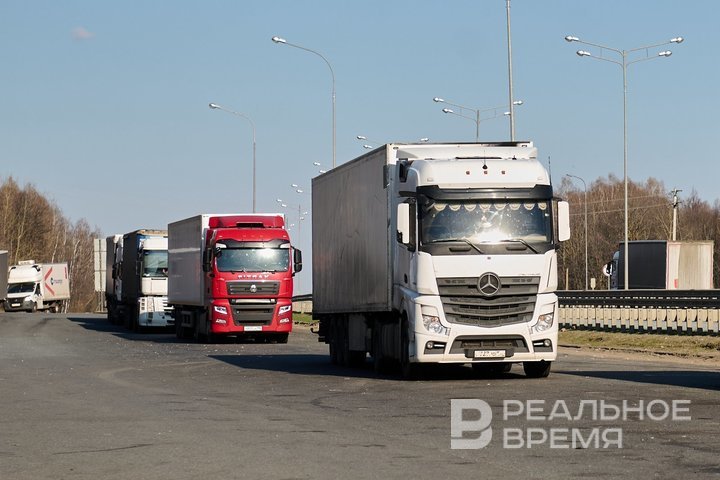
Director of the transport company Revers, Sergey Sotnikov, views the situation differently, arguing that the drop in demand for trucks is partly misleading:

Sotnikov also noted that as demand surged last year, dealers “started aggressively raising prices” and are now reluctant to lower them — partly because the high costs of their own loans are embedded in vehicle prices.
He believes that the lack of competition in the truck market plays a major role in the unaffordable prices for many transport companies:
“Previously, the market was dominated by the ‘big seven’ — Daimler (Mercedes-Benz), MAN, Scania, Volvo, Iveco, and Renault — mostly European manufacturers, with KAMAZ occupying a smaller niche. After their exit, the market remained open. KAMAZ didn’t fill the gap, so Chinese brands did, quickly satisfying demand. Now, with no cheap leasing and an unstable economy, freight volumes are clearly declining.”
“Without cheap money — meaning interest rates of 3–5% — no economy can grow,” he said. “In Turkey, for instance, with a key rate of 40%, the economy shows no growth. Economies with cheap domestic credit, like China, are the ones that grow. With lending rates at 20–25%, economic expansion is simply impossible. And the reckless issuance of subsidised leases, which fuelled last year’s truck boom, has now backfired — many companies bought fleets without viable business plans and then collapsed, dragging the freight market down with them.”
According to KAMAZ press secretary Oleg Afanasyev, it is not entirely correct to describe the current situation as a “decline”:

He noted that KAMAZ had anticipated a 30% drop in the market, but the decline reached 50%, as foreign dealers ignored the warnings and, fearing higher recycling fees, over-imported unsold vehicles last year.
Thanks to early preparations, KAMAZ managed to mitigate the downturn: while the overall market dropped by more than 50%, the company’s sales fell by around 30%. Still, Afanasyev admitted that the company felt the impact of dealer miscalculations, as they are now “dumping” excess inventory at heavily discounted prices, further depressing the truck market.
Shifting to electric buses
The crisis in the commercial vehicle market led the Tatarstan manufacturer to switch to a reduced four-day work week in late July 2025.
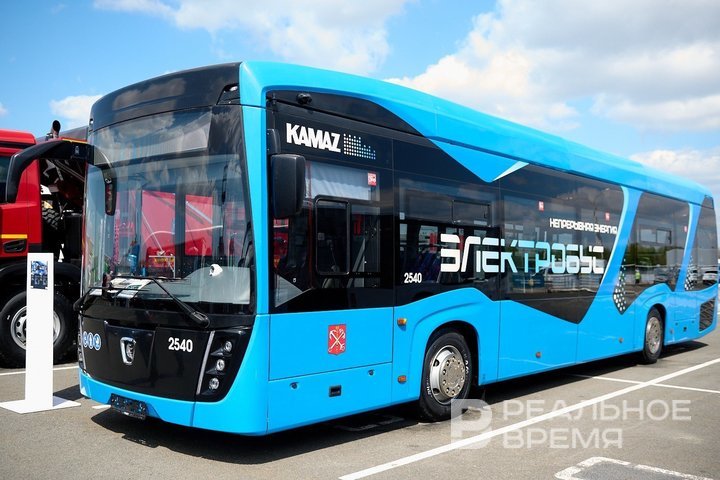
However, the drop in truck sales has been partially offset by state contracts — particularly with Mosgortrans, which in recent years has become the company’s main government customer. Over the past five years, KAMAZ has signed public contracts worth more than 118.6 billion rubles, with the bulk in 2025, including two contracts for the delivery of 1,100 electric buses to Moscow worth a total of 85.4 billion rubles.
As of 10 November, according to official data, KAMAZ production divisions resumed a full five-day work week, though the final schedule for December will be decided by the company’s financial committee after assessing production load.
“KAMAZ hasn’t been putting all its eggs in one basket for quite some time,” Afanasyev noted. “Of course, the truck market remains our core business, but we are actively developing other areas — particularly passenger transport. When one segment declines, we try to compensate in others. Although the passenger transport sector also faces difficulties due to the Central Bank’s high key rate, we are working intensively in this direction to offset part of the losses from reduced truck sales.”